



Quick Verdict: Should You Trust Alien.Fi?
If you are looking for a safe place to trade, the short answer is: proceed with extreme caution. Currently, there is a glaring lack of transparent data regarding the ownership, regulatory licensing, and security audits of Alien.Fi. In the world of Cryptocurrency, anonymity is great for privacy but terrible for platform trust. When a company handles your money, you want to know who is behind the curtain. The absence of a verifiable team or a physical headquarters is a major warning sign that usually precedes a 'rug pull' or a total platform collapse.
| Feature | Alien.Fi | Tier-1 Exchanges |
|---|---|---|
| Regulatory License | Not Found / Unclear | Multi-jurisdictional (SEC, FCA, etc.) |
| Proof of Reserves | None Provided | Publicly Audited / Merkle Tree |
| Team Transparency | Anonymous | Public CEOs and Board Members |
| Withdrawal Process | Reported 'Fees' Required | Standard Transaction Fees |
The Anatomy of a Crypto Exchange Scam
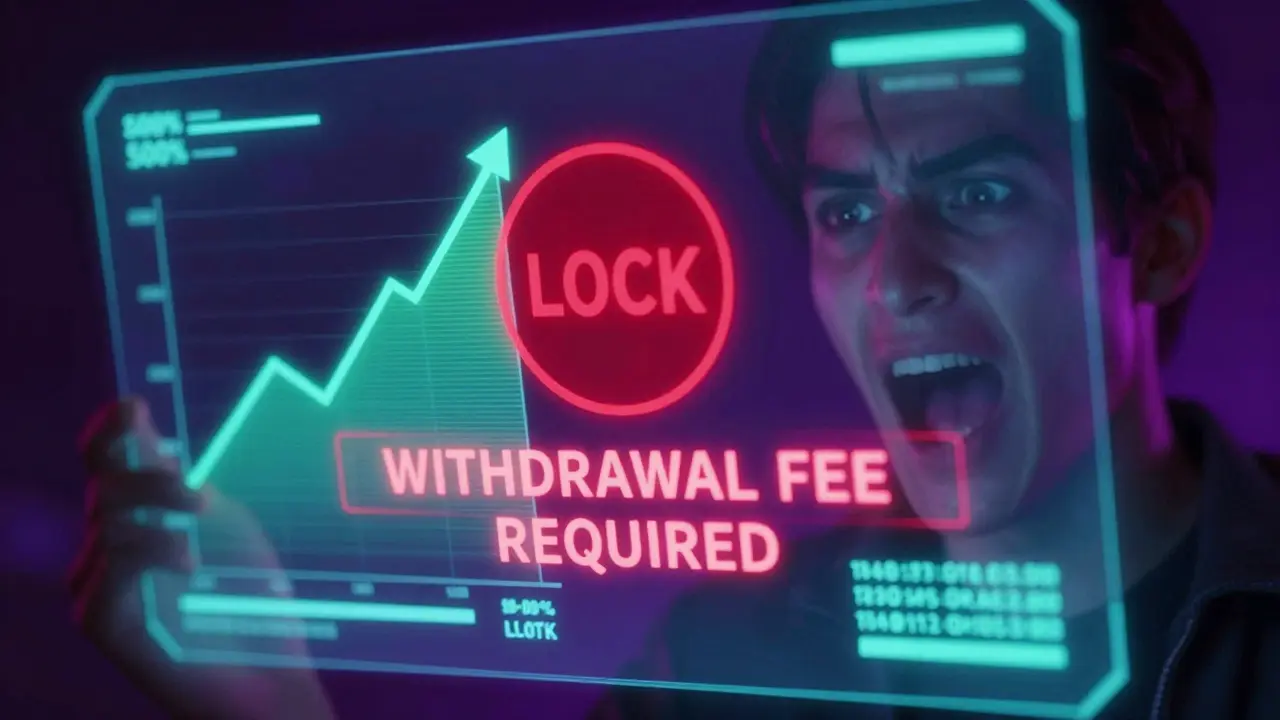
To understand the risks associated with Alien.Fi, we have to look at how modern Trading Platforms often deceive users. A common tactic is the 'Deposit-to-Withdraw' trap. You sign up, deposit a small amount, and the platform uses a manipulated dashboard to show your balance skyrocketing. You feel like a genius. However, when you try to cash out, the platform asks for a 'tax payment' or a 'verification fee' to be paid upfront. This is a classic hallmark of fraudulent operations.
Legitimate exchanges, such as Binance or Coinbase, simply deduct fees from your existing balance. They will never ask you to send more money just to get your own funds back. If you encounter a request for an upfront payment to unlock a withdrawal on Alien.Fi, stop immediately. You are likely dealing with a scam.
Security Analysis and Red Flags
When we analyze the technical side of a platform, we look for Two-Factor Authentication (2FA), cold storage for assets, and third-party security audits. Alien.Fi fails to provide documentation for any of these. A real exchange will brag about its security protocols because that is what attracts institutional investors. Silence on security is effectively an admission of weakness.
Furthermore, check the URL and domain age. Many scam sites use '.fi', '.top', or '.net' extensions to mimic legitimate financial entities. If a platform claims to have been around for years but the domain was registered only a few months ago, you are looking at a disposable website designed to disappear once it has collected enough deposits. This 'burn-and-turn' strategy is common among platforms that target social media users through fake 'investment gurus' on Telegram or WhatsApp.

Comparing the 'Alien' Ecosystem
Confusion is a powerful tool for scammers. By naming a platform Alien.Fi, they piggyback on the recognition of other 'Alien' branded projects. For example, AlienSwap is a known Decentralized Exchange (DEX) and NFT marketplace, but it is a completely different entity from a centralized exchange claiming to manage your funds. Many users see the word 'Alien' and assume it's part of a legitimate, established ecosystem.
It's also worth noting that tracking sites like LegalByte and Cyberclaims have previously flagged similarly named platforms, such as Alienexchange, as fraudulent. While Alien.Fi may try to distance itself from those names, the pattern of using generic, futuristic branding to mask a lack of corporate identity is a recurring theme in the crypto-scam playbook.
How to Protect Your Assets in 2026
The easiest way to avoid losing your money is to follow the 'Golden Rule' of crypto: Not your keys, not your coins. This means that if you keep your assets on a centralized exchange, you are trusting that company with your money. To minimize risk, use a Hardware Wallet (like a Ledger or Trezor) to store the bulk of your holdings and only keep a small amount of trading capital on an exchange.
- Verify the License: Search for the company on official government registries (like the SEC in the US or the FCA in the UK).
- Test Withdrawals: Always try to withdraw a small amount immediately after your first deposit.
- Ignore 'Gurus': If a random person on social media tells you about a "secret" platform with guaranteed returns, it is a scam 100% of the time.
- Check Community Feedback: Look for discussions on Reddit or Trustpilot, but be careful of fake positive reviews-scammers often buy bot accounts to inflate their ratings.
Final Thoughts on Trading Safety
Trading is about managing risk, but using an unverified platform isn't trading-it's gambling with the house owning the dice. Alien.Fi does not currently provide the transparency, security proof, or regulatory backing required to be considered a safe investment vehicle. In a market where Blockchain technology is designed to create trustless systems, trusting an anonymous entity with your life savings is a dangerous move.
Is Alien.Fi a legitimate crypto exchange?
There is no verifiable evidence that Alien.Fi is a licensed or regulated exchange. The lack of a known team, physical address, and third-party security audits makes it a high-risk platform that exhibits several hallmarks of a fraudulent operation.
Why is Alien.Fi asking for a fee to withdraw my money?
This is a major red flag. Legitimate exchanges deduct withdrawal fees from the balance you are withdrawing. If a platform asks you to deposit additional funds to 'unlock' your account or pay a 'tax,' it is almost certainly a scam designed to steal more money from you.
Does Alien.Fi have Proof of Reserves?
No. Proof of Reserves is a method where exchanges prove they hold the assets they claim to have for their users. Alien.Fi has not published any such data, meaning users have no way of knowing if the platform actually holds the funds it shows on the dashboard.
What should I do if I already deposited money into Alien.Fi?
Try to withdraw your funds immediately without depositing any more money. If the platform asks for a fee, do not pay it. Report the platform to your local financial authorities and the cybercrime division of your country's police. Be wary of 'recovery scammers' who claim they can get your money back for a fee.
How is Alien.Fi different from AlienSwap?
AlienSwap is a decentralized platform focused on NFTs and swapping tokens on the blockchain. Alien.Fi presents itself as a centralized exchange. They are not the same entity, and scammers often use similar names to trick users into thinking a new platform is associated with an established one.
Next Steps for Traders
If you are new to crypto, start by using a reputable exchange with a long track record and clear regulatory compliance. Focus on learning the basics of Cold Storage before committing large sums of money. If you have encountered issues with Alien.Fi, your first priority should be securing your remaining assets and changing passwords on any accounts that shared the same credentials.
Comments
15 Comments
Joshua Aldrich
classic pig butchering scam. it starts with that fake high return to get you hooked and then they hit you with the 'tax' fee. i've seen this a hundred times in different flavors. seriously, if a site asks for money to let you withdraw your own money, just run. its a total red flag and honestly just sad how many people still fall for this stuff in 2026.
Trish Swanson
Total scam!!! Stay away!!!
shubhu patel
I completely agree with the points made here because it is so important to be cautious when we see these flashy promises of overnight wealth, especially since many of us are just trying to find a stable way to invest our hard-earned savings and it would be truly heartbreaking to see anyone lose their funds to a platform that doesn't even have a physical address or a transparent team.
Matthew Wright
The domain age check is such a pro tip!!! Most people totally ignore the WHOIS data!!! Always check when the site was actually registered before sending any ETH or BTC!!!
Arwyn Keast
Typical low-effort venture. The lack of a proper regulatory framework is just standard for these fly-by-night operations. Honestly, the sheer incompetence of users trusting a .fi domain without a shred of due diligence is staggering. It's all just noise and ponzi-schemes at this point.
sekhar reddy
OMG I actually saw an ad for this on some random site and almost clicked it!! Literal garbage!! Imagine thinking some 'Alien' thing is gonna make you rich overnight lol!! Absolute clown show!!
Emma Pease-Byron
Oh, look, another groundbreaking discovery that anonymous platforms with zero audits might be scams. Truly revolutionary stuff. I'm sure the 'next-generation' marketing really fooled the three people who actually read the terms of service.
Erica Mahmood
just stick to cold storage. keeping assets on any cex is basically a gamble with a custodian risk. get a hardware wallet and stop trusting third party dashboards for your net worth
Siddharth Bhandari
The distinction between AlienSwap and Alien.Fi is the most critical part of this analysis. Scammers rely on brand confusion to bypass the mental filters of novice traders.
Evan Borisoff
This is exactly why we need a hard-line approach to digital asset sovereignty and why relying on these offshore shadow-entities is a failure of systemic risk management. The liquidity profiles on these sites are completely fabricated via simulated order books to lure in retail capital while the actual treasury is just a single wallet controlled by a bad actor in a non-extradition jurisdiction which is just pathetic.
Krystal Moore
It's honestly disgusting how these people prey on others! I can't believe there are people out there who create these traps just to steal life savings. It's absolutely evil and we need more people calling them out like this!
akash temgire
The lack of Proof of Reserves is unacceptable. I refuse to use any platform without transparent Merkle tree verification.
Sharhonda Walker
guys pleze dont put money in here. i tried to help a friend who did and they keep asking for more 'activation fees'. just dont do it!
Manisha Sharma
these western exchanges are just as bad lol. at least the 'aliens' are honest about being ghosts. the philosophy of trust is dead anyway so why pretend any of these platforms are actually 'safe' when the whole system is just a glitch in the matrix
Brooke Herold
I'll just stay in my lane and keep my coins in a vault. Thanks for the warning.
Write a comment