




Imagine waking up to find that the money in your pocket has lost 20% of its value overnight. For millions in Argentina, this isn't a bad dream-it's a recurring Tuesday. When your local currency behaves like a sinking ship, you don't just look for a lifeboat; you build a new fleet. This is exactly why Argentine peso instability is the primary engine driving one of the highest cryptocurrency adoption rates in the world. It's not about gambling on the next big coin; it's about survival in an economy where the official currency is failing.
The Breaking Point: Hyperinflation and the Peso
To understand the crypto boom, you have to understand the disaster. In 2023, Argentina saw hyperinflation soar past 200%. When prices for basic goods change daily, holding the peso becomes a liability. The central bank has spent billions of dollars trying to prop up the currency, but for the average person, these traditional defenses feel like trying to stop a flood with a paper towel.
This instability has pushed Argentina into a unique position. Despite having a population only one-fifth the size of Brazil's, Argentina has become the second-largest crypto market in Latin America, racking up $93.9 billion in transaction volume. People aren't using crypto to get rich quick; they're using it to stay where they are. In a country where the Central Bank of Argentina struggles to maintain a manageable currency band, decentralized assets offer a level of predictability that the government simply cannot provide.
The Stablecoin Escape Hatch
If you look at the data, Argentines aren't primarily chasing the volatility of Bitcoin. Instead, they are flocking to stablecoins-digital assets pegged to a stable currency, usually the US dollar. In fact, a staggering 89% of peso activity on centralized exchanges is focused on buying stablecoins. It's the digital version of "dollarization."
The most popular choices are USDT (Tether), USDC (USD Coin), and DAI. The latter is particularly loved because its collateral is visible on the Ethereum blockchain, giving users a transparency they never get from a traditional bank. Why trust a government that prints money at will when you can verify the reserves of your digital dollar on a public ledger?
| Feature | Official Bank Channels | Stablecoins (e.g., USDT, DAI) |
|---|---|---|
| Monthly Limit | Capped at $200 (Official Rate) | Unlimited |
| Access Speed | Slow, bureaucratic | Instant / Real-time |
| Transparency | Opaque / Government controlled | Publicly verifiable (on-chain) |
| Exchange Rate | Official (Often artificial) | Market-driven (Closer to "Blue Dollar") |

Bypassing Capital Controls and the "Blue Dollar"
Argentina's government has imposed strict capital controls to stop dollars from leaving the country. If you want to buy USD through a bank, you're stuck with a tiny $200 monthly limit. This creates a massive gap between the official rate and the "blue dollar"-the informal, black-market exchange rate that actually reflects the currency's value.
Stablecoins have effectively killed the need to visit a shady street corner to trade pesos for cash. By using platforms like Lemon, Argentines can convert their pesos into digital dollars in seconds. It's a workaround that bypasses government restrictions entirely. When political uncertainty spikes-like during election cycles-you see massive surges in stablecoin purchases. It's a reflexive move: the moment a candidate suggests a policy that might destabilize the peso further, the volume of crypto trades shoots up.
Bitcoin as the Long-Term Vault
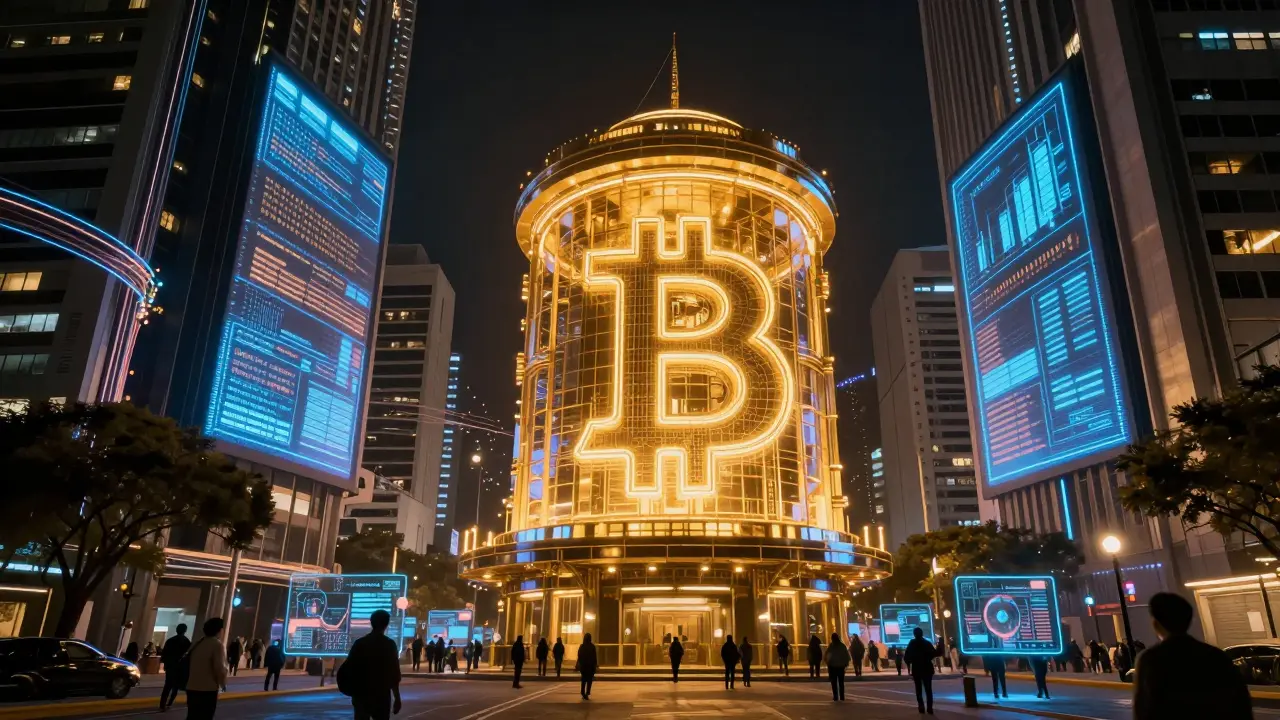
While stablecoins handle the day-to-day survival, Bitcoin is playing a different role. It's becoming the ultimate store of value. Interestingly, reports from local exchanges show that some users actually hold more Bitcoin than stablecoins. This marks a shift in mindset from "how do I pay my rent this month?" to "how do I protect my wealth for the next decade?"
In an environment where the national currency is essentially a melting ice cube, Bitcoin is viewed as "digital gold." It doesn't have a central bank that can print more of it into oblivion. For a generation that has seen multiple economic collapses, the scarcity of Bitcoin is its most attractive feature.
A Regional Powerhouse in the Making
Argentina isn't alone in this, but its motivation is distinct. If you look at the broader Latin American landscape, which is a $1.5 trillion crypto market, the patterns vary. In Mexico, crypto is heavily used for remittances from the US. In Brazil, the growth is more about investment and the rapid adoption of instant payment systems like PIX. In Argentina, however, the adoption is a direct response to systemic failure.
This necessity has turned Buenos Aires into a global hub for Web3 innovation. The city hosts major events like Devconnect, and the government has even introduced a regulatory sandbox and licenses for Virtual Asset Service Providers (VASPs). This shows a growing realization that crypto isn't just a trend-it's the new financial infrastructure for the country.
Getting Started: From Basic Swaps to DeFi
Depending on who you ask, entering the crypto world in Argentina takes either ten minutes or ten weeks. For the average person, the barrier to entry is incredibly low. Downloading an app like Lemon and swapping pesos for USDT is a straightforward process that requires almost no technical knowledge.
On the other end of the spectrum, there's a growing community of power users diving into Decentralized Finance (DeFi). These users aren't just holding coins; they're providing liquidity, lending, and borrowing without any central intermediary. While this requires a steep learning curve, the reward is total financial autonomy-something that is incredibly precious in a country with unpredictable banking laws.
Why do Argentines prefer stablecoins over Bitcoin?
Most users prioritize stability for daily expenses. Since stablecoins like USDT and USDC are pegged to the US dollar, they protect the user's purchasing power from the peso's inflation without the price swings associated with Bitcoin.
What is the "Blue Dollar" and how does crypto relate to it?
The Blue Dollar is the unofficial, black-market exchange rate for USD in Argentina. Crypto stablecoins often trade at a rate very close to the Blue Dollar, providing a legal and digital way to access market-value USD without using illegal cash markets.
Is using cryptocurrency legal in Argentina?
Yes, it is generally legal. The government has even moved toward formalizing the sector by issuing licenses for Virtual Asset Service Providers (VASPs) and creating regulatory sandboxes to foster innovation.
How does Argentina's crypto adoption compare to Brazil's?
While Brazil has a higher overall volume due to its population size, Argentina's adoption is more deeply tied to economic necessity and inflation hedging. Brazil's growth is more focused on fiat-to-crypto investments, whereas Argentina's is dominated by peso-to-stablecoin swaps.
What are the risks of using crypto to hedge against inflation?
The primary risks include platform security (exchanges being hacked), regulatory shifts that could change how assets are taxed or accessed, and the potential for a stablecoin to lose its peg (de-peg).
Comments
19 Comments
Suvoranjan Mukherjee
The use of stablecoins here is basically a masterclass in liquidity management during high-inflation cycles. When the fiat volatility index goes through the roof, swapping to USDT or USDC isn't just a strategy, it's a necessity for maintaining purchasing power parity. It's wild to see the On-Chain transparency of DAI being used as a trust mechanism over legacy banking systems. Truly a fascinating case of organic adoption driven by systemic failure!
Adriana Gurau
Oh honey, imagine thinking a digital token is a 'solution' to a collapsing economy. It's just trading one house of cards for another, but with more electricity bills 🙄💅
Joshua Aldrich
It's really about the psychology of trust. When the state fails, people look for math. There's somethin deeper here about the human need for a stable anchor in a storm, even if that anchor is just code. I think we're seeing a global shift in how we perceive value when the old guards just... stop working. might be the start of something way bigger than just one country
Robert Coskrey
I completely agree with the points presented regarding the necessity of stablecoins... The disparity between official rates and market rates is simply staggering!!!
Alexandra Lance
Sure, just trust the 'transparent' ledger while the elites control the underlying protocols. It's all a psyop to get us off cash so they can track every single cent we move 🤡💸
JERRY ORTEGA
just a heads up for anyone looking into this, if you go the p2p route to get stablecoins, always use an escrow service. plenty of scams out there when things get desperate
vijendra pal
Everyone knows Bitcoin is the real king here 👑 Stablecoins are just training wheels for beginners! Real gains come from holding BTC while the peso burns lol 😂🔥
david head
totally agree with the btc as digital gold thing 🚀🚀
Susan Wright
For those wondering about the technical side, the 'Blue Dollar' essentially acts as a floating exchange rate that the market decides, and since crypto moves instantly, it's the fastest way to peg your wealth to that rate without physically carrying bags of cash.
Deepak Prusty
The premise that Bitcoin is a 'vault' is an oversimplification. One must consider the volatility of the asset itself compared to the inflation of the peso, though the scarcity argument remains mathematically sound.
Emily 2231
THE FED IS DOING THE SAME THING TO US. THEY WANT US ON DIGITAL CURRENCY TO CONTROL THE POPULATION. NO MORE PHYSICAL CASH MEANS NO MORE FREEDOM. WAKE UP
shubhu patel
It is actually quite heartbreaking to read about people having to use these tools just to survive their daily lives, and while I agree that the technology is impressive, I cannot help but feel for the families who struggle to afford basic goods because their money evaporates overnight.
Patty Levino
If anyone is feeling overwhelmed by the DeFi part, just start with a simple wallet. You don't need to be a pro to keep your savings safe from inflation.
Hugo Lopez
It's awesome to see people finding ways to help themselves! 🌟 I hope this leads to more financial freedom for everyone there.
Carmelita Gonzales
many of my cousins in buenos aires already do this and it's the only way they can keep their savings intact
Nicholas Whooley
The transition toward a regulatory sandbox is a commendable step by the government. It allows for innovation while maintaining a framework for consumer protection.
alex rodea
Keep going guys! Use the tools you have to stay safe.
Earnest Mudzengi
This is exactly what happens when you let globalist agendas wreck a national currency. The 'Blue Dollar' is just a symptom of the disease. Tether is basically a black box and we're all just trusting a company in the BVI with the world's liquidity. Absolute madness.
June Coleman
Oh look, another group of people discovering that governments are great at printing money until it's worthless. How shocking. 🙄 Glad everyone found their digital lifeboat!
Write a comment