



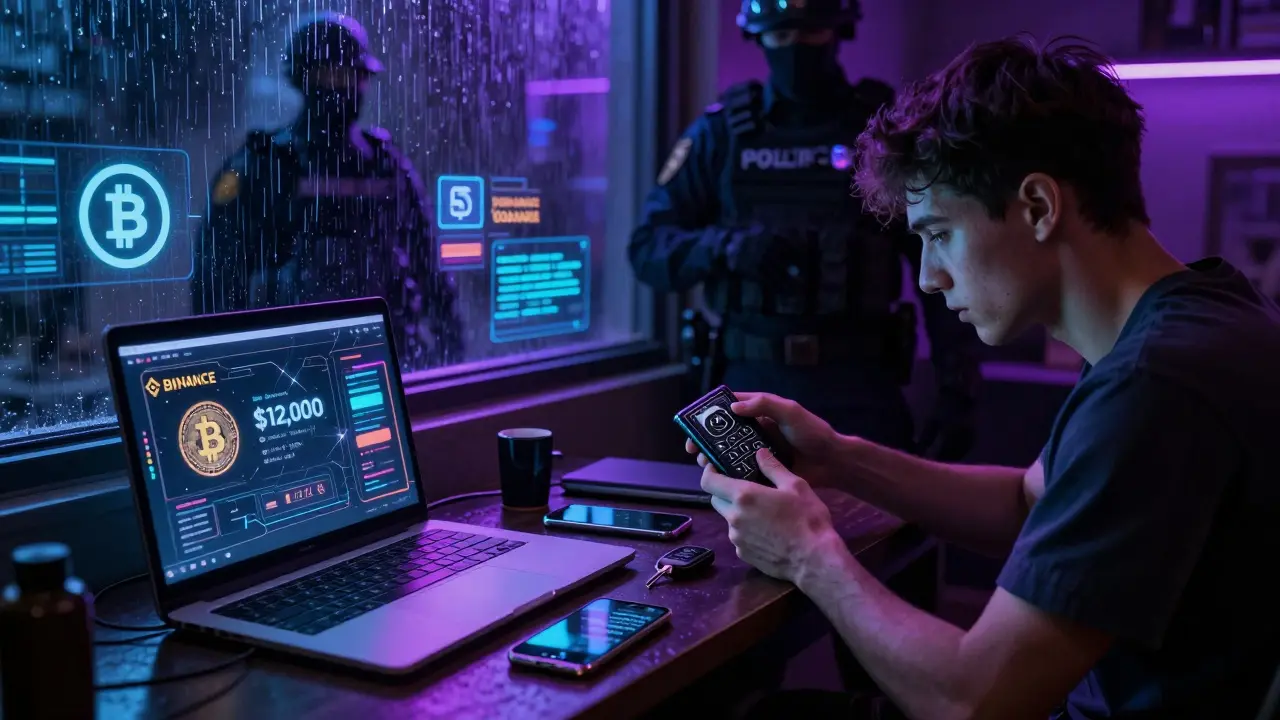
In Nepal, owning or using cryptocurrency isn’t just risky-it’s a crime. If you’re caught trading Bitcoin, mining Ethereum, or even holding crypto in a wallet, the government can take everything you own. No warning. No second chance. Just asset forfeiture.
Why Nepal Bans Crypto Completely
Nepal doesn’t just discourage cryptocurrency-it outlaws every single part of it. Mining, trading, sending, receiving, storing, or exchanging crypto is illegal under the Muluki Criminal Code Act 2017, Section 262(A). The law doesn’t just call crypto “unregulated.” It calls it a threat to the national economy. The Nepal Rastra Bank (NRB), the country’s central bank, says crypto isn’t money. It has no backing from the government, no oversight, and no accountability. That’s dangerous in a country where most people still rely on cash and the Nepalese Rupee (NPR). The fear? If people start using Bitcoin instead of NPR, the national currency could collapse. Banks could lose control. Tax revenue could vanish. And illegal money flows-like drug trafficking or human trafficking-could hide behind anonymous wallets. In 2021, the Nepal Telecommunication Authority blocked over 200 crypto exchange websites, including Binance, Coinbase, and Kraken. These blocks are still active in 2026. No VPNs, no proxies, no workarounds. The government doesn’t just want to stop crypto-it wants to erase it from the digital landscape.How Asset Forfeiture Works in Nepal
There’s no public handbook on how crypto asset forfeiture works. But Nepal doesn’t need one. The same laws used to seize cash from drug dealers, smugglers, and money launderers apply to crypto. If police suspect you’re involved in crypto activity, they can freeze your bank accounts, seize your physical assets-like cars or property-and demand access to your digital wallets. They don’t need a court order to start. Under Nepal’s anti-money laundering laws, authorities can act on suspicion alone. Once assets are seized, the burden of proof falls on you. You have to prove the money or crypto wasn’t from illegal activity. But here’s the catch: if you bought Bitcoin on a foreign exchange, you can’t produce bank records showing the source. No receipts. No paperwork. No legal trail. That’s enough for the state to claim it’s illicit. In 2023, a Kathmandu-based trader was arrested after police found $12,000 in Bitcoin in his digital wallet. His car, two laptops, and his savings account were frozen within 48 hours. He spent six months in jail before the case was dropped due to lack of evidence. But he never got his assets back. The government kept them.What Gets Taken
It’s not just crypto. It’s everything tied to it.- Crypto wallets - Even if you use a hardware wallet like Ledger or Trezor, police can seize the device. Passwords are forced under interrogation.
- Bank accounts - Any account linked to crypto purchases (even indirectly) gets frozen. You can’t access your own salary if it’s tied to a wallet.
- Electronic devices - Phones, laptops, tablets, and even smart TVs with crypto apps installed can be confiscated for forensic analysis.
- Real estate and vehicles - If you bought a car or apartment with crypto proceeds, the state can seize it. They trace transactions through blockchain analysis tools.
- Business assets - Shops, online stores, or freelancing businesses that accepted crypto as payment can be shut down and their equipment seized.

Punishments Go Beyond Seizure
Forfeiture isn’t the end. It’s just the beginning. Under Section 262(A), violating crypto laws can lead to:- Up to five years in prison
- Fines up to 500,000 NPR (about $3,700 USD)
- Permanent criminal record
- Travel bans
- Blacklisting from financial institutions
How Nepal Compares to the Rest of the World
Most countries are moving toward regulating crypto. India taxes it. Japan licenses exchanges. El Salvador made Bitcoin legal tender. Nepal is one of only 12% of emerging markets still enforcing a full ban. That’s not because Nepal is behind. It’s because it’s afraid. The government believes crypto is a Trojan horse for financial chaos. And in a country where 70% of the population is under 35 and tech-savvy, the fear is real. If crypto spreads, it could bypass the banking system entirely-and with it, the state’s control over money. But here’s the irony: the ban hasn’t stopped crypto use. It’s just driven it underground. Dark web markets, peer-to-peer trades over WhatsApp, and cash-for-Bitcoin deals in back alleys of Kathmandu are growing. And those are the hardest cases to track-and the most dangerous for those caught.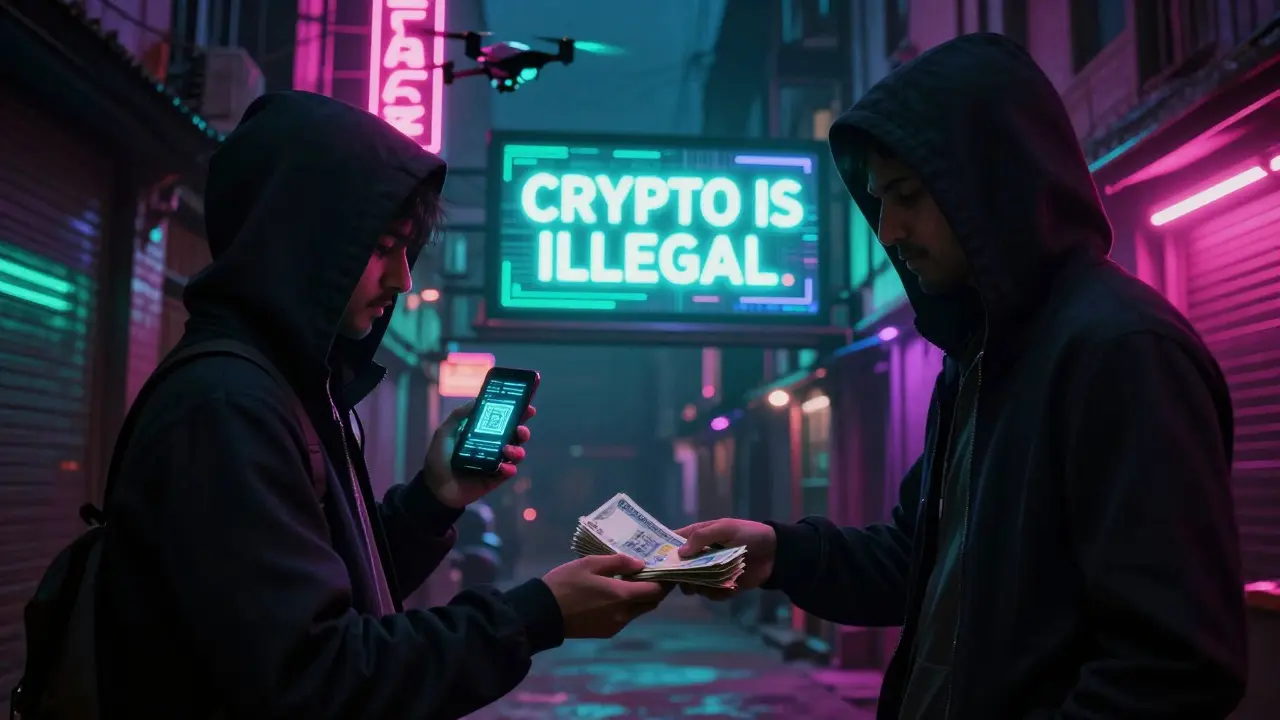
What You Can Do (If You’re in Nepal)
If you’re in Nepal and you hold crypto, your options are limited:- Do nothing - Keep your crypto locked in a cold wallet, never use it, never tell anyone. Hope it stays hidden.
- Sell it illegally - Risk arrest, seizure, and jail. Not recommended.
- Move it out - Transfer crypto to someone abroad. But if you’re caught transferring it, you’re still guilty.
- Convert it to cash and spend it - Still illegal. Cash transactions above 50,000 NPR are reported to authorities.
What the Future Holds
There’s no sign Nepal will change its stance. The central bank has issued public warnings every year since 2021. No lawmakers have proposed legalization. No court has challenged the ban. The government’s message is clear: crypto is not a financial innovation. It’s a threat. And threats are eliminated-not regulated. If you’re thinking of moving to Nepal and plan to trade crypto, don’t. If you’re already here and holding crypto, act now. The longer you wait, the harder it gets to get out without losing everything.Frequently Asked Questions
Is it illegal to own Bitcoin in Nepal?
Yes. Owning, holding, or storing any cryptocurrency-including Bitcoin, Ethereum, or stablecoins-is illegal under Nepal’s Muluki Criminal Code Act 2017. Even having crypto in a wallet on your phone or hardware device counts as a violation.
Can the government take my house if I used crypto to buy it?
Yes. If authorities determine that funds used to purchase property came from cryptocurrency, they can seize the property under anti-money laundering laws. There’s no requirement to prove the crypto was used for illegal purposes-just that it was involved in the transaction.
What happens if I transfer crypto out of Nepal?
Transferring crypto out of Nepal doesn’t make it legal. If you’re caught sending crypto from a Nepali IP address or bank account, you can still be charged with violating financial laws. The act of transferring is considered part of the illegal activity.
Can I be arrested for just talking about crypto?
Not just for talking. But if you’re advising others on how to buy, trade, or store crypto, or if you’re promoting crypto platforms, you can be charged with facilitating illegal activity. Social media posts, group chats, or YouTube videos about crypto have led to arrests in Nepal.
Are there any legal crypto exchanges in Nepal?
No. There are zero legal crypto exchanges in Nepal. All exchanges operating in the country are banned. Even peer-to-peer trading apps like Paxful or LocalBitcoins are blocked and considered illegal. Any platform that allows crypto trading is subject to shutdown and prosecution.
What if I inherited crypto from someone abroad?
Inheritance doesn’t make it legal. If you receive crypto from overseas, you must declare it to authorities-but there’s no legal way to do so. Possessing it without authorization is still a crime. Many people in this situation choose to donate or destroy the crypto to avoid prosecution.
Can I use blockchain technology legally in Nepal?
Yes-but only if no cryptocurrency is involved. Blockchain for supply chain tracking, land records, or medical data is allowed as long as no tokens, coins, or digital assets are created or traded. The technology itself isn’t banned-only the financial use of it.
Comments
21 Comments
Caitlin Colwell
So they just take your stuff and call it a day? No trial? No judge? Just cops with a clipboard and a hunger for your laptop?
That’s not law. That’s feudalism with Wi-Fi.
Charlotte Parker
Let me get this straight - Nepal bans crypto because it fears losing control over money, but they’re fine with a system where the state can seize your entire life over a digital file?
That’s not economic policy. That’s authoritarianism dressed up as financial prudence. They’re not protecting the rupee - they’re protecting their own power.
LeeAnn Herker
Oh wow, Nepal’s finally doing something right. Crypto is a scam run by tech bros in hoodies who think they’re Satoshi. The government’s not being oppressive - they’re being smart.
Let the Americans burn their 401(k)s on Dogecoin. Nepal’s keeping its people safe from financial snake oil.
Jacob Clark
Wait… so if I buy a car with Bitcoin… they take the car? And if I mine 0.1 BTC on my dorm PC… I go to jail? And if I TALK about crypto… I’m an accomplice? And if I INHERIT it… I’m STILL guilty??
Are we sure this isn’t a dystopian novel? Because I swear I just read the plot summary of ‘The Hunger Games: Crypto Edition’.
Rahul Sharma
Dear friends, Nepal has a very serious situation. In our country, many people do not understand digital money. They think it is magic. So government must protect them. This is not punishment - this is education.
Also, blockchain without crypto is good. Like paper without ink. Still paper. Still useful.
🙏
Paul Johnson
you think this is bad wait till you see what the feds do in the usa
they dont even need a warrant anymore just say 'suspicion' and boom your bank account is gone
theyre just slower about it thats all
Michael Richardson
Nepal’s right. Crypto is for losers who can’t handle real money.
Respect the rupee. Or get seized.
Andy Schichter
So let me get this straight - the government’s so afraid of crypto that they’ll ruin your life over a 50-dollar wallet… but they’re cool with corruption, bribery, and 70% of the population living on less than $3 a day?
Wow. What a priority.
Mollie Williams
I wonder what it feels like to live in a country where your right to control your own wealth is seen as a threat.
Not just your money - your autonomy, your trust in technology, your belief that you can build something outside the system.
They’re not banning crypto.
They’re banning hope.
Tiffani Frey
It’s fascinating how Nepal treats blockchain as a dangerous tool, yet allows its use for land records and medical data - as long as no coins are involved.
So the technology is fine… unless it’s used for freedom?
That’s not policy. That’s control disguised as caution.
Valencia Adell
Let’s be real - this isn’t about financial stability. It’s about power.
The NRB doesn’t want people to have alternatives. They want you dependent. They want you begging for loans. They want you to need their approval for every rupee.
Crypto doesn’t threaten the economy.
It threatens their monopoly.
Kelley Ramsey
Hey everyone - if you’re holding crypto in Nepal, I know it’s scary, but please don’t panic.
There are safe ways to move forward. Talk to people who’ve been through this. Find communities. You’re not alone.
And if you’re reading this from outside Nepal - share this. Help raise awareness.
We can’t let silence be the price of freedom.
Emily Hipps
They’re not just banning crypto - they’re banning the idea that you can be your own bank.
And that’s the real crime here.
Not the blockchain.
Not the wallet.
The fear.
Jessie X
they take your car for bitcoin
but they let politicians steal millions
the math dont add up
Kip Metcalf
Man, I used to think the U.S. was bad with asset seizures…
But this? This is next level.
At least here you get a lawyer. In Nepal? You get a locked door and a seized laptop.
That’s not justice. That’s a warning.
Natalie Kershaw
Look - I get the fear. But banning tech because it’s misunderstood is like banning cars because people drive drunk.
Solution? Educate. Regulate. Don’t erase.
They’re not protecting the people. They’re protecting the system - even if the system is broken.
Jon Martín
Imagine being told you can’t own a digital key to your own wealth…
Then imagine being told your house, your car, your phone - all of it - belongs to the state if they suspect you used it.
This isn’t law.
This is a cult.
And crypto is the heresy.
Dennis Mbuthia
Let me explain something to you, okay? Nepal is not some backward country - they’re one of the few places left that still have common sense. Crypto is a Ponzi scheme wrapped in blockchain hype. It’s not money. It’s not wealth. It’s digital glitter.
And you think the government should let people gamble with their life savings? No. They’re doing the right thing. They’re protecting the poor from predators in hoodies with fancy websites.
So stop crying about your Bitcoin. Go get a job. Pay taxes. Live like a real human being.
Calen Adams
Here’s the real issue: Nepal’s ban is a symptom, not the disease.
The disease is centralized control over money. The ban is just the symptom.
Crypto isn’t the enemy - it’s the antidote.
And the NRB knows it.
That’s why they’re terrified.
They don’t want you to have alternatives.
They want you to need them.
Krista Hoefle
so nepal banned crypto... and now im supposed to feel bad for them?
lol
theyre the ones who think a 12k btc wallet is a crime
not the ones who stole the country's budget
Sabbra Ziro
There’s a quiet courage in holding crypto in Nepal - not because you believe in it, but because you believe in something beyond what the state allows.
That’s not illegal.
That’s human.
Write a comment