


You hear about crypto airdrops constantly, but most turn out to be scams or empty promises. You want to know if the BlockSwap Network StakeHouse campaign is real and how you can actually get your hands on some rewards. We are deep into the crypto era, yet finding reliable information on specific projects remains a headache. If you are hunting for details on the CBSN token distribution or the rumored StakeHouse NFT airdrop, you need clarity before risking your wallet.
This guide cuts through the noise. We look at the official project structure, the verified history of distributions, and exactly what you need to do to stay safe. Let’s get straight into what BlockSwap has offered so far and what is currently happening.
Understanding BlockSwap Network and Its Infrastructure
Before worrying about free tokens, you need to know what you are signing up for. BlockSwap Network is a permissionless web3 infrastructure layer designed for multichain composable ETH and modular blockspace. It launched its native CBSN token back in April 2021 during a Token Generation Event. Since then, the goal has remained focused on public benefit infrastructure for the Ethereum Proof of Stake ecosystem.
The project aims to onboard everyday users to Proof of Stake chains by providing stable yield. They are trying to connect DeFi with the outside world, making things less intimidating for regular people. Their most notable product is the StakeHouse LSD Networks, which they describe as a revolutionary decentralized liquid staking platform. This means you can stake ETH and still have liquidity available for other transactions, unlike traditional locking mechanisms.
Infrastructure matters when evaluating an airdrop. If the protocol behind the token is solid, the chances of legitimate rewards increase significantly. BlockSwap has successfully raised $7 million across four funding rounds, including private rounds and token launch phases. This financial backing suggests longevity, even if trading activity on major exchanges has been sparse recently.
The Reality of StakeHouse NFT Distributions
Now, let’s talk about the headline item: the airdrop itself. There is a lot of confusion circulating about whether there is an NFT drop versus a token drop. Research shows that BlockSwap Network has conducted campaigns involving prize pools worth around $2,500 in cBSN tokens specifically inviting StakeHouse CommunityNet participants. However, hard data on specific “StakeHouse NFT airdrops” is thinner than expected.
Type
Status
Requirement
cBSN Token Pool
Completed/Past Campaigns
CommunityNet Participation
SHB Batch Minting
Active Protocol Testing
Ethereum Deposit Simulation
NFT Drops
No Official Confirmation
Watch Official Announcements
The distinction is critical. While there were campaigns offering coins valued at approximately $0 USD through ICOmarks, current sources indicate no specific information is available regarding upcoming large-scale NFT airdrops for Stakehouse alone. Project announcements remain the primary source for such updates. Relying on unverified third-party sites for claims about NFT collections is risky. Stick to the official communication channels to avoid wasting gas fees on nothing.
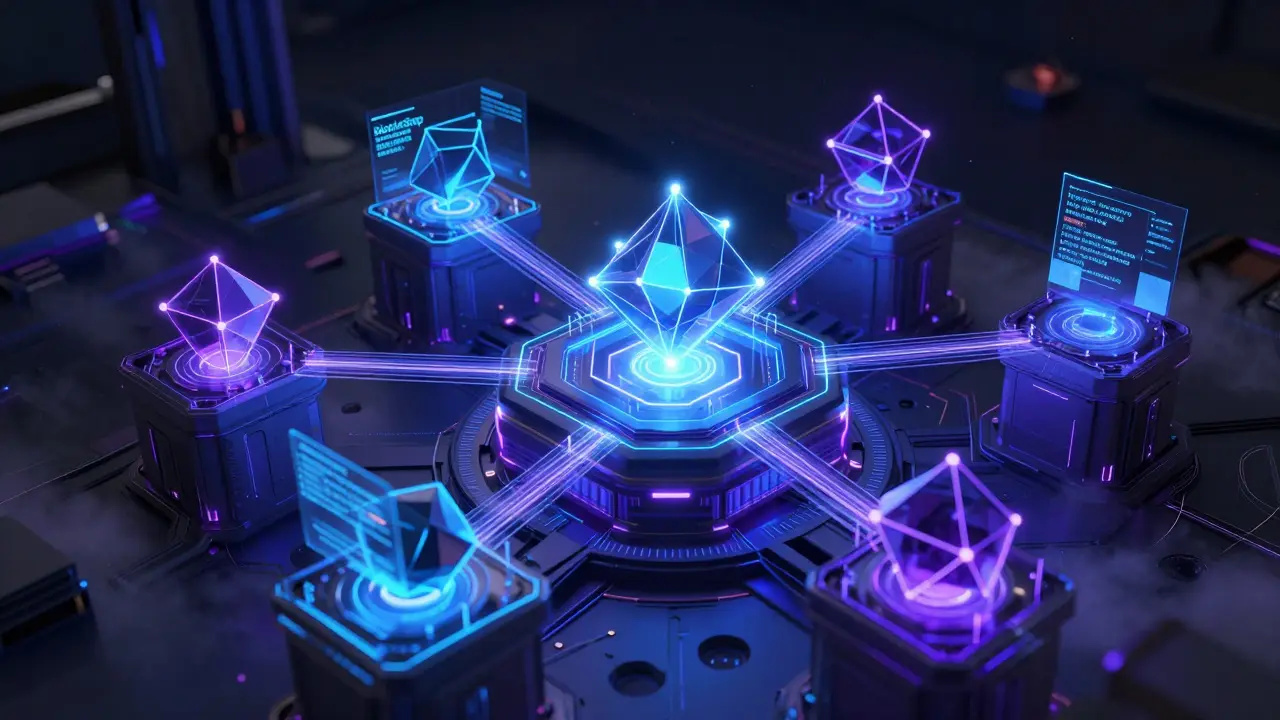
However, the ecosystem does feature StakeHouse Batch (SHB) tokens, which are batch minter tokens with native yield. These are used within the Stakehouse representing 32ETH deposit simulations. They function as part of the Blockswap protocol's market fit exercise. While these aren’t standard NFTs in the visual art sense, they act as access keys or receipts for certain staking activities. Users utilize SHB tokens to mint batches in the CommunityNet.

How to Participate in the Ecosystem
If you want to position yourself for future rewards, simply waiting for an email isn't enough. You need to interact with the protocol. BlockSwap’s tech centers around a smart contract suite that brings automated coordination on Ethereum for staked ETH2 liquidity accessible through ERC20 tokens trustlessly. Here is how you engage meaningfully:
- Join StakeHouse Protocol: You can participate by staking ETH through the Stakehouse protocol either as solo stakers or by joining staking pools. This demonstrates real usage of the network.
- Use OpenSaver: BlockSwap’s flagship product, OpenSaver, represents a Universal Basic Saving mechanism. It enables anyone to earn 7% USD yield from their native currency. Using this tool marks you as an active user of their infrastructure.
- Monitor CommunityNet: Since CommunityNet participants have been invited to previous prize pools, active engagement here is key. This involves stress-testing contracts in real-time environments.
- Check Wallet Activity: Ensure your interactions trigger events that protocols track. Passive holding rarely qualifies for “active user” airdrops.
Developers can also get involved by utilizing provided SDKs and tools to build applications on the Stakehouse ecosystem. If you are building something that integrates with their stack, that creates a higher tier of relationship with the project team, which often translates to better visibility during distribution periods.
Security Checks and Safety Measures
In the crypto space, excitement often leads to oversight regarding security. The BlockSwap protocol acknowledges standard DeFi risks including smart contract vulnerabilities and market volatility. They mitigate these through rigorous audits. Specifically, multiple audits and formal verifications were conducted by reputable firms including Halborn, Solidified, Runtime Verification, and Certora. This ensures protocol security and reliability to a high degree.
When chasing an airdrop, always verify the contract address. The CBSN token operates on Ethereum with the contract address starting with 0x7d4B...F6B25B. Double-check this against official documentation. Never share your seed phrase, and never sign transactions that look like approvals for unknown contracts just because a website claims it unlocks your airdrop.
Audits aren’t magic, but they reduce risk significantly. The commitment to transparency and user education is central to their mission. If you see messages claiming an urgent NFT drop requiring immediate connection, pause. Legitimate airdrops give time and instructions through verified social channels. The project maintains active development with ongoing CommunityNet operations, so keep those channels bookmarked.
Tokenomics and Market Presence
To understand the potential value of any reward, look at the underlying asset. The CBSN token structure shows a total supply of 500 million tokens initially, though the maximum supply stands at 5 billion tokens. Currently, CoinMarketCap data indicates zero circulating supply, which is unusual for a post-2021 launch. The TGE distribution was implemented with no lock-up period, indicating immediate token availability upon launch theoretically.
This discrepancy between theoretical supply and visible market presence needs watching. Current market presence shows limited trading activity despite the completed TGE. The project continues operating within the Ethereum staking infrastructure space. Positioning itself as infrastructure for multichain ETH composability and modular blockspace solutions keeps them in the technical conversation even if retail trading volume is low.
The profile score of the token sits at 44% on major tracking platforms. This suggests a niche but functional project. When evaluating an airdrop’s future value, consider that utility trumps hype. If the StakeHouse LSD Networks grow in adoption, the rewards tied to early support could become more valuable as the network scales.
Troubleshooting Your Claim Process
You might run into issues where your eligible actions aren’t showing up on a dashboard. Usually, this stems from wallet mismatch or timing delays. First, check if you used the exact wallet connected during the specific snapshot window for CommunityNet participation. Sometimes users switch wallets mid-way and lose credit.
Another common hurdle is transaction failures due to gas prices. Ethereum networks can get congested. Ensure you have sufficient ETH for gas fees when interacting with the smart contract suite to mint or claim anything. If a site asks for payment to claim a free airdrop, that is almost certainly a scam. Legitimate airdrops cover the cost themselves or require minimal gas for transfer, never upfront payment.
Finally, keep records of your transactions. Screenshots of successful staking sessions or batch minting events help if you need to appeal for inclusion later. While the process is mostly automated, having proof of interaction helps resolve disputes with customer support teams or governance forums.
Is the BlockSwap NFT airdrop officially confirmed?
Currently, there is no specific official confirmation regarding an upcoming NFT collection airdrop. Most recent campaigns focused on cBSN token prize pools for CommunityNet participants. Always wait for official announcements from BlockSwap channels.
Can I still join the StakeHouse program in 2026?
Yes, the protocol is active. You can stake ETH through the Stakehouse protocol as solo stakers or join pools. Active participation in CommunityNet stress tests increases chances for future incentives.
What is the minimum amount of ETH required to participate?
There is no strict minimum for using OpenSaver or accessing the protocol tools, but simulating a standard stake often involves understanding 32 ETH deposit concepts represented by SHB tokens.
Are the CBSN tokens tradable right now?
Market data shows very limited trading activity and zero circulating supply on major trackers. Availability may depend on exchange listings or secondary markets not fully populated yet.
How do I verify a BlockSwap campaign is legitimate?
Check the contract address against the official docs (starts with 0x7d4B...). Look for security audits by firms like Halborn or Certora. Never pay to claim an airdrop.
Comments
24 Comments
Lisa Walton
This whole thing smells like a pump and dump scheme disguised as infrastructure innovation.
Disha Patil
I am so worried someone is going to steal my funds if I interact with their smart contracts though it does look fun.
Sean Carr
You can actually verify the contract address on the official docs to stay safe while participating.
Just make sure you never share your seed phrase with anyone asking for help.
Joy Crawford
Oh my god I feel so ignored when projects ignore retail investors like this :(
I hope i dont lose money though :)
Zackary Hogeboom
Using OpenSaver to earn yield definitely helps show activity on the protocol for potential rewards later.
Leah Lara
Boring stuff again.
Justin Smith
The distinction between SHB batch minter tokens and standard NFTs is often misunderstood by casual observers who lack technical depth.
Audits by firms like Halborn provide necessary assurance regarding the security architecture underlying these mechanisms.
Colin Finch
We are building castles on sand when we chase yields that defy traditional economic principles of risk versus return.
Shubham Maurya
Scam alert 🚨 run away everyone don't fall for these fake promises 😤🙄
Katrina Tate
They claim zero circulating supply which usually indicates something is fundamentally wrong with distribution mechanics.
Liam Robertson
Just stick to the official links provided in the documentation to ensure you are transacting on the correct addresses.
Justin Garcia
Stop enabling these grifters and move your assets elsewhere immediately.
athalia georgina
why do u peple trust this garbage i knoo somthing is up wit the tokenomikss ughhh just saying lollll
joshua kutcher
Everyone deserves a chance to understand how staking pools work without getting scared by complex terminology or threats of loss.
Ashley Stump
Deep state crypto cartel controlling the supply is obvious when you look at the locked tokens and exchange listings.
Callis MacEwan
The modular blockspace solution represents a significant paradigm shift in ETH composability if the execution layer scales correctly under load.
Alex Kuzmenko
I tried to conecct my wallet buut it failed so mabye its just gas fees being to high right now fyi
Alex Lo
Look at the bigger picture of what liquid staking actually enables for DeFi protocols down the road and realize the value isn't just immediate coin drops.
If you engage consistently through CommunityNet you are likely to be tracked by the snapshot algorithms regardless of whether it is visible today or tomorrow.
There is a lot of noise on twitter but checking the audit reports gives real clarity on risk exposure instead of hype cycles.
People panic sell too quickly when price dips slightly even though the utility of holding SHB tokens provides yield on deposits directly.
Gas costs might seem annoying but paying network fees proves you are a genuine user rather than a bot farm running dummy wallets.
Security teams from Halborn did check the code so trusting their word is better than ignoring professional verifications completely.
Many projects fail because they lack actual adoption metrics and here we see active development cycles despite low retail volume.
Always double check the contract hash before signing anything to prevent phishing attacks targeting newbies in the space.
Risk management is essential when dealing with early stage infrastructure tokens on volatile chains like Ethereum mainnet.
Don't forget that past performance of funding rounds doesn't guarantee future returns but it shows some investor confidence remains.
Keep watching official channels because announcements often drop late at night for time zone reasons and people miss them.
Patience pays off more than FOMO buying during the initial launch phases of these niche protocols.
Yield farming strategies require constant monitoring to capture optimal rates during different market conditions effectively.
Stay safe and secure your keys offline because software wallets get compromised frequently by browser extensions lately.
This ecosystem has tools worth learning even if you never participate in another airdrop campaign ever again in your life.
Lisa Miller
I love how positive the community seems despite the confusion about token availability on exchanges right now.
Beverly Menezes
Just take small steps and learn how the protocol works before putting all your savings into one place.
Michael Nadeau
The philosophical implication of permissionless infrastructure suggests we are moving towards a new era of decentralized identity ownership.
Ronald Siggy
You got this if you read the whitepaper and verify everything yourself before taking action on claims made by third parties.
Shaira Vargas
My heart breaks every time I see someone scammed on these things so please be careful out there friends.
Samson Abraham
Verify contract address always check audits do not pay for free items remember safety first
Write a comment