


The Cratos (CRTS) airdrop was never meant to be a get-rich-quick scheme. It was a quiet, calculated move by a small blockchain team to build a real community - and it worked. Over 5,000 people got 500 CRTS tokens each, totaling 2.5 million tokens distributed in July 2024. That’s not a massive number compared to big-name airdrops, but for Cratos, it was everything. This wasn’t about hype. It was about giving people a real stake in something new.
How the Cratos Airdrop Actually Worked
There were no complex tasks. No need to bridge wallets, stake tokens, or fill out long forms. Cratos didn’t ask you to do anything technical. They just wanted you to be active. Follow their Twitter. Join their Discord. Share the news. Use the hashtag #CRATOS2024. That was it. The team picked 5,000 winners based on who showed up, who talked, who engaged. No bots. No fake accounts. They filtered for real people. Each winner got exactly 500 CRTS tokens. At the time, each token was worth about $0.00029888. So each person walked away with roughly $0.15. Doesn’t sound like much, right? But here’s the thing - it wasn’t about the money then. It was about being part of something before it blew up. The airdrop dropped on July 5, 2024, at 8:00 AM UTC+9. That timing wasn’t random. It targeted Asia, where crypto adoption was growing fast. Cratos knew where their audience was. They didn’t try to be global overnight. They focused, delivered, and moved on.What Happened After the Airdrop
The market reacted fast. Within hours of the announcement, CRTS started climbing. It jumped 18.64% in a single day. Two days later, it was up 18.47%. By the end of the first week, the token had surged nearly 37% from its pre-airdrop price. Trading volume hit $29.6 million in a single day. That’s a lot for a project with a $18.7 million market cap. Why? Because people who got the tokens started talking. They weren’t just holding - they were sharing, trading, asking questions. The airdrop didn’t just give out tokens. It gave out conversation. And that’s what drove the price. Cratos didn’t panic. They didn’t dump their team tokens. They didn’t make false promises. They just let the community do its thing. And it worked. The token didn’t crash after the airdrop. It held steady. That’s rare. Most airdrops see a spike and then a freefall. Cratos avoided that.Why Cratos Was Different
Most airdrops in 2024 were trying to be the next Ethena or Hyperliquid. They offered hundreds of thousands of dollars in tokens. They ran multi-phase campaigns. They partnered with big VCs. Cratos did none of that. They didn’t have $47 million in funding like RedotPay. They didn’t have Andreessen Horowitz backing them like Espresso. They had a small team, a clear goal, and a community that showed up. That’s what made them stand out. They didn’t try to outspend anyone. They out-engaged. They didn’t need 100,000 participants. They only needed 5,000 real ones. And they got them. Compare that to Midnight Network’s airdrop, which had 60-day claim windows, scavenger hunts, and four-year vesting schedules. Cratos said: “Here’s your tokens. Go use them.” Simple. Direct. Human.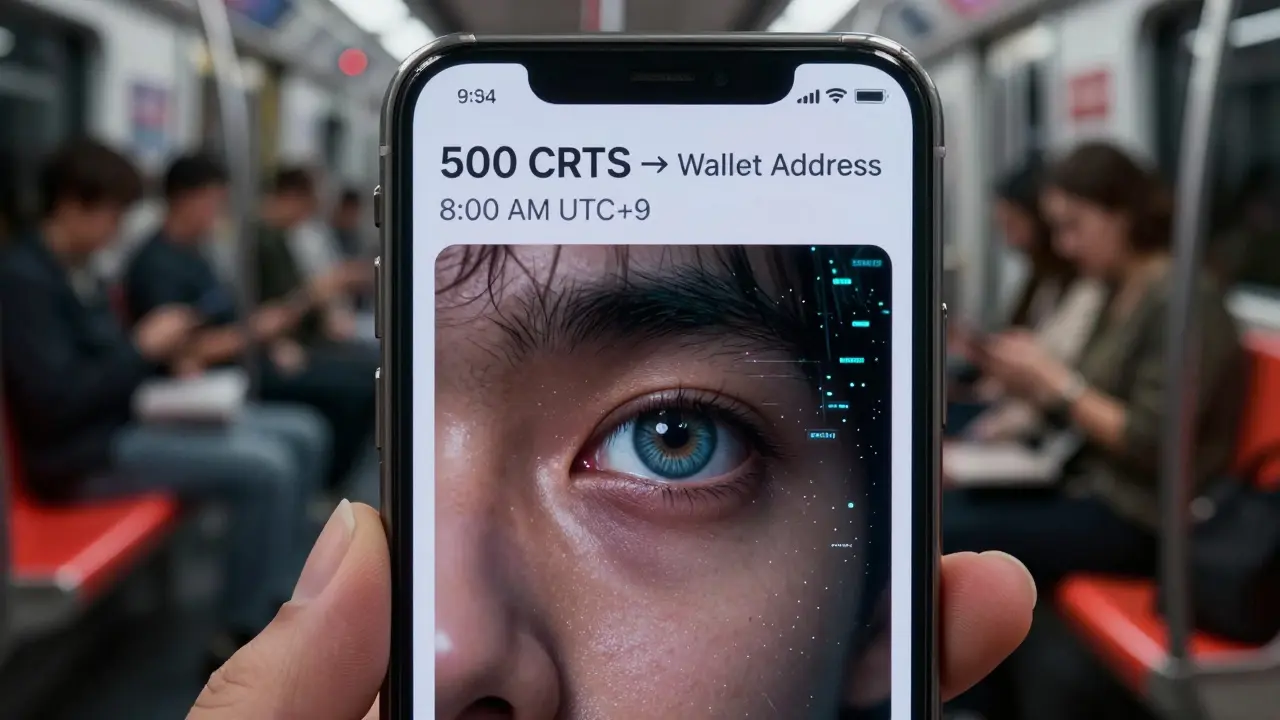
The Tokenomics Behind the Airdrop
CRTS had a total circulating supply of 62.8 billion tokens. That’s a huge number. But the price stayed low - around 0.0003 USD. That’s intentional. Low price means more people can hold it. More people can feel like they own a piece of the project. The airdrop added 2.5 million tokens to circulation. That’s just 0.004% of the total supply. Tiny. No inflation risk. No dilution. The market absorbed it without blinking. The project’s market cap hovered around $18.7 million. Not a giant. Not a joke. A real mid-tier project with traction. And it stayed there because the team didn’t overpromise. They didn’t flood the market. They didn’t chase pumps.Who Won the Airdrop?
We don’t know names. We don’t know wallets. But we know who they were. They were the people who replied to tweets. Who asked questions in Discord. Who shared the airdrop with friends. Who didn’t wait for a guide on Reddit. Who just jumped in. Some of them cashed out right away. Others held. A few even started building tools for the Cratos ecosystem. That’s the real win. The airdrop didn’t just hand out tokens. It found early believers. You won’t find a list of winners anywhere. Cratos didn’t publish it. They didn’t need to. The proof was in the price. The proof was in the volume. The proof was in the people who kept talking about it months later.
Where Is CRTS Today?
As of January 2026, the Cratos airdrop is over. The tokens are distributed. The hype is gone. But the project is still alive. CRTS isn’t trading like it did in July 2024. The price has settled. That’s normal. Most airdrops don’t keep their initial spike. But Cratos didn’t die either. The team kept working. The community stayed small but steady. There’s no big marketing push. No influencer campaigns. Just updates. Bug fixes. Minor feature drops. It’s not the next Bitcoin. It’s not even the next Solana. But it’s something rarer: a project that didn’t burn out. It didn’t chase the next trend. It stayed true to its original goal - build a community, not a bubble.What You Can Learn From It
If you’re looking for the next airdrop, don’t chase the big names. Look for the quiet ones. The ones with no VC logos on their website. The ones that ask you to just show up - not to stake, not to bridge, not to fill out a form. Just to be there. Cratos didn’t need a whitepaper that was 80 pages long. They didn’t need a celebrity endorsement. They didn’t need a $10 million marketing budget. They just needed people who cared enough to click, comment, and share. That’s the real lesson. Airdrops aren’t about the money. They’re about the people. The ones who show up when no one’s watching. If you want to find the next Cratos, don’t look at the price. Look at the chatter. Look at the Discord. Look at who’s asking questions - not just copying and pasting links.Is There Still a Chance to Get CRTS?
No. The airdrop ended on July 5, 2024. The window closed. The tokens were sent. There’s no claim period left. No extension. No second chance. You can still buy CRTS on exchanges that list it, but you’re buying from someone else - not from the airdrop. The original distribution is history. Don’t fall for scams claiming to offer “late CRTS airdrops.” They’re fake. Cratos never announced any follow-up. No official channel is still handing out tokens. If you missed it, you missed it. But you can still learn from it.Was the Cratos airdrop real?
Yes, the Cratos (CRTS) airdrop was real. It was officially announced and executed by the Cratos team in July 2024. Over 5,000 participants received 500 CRTS tokens each, totaling 2.5 million tokens distributed. The event was tracked on blockchain explorers, and the token price reacted immediately, confirming its legitimacy.
How many CRTS tokens did each winner get?
Each of the 5,000 winners received exactly 500 CRTS tokens. This was a fixed amount across all participants. The total airdrop pool was 2.5 million CRTS tokens, and no one got more or less than that.
What was the value of the Cratos airdrop at the time?
At the time of distribution in July 2024, each CRTS token was worth approximately $0.00029888. That meant each winner received about $0.149 worth of tokens. While small in dollar terms, the real value came from the potential upside, which saw the token rise nearly 37% in the following week.
Did Cratos require KYC for the airdrop?
No, Cratos did not require KYC (Know Your Customer) verification for the airdrop. Participation was based solely on community activity - following social media, engaging in Discord, and using the official hashtag. No personal information was collected.
Can I still claim CRTS tokens from the airdrop?
No, the airdrop claim period ended on July 5, 2024, at 8:00 AM UTC+9. All eligible winners received their tokens by that date. There is no ongoing claim window, and no official extensions have been announced. Any site claiming to offer late claims is a scam.
Why did the CRTS price spike after the airdrop?
The price spiked because the airdrop created real demand. People who received tokens started trading them. Community members talked about the project online. The low token price made it easy for many to participate, and the limited supply of winners created a sense of exclusivity. This combination drove trading volume to $29.6 million in a single day and pushed the price up nearly 37% from its pre-airdrop level.
Is Cratos still active today?
Yes, Cratos is still active as of early 2026, though it operates quietly. The team continues to release minor updates and maintain the network. There’s no big marketing push, no influencer campaigns, and no new airdrops. The community remains small but loyal, focused on the long-term vision rather than short-term price moves.
How does Cratos compare to other 2024 airdrops?
Cratos was much smaller than major 2024 airdrops like Ethena or Hyperliquid, which distributed millions in value. But it was more focused. While others used complex multi-phase systems and big VC backing, Cratos kept it simple: reward community engagement. It didn’t try to be the biggest - it tried to be the most genuine.
What happened to the Cratos team after the airdrop?
The Cratos team didn’t disappear or cash out. They stayed quiet, kept building, and avoided the usual post-airdrop hype cycles. There were no major announcements, no token unlocks, and no sudden price pumps. They treated the airdrop as a starting point, not an end goal - and that’s why the project still exists today.
Should I still buy CRTS tokens now?
Buying CRTS now is purely speculative. The airdrop is long over, and the project has no new distribution plans. The token’s value depends entirely on future development, adoption, and market conditions. There’s no guarantee of growth. Only buy if you believe in the long-term vision - not because you’re chasing a past price spike.
Comments
21 Comments
Joseph Pietrasik
cratos? more like crat-oscar lol
Mark Ganim
This isn't an airdrop... it's a quiet revolution. No screaming. No VC noise. Just people showing up. And that's the most radical thing in crypto today. We've forgotten how to be present. We're all chasing the next pump, the next influencer, the next 1000x... but Cratos? It just asked you to breathe. To click. To be human. And that's why it worked.
Nickole Fennell
I'm so mad I didn't join their Discord. I was too busy doomscrolling Elon's latest tweet. Now I feel like I missed the entire point of life.
christal Rodriguez
Community over hype. That's the only lesson here. Everything else is noise.
Aaron Poole
Honestly? This is the blueprint. No KYC. No complex tasks. No 100-page whitepaper. Just real people doing real things. Most projects treat users like ATM machines. Cratos treated them like humans. That's why it lasted. Most airdrops are fireworks. This was a campfire.
Calvin Tucker
The structural integrity of Cratos’ tokenomics is noteworthy. A circulating supply of 62.8 billion with a mere 0.004% dilution via airdrop demonstrates an understanding of monetary velocity and psychological anchoring. The low price point isn’t a bug-it’s a feature designed for mass psychological inclusion.
Gavin Francis
This is why I still believe in crypto! 🙌 No bs. No fluff. Just people showing up. I wish more projects had this kind of soul.
Lori Quarles
If you didn't get in on this, you're not a crypto believer-you're just a spectator. Stop complaining and start building. The quiet ones win. Always.
Rob Duber
I cried when I saw the price jump. Not because I got rich-but because someone finally did it right. No hype. No lies. Just 5,000 souls who showed up when no one was watching. That’s poetry. That’s art. That’s crypto.
Dahlia Nurcahya
I didn't get the airdrop but I still follow their Discord. It's the only crypto space where no one's selling anything. Just people talking about tech, life, and weird memes. It's peaceful. Rare. Beautiful.
Gurpreet Singh
In India, we know what real community means. Not the fake Twitter followers. Not the bots. Real people talking. Cratos got it. That’s why it survived. Most projects here just want your money. Cratos wanted your voice.
Akhil Mathew
I was one of the 5k. Got my 500 CRTS. Sold 200 for rent. Held the rest. Been watching the charts. Still no big moves. Still no drama. Still just the team quietly updating. That’s the real win. Not the price. The patience.
Wayne mutunga
I didn't comment back then. Just quietly joined. Now I check the Discord every morning. It’s like a library. No yelling. No shilling. Just people building. I miss this in crypto.
Andrea Demontis
Let’s consider the sociological implications of this event. The Cratos airdrop didn’t merely distribute tokens-it redistributed epistemic authority. Traditional crypto hierarchies, dominated by whales, VCs, and influencer culture, were subverted by a decentralized, meritocratic engagement model. The winners weren’t chosen by wealth or algorithmic bias but by presence, attention, and authentic participation. This represents a paradigm shift from extractive capitalism to participatory communalism within blockchain ecosystems. The token’s subsequent price stability isn’t a fluke-it’s the emergent property of a community that values continuity over extraction. We’re witnessing the birth of a new crypto ethos: not ‘get rich quick,’ but ‘stay true slow.’
Devyn Ranere-Carleton
wait so u just followed twitter and that was it?? i thought u had to bridge or something lol
Dylan Morrison
this is why i still believe. 🌱 no hype. no bs. just people. i hope more projects do this. we need more campfires, not fireworks.
Gustavo Gonzalez
Let’s be real. The 37% spike was just FOMO from people who didn’t understand tokenomics. CRTS has no utility. No roadmap. No team transparency. The whole thing was a vanity project dressed up as ‘authenticity.’ Don’t confuse quietness with substance. This isn’t a revolution-it’s a placebo.
Steven Dilla
I still have my CRTS. Not because I think it’ll pump. But because I remember the Discord. The guy who shared his grandma’s recipe. The girl who posted her cat. The dev who fixed a bug at 3am and just said ‘fixed.’ That’s the real token. The coin is just the wrapper.
Kevin Thomas
If you're looking for the next Cratos, don't look at the price. Look at the people. Who's still talking after the hype dies? Who's still helping others? That's your signal. This isn't about tokens. It's about who shows up.
mary irons
I’m not saying it’s fake... but what if the 5,000 winners were all bots? What if the Discord was run by the same team? What if the ‘community’ was just a script? I’ve seen this before. They build the illusion of authenticity to pump and dump. And now they’re pretending it’s deep. It’s not. It’s a mirror. And we’re all staring at our own greed.
Robert Mills
Do it again. Just show up. That’s it.
Write a comment