

If you're looking for a crypto exchange to trade Bitcoin or Ethereum, DOBI Exchange is not one you should consider. Launched in May 2018 by a Shenzhen-based company, DOBI Exchange (also called DOBI Trade) operates as a crypto-only platform-meaning you can't deposit dollars, euros, or any fiat currency. You must already own cryptocurrency from another exchange just to get started. That alone makes it a bad fit for beginners. But even experienced traders have strong reasons to walk away.
It Doesn't Accept Fiat-So Who Is It For?
Most major exchanges like Binance, Coinbase, or Kraken let you buy crypto directly with your bank account. DOBI Exchange doesn't. You can't deposit USD, CAD, EUR, or even CNY. You need to buy Bitcoin or Ethereum elsewhere, send it over, and only then can you trade. That adds a layer of complexity and cost. Why would you do that? The answer, based on user behavior and industry analysis, is: you wouldn't.The platform's crypto-only model isn't a feature-it's a barrier. It excludes over 90% of new crypto users. And for those who already hold crypto? There's little incentive to move their assets here. The fees are punishing, the selection is tiny, and the platform lacks transparency.
Withdrawal Fees Are Wildly Out of Line
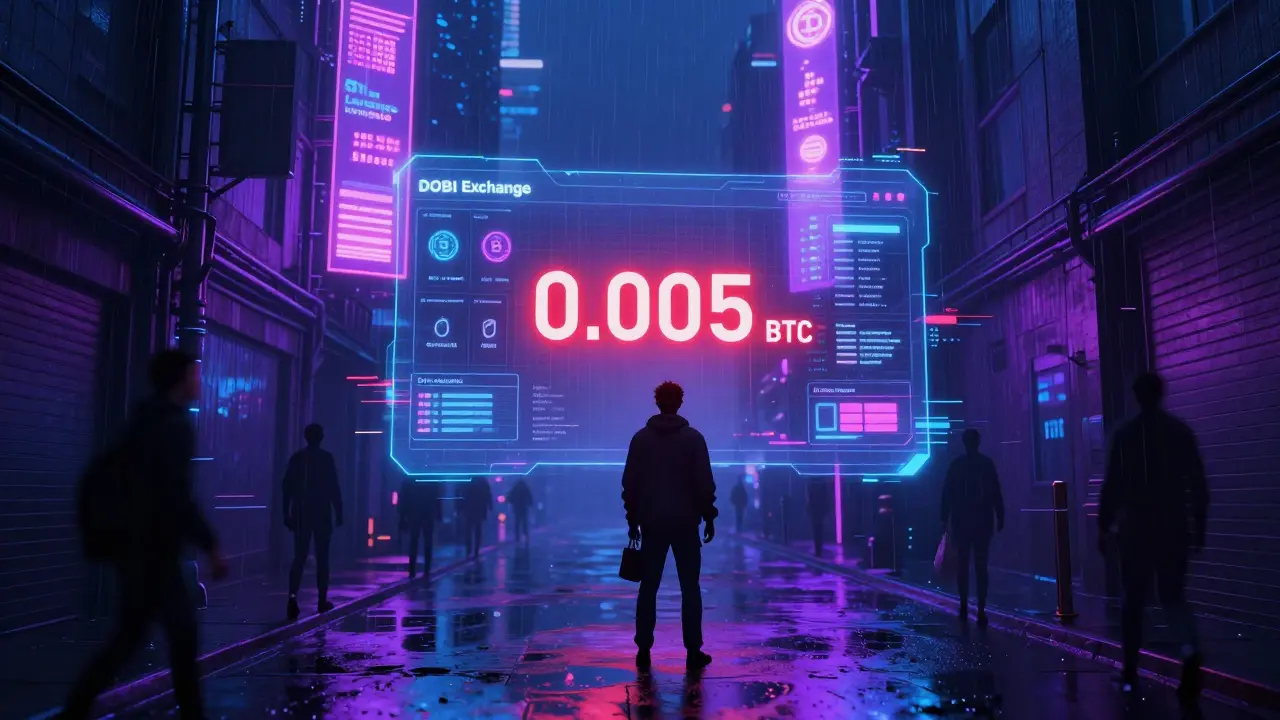
DOBI Exchange charges 0.005 BTC to withdraw Bitcoin. That’s about $150 to $300, depending on Bitcoin’s price. Compare that to the industry standard: 0.0005 BTC, or roughly $15-$30. DOBI’s fee is ten times higher. Cryptowisser called it "nothing short of a robbery."Imagine you deposited 0.1 BTC to trade. You make a small profit, and now want to pull out 0.05 BTC. Your withdrawal fee alone would eat up over 30% of your profit. That’s not a fee-it’s a trap. This structure forces users to hold their assets on the platform longer than they want, increasing risk without offering any benefit.
Even worse, this fee applies regardless of how much you withdraw. Whether you’re pulling out 0.01 BTC or 1 BTC, you pay the same 0.005 BTC. That’s not how fees work in legitimate markets. It’s designed to discourage withdrawals, not encourage trading.
Trading Fees? Flat, But Still Problematic
DOBI Exchange uses a flat fee model: 0.10% for trades against BTC, ETH, or DOB (its native token). Trades against newer coins cost 0.30%. That sounds reasonable-until you realize it’s not a maker-taker model. Most exchanges reward liquidity providers (makers) with lower fees or even rebates. DOBI doesn’t. Everyone pays the same. That removes incentive to add depth to the order book.Plus, the trading pairs are extremely limited. The platform lists maybe 20-30 coins at most. Compare that to Binance’s 1,000+ or Kraken’s 500+. You won’t find popular tokens like Solana, Polygon, or Arbitrum. Even major altcoins are missing. The only notable listing was TaTaTu, a coin tied to Johnny Depp in 2018. That was a one-off PR stunt, not a sign of serious market integration.
No Regulation. No Trust. No Transparency
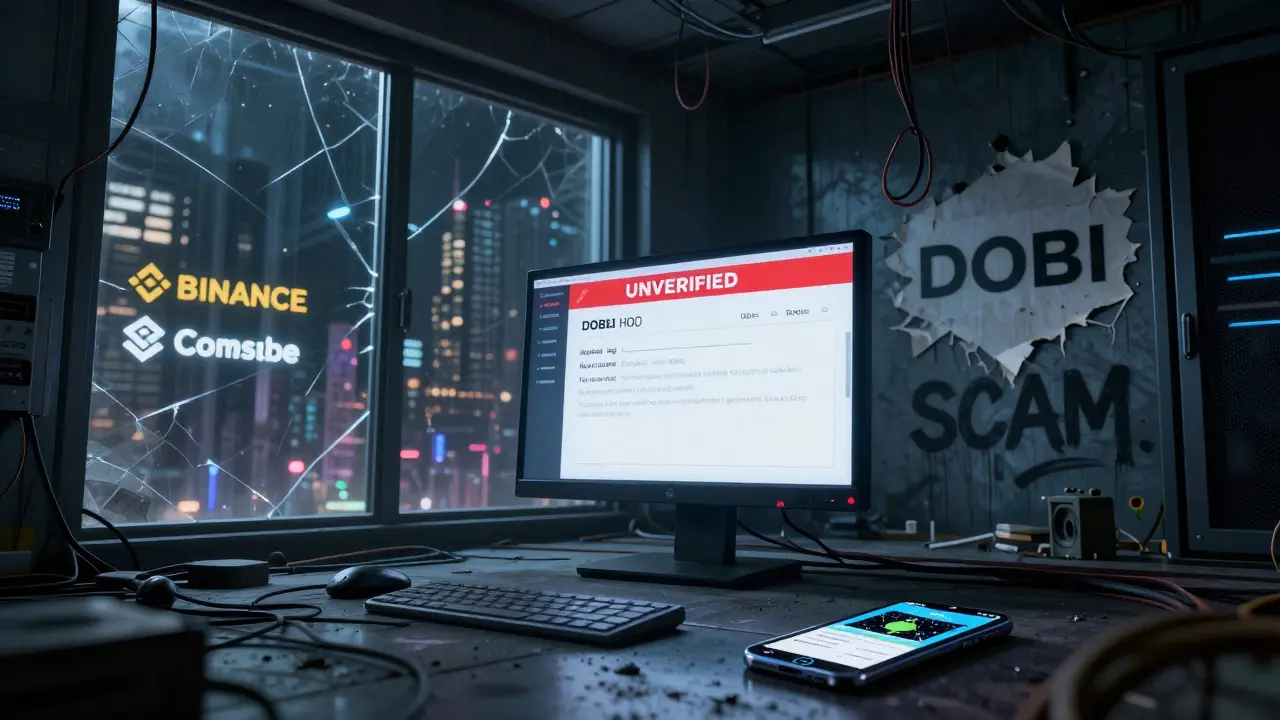
DOBI Exchange has no valid regulatory license. WikiBit classifies it as "Suspicious Regulatory License" with a "Medium potential risk" rating. Scamadviser gives it a 28/100-among the lowest scores for any crypto platform. That’s not a typo. It’s a warning.Its parent company operates in China, a country that banned crypto exchanges in 2021. While DOBI claims to operate offshore, there’s zero public information about its legal structure, ownership, or compliance team. No KYC policy is clearly explained. No terms of service are easily accessible. No customer support phone number or live chat is advertised. You’re dealing with a black box.
Trading Volume? Probably Fake
DOBI Exchange claims to be the 5th largest crypto exchange by daily volume. That’s absurd. CoinMarketCap doesn’t even track its data. It’s labeled as an "Untracked Listing," meaning its reported numbers can’t be verified. Industry experts believe the volume is manufactured through wash trading-where bots buy and sell the same coins back and forth to inflate numbers.Why does this matter? Because real volume means real liquidity. If no one is genuinely trading, your orders won’t fill. You’ll get stuck with assets you can’t sell. And if the exchange shuts down tomorrow? Good luck recovering your funds.
User Reviews? Zero. Community? Gone
WikiBit shows 0 user ratings for DOBI Exchange. CoinMarketCap lists its markets as "under maintenance" with "No data." There are no active Reddit threads, no Twitter engagement, no Telegram group with meaningful activity. Even in 2026, after six years of operation, the platform has zero community trust.That’s not normal. Even obscure exchanges have at least a handful of users who post reviews. DOBI doesn’t. That silence speaks louder than any negative review. People aren’t just avoiding it-they’re erasing it from their memory.
What About the DOB Token?
DOBI Exchange has its own token, DOB. It’s used for fee discounts and trading pairs. But here’s the catch: there’s no public roadmap for DOB. No use case beyond the exchange. No burn mechanism. No staking. No liquidity pool data. The token exists only to create the illusion of utility. It’s a classic red flag.When a platform creates a token with no real function, it’s usually a way to pump the price and cash out early investors. DOBI’s tokenomics follow that pattern. No transparency. No audits. No third-party verification.
Why This Matters in 2026
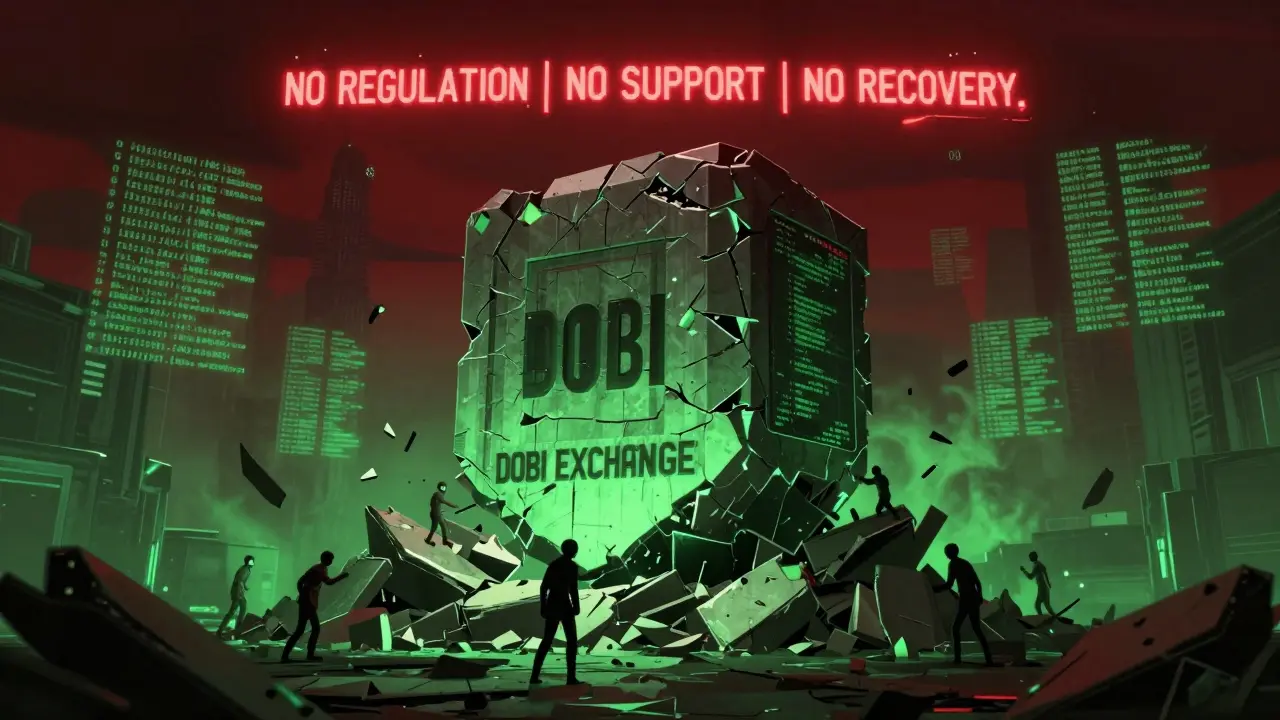
The crypto market has changed since 2018. Exchanges now need regulation, clear fee structures, fiat on-ramps, and public audits. DOBI Exchange does none of these. It’s stuck in the wild west era of crypto-when anyone could launch a site, claim high volumes, and disappear.Today, regulators in the U.S., Canada, EU, and even parts of Asia are cracking down on unlicensed platforms. If DOBI Exchange ever gets targeted, your funds could vanish overnight. There’s no insurance. No legal recourse. No customer support.
What Should You Do Instead?
If you’re new to crypto, use an exchange that accepts fiat: Coinbase, Kraken, or Gemini. They’re regulated, have transparent fees, and let you buy crypto with a credit card. If you’re experienced and want to trade altcoins, go to Binance or KuCoin. They have thousands of tokens, low fees, and real volume.DOBI Exchange offers nothing you can’t get better elsewhere. It’s not a hidden gem. It’s a ghost platform with high fees, fake volume, and zero trust.
Is DOBI Exchange safe to use?
No, DOBI Exchange is not safe. It has no regulatory license, charges extremely high withdrawal fees, and operates with zero transparency. Scamadviser rates it 28/100, and CoinMarketCap doesn’t track its data. There’s no evidence it’s been audited or regulated. If you deposit funds, you risk losing them with no recourse.
Can I deposit fiat currency on DOBI Exchange?
No, DOBI Exchange only accepts cryptocurrency deposits. You must already own Bitcoin, Ethereum, or another supported coin from another exchange before you can trade. This makes it unusable for beginners or anyone who wants to buy crypto directly with cash or bank transfer.
Why are DOBI Exchange’s withdrawal fees so high?
DOBI Exchange charges 0.005 BTC to withdraw Bitcoin, which is ten times higher than the industry standard of 0.0005 BTC. This is likely designed to discourage users from moving funds off the platform, increasing the chance they’ll hold assets there longer. It’s a common tactic used by untrustworthy exchanges to trap user funds.
Does DOBI Exchange have a mobile app?
Yes, DOBI Exchange offers an Android app. However, there’s no iOS version, and the app has no public reviews or ratings on Google Play. The app’s functionality appears limited, and user reports suggest frequent crashes and outdated interfaces. It’s not a reliable tool for active trading.
What cryptocurrencies are listed on DOBI Exchange?
DOBI Exchange lists fewer than 30 coins, mostly obscure tokens. Notable past listings include TaTaTu, tied to Johnny Depp in 2018. Major coins like Solana, Cardano, and Polygon are absent. The selection is too small to be useful for serious traders, and many listed tokens have no real market demand.
Is DOBI Exchange still operational in 2026?
It appears to be, but barely. There’s no recent news, no social media updates, no press releases, and no user engagement. The platform’s website is static, and CoinMarketCap still shows its data as "under maintenance." Experts believe it’s either inactive or operating at minimal capacity, relying on old users who can’t or won’t leave due to high withdrawal fees.


Comments
17 Comments
John Fuller
DOBI is trash. No fiat. High fees. Zero trust. Done.
Lucy Simmonds
I told everyone!!! I said it from day one!!! DOBI is a front for Chinese intelligence!!! They're stealing your coins and sending them to PLA servers!!! They don't even have a website!! It's just a .xyz domain with a fake app!!! And the DOB token?? It's a honeypot!!! I saw a guy in a Reddit thread from 2020 who lost 12 BTC!!! And no one listens!!!
Maggie House
I'm still learning about crypto and this actually helped me avoid a bad spot! I was curious about DOBI because it looked simple, but now I'm glad I didn't sign up. Thanks for the clear breakdown! I'm going with Coinbase for now-feels way safer. 😊
Dana Sikand
The withdrawal fee alone should be a red flag bigger than a neon sign in Times Square. 0.005 BTC? That's not a fee-it's a hostage situation. You deposit, you trade, you make 0.01 BTC profit and suddenly you're paying 30% just to get your own money out? That's not finance. That's extortion wrapped in a crypto logo. And the fact that they don't even track volume? They're not trying to build a platform. They're trying to build a one-way trap. Don't touch it. Ever.
Robert Kromberg
I get why some people still use it. Maybe they're stuck. Maybe they deposited early and can't afford the fee to leave. Or maybe they're holding onto hope. But honestly? It's like living in a house with no door. You can go in. But you can't get out. And that's not a feature. It's a flaw.
Alyssa Herndon
There's something haunting about platforms that just... fade. No drama. No shutdown notice. No user outcry. Just silence. Like everyone woke up one day and decided to forget it existed. That silence is louder than any warning.
Ifeanyi Uche
You think this is bad? Wait till you see how Western exchanges steal your data and sell it to NSA. DOBI at least has honesty in its greed. You want safety? Then stop using the internet. Or better yet-move to North Korea. At least they don't pretend to be transparent.
Shannon Black
The absence of regulatory oversight and the deliberate obfuscation of corporate structure are deeply concerning. One must question the ethical foundations of any financial entity that refuses transparency. This is not innovation. It is evasion.
Richard Cooper
DOBI? More like DOB-NOPE. I tried it once. Lost 0.02 BTC in fees trying to withdraw 0.03. Never again.
Dee Resin
Oh wow. A crypto exchange that charges more to withdraw than you might make trading? That's not a platform. That's a charity... for the owners. Congrats, DOBI. You turned greed into an art form.
Tanvi Atal
They don't even have real volume. Fake listings. Fake tokens. Fake trust. It's all theater. And people still fall for it. Sad.
Sony Sebastian
The fee structure reveals a fundamental misunderstanding of liquidity dynamics. By imposing a flat withdrawal fee regardless of volume, they're violating the principle of marginal cost pricing. This is not a market-it's a rent-seeking monolith. The DOB token is a liquidity sink disguised as utility. This is why retail crypto remains a graveyard.
Brian Lemke
I used to think crypto was all about freedom. Then I met DOBI. Now I know freedom means having options. And DOBI? It’s the opposite. It’s a locked door with no key. No fiat? No transparency? No future? Yeah. That’s not innovation. That’s a trap with a website.
Mae Young
So... let me get this straight. You can't deposit money. You can't withdraw money without paying a ransom. You can't trade anything real. You can't find out who runs it. And the only thing they're proud of? A token with zero use. Oh, and they claim to be #5 in volume... while being completely untracked. This isn't a crypto exchange. This is a performance art piece titled 'How to Ruin a User's Life in 6 Easy Steps'.
Trenton White
I used to trade there. Back in 2019. Never again. The app crashed every time I tried to check my balance. The support email? Unanswered. I just... left. Didn't even bother trying to get my coins back. Sometimes silence is the only answer.
Michael Teague
I don't even know why people still check DOBI. It's like visiting a ghost town and wondering why there's no one around. The answer's in the weeds. No one's there. Because no one should be.
kati simpson
I just wanted to try something new. I didn't know how bad it was. I thought maybe it was just small. But then I saw the withdrawal fee. I was like... wait. You're asking me to pay more than half of what I made just to get my money out? That's not a fee. That's a punishment. I deleted the app. Never looked back.
Write a comment