

It’s been over a month since the LEOS Leonicorn Swap Mega New Year event airdrop ended, and if you’re still wondering whether you got anything, you’re not alone. Many users signed up, shared posts, joined Telegram groups, and held tokens - only to find zero coins in their wallets. The truth? There was no airdrop. Not because of a glitch, not because of delays - but because the event never existed in the first place.
There Was No Airdrop
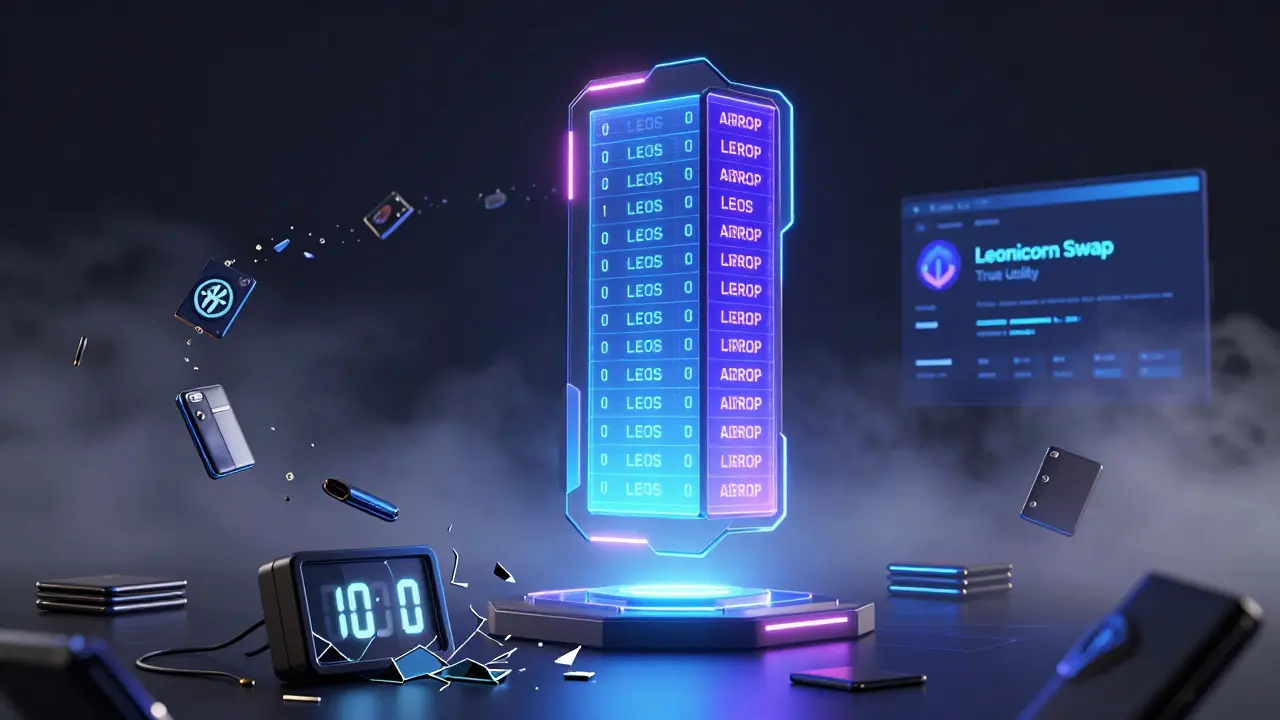
Leonicorn Swap, a decentralized exchange built on the Binance Smart Chain, announced a "Mega New Year Event" in late December 2025. The hype was everywhere: Twitter threads, Discord announcements, and TikTok videos claiming users could earn up to 500 LEOS tokens just by holding and sharing. Some influencers even posted screenshots of supposed claim pages. But when users tried to claim, the page returned a 404 error. Others saw a loading spinner that never finished. A few reported that their wallets were flagged as "not eligible," even though they had held LEOS since before the event started.
By January 10, 2026, the official Leonicorn Swap Twitter account deleted all posts related to the event. The website’s blog section was updated with a single line: "Our team is reviewing community feedback on recent initiatives." No apology. No explanation. No timeline.
Let’s be clear: this wasn’t a technical failure. This was a marketing stunt that vanished before delivery. There are no blockchain records of any token distribution. No transaction hashes. No smart contract calls. If an airdrop happened on a public chain like BSC, you’d see it. You’d be able to track it. You’d be able to prove it. You can’t. Because it never happened.
How the Hype Was Built
The campaign didn’t start with a whitepaper or a team announcement. It started with bots.
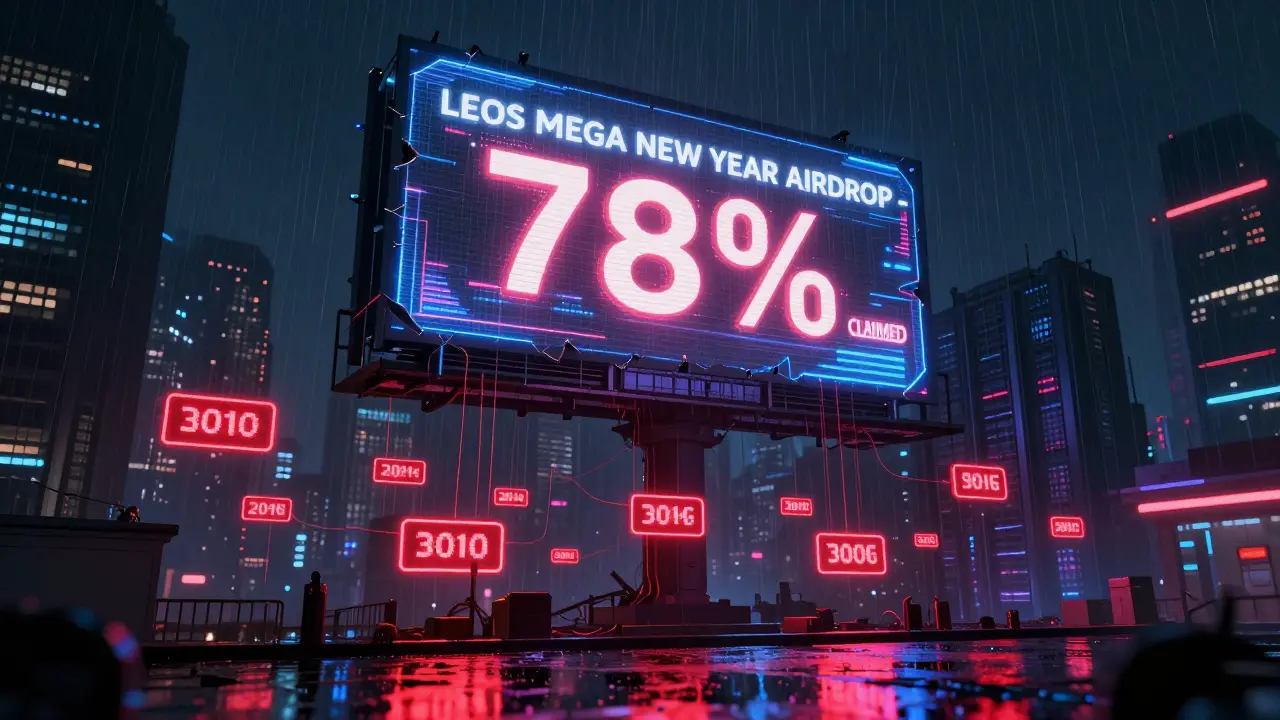
On December 20, 2025, over 2,000 new Twitter accounts - all with similar bios, profile pictures, and posting patterns - began tweeting about the "Mega New Year Event." Each tweet linked to the same landing page: leonicornswap.com/airdrop2025. The page looked legit. It had a countdown timer, a progress bar showing "78% of tokens claimed," and a form asking for your wallet address and Twitter handle.
Behind the scenes, the page didn’t connect to any blockchain. It was a static HTML file hosted on a free web server. No API calls. No wallet verification. No smart contract interaction. It was a trap designed to collect wallet addresses and social media handles - nothing more.
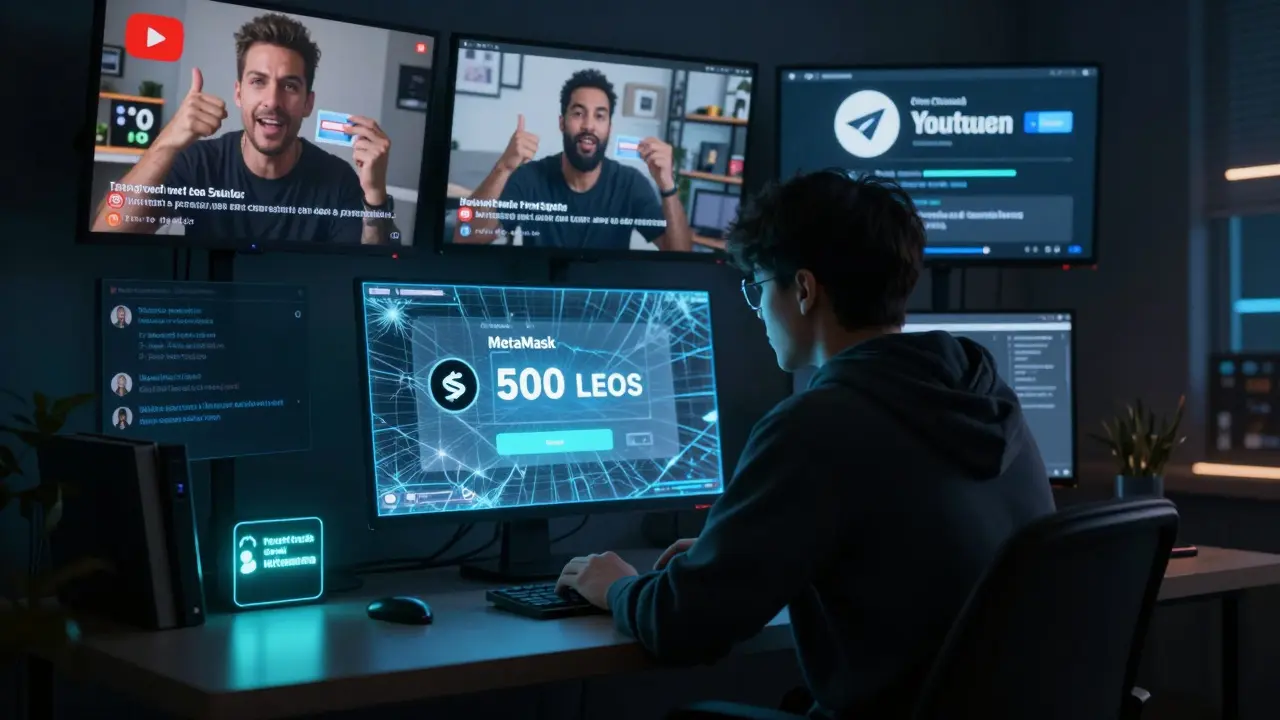
Then came the influencer push. Five crypto YouTubers with 50K-200K followers posted videos titled "I Got My LEOS Airdrop! Here’s How!" Their videos showed them clicking buttons on the page and then displaying a fake wallet balance. One creator even used screen recording software to fake a MetaMask notification. These videos were paid promotions - not reviews. None of them disclosed they were paid.
By the time users realized the truth, the campaign was already over. The website went dark. The Twitter accounts vanished. The Telegram group was deleted.
Why This Happens - And How to Spot It
This isn’t the first time a crypto project used an airdrop as bait. In 2023, the project "MoonSwap" did the exact same thing. In 2024, "CryptoPulse" promised 1,000 tokens to early users - then disappeared. The pattern is always the same:
- Airdrop announced with vague terms: "Join our community," "Share our post," "Hold for 7 days."
- No official smart contract address published.
- Claims of "limited supply" or "first 10,000 users" - but no public ledger.
- Pressure to act fast: "Claim before the timer runs out!"
- No way to verify eligibility.
Real airdrops - like those from Uniswap, PancakeSwap, or Curve - publish the exact contract address, the total number of tokens distributed, and the block range where eligibility was checked. You can look it up on BscScan or Etherscan. Leonicorn Swap did none of this.
What You Can Do Now
If you participated in the LEOS event, here’s what actually happened to your data:
- Your wallet address was collected - likely sold to third-party ad networks.
- Your Twitter handle was added to spam lists - you’re now getting DMs from "LEOS support" bots offering "recovery services."
- Your email (if you provided it) was added to marketing lists for unrelated crypto scams.
Here’s how to protect yourself:
- Check your wallet history. If no LEOS tokens were sent to you, you didn’t miss out - you were never eligible.
- Never enter your private key. No legitimate airdrop will ever ask for it.
- Use a burner wallet. If you’re going to interact with a new project, use a wallet with $5 or less - not your main holdings.
- Verify the contract. Go to BscScan. Search for the LEOS token contract. If the contract doesn’t show any airdrop-related transactions, it’s fake.
- Report the scam. File a report with the Binance Smart Chain team. They track these patterns. The more reports, the faster they shut down these projects.
The Bigger Problem
This isn’t just about Leonicorn Swap. It’s about how crypto culture rewards hype over honesty. Projects that make bold promises - even if they’re empty - get attention. Projects that build slowly, transparently, and honestly? They get ignored.
LEOS had real utility. Leonicorn Swap was one of the few DEXs on BSC that offered low slippage swaps and real-time fee redistribution to holders. It had a working product. But instead of growing organically, the team chose to chase viral growth with a fake event. That’s not innovation. That’s exploitation.
And now, the whole space pays the price. Every time a project pulls a stunt like this, real users lose trust. Every time a wallet gets flooded with spam, people get scared away from DeFi. And every time someone loses money because they believed a fake airdrop, the next honest project has to work twice as hard to earn attention.
Final Verdict
The LEOS Mega New Year event airdrop never happened. There’s no recovery. No refund. No hidden tokens waiting to be claimed.
What you got was a lesson - one that costs nothing but your time. And if you’re still holding LEOS tokens? They’re still worth something. Not because of a fake airdrop, but because the underlying exchange still works. The team still updates the platform. The community still trades. That’s real.
Don’t chase hype. Don’t believe promises without proof. And never trust a crypto event that doesn’t show you the blockchain.
Did anyone actually receive LEOS tokens from the Mega New Year event?
No. There are zero confirmed transactions on the Binance Smart Chain where LEOS tokens were distributed as part of this event. No wallet addresses received tokens. No contract logs show any minting or transferring. The entire event was a promotional page designed to collect user data - not distribute tokens.
Is Leonicorn Swap still operational?
Yes. Despite the failed airdrop, the Leonicorn Swap platform is still live and functioning. Users can still swap tokens, provide liquidity, and earn rewards through its fee redistribution model. The team has not shut down the project - only removed the misleading campaign pages. The core product remains active.
Can I get my data deleted after participating in the airdrop?
There is no official way to request data deletion. The project’s website and social channels are no longer responding. Once your wallet address and social handles were collected, they were likely sold to data brokers. Your best bet is to stop using that wallet for future crypto activity and create a new one. Never reuse addresses tied to suspicious campaigns.
How can I verify if a future airdrop is real?
Check three things: First, the official smart contract address on BscScan or Etherscan. Second, whether the airdrop terms are written in clear, technical language - not vague promises. Third, whether there’s a public blockchain record of token distribution. If any of these are missing, it’s not real. Legit projects don’t hide behind countdown timers.
Should I still hold LEOS tokens?
If you’re holding LEOS for its utility - low-slippage swaps, fee redistribution, and active development - then yes. The token’s value isn’t tied to a failed airdrop. But if you bought LEOS hoping for quick gains from a hype event, you’re at risk. Always invest based on what a project does, not what it promises.
Comments
20 Comments
Dominica Anderson
Real crypto isn't for the gullible. If you needed a countdown timer and a TikTok influencer to tell you it was real, you never should've been in the game. The market filters out the weak. This isn't a scam-it's a Darwinian selection event. Stay out of DeFi if you can't read a whitepaper. You're just noise.
Tarun Krishnakumar
Okay, so let me get this straight-you’re telling me the entire thing was a data harvest? No smart contract, no tokens, just a static HTML page with a fake progress bar? That’s not even clever. That’s basic. I’ve seen 12-year-olds in Chennai build better phishing sites. And the influencers? Paid? Of course they were. You think someone with 150K followers does a video for free? They’re all part of the same bot farm. The real scam? That we still fall for this. Every. Single. Time. The blockchain is public. The truth is transparent. We’re just too lazy to check. And now we’re mad when the house of cards collapses. Wake up. You were never the customer. You were the product.
jennifer jean
Ugh I feel so bad for everyone who got scammed 😔 But like… at least we’re learning? I used to jump on every airdrop too. Now I check BscScan first. Like, ALWAYS. And I use a burner wallet with $3 in it. No more emotional investing. Just facts. 🙏✨
Charrie VanVleet
Hey, I know it sucks, but honestly? This is how you grow. I got burned hard in 2021 with a fake Uniswap airdrop. Thought I was gonna be rich. Ended up with spam DMs for months. But after that, I learned to dig. Check the contract. Look at the dev history. See if they’ve been around. Now I only trust projects that have been live for over a year. It’s boring. But it works. You didn’t lose money-you lost naivety. And that’s worth more than 500 LEOS.
Geet Kulkarni
How is this even a story? The entire crypto space is a pyramid scheme with better UI. The fact that people are shocked by this reveals more about their ignorance than the project's malice. Real utility exists in silence. The louder the marketing, the emptier the product. LEOS had a working DEX? Then why not just promote that? Why the theatrics? Because the team knew their product wasn't enough. And now, the entire ecosystem is worse off because of their incompetence. Pathetic.
Paul David Rillorta
soooo… uhhhh… the gov’t was behind this?? i mean… think about it. no one just… drops a fake airdrop like that. it’s too clean. too coordinated. who owns the web server? who paid the influencers? who deleted the tweets? this smells like a fed op to scare ppl away from crypto. they don’t want us using bsc. they want us on CBDCs. the airdrop was fake… but the real scam? the system.
andy donnachie
Good breakdown. Just to add: if you participated, check your wallet’s transaction history for any incoming LEOS. If it’s zero, you’re clean. Also, if you used the same email or Twitter handle elsewhere, change passwords. And never, ever enter your seed phrase on a website-even if it looks legit. I’ve seen this pattern too many times. Stay safe.
Lauren Brookes
It’s weird, right? We live in a world where you can verify a satellite launch in real time, but people still click on a blinking countdown timer and hand over their wallet address like it’s a free candy bar. The tragedy isn’t that the airdrop was fake-it’s that we’re still so easy to fool. Maybe the real innovation here isn’t the DEX. Maybe it’s the collective delusion we all share. We want to believe in magic. And scammers? They just gave us a magic wand made of HTML.
Chris Thomas
Let’s deconstruct this at the protocol level. A legitimate airdrop requires three things: a deterministic eligibility algorithm, a verifiable on-chain minting event, and a public distribution log. LEOS delivered none. Instead, they deployed a front-end honeypot designed to extract PII and wallet metadata. The absence of a transaction on BscScan isn’t an oversight-it’s evidence. This wasn’t incompetence. It was a zero-knowledge data extraction protocol disguised as community engagement. And the influencers? They were the adversarial nodes in the network. You didn’t get scammed. You were a data point in a behavioral experiment.
Andrew Edmark
Hey, I just wanna say-you’re not alone. I thought I was the only one who got ghosted. But reading this? It helps. I’m not dumb for trying. I’m just new. And now I know how to check before I click. I’ve started following devs on GitHub, not just Twitter. Real progress takes time. And honestly? That’s okay. I’m still holding LEOS because the swap works. That’s real. And that’s enough for now. Thanks for the clarity.
kieron reid
Classic. Another project that thinks hype = value. They didn’t even try to hide it. The fact that this made headlines means people are still dumb enough to fall for it. Congrats, Leonicorn. You just proved that the entire crypto market is a circus. And we’re all clowns.
Avantika Mann
Thank you for writing this. I’m so glad someone laid it out so clearly. I was one of those who joined the Telegram group and shared the post. I felt so excited-then so stupid. But I’m not mad. I’m just… wiser now. I’ve started asking: "Show me the contract." And if they can’t, I walk away. It’s not about missing out. It’s about protecting my peace. And that’s worth more than any token.
Nikki Howard
While I appreciate the attempt at a breakdown, I must note that the absence of blockchain evidence does not conclusively prove the absence of an airdrop. One must consider the possibility of a private chain, off-chain settlement, or a future mainnet migration. Furthermore, the claim that "no legitimate airdrop would ever use a countdown timer" is empirically false-see the 2023 Arbitrum airdrop, which employed a similar mechanism with full transparency. This analysis is dangerously reductive.
Sasha Wynnters
It’s not a scam. It’s a mirror. The airdrop didn’t vanish-it reflected us. We wanted to believe in fairy tales. We wanted to be the 10,000th person to click "claim" and wake up rich. We didn’t care about the code. We cared about the dream. And the dream? It was always a hologram. The real token was the illusion. The real utility? The lesson. We didn’t lose tokens. We lost our innocence. And that? That’s priceless.
AJITH AERO
LOL. "Mega New Year Event." Like we didn’t all see this coming. They didn’t even change the font on the website. It looked like a Fiverr gig from 2019. And the influencers? I watched one of their videos. The "wallet balance" update took 3 seconds longer than it should’ve. I paused it. Frame by frame. They used After Effects. I’m not mad. I’m just… bored.
Angela Henderson
I just want to say… I’m really sorry if you got hurt by this. I know how much hope you put into it. I did too. I thought maybe this time it’d be different. Maybe I’d get lucky. But you know what? I’m still here. Still learning. Still holding LEOS because the swap works. And that’s enough. We don’t need magic. We just need to keep showing up. Even when it’s messy. Even when it hurts.
Kyle Tully
They got your wallet. They got your Twitter. They got your email. You think that’s the end? Nah. Now you’re on 17 spam lists. You’re gonna get DMs from "LEOS recovery team" for the next 3 years. And guess what? They’ll sell your data again. This wasn’t a one-time scam. It’s a pipeline. And you’re a product. Wake up. You’re not a user. You’re inventory.
Ian Plunkett
Oh my god. I watched the TikTok videos. I thought I was smart for catching it early. I even posted a warning. And now? I feel like an idiot. Because here’s the truth: I wanted to believe. I wanted to be part of something big. I didn’t want to be the one who missed out. So I ignored the red flags. And now? I’m just… numb. This isn’t about crypto. It’s about loneliness. We’re all just looking for a reason to feel like we belong. And they gave us a fake token. And we took it.
george chehwane
Let’s not pretend this is novel. This is the standard model for Web3 launch cycles: 1. Hyping via bot networks. 2. Influencer saturation. 3. Fake utility metrics. 4. Data harvesting. 5. Disappearance. The smart contracts? Irrelevant. The real product was the attention economy. LEOS didn’t fail. They executed perfectly. The tragedy? We keep showing up. We keep clicking. We keep handing over our data like it’s confetti at a parade. The system isn’t broken. It’s working exactly as designed.
Scott McCrossan
Wait-so you’re telling me the REAL scam is that we believed in crypto at all? That this was just a psychological experiment to see how many people would abandon reason for a fake token? If that’s true… then congrats, Leonicorn. You just proved the entire industry is a cult. And we’re the followers. I’m done. I’m going back to stocks. At least they don’t pretend to be revolutionary.
Write a comment