

Every vote should count. But in too many elections, doubts linger: Was the system hacked? Were votes altered? Were people allowed to vote more than once? These aren’t just conspiracy theories-they’re real concerns that have haunted elections for decades. Traditional paper ballots can be lost or miscounted. Digital voting machines can be hacked with a single exploit. And centralized vote tabulation? That’s a single point of failure waiting to be exploited.
Enter blockchain. Not as a cryptocurrency gimmick, but as a tool built for one thing: ensuring election integrity. It doesn’t just make voting digital. It makes voting unbreakable-not by locking it away, but by opening it up to everyone.
How Blockchain Stops Vote Tampering
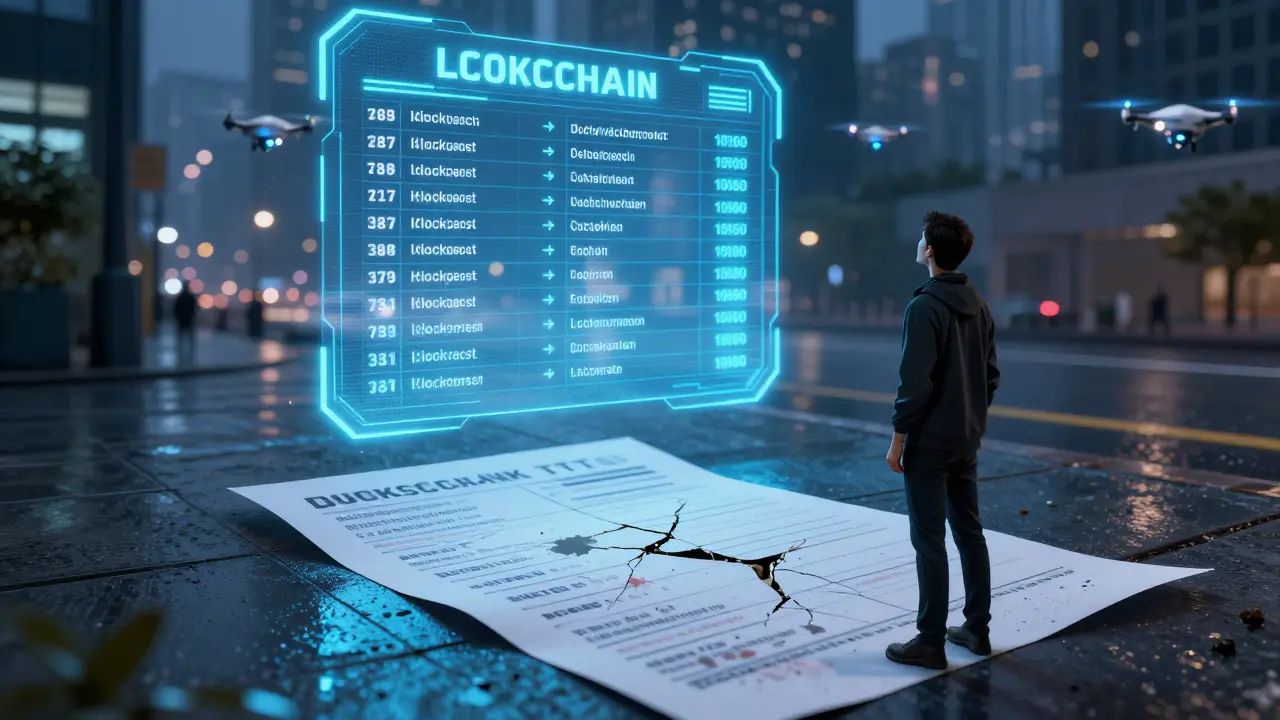
Blockchain is a digital ledger that records transactions across hundreds or thousands of computers. Each vote cast becomes a block in this chain. Once recorded, it can’t be changed. Not without changing every block after it-and every copy of the ledger on every machine in the network. That’s impossible in practice.
Imagine a voting system where every ballot is signed with a unique digital fingerprint. That fingerprint is stored on the blockchain. If someone tries to alter the vote later, the system instantly flags the mismatch. No central server holds all the data. No single government agency controls the ledger. Instead, copies are held by independent nodes-servers run by auditors, universities, even citizen volunteers. To change one vote, you’d need to hack every single one at once. That’s not just hard. It’s practically impossible.
Compare that to traditional systems. In 2020, a single vulnerability in a voting machine’s software allowed hackers to flip votes in test simulations. In 2023, a county in the U.S. discovered 12,000 ballots had been miscounted due to a firmware bug. Blockchain doesn’t fix every problem-but it makes these kinds of errors detectable and undoable.
Who Votes? How Do We Know?
Blockchain doesn’t just secure votes. It secures who votes. Many digital voting systems fail because they can’t reliably confirm identity. Someone could vote twice. Or someone else could vote in their name.
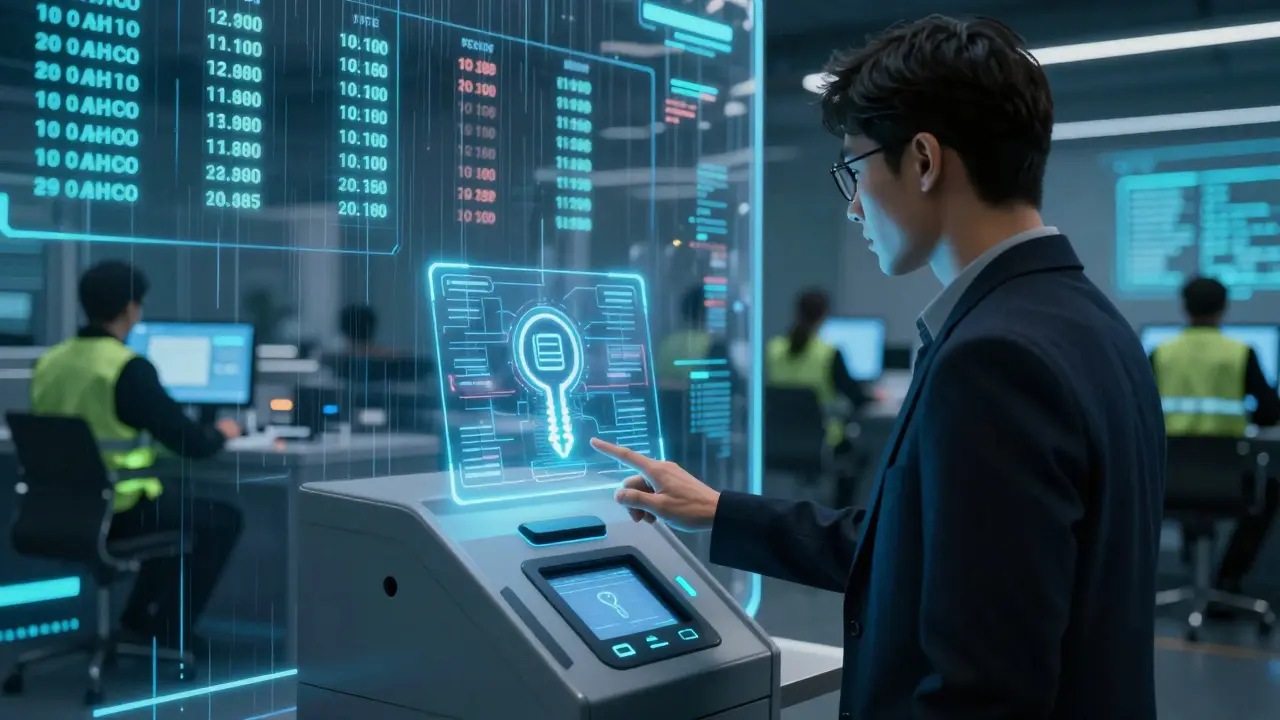
Blockchain voting solves this with cryptographic identity. Each eligible voter gets a unique digital key-like a password, but far more secure. This key is tied to their verified identity through government-issued documents or biometrics (fingerprint, facial scan). That key only works once. Once used to vote, it’s automatically locked. No duplicates. No impersonation.
And here’s the twist: your identity is never stored with your vote. The system separates who you are from what you voted for. The blockchain records only the vote. The identity is kept in a separate, encrypted vault. Only authorized auditors can link them-if they need to verify eligibility after the fact. This keeps your ballot private but your identity authentic.
Transparency Without Compromise
People don’t trust elections because they can’t see how the count works. Paper ballots are counted behind closed doors. Digital systems are black boxes with proprietary code.
Blockchain changes that. The entire voting process is public-but not personal. Anyone can watch the blockchain as votes are added. Independent observers, journalists, and even voters can run their own nodes and verify the tally in real time. No need to trust a government or vendor. You can check it yourself.
In Estonia’s pilot program, citizens could log into a public portal after voting and see their ballot recorded on the blockchain. If they spotted an error, they could request a review. No one could change their vote-but they could confirm it was counted right.
This kind of transparency rebuilds trust. When voters know the system can’t be secretly manipulated, they’re more likely to participate. And when watchdogs can audit the results without asking for permission, election fraud becomes far riskier than it’s worth.
What Happens When the Internet Goes Down?
Here’s the hard truth: blockchain voting needs the internet. It needs power. It needs secure hardware to scan fingerprints or verify IDs. If your town has spotty connectivity or outdated machines, this system won’t work.
That’s why no country has gone fully blockchain-based for national elections-not yet. Estonia uses blockchain for its online voting system, but only for citizens who already have government-issued digital IDs. Other pilots in West Virginia and Utah were limited to military voters overseas.
The real solution isn’t replacing paper with blockchain. It’s blending them. Think of blockchain as the final audit layer. Voters still use paper ballots or secure kiosks. But once votes are cast, they’re encrypted and uploaded to the blockchain as a tamper-proof backup. If anyone questions the count, they can compare the paper trail to the digital ledger. If they match? The election is solid. If they don’t? The blockchain tells you exactly where the error happened.
The Real Barriers: Trust, Training, and Law
Technology isn’t the biggest hurdle. It’s people.
Election officials aren’t trained in cryptography. Voters don’t understand how a blockchain works. And lawmakers? They’re scared of change. A 2024 study from MIT found that 68% of election administrators in the U.S. said they wouldn’t adopt blockchain because they didn’t know how to manage it.
Plus, there’s no global standard. Some countries treat blockchain voting as a national security issue. Others ban it outright. Without clear laws, no system can scale.
Successful pilots have one thing in common: they started small. A local school board vote. A neighborhood association election. A university student council. These weren’t about replacing democracy. They were about proving it could work.
Training programs now exist to teach election workers how to deploy blockchain nodes, monitor smart contracts, and respond to audit requests. In 2025, the EU launched a blockchain voting certification program for public officials. It’s not perfect-but it’s a start.
Why This Matters More Than Ever
By 2026, over 40% of global voters are under 35. They don’t trust institutions. They’re online 24/7. They want to vote from their phones. But they also want to know their vote won’t be stolen.
Blockchain doesn’t promise perfection. It promises something better: verifiability. Accountability. Resilience.
When a voter can check their ballot on a public ledger, when an auditor can trace every step of the count, when a hacker can’t touch even one vote without being caught-elections stop being a game of secrets. They become a public record.
That’s not just technology. That’s democracy rebuilt.
Can blockchain voting be hacked?
It’s not impossible-but it’s far harder than hacking a traditional system. Blockchain voting uses distributed ledgers, so a hacker would need to control over 51% of the network nodes simultaneously. That requires massive resources, coordination, and time. Plus, every change is visible to independent auditors. Most attempts are caught before they succeed.
Does blockchain voting violate voter privacy?
No. Blockchain systems separate identity from vote. Your name and biometric data are stored in a secure, encrypted vault-completely separate from the blockchain where your vote is recorded. Only authorized auditors can link the two, and only under strict legal oversight. Your ballot remains anonymous.
Is blockchain voting used anywhere today?
Yes-but only in limited pilots. Estonia has used blockchain for online voting since 2019 for national elections, but only for citizens with digital IDs. West Virginia tested it for overseas military voters in 2018 and 2020. Several U.S. cities and universities have run small-scale blockchain votes for local decisions. No country has adopted it fully for all voters yet.
What’s the difference between blockchain voting and e-voting machines?
Traditional e-voting machines store votes on a single server or memory card. That’s one target for hackers. Blockchain spreads votes across hundreds of computers. No single point of control. Votes are cryptographically sealed and permanently recorded. Plus, blockchain allows public audits-e-voting machines rarely do.
Can blockchain prevent voter suppression?
Not directly. Blockchain doesn’t fix access issues like long lines, lack of polling stations, or ID requirements. But it can help by enabling secure remote voting. People in rural areas, disabled voters, or those abroad can vote safely from home-without needing to travel. This increases participation, which reduces the impact of suppression tactics.
Comments
14 Comments
Alan Enfield
Blockchain for voting is honestly one of those ideas that sounds like magic until you dig into the details. The distributed ledger thing? Yeah, it’s solid. But let’s not pretend it’s a silver bullet. You still need identity verification that doesn’t exclude rural folks or elderly people without smartphones. And who’s auditing the auditors? I’ve seen too many ‘transparent’ systems where the public can see the data but can’t make sense of it. We need UIs that don’t require a CS degree to use.
The real win isn’t the tech-it’s the trust. If people feel like they can verify their vote without begging permission from some bureaucrat, that’s huge. Estonia’s model works because they’ve had digital IDs since the early 2000s. That’s not replicable everywhere overnight.
george chehwane
Oh, here we go again. Another tech bro mistaking decentralization for democracy. Blockchain doesn’t fix voter suppression. It doesn’t fix gerrymandering. It doesn’t fix the fact that 20% of Americans still can’t access a polling station. You’re not building a voting system-you’re building a digital temple to Silicon Valley’s ego. Meanwhile, real people are waiting in line for 5 hours because their county ran out of machines. Cool blockchain. Now go fix that.
Aileen Rothstein
I love how this post acknowledges the real barriers-training, law, trust-but still ends with this grand vision. That’s the thing. We don’t need to go all-in tomorrow. We need pilots. In schools. In town councils. In tribal nations. Let people experience it. Let them see their vote show up on a public ledger. That’s how you build trust-not by decree, but by doing. And if it works in a small town in Iowa? Then we scale. Slowly. Carefully. With input from the people who actually vote.
Also-yes, the internet goes down. So what? Paper ballots + blockchain backup is the future. Not either/or. Both. The paper’s the anchor. The blockchain’s the witness.
JJ White
Blockchain voting? So what you’re saying is, we’re going to let hackers from Moscow, Pyongyang, and a basement in Ohio all fight over a digital ledger while the rest of us watch like it’s a Netflix documentary? ‘Oh look, the votes are immutable!’ Great. So now we have a permanent, public record of every single ballot… that can be weaponized by future governments to target voters. You think this won’t be used for voter intimidation? That the data won’t be leaked? That some state won’t cross-reference blockchain votes with tax records to ‘audit’ dissenters? Oh, we’re so clever. We’re so advanced. And we’re so naive.
Nicole Stewart
Blockchain voting is just digital snake oil wrapped in whitepaper
yogesh negi
Let me say this gently: blockchain isn’t the hero here-people are. The real innovation isn’t the ledger, it’s the community of volunteers running nodes. Universities. Libraries. High school tech clubs. Imagine if every town had a local blockchain auditor trained by the state. Not just techies-regular folks. They’d become the new poll watchers. The new watchdogs. And that’s beautiful. We don’t need to replace paper-we need to empower citizens. This isn’t about technology. It’s about civic pride. Let’s build that first.
I’ve seen this work in rural India. Not with blockchain, but with community-led vote counting. Same principle: transparency through participation. The tech just makes it easier. Not better. Just easier.
Nikki Howard
Let’s be honest: blockchain voting is a solution looking for a problem. The number of verified election fraud cases in the last decade? Less than 10 in the entire U.S. Meanwhile, the cost of implementation? Millions. The risk of system failure? High. The likelihood of public confusion? Near-certain. You’re trading a known, manageable system for a complex, opaque one that only experts can verify. And you call that progress? I call it a vanity project for tech investors who think they’re saving democracy.
Also-why are we even talking about this when we haven’t fixed mail-in ballot processing? Or restored the Voting Rights Act? Or funded polling places? Priorities, people.
Tarun Krishnakumar
Blockchain voting? Yeah, right. And I suppose the NSA just happens to be one of the 10,000 ‘independent nodes’ running the ledger? Let me guess-they’re the ones with the fastest servers and the deepest pockets. You think a decentralized system won’t be infiltrated? Please. Every ‘open’ blockchain has a backdoor. Every ‘transparent’ ledger has a hidden admin. The U.S. government already has the keys. They just haven’t used them… yet. But once they do? Your vote becomes a data point. A behavioral marker. A target for future ‘national security’ sweeps. This isn’t democracy. It’s surveillance with a pretty UI.
And don’t even get me started on biometrics. You think your fingerprint is safe? It’s already in 78 federal databases. Now you’re giving it to a blockchain? That’s not voting. That’s surrender.
Dominica Anderson
America doesn't need blockchain. We need better paper systems. And discipline. And accountability. Not tech theater.
sruthi magesh
Blockchain voting? That’s just how they’ll track who voted against the party. Next thing you know, your vote gets flagged as ‘subversive’ and your kid’s college application gets denied. It’s not secure-it’s a social credit system with ballots.
Lisa Parker
I just want to vote from my couch without a 30-minute tutorial. If blockchain does that, cool. If it makes me scared to open my phone? No thanks.
Nova Meristiana
Oh wow, blockchain! So now we’re outsourcing democracy to a system that runs on energy equivalent to a small country? And you think that’s sustainable? Or ethical? Meanwhile, we could’ve just funded 10,000 more polling stations and trained 50,000 volunteers. But no. Let’s burn a mountain of electricity to prove we’re ‘advanced.’ What a legacy.
Also-Estonia? Tiny country. 1.3 million people. Digital ID since 2002. We’re not Estonia. We’re not even close. Stop romanticizing a pilot that wouldn’t survive a county fair in Ohio.
Jennifer Riddalls
I work in rural election offices. We don’t have IT staff. We have volunteers who still use fax machines. If you hand us a blockchain system, we’ll break it. Not because we’re dumb. Because we’re overwhelmed. The real solution? Train us. Pay us. Let us be part of the design. Tech doesn’t fix human problems. People do. Start there.
Also-can we please stop calling this ‘democracy rebuilt’? Democracy isn’t a software update. It’s a practice. A habit. A shared belief. We don’t need more tech. We need more trust. And that starts with respect.
Kyle Tully
Look, I’m all for innovation. But let’s not pretend blockchain voting is some revolutionary leap. It’s just the next phase of the same old problem: we want convenience without consequences. We want to vote from our phones… but also have zero risk. That’s not possible. There’s always a trade-off. Blockchain just hides the trade-offs behind fancy math. Meanwhile, real voters are still waiting for buses to polling places. Fix that first. Then we’ll talk about ledgers.
Also-when was the last time you saw a voter who actually understood how blockchain worked? No one does. And that’s not their fault. It’s ours. We made it too complicated.
Write a comment