

Imagine finding a rare baseball card in your attic. Now imagine someone publicly destroying ten other copies of that same card. Suddenly, your single copy feels more valuable, doesn't it? That’s the basic idea behind coin burning, a mechanism where cryptocurrencies permanently remove tokens from circulation to create artificial scarcity. But does this digital destruction actually drive up prices, or is it just clever marketing?
The short answer is: sometimes. It depends entirely on context, scale, and market sentiment. If you’re holding crypto assets, understanding how burns work-and when they matter-is crucial for making smart investment decisions. Let’s break down the mechanics, the myths, and the real-world data behind one of blockchain’s most debated features.
What Exactly Is Coin Burning?
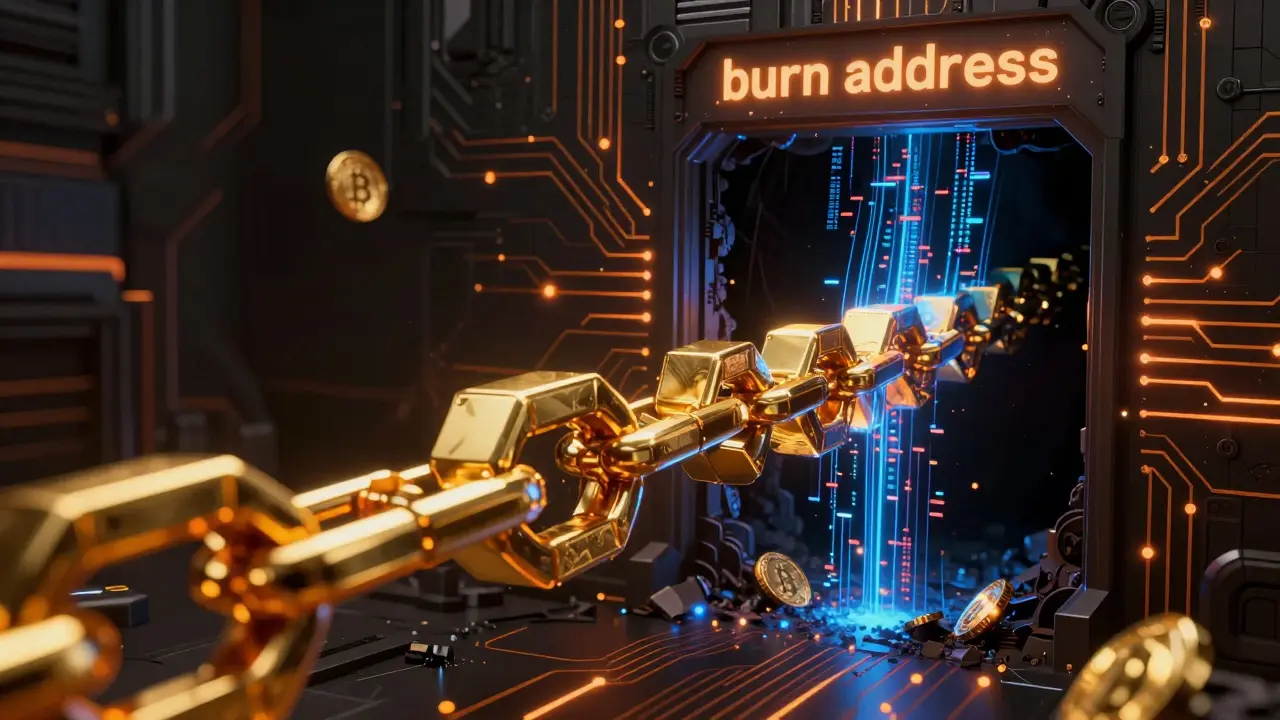
At its core, coin burning is the permanent removal of cryptocurrency tokens from circulation. Unlike staking or locking tokens in a wallet (where they can theoretically be unlocked later), burned coins are gone forever. They are sent to a "burn address"-a digital wallet with no private key, meaning nobody can ever access or spend them again.
| Network | Burn Address Format | Key Feature |
|---|---|---|
| Ethereum | 0x000...dEaD | No private key exists; funds are cryptographically unrecoverable |
| Binance Smart Chain | 0x000...bEaD | Similar structure to Ethereum; verified via BscScan |
| Solana | 11111111111111111111111111111111 | System program account; transfers here are irreversible |
This process isn’t magic-it’s code. When a project decides to burn tokens, the smart contract verifies ownership, moves the tokens to the dead wallet, and updates the total supply on the blockchain. Because blockchains are transparent, anyone can verify these transactions using explorers like Etherscan or BscScan. This transparency is key: if you can’t prove the burn happened, investors won’t trust it.
The Economic Theory: Supply, Demand, and Scarcity
The logic behind burning is simple economics. If you reduce the supply of something while demand stays the same-or increases-the price should go up. Think of it like gold: if miners stopped producing new gold but people still wanted jewelry, existing gold would become more expensive.
In crypto, this theory plays out through tokenomics. Projects use burns to control inflation. For example, BNB uses quarterly burns to destroy a portion of its supply based on trading volume and token price. The goal? To eventually reach a maximum supply of 100 million tokens, down from the original 200 million. By shrinking the pie, each slice becomes larger relative to the whole.
But here’s the catch: supply reduction alone doesn’t guarantee price increases. You also need demand. If fewer people want the token after the burn, the price might drop despite lower supply. Burns only work when they signal long-term commitment-not when they’re used as short-term hype tactics.
Real-World Examples: Do Burns Actually Move Prices?
Let’s look at actual data. In Q2 2024, Binance executed its largest-ever BNB burn, removing $1.2 billion worth of tokens. What happened next? The price spiked 5.2% immediately after the announcement. But within 30 days, that gain faded to just 1.8%. Why? Because markets quickly adjusted to the news. The burn was expected, so it didn’t surprise anyone.
Compare that to Ethereum’s EIP-1559 upgrade, introduced in August 2021. This change made Ethereum “deflationary” during high network usage by burning base fees. Since then, over 4.1 million ETH has been burned-worth roughly $12.3 billion at current prices. Did ETH’s price rise? Yes, it surged 387% in the 18 months following the update. But was it solely because of burns? Probably not. Other factors like DeFi growth, NFT booms, and institutional adoption played huge roles too.
Then there’s Shiba Inu (SHIB). Its community-driven burn portal allows users to voluntarily send SHIB to a burn address. While impressive in spirit, the impact on price has been minimal. Why? Because SHIB’s total supply is enormous-quadrillions of tokens. Burning even billions doesn’t move the needle significantly unless done consistently over years.
When Burns Fail: Common Pitfalls
Not all burns succeed. According to a September 2024 report by the Crypto Council, 72% of ineffective burns destroyed less than 0.5% of total supply. That’s barely noticeable. Another issue? Timing. Burns conducted during bear markets showed 63% lower efficacy than those in bull markets. Investors care less about scarcity when they’re focused on survival.
Lack of transparency kills credibility too. Projects without verifiable burn proofs saw 89% lower price impact compared to those with public transaction hashes. Trust matters. If you claim to burn tokens but don’t provide proof, skeptics will assume you’re lying-and punish your price accordingly.
- Too small: Burns under 1% of supply rarely affect price.
- Poor timing: Bear market burns lose momentum fast.
- No verification: Unverified burns erode investor confidence.
- One-off events: Single burns lack lasting impact; consistency wins.
Expert Opinions: Are Burns Just Marketing?
Dr. Linda Xie, co-founder of Scalar Capital, argues that burns only influence price when perceived as credible signals of long-term commitment. One-off burns? Gimmicks. Transparent schedules? Powerful tools. Her research shows projects with clear burn plans see 3.2x greater price impact than those with random events.
Professor David Yermack of NYU Stern analyzed 127 token burns between 2018-2024. His findings? Only 38% resulted in statistically significant price increases beyond normal volatility. Average positive impact lasted just 14.3 days. Not exactly life-changing returns.
Yet institutional investors are paying attention. Grayscale’s July 2024 report found that 78% now factor burn mechanisms into valuation models. They focus on two things: transparency and sustainability. Can you verify the burn? Will it continue? These questions matter more than the headline number.
Community Sentiment: Skepticism vs. Hope
Reddit threads reveal deep skepticism. A October 2024 analysis of r/CryptoCurrency comments showed 63% doubted burns’ effectiveness. User u/CryptoSkeptic89 summed it up: “BNB burns are just marketing-price dumps after initial pump every quarter.” With 1,247 upvotes, that sentiment resonates widely.
Twitter tells a different story temporarily. Brand24’s September 2024 analysis recorded 58% positive sentiment around burn announcements-but dropped to 41% within seven days. Initial excitement fades quickly once reality sets in.
YouTube educator Boxmining’s video “Crypto Burns: Real Impact or Hype?” reached 2.4 million views. He analyzed 15 major burns and found only six maintained gains beyond 30 days. Viewers commented extensively, reflecting widespread doubt about long-term efficacy.
Best Practices for Effective Token Burns
If you’re building a project or evaluating one, follow these guidelines for meaningful burns:
- Scale matters: Aim for at least 1-2% of total supply per event to register statistical significance.
- Be consistent: Schedule regular burns (quarterly, monthly) rather than sporadic ones.
- Verify everything: Publish transaction hashes on-chain for independent confirmation.
- Align with fundamentals: Combine burns with active development, user growth, and utility expansion.
- Avoid gimmicks: Don’t burn tokens purely for PR; ensure economic rationale supports the action.
Projects like Ethereum and Binance succeed because their burns tie directly to protocol improvements or ecosystem health. Others fail because they treat burns as standalone promotions disconnected from real value creation.
Regulatory Watch: SEC Cracks Down on False Claims
In September 2024, the U.S. Securities and Exchange Commission took enforcement action against a project claiming burns would increase token value without disclosing risks. The ruling established precedent: token burns constitute material information requiring full disclosure. Misleading investors about burn impacts could lead to legal consequences.
This means future burn campaigns must include disclaimers. No guarantees. No promises. Just facts backed by data. Transparency protects both creators and buyers.
Future Trends: Algorithmic and Dynamic Burns
The next evolution lies in automated, responsive burns. Terra 2.0 experiments with dynamic rates adjusting based on price deviation from target. Ethereum’s upcoming Prague hard fork (Q2 2025) may introduce variable burn rates tied to network congestion. Imagine a system where burns accelerate during bull runs to cool overheated speculation-or slow during downturns to preserve liquidity.
MIT’s Digital Currency Initiative launched a $2.5 million study in September 2024 tracking 100+ burn events across multiple cycles. Early results suggest algorithmic approaches offer better predictability than manual interventions. Expect smarter, self-adjusting systems in coming years.
Does coin burning always increase cryptocurrency prices?
No. Burns only boost prices when combined with strong fundamentals, sufficient scale (>1% of supply), and favorable market conditions. Many burns have negligible or temporary effects.
How do I verify if a token burn actually happened?
Check blockchain explorers like Etherscan or BscScan for published transaction hashes. Reputable projects share links to burn addresses showing zero outgoing transactions.
Why did BNB’s price spike after its recent burn?
Short-term sentiment drove the spike. Long-term impact diminished as traders realized the burn was anticipated and part of a predictable schedule.
Can small-cap tokens benefit from burns?
Yes, if burns represent meaningful percentages of tiny supplies. However, low liquidity makes them vulnerable to manipulation regardless of burn activity.
Is Ethereum currently deflationary due to burns?
During periods of high network usage, yes. Base fee burns exceed issuance rewards. During quiet times, net supply still grows slightly.