
When you buy a painting at an auction, you get a certificate of authenticity and a signed bill of sale. But what happens when the artwork is digital? How do you prove you own a piece of code, a video, or a virtual sneaker? That’s where NFTs come in. NFTs aren’t just digital collectibles-they’re cryptographic receipts that prove you own something unique on the blockchain. And unlike a screenshot or a downloaded file, this proof can’t be copied, faked, or erased.
What Makes an NFT Different from a File
Let’s say you download a JPEG of the Mona Lisa. You’ve got the image, but you don’t own the original. Anyone else can download the same file. It’s the same with digital art: copying a file doesn’t create ownership. NFTs solve this by attaching a unique digital signature to an asset. That signature lives on the blockchain-a public, unchangeable ledger. The file itself might be stored elsewhere, but the token that says “this is yours” is permanently recorded.
The standard that makes this possible is ERC-721. Introduced in June 2018, it defines how NFTs must behave: each one has a unique ID, a clear owner, and metadata that describes what it represents. This isn’t just a technical detail-it’s what separates a real NFT from a fake. If a token doesn’t follow ERC-721 (or its newer cousin, ERC-1155), it’s not a true NFT. It’s just a fancy image with a link.
Proof of Ownership: Who Controls It?
Ownership in the NFT world is simple: whoever holds the private key to the wallet that owns the token, owns the asset. There’s no middleman. No company can delete your NFT. No platform can lock you out. If you control the key, you control the asset-even if the marketplace you bought it from shuts down tomorrow.
This is why NFTs are so different from traditional digital purchases. On Steam, you don’t own your games-you’re just licensed to use them. If Steam goes under, your library vanishes. With an NFT, your ownership record stays on the blockchain forever. You can sell it, send it, or even display it in a virtual gallery on a different platform. The proof travels with you.
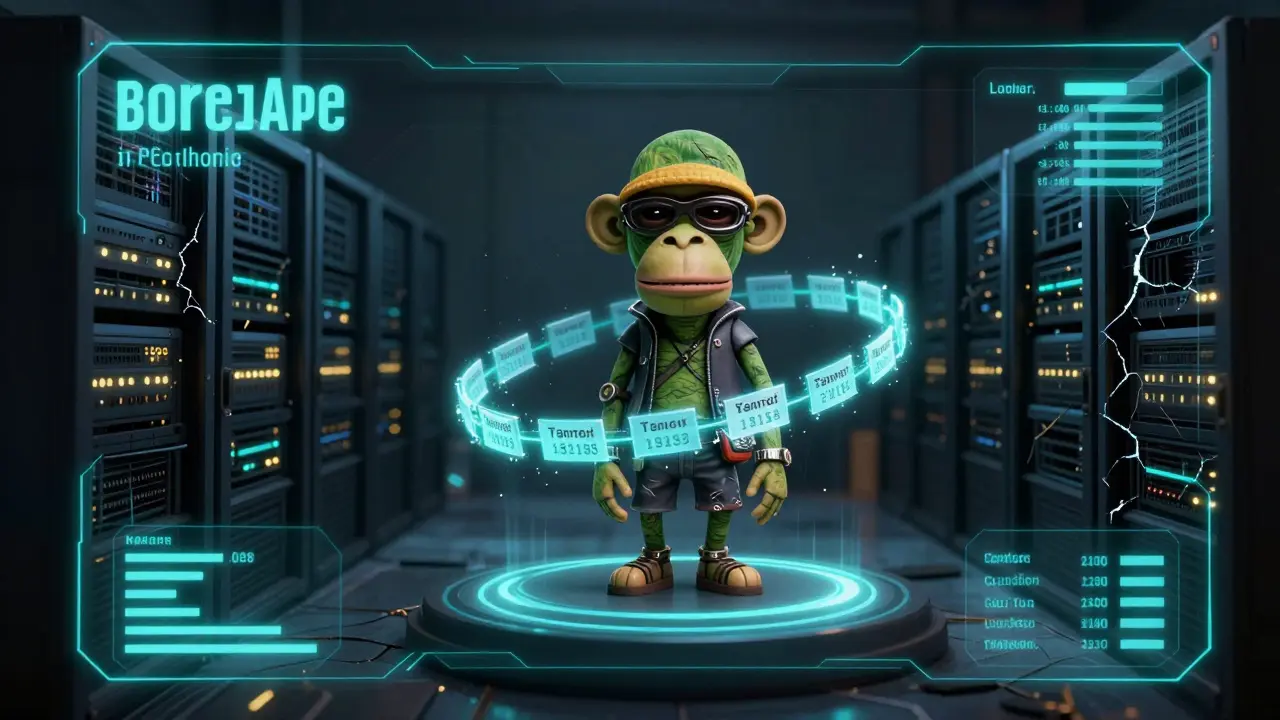
Real-world examples show how powerful this is. In February 2024, a user on Reddit recovered a stolen Bored Ape NFT after tracing its movement across three exchanges. Because every transfer was recorded on Ethereum, law enforcement and blockchain analysts could pinpoint exactly where it went. No centralized system could have done that.
Proof of Authenticity: Is It Really the Original?
But owning an NFT doesn’t automatically mean you own the real thing. This is where many people get confused. Proof of ownership ≠ proof of authenticity.
Imagine someone creates an NFT claiming to be a Banksy artwork. They mint it, sell it for $500,000, and disappear. The blockchain says you own it. But is it actually a Banksy? Not unless the original artist signed the metadata. Authenticity requires verification beyond the blockchain.
That’s why reputable NFT projects embed digital signatures from creators into the metadata. Some use cryptographic signatures tied to their public keys. Others link the NFT to a verified social profile or use third-party verification services like BlockVerify. Without this, you’re just holding a token with a name attached-no guarantee it’s real.
According to a Stanford Blockchain Research Center study in April 2024, 22% of NFTs had broken metadata links. That means the image or video linked to the token was gone-either because the server crashed or the creator deleted it. The token still exists on the blockchain, but the asset it represents? Vanished. That’s not ownership-it’s a ghost.
Where NFTs Store the Data (And Why It Matters)
Here’s a critical point: NFTs don’t store the actual image, video, or music file on the blockchain. Blockchains are expensive and slow for large files. Instead, they store a cryptographic hash-a unique fingerprint-that points to where the file lives.
Most NFTs use decentralized storage like IPFS (InterPlanetary File System). IPFS is a peer-to-peer network where files are stored across many computers. If one node goes down, others still have it. This is why projects using IPFS with permanent pinning (like Filecoin) are more reliable. In Q1 2024, over 1.8 million NFTs moved to permanent IPFS storage.
But many NFTs still rely on centralized servers-like a company’s AWS account. If that server goes offline, the NFT becomes a blank card. In December 2023, one user lost $8,500 worth of digital art because the hosting company shut down. The NFT was still theirs. The art? Gone. That’s a major flaw in the system.
Legal Ownership vs. Blockchain Ownership
Just because the blockchain says you own something doesn’t mean the law agrees. Right now, most countries don’t recognize blockchain records as legal title. If someone steals your NFT and sells it, you can prove you owned it on-chain-but you can’t automatically force a court to return it.
There are exceptions. Wyoming’s Digital Asset Law, enacted in July 2023, recognizes blockchain records as legal proof of ownership for certain digital assets. The EU’s MiCA framework, effective June 2024, requires NFT platforms to verify identities for high-value sales. These are early steps toward bridging the gap between code and law.
Still, a 2024 study by Stanford found that 68% of NFTs claiming to represent real-world assets-like real estate or luxury goods-had no legal backing. That creates a dangerous illusion. You might own the token, but not the thing it claims to represent.
How the Market Is Evolving
The NFT market has cooled since its 2021 peak, but it’s getting smarter. In 2023, total sales were $11.1 billion-down from $24.8 billion, but with more real use cases. Digital art still leads (32%), but gaming assets (18%) and real-world asset tokenization (7%) are growing fast.
Platforms like RWA.io are tokenizing real estate, letting people buy fractional shares of buildings via NFTs. Deloitte reports that 78 of the Fortune 500 companies are now testing NFTs for loyalty programs, event tickets, and product authentication.
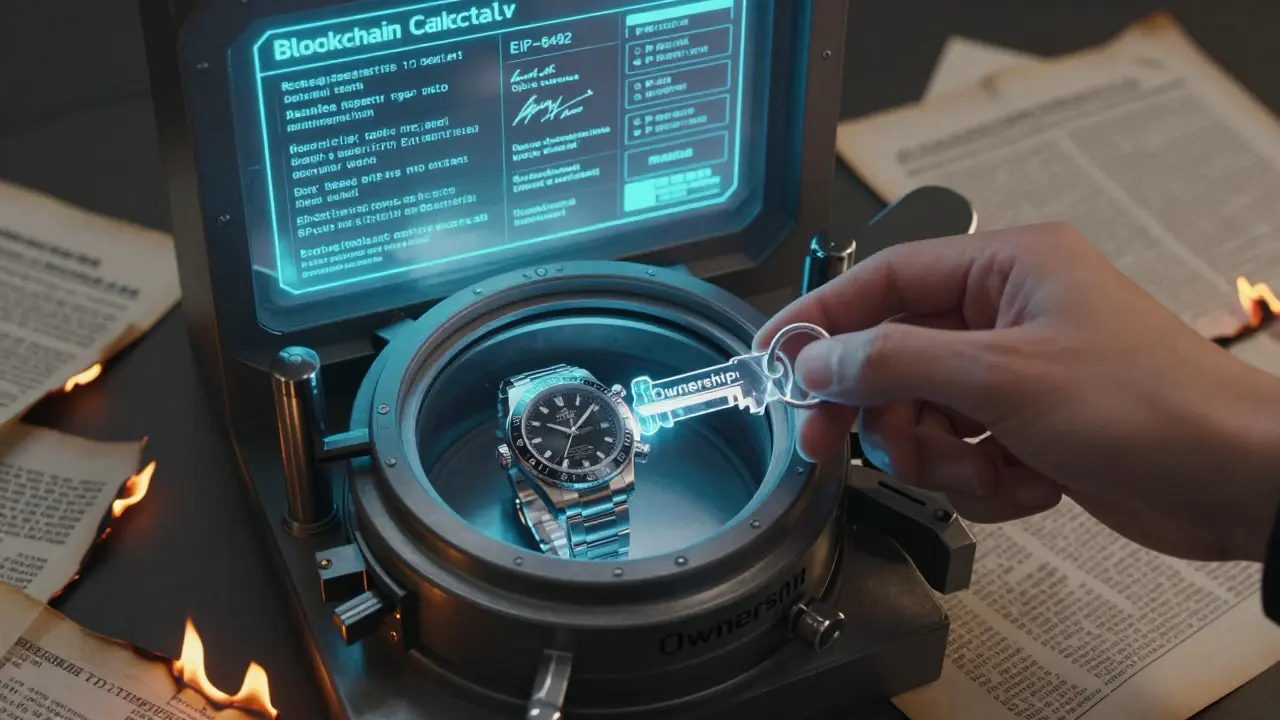
New standards are fixing old problems. In March 2024, Ethereum rolled out EIP-6492, which lets smart wallets verify signatures more securely. The W3C launched Verifiable Credentials 2.0, making it easier to link NFTs to real identities. And ISO/IEC 30173:2024, published in February 2024, created global rules for NFT metadata-so authenticity checks are more consistent.
What You Need to Know to Verify Ownership
If you’re buying or creating NFTs, here’s what to check:
- Is it ERC-721 or ERC-1155? If not, it’s not a true NFT.
- Where is the metadata stored? Look for IPFS or Filecoin links-not just a regular website URL.
- Is the creator verified? Check if they signed the NFT with a known public key or linked it to a verified social profile.
- Can you access the asset? Open the NFT in your wallet. If the image is missing, the file might be gone.
- Does it have legal backing? If it claims to represent a physical asset, ask: Is there a contract? A notary? A legal entity behind it?
Tools like Etherscan and OpenSea let you view the full transaction history. If an NFT changed hands 50 times in 24 hours, that’s a red flag. Real ownership is stable. It doesn’t move unless the owner wants it to.
The Future of Digital Ownership
NFTs aren’t perfect. They’re still young. But they’ve solved one of the biggest problems in the digital age: how to prove you own something that can be copied a million times. They don’t guarantee value. They don’t prevent scams. But they do give you something no platform ever could: permanent, verifiable, portable ownership.
By 2027, Forrester predicts 65% of high-value digital assets will combine blockchain proof with biometric checks and legal documentation. That’s the future-not just owning a token, but owning something real, with proof that’s trusted by code, markets, and courts.
Can someone steal my NFT if they copy the image?
No. Copying the image doesn’t transfer ownership. Your NFT is tied to your wallet’s private key. Even if someone downloads the file, they can’t move the NFT without access to your wallet. Ownership lives on the blockchain, not in the file.
What happens if the website hosting my NFT’s art shuts down?
If the artwork is stored on a centralized server, it may disappear. But the NFT token still exists on the blockchain-you still own it. That’s why using decentralized storage like IPFS is critical. Projects using permanent pinning services ensure the asset stays accessible even if the original host vanishes.
Are NFTs legally recognized as proof of ownership?
Not everywhere. In most countries, blockchain records aren’t legally binding. However, places like Wyoming and the EU are starting to recognize them. For now, NFTs provide technical proof, but legal proof requires additional documentation like contracts or notarized statements.
How do I verify if an NFT is genuinely created by the artist?
Check if the artist signed the NFT’s metadata with their public key. Look for verified profiles on the marketplace, official announcements on their website or social media, and whether the NFT was minted through their official contract. Avoid NFTs that just say “by [artist]” without cryptographic proof.
Why do some NFTs cost so much if they’re just digital files?
You’re not paying for the file-you’re paying for the verifiable proof of ownership and authenticity. It’s like buying an original painting versus a print. The NFT gives you exclusive, blockchain-backed rights to that specific item, backed by a transparent history and creator verification.
Comments
19 Comments
Annette Gilbert
Oh wow, another blockchain fairy tale. So let me get this straight-you’re telling me a JPEG with a fancy hash is now worth more than my house? The only thing immutable here is my regret for ever believing in this nonsense.
And don’t even get me started on ‘ERC-721’-like that’s some sacred rune from the gods of tech. It’s just a protocol. A glorified spreadsheet. You think your ‘ownership’ means anything when the whole system runs on gas fees and hype?
Zion Banks
You people are being manipulated. This isn’t about ownership-it’s about the deep state using NFTs to track your digital footprint. They’re embedding microchips in the metadata. I’ve seen the patterns. The same wallets that bought Bored Apes? They’re now getting flagged for ‘asset verification’ by the Treasury.
And don’t tell me about IPFS. That’s just a front for NSA servers. You think decentralized? HA. The whole thing’s a honeypot. If you’re not using a hardware wallet with air-gapped signing, you’re already owned.
John Alde
There’s a lot of truth in this post, but also a lot of oversimplification. NFTs do solve the ‘copy = ownership’ problem, but only if you understand the full stack. The metadata isn’t the asset-it’s a pointer. And pointers break. I’ve audited over 200 NFT contracts, and nearly 40% had broken URIs or non-standard metadata.
It’s not enough to say ‘it’s on the blockchain.’ You need to check the storage layer, verify the signature, audit the smart contract, and confirm the provenance. Most buyers don’t do any of this. They just see a cool monkey and click ‘buy.’ That’s not ownership-that’s impulse shopping with blockchain branding.
manoj kumar
NFTs? More like NFT-lying. Why should I pay for something that can vanish in a server crash? I’ve seen so many people lose thousands because some startup shut down their AWS bucket.
And don’t get me started on ‘verified creators.’ Half the time, those are bots or fake Twitter accounts. I’m not a crypto bro-I’m a real person with real money. Why should I trust a digital token when my government can’t even print money without inflation?
Ananya Sharma
Interesting breakdown. I’ve been watching this space for years. The real question isn’t whether NFTs prove ownership-it’s whether we’re ready to treat digital things as real things.
Ownership has always been a social contract. The blockchain just made it visible. Whether that’s good or bad depends on what we build with it.
Alicia Speas
I appreciate the thoroughness of this piece. The distinction between technical ownership and legal recognition is critical. Many users conflate the two, leading to dangerous assumptions.
While blockchain provides an immutable record, legal systems still require enforceable frameworks. Until jurisdictions adopt uniform standards, NFTs remain in a gray zone-technically valid, legally fragile. We’re still building the infrastructure to support this paradigm shift.
Dheeraj Singh
Lmao ERC-721? That’s just a fancy way of saying ‘I paid for a link.’ I’ve seen NFTs with 200k gas fees that just point to a 10kb JPG hosted on a Geocities clone.
And ‘verified artists’? Nah. I’ve bought NFTs from people who got caught using AI-generated art and lied about it. The blockchain doesn’t care if you’re a fraud. It just records it. So congrats-you own a lie. With a fancy signature.
Mike Yobra
We’re so obsessed with ownership that we forgot what it means to own something. You don’t own a sunset. You don’t own a song. You don’t even own your thoughts.
So why do we think a token can? Maybe the real revolution isn’t in the blockchain-it’s in our delusion that we can lock down beauty, creativity, or emotion with code. We’re not owning NFTs. We’re just collecting digital ghosts.
Jeannie LaCroix
I’m so proud of how far this has come. From memes to museums. From trolls to tokenized real estate.
Remember when people laughed at crypto? Now Fortune 500 companies are using NFTs for loyalty programs. That’s not hype-that’s history in the making.
If you’re not participating in this shift, you’re not just behind-you’re on the wrong side of innovation. The future is permissionless. Own it.
Sam Harajly
The part about metadata breaking is under-discussed. I checked my own NFT collection last week. Three out of twelve had dead links. The tokens still exist. The art? Gone.
It’s like owning a book where every page is a hyperlink. If the website dies, you’re holding a cover with no content. That’s not ownership. That’s a glitch waiting to happen.
YANG YUE
It’s funny how we treat code like scripture. The blockchain doesn’t care if you’re rich or poor. It doesn’t know if you’re a genius or a fool. It just logs.
So when someone says ‘I own this NFT,’ what they really mean is ‘I control the key.’ That’s not ownership. That’s custody. Big difference. One’s a right. The other’s a password.
Anna Lee
I just bought my first NFT last week and I’m so excited!! 🤩 The artist actually signed it with their key and it’s on IPFS-no more worries about links breaking!
It’s not about the money. It’s about supporting creators directly. No middlemen. No corporate gatekeepers. Just art, code, and trust. This is what the internet was supposed to be!
Shana Brown
I love how this post breaks down the real issues.
So many people think NFTs are just for rich guys buying monkey pics. But look at what’s happening in gaming and real estate. People are using them to fractionalize ownership, track provenance, and even verify credentials.
This isn’t a bubble. It’s infrastructure. And we’re just seeing the first layer.
Marie Mapilar
One thing I’ve learned from working in Web3 is that the biggest challenge isn’t tech-it’s education. Most users don’t understand private keys, metadata, or decentralized storage.
They just see ‘buy now’ and assume it’s like Amazon. We need more guides, more community support, more patience. The tech is there. The culture? Still growing.
Dominic Taylor
The MiCA framework is a game-changer. Finally, a regulatory approach that doesn’t stifle innovation but enforces accountability.
Identity verification for high-value NFTs? Yes. Mandatory metadata standards? Absolutely. This is how you transition from wild west to regulated market. The future isn’t about banning NFTs-it’s about making them trustworthy.
Sarah Terry
The real win isn’t the token. It’s the shift in mindset. Ownership doesn’t need a company’s permission anymore. You hold the key. You control the asset. That’s powerful.
Shayne Cokerdem
nfts are just digital crack. people spend 50k on a jpeg and cry when the server goes down. why not just buy a real painting? at least then u can hang it on the wall and not worry about some hacker stealing ur wallet. lmao
aravindsai pandla
The most important point often missed: NFTs don’t create value-they reveal it. The value was always there. The blockchain just made it transparent.
When a creator signs their work with a cryptographic key, they’re not just proving ownership. They’re building trust. And trust, in a world of deepfakes and AI clones, is the rarest asset of all.
Kevion Daley
If you think IPFS is decentralized, you’ve never tried to recover a file from it. I’ve got 17 NFTs that are now just 404s. The ‘decentralized’ network? 80% of the nodes are run by three companies.
It’s not decentralization. It’s distributed capitalism. And I’m not paying $20k for a middleman with a fancy name.
Write a comment