



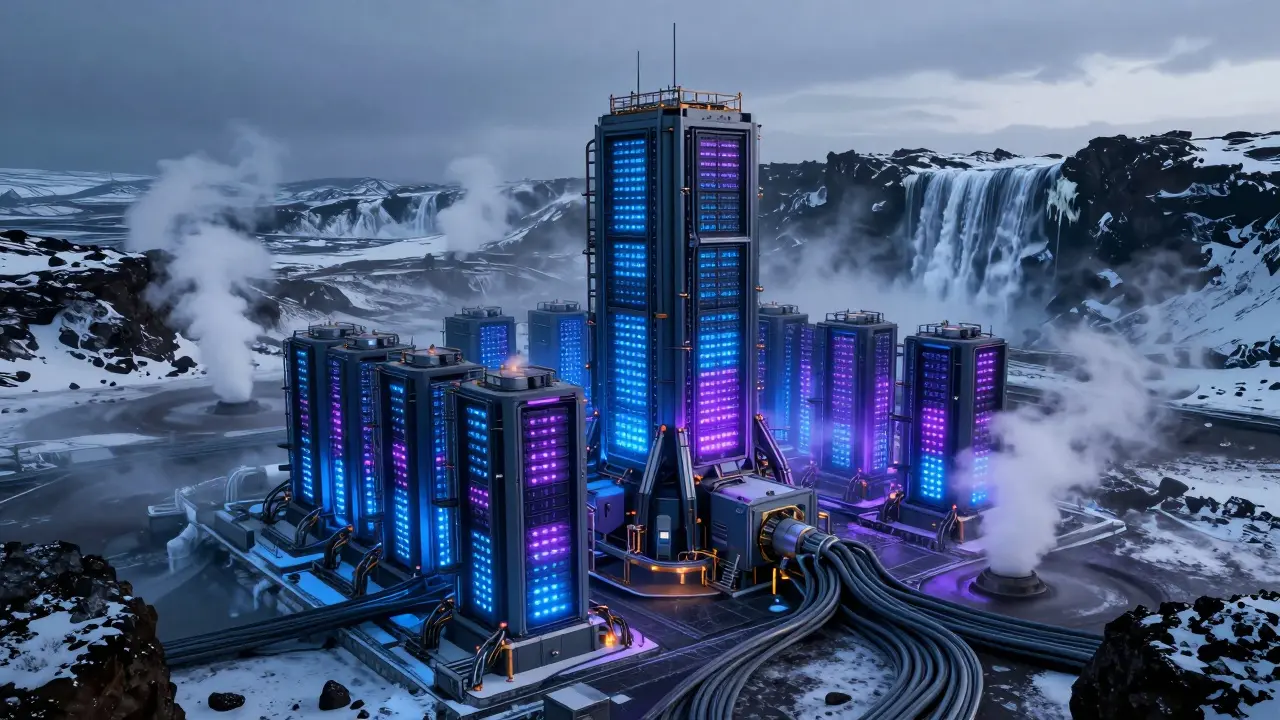
For years, Iceland was the gold standard for crypto mining. You had cheap geothermal electricity, freezing air that cooled servers naturally, and a government that didn't care much about your hash rate. But if you are planning to ship ASICs to Reykjavik in 2026, stop right there. The party is over. The national power company, Landsvirkjun, along with local municipal utilities, has tightened the screws on energy-intensive operations. The days of signing a long-term contract and drawing unlimited power from the grid are gone.
This isn't just a rumor floating around Reddit threads. It is a structural shift in how Iceland manages its most valuable resource: renewable energy. The country’s leadership realized that letting data centers eat up half the nation’s power output wasn’t sustainable. Now, miners face strict caps, higher costs, and a bureaucratic maze designed to protect residential and industrial needs over speculative digital assets.
The Shift From Welcome Mat to Gatekeeper
To understand why the rules changed, you have to look at the scale of the problem. In 2017, cryptocurrency processing accounted for nearly 90% of Iceland's data center power consumption. That number sounds insane, but it makes sense when you realize that Bitcoin mining is essentially an electricity arbitrage game. Miners go where the power is cheapest and cleanest. Iceland fit both criteria perfectly.
However, by 2024, the situation became untenable. Prime Minister Katrín Jakobsdóttir publicly stated her desire to reduce cryptocurrency mining activities within the country. The concern wasn't moral; it was physical. There was simply not enough surplus energy left for everyone else. When mining rigs consume more electricity than the entire Icelandic population combined, you run into problems with grid stability and future economic development.
Landsvirkjun, the state-owned electricity company responsible for generating and transmitting high-voltage power, found itself in the middle of this crisis. While they don't sell directly to every small miner, they set the wholesale prices and capacity limits that local distribution companies follow. If Landsvirkjun signals that capacity is tight, local utilities like Orka Reykjavíkur (ORKA) or HS Orka immediately tighten their own contracts.
How Landsvirkjun and Local Utilities Restrict Miners
You might be wondering exactly what these restrictions look like in practice. It’s not always a blunt "no." Often, it’s a slow squeeze designed to make mining less profitable without outright banning it. Here is how the current landscape works for operators:
- Capacity Caps: New large-scale mining facilities often cannot get guaranteed power connections. Utilities prioritize established industries like aluminum smelting and fishing processing. These sectors provide stable jobs and tax revenue. Crypto mining, which can shut down overnight if prices drop, is seen as a risky load on the grid.
- Dynamic Pricing: Gone are the days of flat-rate industrial pricing for new entrants. Many miners now face dynamic pricing models where costs spike during peak demand hours. Since mining requires 24/7 operation, this volatility eats into margins significantly.
- Contract Renewal Blocks: When existing contracts expire, utilities are increasingly refusing to renew them at favorable rates. Some operators have been forced to scale back or relocate because they couldn't secure the same terms they enjoyed five years ago.
- Environmental Impact Assessments: Even though the energy is green, the infrastructure isn't free. New facilities must undergo rigorous environmental reviews. This process takes time and money, acting as a barrier to entry for smaller players.
The key takeaway here is that access to power is no longer a given. It is a privilege granted based on national interest. And currently, the national interest leans away from Bitcoin.
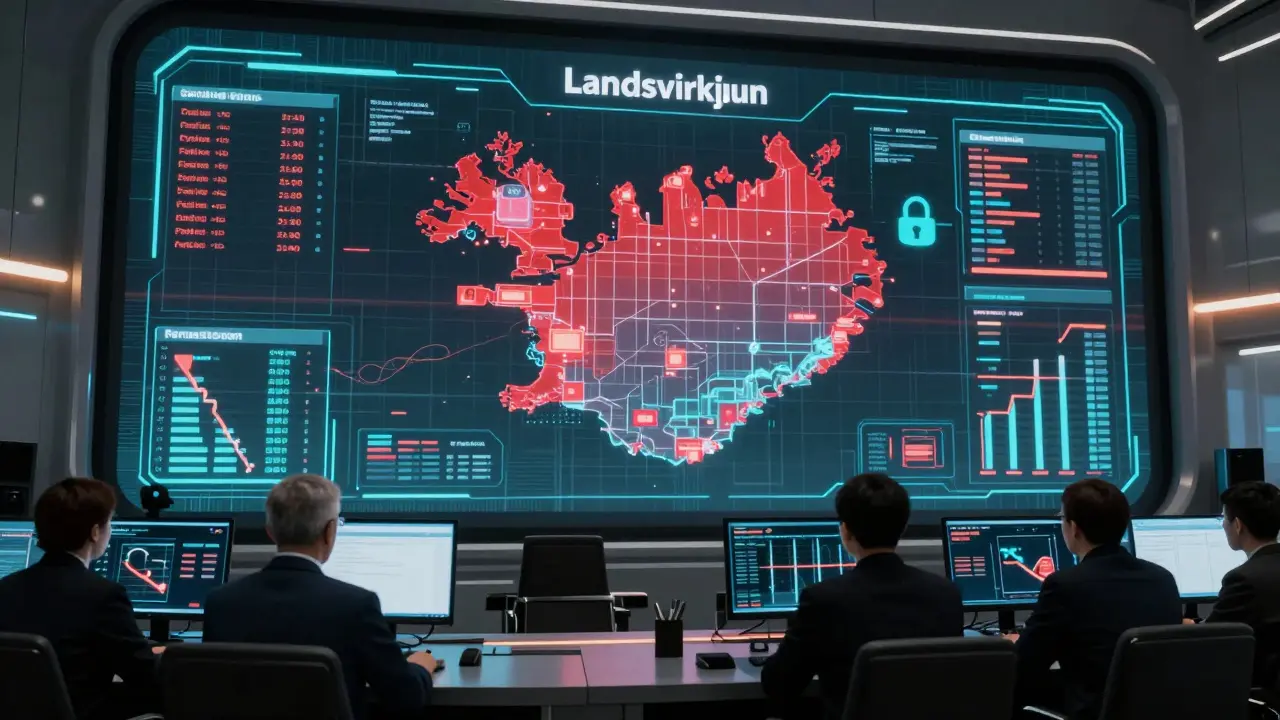
The Economic Reality: Why Iceland Changed Its Tune
Iceland’s economy is small. With a population of around 380,000 people, every major industry matters. After the 2008 financial crash, Iceland rebuilt its economy on exports and tourism. Cryptocurrency mining brought in foreign investment and helped diversify the economy post-2008. Companies like Hive Blockchain Technologies, Genesis Mining, and Bitfury Holding built massive facilities there.
But the math changed. As Bitcoin’s block reward halved and network difficulty increased, miners needed more power to earn the same amount of BTC. Meanwhile, other industries were begging for power. Data centers for cloud computing, AI research, and traditional tech firms started looking at Iceland. These businesses offer higher value per kilowatt-hour than brute-force hashing.
Let’s look at the numbers. Aluminum smelting is energy-intensive but provides consistent employment and export revenue. Crypto mining provides volatile revenue and few local jobs. When you have limited geothermal resources, you allocate them to the highest-value use case. For Iceland’s policymakers, that value shifted from crypto to broader tech infrastructure and essential services.
| Sector | Energy Priority Level | Job Creation | Revenue Stability |
|---|---|---|---|
| Residential/Households | Highest | N/A | Stable |
| Aluminum Smelting | High | High | Very Stable |
| Cloud Computing / AI | Medium-High | Medium | Stable |
| Cryptocurrency Mining | Low | Low | Volatile |
What This Means for Miners in 2026
If you are running a mining operation in Iceland today, you need to adapt. The era of easy expansion is over. Here is what successful operators are doing differently:
- Diversifying Locations: Smart miners aren't putting all their eggs in one basket. They are spreading hardware across multiple jurisdictions, including countries with excess hydroelectric power like Canada or Norway, where regulations might be more flexible.
- Efficiency Upgrades: Older ASICs are being retired. Only the most efficient machines (like the latest Antminer S21 series) make economic sense under tighter power constraints. Efficiency is no longer optional; it is survival.
- Engaging with Local Communities: Operators who maintain good relationships with local municipalities sometimes get leeway. Showing that your facility contributes to local heating grids or supports community projects can help keep the lights on.
- Pivoting to Other Services: Some former mining farms are repurposing their space for cold storage or general-purpose data hosting. This allows them to keep their power contracts while earning steady income from less controversial services.
It’s also worth noting that trading and investing in crypto remain legal in Iceland. The restrictions are specifically targeted at the energy consumption of mining. You can still buy Bitcoin, run a wallet, or operate an exchange, provided you comply with anti-money laundering (AML) laws overseen by the Icelandic Financial Supervisory Authority.
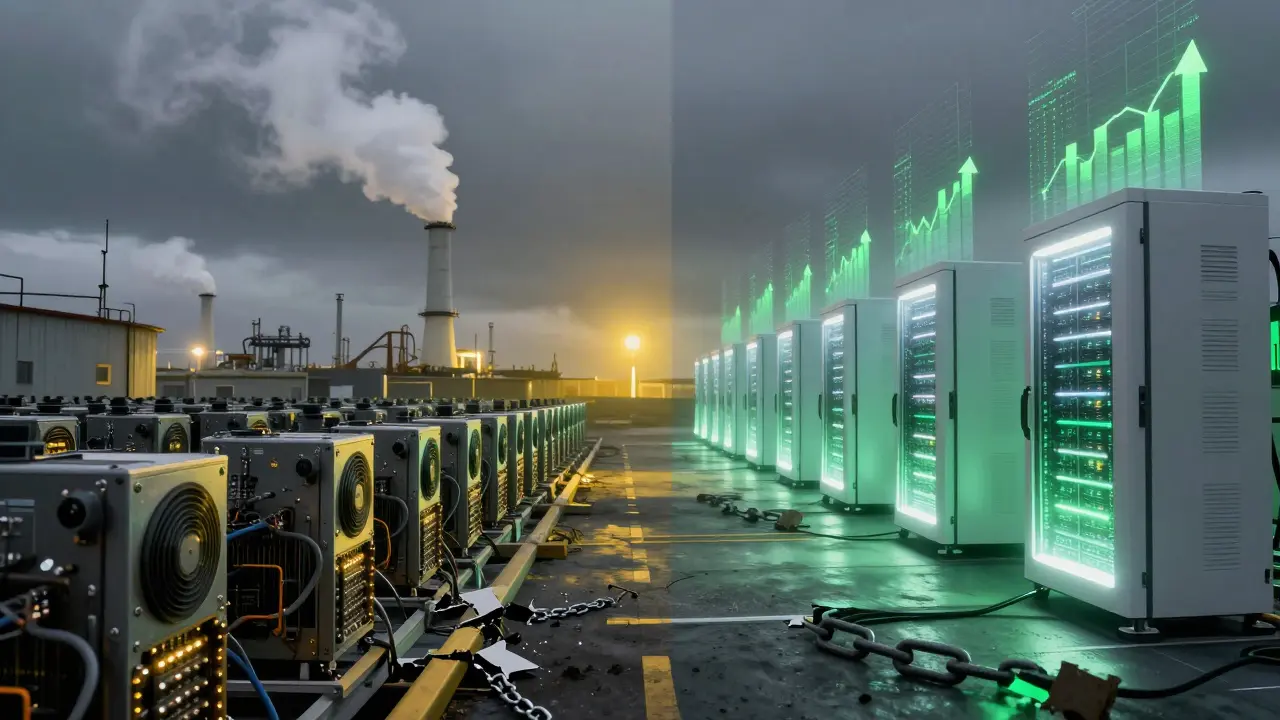
The Future: Beyond Bitcoin
Iceland isn’t abandoning blockchain technology entirely. The government is exploring Central Bank Digital Currencies (CBDCs). The Central Bank of Iceland has conducted feasibility assessments for a digital króna. This shows a nuanced approach: they want the benefits of digital finance without the energy drain of Proof-of-Work mining.
We may see a shift toward Proof-of-Stake (PoS) related infrastructure, which consumes a fraction of the energy. Nodes for Ethereum or other PoS networks require minimal power compared to Bitcoin miners. Iceland could become a hub for institutional blockchain services rather than raw hashing power.
International cooperation is also increasing. Iceland is working with global partners to combat financial crimes associated with crypto. This regulatory tightening aligns with EU standards, even though Iceland is not in the EU. As global scrutiny increases, operating in a jurisdiction with clear, albeit restrictive, rules becomes safer for legitimate businesses.
Key Takeaways for Investors and Operators
The message from Reykjavik is clear. Renewable energy is precious. It powers homes, hospitals, and factories. It is not an infinite resource for speculative ventures. If you are considering Iceland for your next mining farm, expect hurdles. You will need to negotiate hard, prove your efficiency, and accept that you are a lower priority than other industries.
For investors, this means higher operational risks. Margin compression is likely. However, for those already established, there is still opportunity if you play the long game. Focus on sustainability, community relations, and technological efficiency. The wild west days of Icelandic crypto mining are behind us. The professional era has begun.
Is cryptocurrency mining illegal in Iceland?
No, cryptocurrency mining is not illegal in Iceland. However, it is heavily regulated due to energy concerns. Operators face strict limitations on power access, higher costs, and difficult contract renewals. The government aims to reduce the sector's overall energy footprint rather than ban it completely.
Why did Landsvirkjun restrict crypto mining?
Landsvirkjun and local utilities restricted mining because the sector consumed a disproportionate amount of the country's renewable energy. At its peak, mining used nearly 90% of data center power, threatening the grid's ability to serve residents and other critical industries like aluminum production.
Can I still start a new mining farm in Iceland?
It is extremely difficult. New large-scale facilities rarely receive guaranteed power connections. Utilities prioritize established industries and residential needs. If you do get approval, expect dynamic pricing and strict environmental compliance requirements.
How does Iceland compare to other mining hubs?
Compared to places like Texas or Kazakhstan, Iceland offers cleaner energy but far less flexibility. Texas has abundant wind and solar with deregulated markets, while Kazakhstan has historically offered cheap coal power. Iceland’s advantage was low cost and green credentials, but those advantages are eroding due to capacity caps.
Will Iceland ban crypto mining in the future?
A total ban is unlikely. Instead, expect continued gradual restrictions. The government prefers market-based mechanisms like pricing and capacity limits to shrink the industry naturally. A sudden ban would harm existing investments and international reputation.
Comments
14 Comments
Nick Rice
Look, I get the hype around green mining, but let's be real for a second. You cannot prioritize speculative digital assets over basic infrastructure stability. It is that simple. The grid belongs to the people who live there, not some offshore LLC running ASICs in a warehouse. If you want to mine, go somewhere with excess capacity and don't complain when the locals draw the line.
Charles Pawlikowski
about time they woke up lol. these crypto bros think they own the planet because they bought a few hashes. iceland is not your personal battery farm buddy. keep your dirty energy hogs out of our clean air. :)
Andrea Burd
another day another government overreach story. typical. they always say its for the 'greater good' but really its just control. i bet the elites are still mining while telling us little guys to stop. whatever.
Amit Thakur
The macroeconomic implications here are staggering when you analyze the hash rate distribution vs local GDP contribution. We are witnessing a classic resource misallocation event where the opportunity cost of kWh dedicated to PoW consensus mechanisms outweighs the marginal utility gained by the network security. The shift towards dynamic pricing models is merely a market correction mechanism forcing operators to internalize the externalities of their energy consumption. It is not just about 'restrictions'; it is about thermodynamic efficiency and economic sustainability in a closed system. If you look at the LCOE (Levelized Cost of Energy) trends in Nordic regions, the arbitrage window is closing rapidly due to increased demand from AI data centers which offer higher ROI per watt than brute-force hashing algorithms.
pankaj chawla
I agree with the sentiment that priorities have shifted. Aluminum smelting has been there for decades providing stable jobs. Crypto is volatile. It makes sense for the government to protect long-term industrial partners rather than chasing short-term crypto gains.
Jessica Lane
This is a fascinating development in energy policy. It highlights the tension between technological innovation and resource management. While crypto advocates argue for decentralization, the physical reality of energy grids requires centralized planning and prioritization. It will be interesting to see how other nations follow this model.
Akeem Whittaker
Let’s break this down logically. Iceland has limited geothermal output. When you introduce a load that consumes nearly 90% of data center power, you create a bottleneck for everything else. The solution isn’t necessarily a ban, but a tiered priority system. Residential needs come first, then essential industry, then high-value tech like AI, and finally speculative mining. This hierarchy ensures grid stability and economic resilience. Operators need to adapt or move to jurisdictions with surplus hydroelectric capacity.
Manish Prajapat
One must consider the philosophical underpinning of resource allocation. Is energy a right or a commodity? In Iceland, it seems they view it as a national heritage to be stewarded carefully. The transition from a wild west approach to regulated stewardship reflects a maturation of the digital economy. We are moving from extraction-based value creation to sustainable integration.
Mekz Wheoki
Oh great, now the 'green' paradise is kicking out miners because they realized their servers are hotter than the sun. Typical. They probably want to save all that power for their expensive electric cars and heated swimming pools. Not that I care, but do try to enjoy your moral superiority without the bitcoin subsidy.
Kwon Bill
From a cultural perspective, this shift aligns with broader global trends in regulatory compliance. Iceland is positioning itself as a hub for legitimate blockchain services rather than raw compute power. This distinction is crucial for maintaining international trade relations and avoiding sanctions. The jargon-heavy discourse often misses the nuance of geopolitical strategy involved in energy diplomacy.
Suman Patil
Hey everyone, let's keep the discussion constructive. The key takeaway is efficiency. Miners need to upgrade to S21 series or better to stay viable. Also, diversifying locations is smart. Don't put all eggs in one basket. Let's help each other navigate these new regulations instead of fighting.
Kumaran sowkarpet
i totally get the frustration but hey, rules are rules :) maybe we can pivot to cloud storage? it seems like a good alternative for keeping the lights on. lets work together to find solutions rather than blaming the gov. peace! ✌️
sreeja boora
This decision reinforces national sovereignty over resources. It is imperative that domestic industries are protected from foreign speculative capital. The formal stance taken by Landsvirkjun is appropriate and necessary for long-term economic health.
Grace Newman
It is evident that this policy shift is part of a larger coordinated effort to monitor and control financial flows under the guise of environmental concern. The sudden alignment with EU standards suggests external pressure from globalist entities seeking to standardize regulatory frameworks across borders. One must remain vigilant against such encroachments on individual liberty and energy independence.
Write a comment