

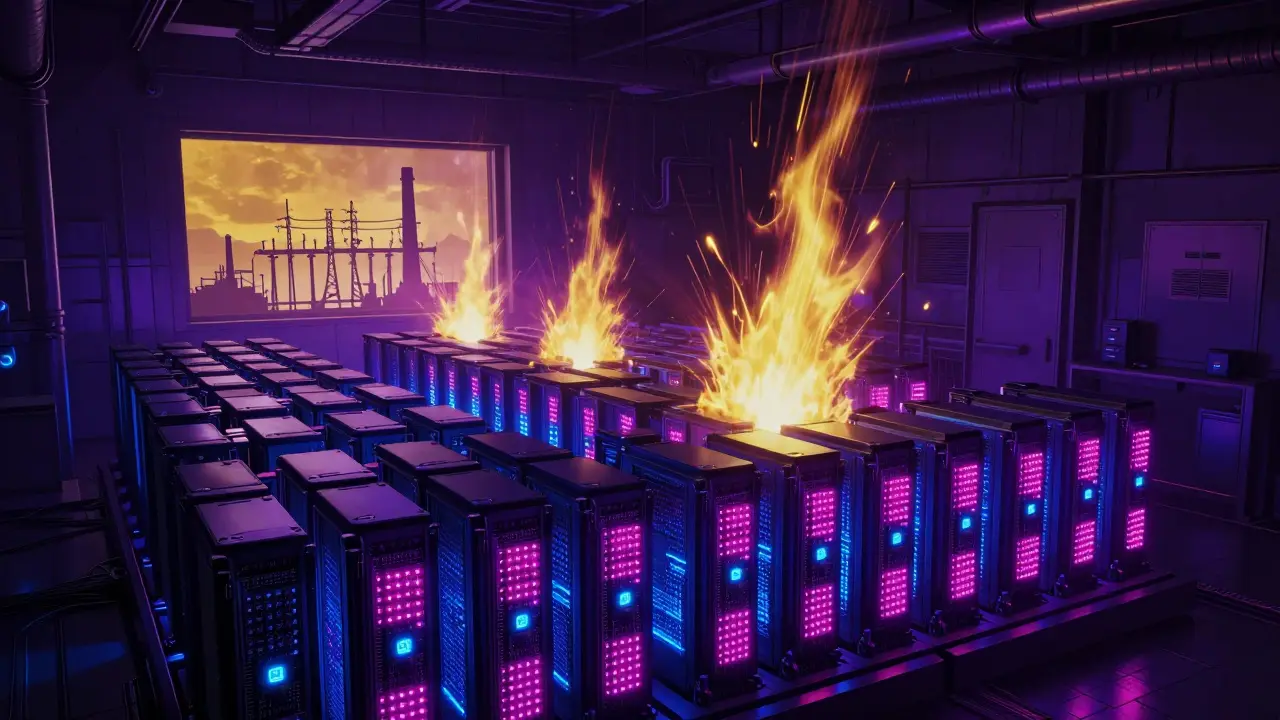
The crisis hit a breaking point in December 2021 when Kosovo declared a 60-day state of emergency. The country relies heavily on coal-fired power, and when one of its two primary plants went offline, the grid began to buckle. With the lights flickering for millions of people, the government decided that the massive electricity hunger of mining rigs was a luxury they could no longer afford. Acting Economy Minister Artane Rizvanolli stepped in to implement an emergency ban to keep the national grid from a total blackout.
The lure of cheap power and the crackdown
Before the ban, Kosovo was a hidden gem for miners. In some regions, especially the northern Serb enclaves, electricity was either heavily subsidized or simply not billed. This created a gold rush. Some individual miners were pulling in 2,000 euros a month-roughly five times the average local income. When you aren't paying for power, the only cost is the hardware and the electricity bill you ignore.
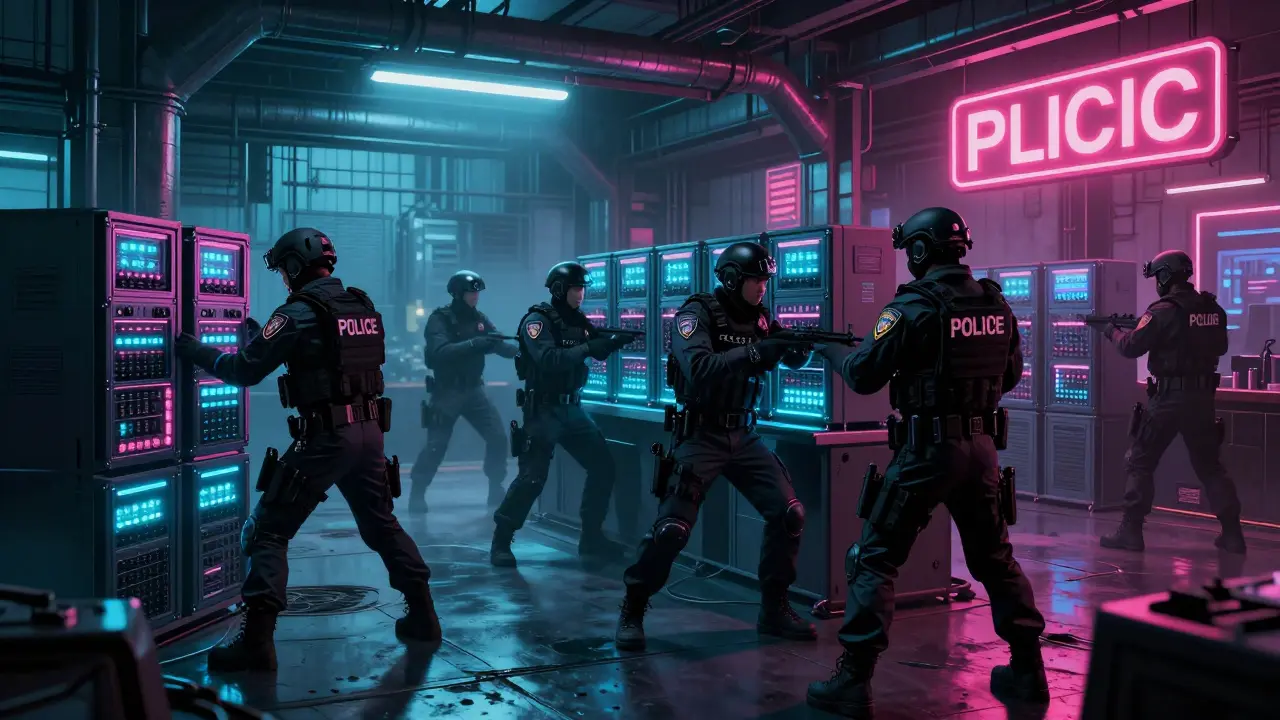
The government's response was swift and aggressive. They didn't just send letters; they sent police. Raids happened nationwide, and authorities seized hundreds of mining devices. Some of these operations had hardware values ranging from 20,000 to 30,000 euros. For the people involved, the financial blow was double: they lost their monthly income and the massive capital they had sunk into their rigs.
| Feature | Pre-2022 Era | Post-2022 Regulation |
|---|---|---|
| Power Source | Universal Public Grid (Often free/subsidized) | Alternative Energy Sources Only |
| Legal Status | Unregulated / De facto permitted | Strictly banned on public grid |
| Profitability | Extremely high due to low overhead | Moderate (Dependent on energy costs) |
| Enforcement | Minimal | Police raids and equipment confiscation |
Why Bitcoin is the primary target
Most of the heat in Kosovo is directed at Bitcoin because of its Proof of Work (PoW) mechanism. In a PoW system, miners compete to solve a puzzle; the more computing power you throw at the problem, the higher your chance of winning the block reward. This creates an endless loop of energy consumption. If you have a thousand rigs running 24/7, you are essentially running a small factory that produces nothing but digital signatures.
This isn't just a Kosovo problem. The global community is waking up to the environmental cost. Data from the University of Cambridge shows a grim reality: only about 39% of the electricity used for Bitcoin mining comes from renewables. The other 61% is fueled by coal, oil, and natural gas. When a country like Kosovo, which is already struggling with outdated coal plants, sees this level of waste, a ban becomes the only logical move to ensure hospitals and homes have power.
Moving from a ban to a balanced framework
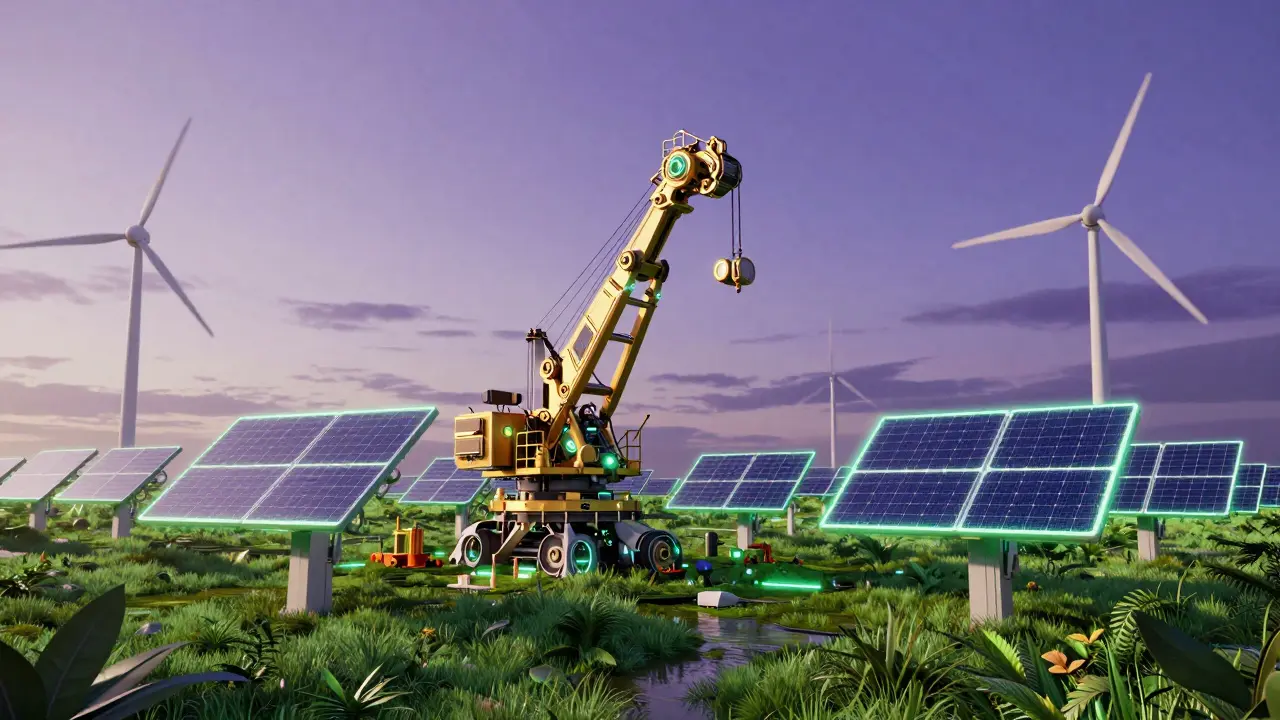
Total bans are rarely sustainable. By 2025, Kosovo began shifting its strategy. Instead of a blanket "no," the government introduced a conditional "yes." Under the guidance of the ruling Vetëvendosje Movement, mining is now permitted-but there's a catch. You cannot touch the public grid. If you use alternative energy sources, like private solar arrays or wind turbines, you're in the clear.
This shift is part of a larger effort to bring the industry under government control. The goal isn't to kill the sector but to stop the bleeding of the national grid and crack down on illegal electricity consumption. By requiring the verification of imported equipment and establishing a tax framework, the state can finally turn a chaotic shadow industry into a regulated economic contributor.
The legal struggle and international pressure
The road to legality hasn't been smooth. Legal experts have pointed out that when the original ban was slapped together, Kosovo didn't actually have any laws specifically regulating crypto. It was a reactive move-the government acted first and looked for the legal justification later. This created a gray area that left many investors in limbo.
Furthermore, the process of finalizing a comprehensive cryptocurrency law has been slowed down by the European Commission. The EU sent advisers to ensure the draft law didn't just cover energy, but also addressed money laundering and financial crimes. This ensures that Kosovo's laws align with European best practices, preventing the country from becoming a haven for digital money laundering.
Lessons from the global trend
Kosovo is following a path blazed by others. The most famous example is China, which once hosted nearly 75% of the world's Bitcoin mining capacity before implementing a total shutdown in 2021. China's move was driven by both a desire to control financial volatility and a commitment to climate goals. When China exited, the global mining map shifted, but the fundamental problem-energy intensity-remained.
For other small nations, the Kosovo experience serves as a cautionary tale and a blueprint. It shows that while emergency bans can save a power grid, a sustainable future requires a transition to Renewable Energy. The only way crypto mining can coexist with national energy security is if the miners provide their own power rather than leaching from a fragile public infrastructure.
Is cryptocurrency mining still completely illegal in Kosovo?
No, it is no longer a blanket ban. Mining is permitted as long as it does not use the universal public electrical grid. Operators must utilize alternative energy sources to legally mine cryptocurrency in the country.
What caused the original mining ban in 2022?
The ban was triggered by a severe energy crisis. The shutdown of one of Kosovo's two coal-fired power plants led to critical electricity shortages, forcing the government to declare a state of emergency and cut off energy-intensive activities like mining.
What happens if you mine using the public grid in Kosovo?
Using the public grid for mining remains strictly prohibited. Authorities have previously conducted raids and confiscated high-tech mining hardware valued at tens of thousands of euros from illegal operations.
Why does Bitcoin mining use so much electricity?
Bitcoin uses a system called Proof of Work (PoW). This requires miners to use massive amounts of computing power to solve complex puzzles to secure the network and earn rewards, which translates to high electricity consumption.
How is the European Commission involved in Kosovo's crypto laws?
The European Commission provided advisers to help draft the cryptocurrency legislation, specifically focusing on anti-money laundering (AML) measures to ensure the laws are compatible with broader European standards.
What's next for miners?
If you're looking at the crypto space in the Balkans, the move is clear: decouple from the grid. For industrial-scale operations, this means investing in dedicated solar farms or wind projects. For the hobbyist, it means recognizing that the era of "free electricity" is over. The future of mining in Kosovo depends on the finalization of the pending cryptocurrency law, which will likely introduce strict taxes and monitoring of imported hardware.
Comments
16 Comments
James Bone
The sheer hubris of thinking you can run a digital gold mine on a dying coal grid is peak comedy. It is basically a moral failure to prioritize a few hashes over actual hospitals. People love to preach about decentralization while leaching off a fragile state infrastructure that can't even keep the lights on. It is just typical of the crypto crowd to ignore the material reality of the world for a digital ledger that mostly serves as a casino for the bored. The state of emergency was the only sane reaction to a collective delusion of endless growth in a finite energy environment.
william manes
Totally deserved 🤡🇺🇸
Tyler Webb
It must have been incredibly stressful for those people to lose their entire investment overnight. I can only imagine the panic when the raids started :(-(
Hope Johnson
When we examine the intersection of technological acceleration and the limitations of physical infrastructure, we see a recurring theme where the digital dream clashes violently with the reality of geopolitical instability. It is not merely about the electricity, but about the social contract between a citizen and the state, where the individual's desire for financial liberation through mining conflicts with the collective need for basic survival and stability. By shifting toward a framework of alternative energy, Kosovo is essentially attempting to synthesize these two opposing forces, allowing for innovation while insulating the public from the risks of systemic collapse. We must consider if this model of 'off-grid' legitimacy can be exported to other developing nations facing similar crises, as it provides a pathway for growth that does not cannibalize the essential services required for a functioning society, thereby transforming a parasitic relationship into a symbiotic one where new energy infrastructure is built specifically to fuel the digital economy without compromising the quality of life for the average citizen who simply wants their lights to stay on during a winter storm.
Adam Auksel
Solar is definitely the way to go here! ☀️ It's a great chance to modernize the whole energy sector while keeping the tech dream alive. Let's hope more people jump on the green energy train! 🚀
Aaliyah BROTHERS
THEY'RE JUST TRYING TO CONTROL THE MONEY!!! Typical government overreach!!! They probably have a secret deal with some big energy conglomerate to force everyone onto 'approved' solar panels!!! Absolute madness!!!! Wake up people!!! The raids were just a show to scare the little guys while the elites keep their rigs running in the shadows!!!
Heather Warren
If anyone is looking into this, you should check out the latest efficiency ratings for ASIC miners. Using low-power hardware could make the transition to solar much more viable for small-scale setups.
Kieran Smith
do u think they'll actually let people use wind power too? would be cool to see some wind farms in the mountains there
aletheia wittman
omg police raiding computers is just so extraaaa lol!! imagine the drama when they found the rigs!! 💅
Jason Davis
Actually, if you look at the local regs in some of those northern areas, the power theft was rampant. It wasnt just mining, but the miners were the most visable targets for the gov to make a point.
Akshay Gorad
It is a balanced approach to move toward alternative energy. The public grid should always be for public necessity first.
jennelle williams
just a cycle of greed and crash
Chidinma Sandra okafor
Oh, so the government just 'accidentally' forgot to make laws and then decided to steal equipment? How wonderful. Truly a masterclass in governance!
Lauren Abrams
Interesting how the EU is stepping in. It seems like they want to standardize the AML rules across the region.
Alan Seiden
Typical Balkan chaos. The government is incompetent and the miners are thieves. Both deserve the mess they are in.
Samson Selleck
The systemic failure of the energy grid is a triviality compared to the macroeconomic volatility induced by such unregulated hash-rate expansion. The subsequent regulatory pivot toward off-grid externalities is a predictable, albeit belated, attempt to mitigate the negative externalities of Proof-of-Work protocols. The European Commission's insistence on AML compliance is the only significant part of this narrative, as it addresses the actual systemic risk rather than the mere electricity consumption of a few thousand GPUs.
Write a comment