
Imagine your crop fails because of a drought, and instead of waiting months for paperwork, adjusters, and claims reviews, you get paid automatically-no phone calls, no forms, no arguing. That’s not science fiction. It’s parametric insurance on blockchain, and it’s already happening.
What Is Parametric Insurance?
Traditional insurance is built on one idea: you get paid back for what you lost. If your house burns down, an adjuster comes to inspect the damage, estimates the cost, and then you wait-sometimes for months-for a check. It’s slow, expensive, and often frustrating. Parametric insurance flips that model. Instead of paying for actual loss, it pays out when a specific, measurable event happens. Think of it like a thermostat: if the temperature hits 95°F, the AC turns on. In insurance terms: if an earthquake hits 7.0 magnitude, you get $10,000. No damage assessment. No paperwork. Just a trigger and a payout. The key? The event has to be objective. Something you can’t argue about. Weather data. Seismic readings. Flight delay times. Satellite images. These are all verifiable, public, and automated. No human bias. No delay.Why Blockchain? The Perfect Match
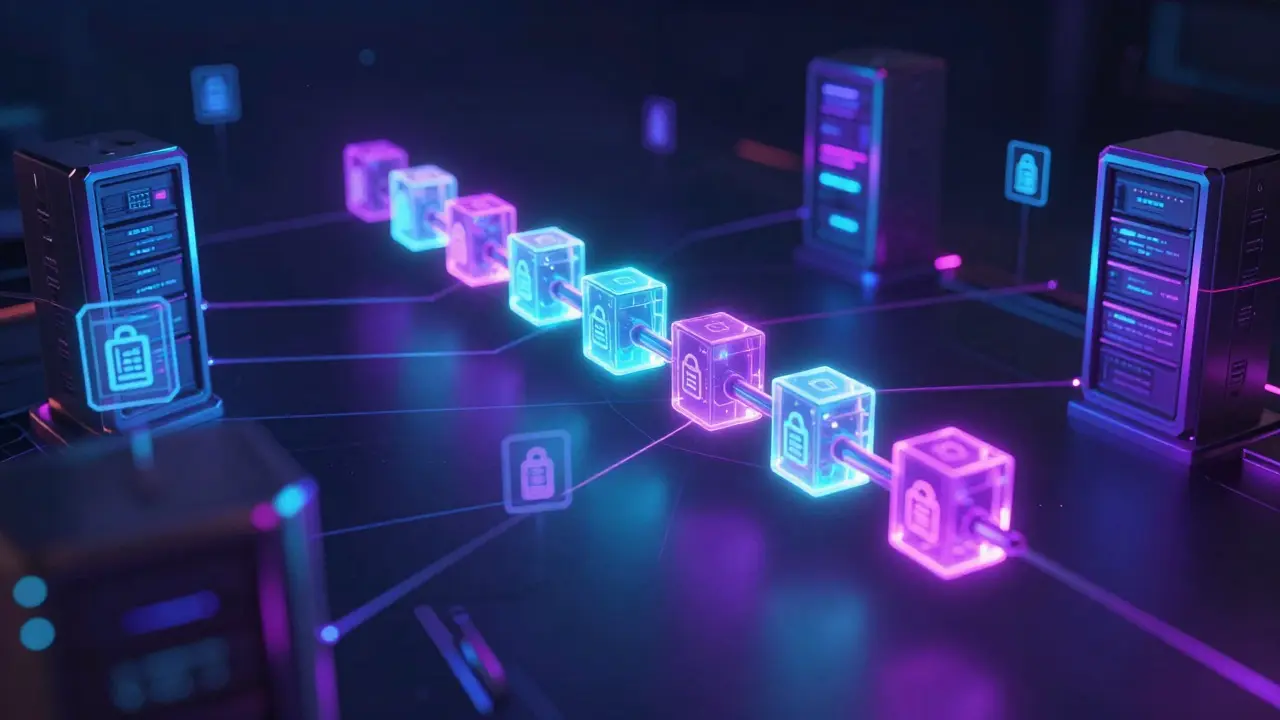
Parametric insurance works because it’s based on clear rules. Blockchain works because it’s built on rules too. That’s why they fit together like puzzle pieces. Blockchain is a digital ledger that records transactions across many computers. Once data is added, it can’t be changed. That’s called immutability. And when you combine that with smart contracts is self-executing agreements with terms written directly into code, you get something powerful. Here’s how it works:- You buy a policy. It’s stored on the blockchain-no paper, no PDFs hidden in a folder.
- The contract says: "If rainfall drops below 200mm during planting season, pay $500 to wallet address X."
- Trusted data sources-like weather stations or satellite feeds-send real-time info to the blockchain through oracles is secure bridges that connect real-world data to blockchain smart contracts.
- When the condition is met, the smart contract automatically sends the payout. No human touches it.
How It Actually Works: Step by Step
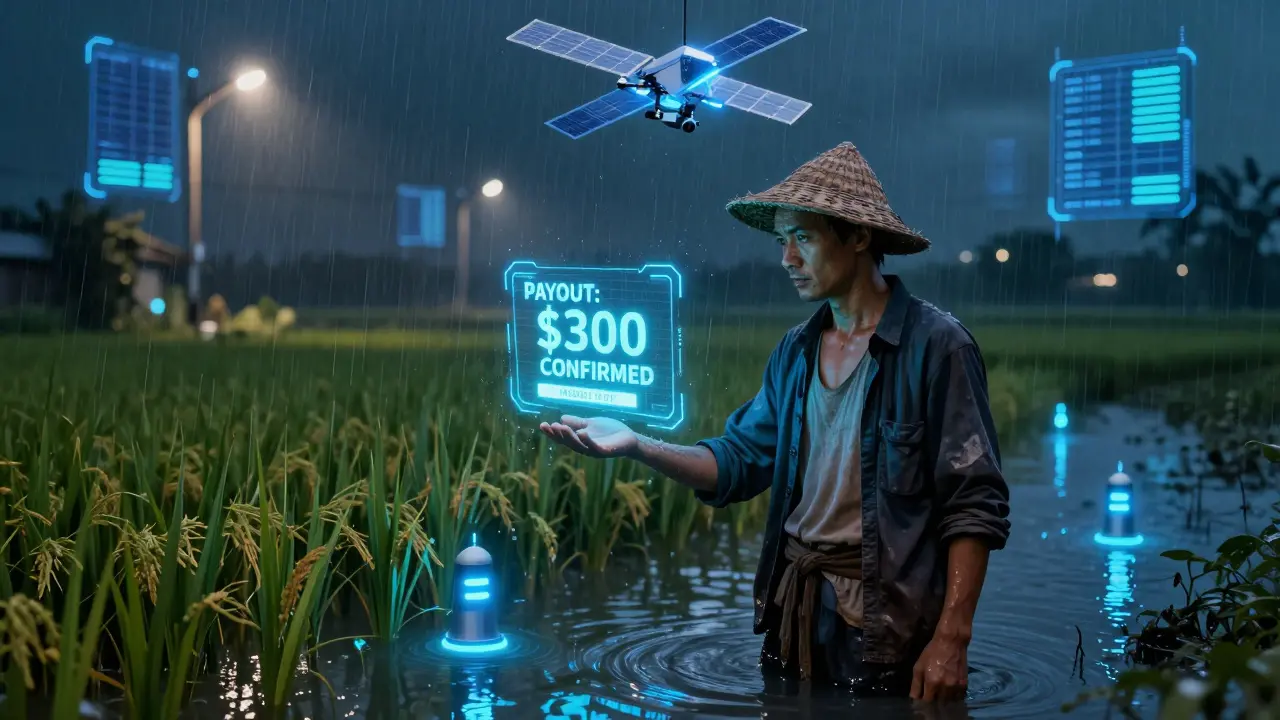
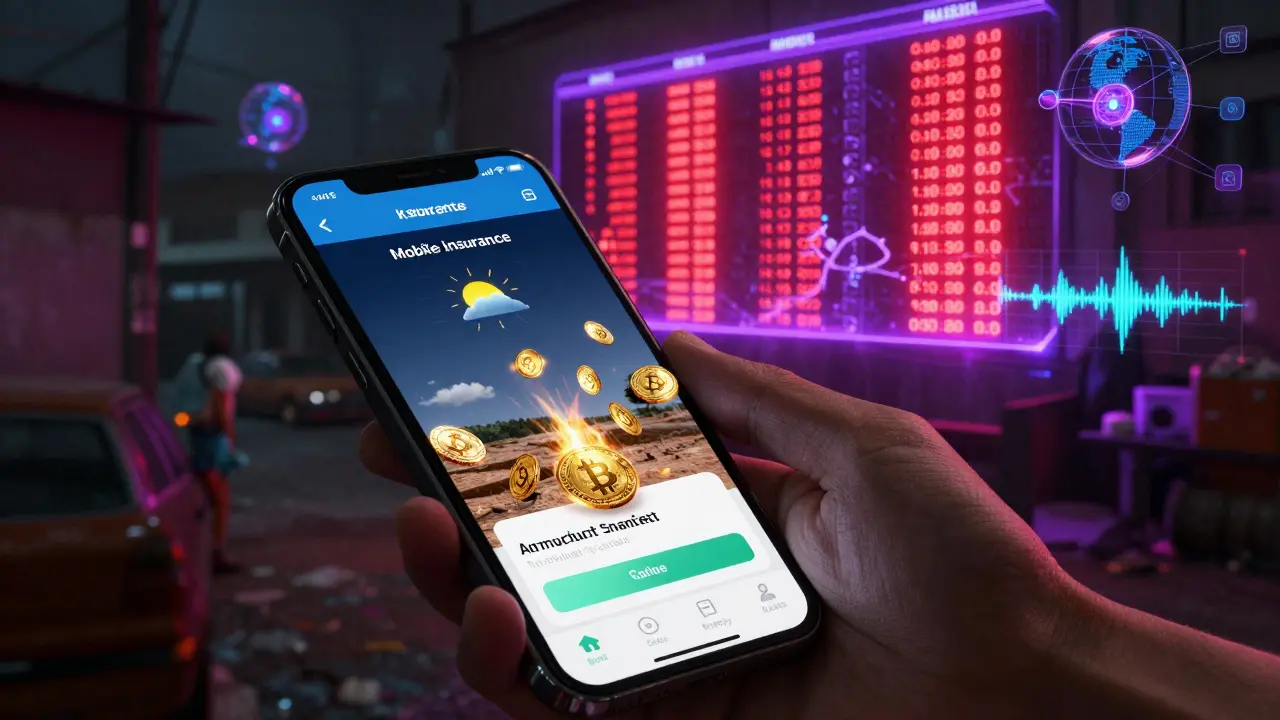
Let’s say you’re a rice farmer in Vietnam. You’re worried about flooding. Here’s what happens:- You open a mobile app and buy a policy for $20. You choose: "If flood depth exceeds 50cm in my village, pay $300."
- The app links to a public flood sensor network. No private company owns it. It’s open data.
- Your policy is written into a smart contract on the blockchain. It includes your wallet address, the trigger level, and the payout amount.
- During monsoon season, sensors in your region detect water depth. The data is sent to the blockchain via an oracle.
- The system checks: Is depth > 50cm? Yes. Is the date within policy window? Yes.
- Within minutes, $300 is sent to your digital wallet. No form. No call. No waiting.
Why This Matters: The Real Impact
The biggest problem in global insurance isn’t fraud. It’s access. Over 4 billion people have no insurance. Why? Because traditional models cost too much to administer. You need offices, adjusters, lawyers, call centers. For a $20 policy, that’s not sustainable. Blockchain-based parametric insurance cuts costs by 70-80%. No middlemen. No paperwork. No field agents. That means:- Policies can cost as little as $5.
- People in remote areas can get coverage without ever setting foot in a bank.
- Small businesses can insure against weather, delays, or supply chain shocks.
- Disaster response becomes faster. Communities recover quicker.
Real-World Examples
This isn’t just startups. Big players are testing it too.- In the Philippines, InsurAce is a blockchain-based insurance protocol offering parametric products for natural disasters launched flood insurance for 50,000 farmers using satellite rainfall data.
- In Europe, airlines now offer flight delay insurance that pays out automatically if your flight is delayed over 3 hours-verified by public flight APIs.
- A startup in Kenya uses weather data from the government’s meteorological service to insure smallholder farmers against drought. Payouts go directly to mobile money accounts.
Challenges? Yes. But They’re Solvable
It’s not perfect. There are real hurdles.- Data reliability: What if the weather station is broken? That’s why multiple oracles are used-cross-checking data from different sources.
- Regulation: Some countries don’t yet recognize smart contracts as legal contracts. That’s changing. The EU, Singapore, and parts of the U.S. are updating laws.
- Trust: People are used to talking to a person. But once they get a payout in minutes instead of months, trust builds fast.
The Bigger Picture: More Than Just Insurance
Parametric insurance on blockchain isn’t just about paying out money. It’s about changing how risk is shared. Traditional insurance is top-down: a big company decides what’s covered, how much, and when. Blockchain insurance is bottom-up: communities set their own rules, pool funds, and control the system. It’s not just insurance. It’s a new kind of social contract-built on code, verified by data, and executed without permission. And it’s just the beginning. Once this model proves itself, it can expand to other areas: supply chain guarantees, energy grid failures, even unemployment triggers based on local job data.What’s Next?
By 2027, analysts expect over $20 billion in parametric insurance premiums to be managed via blockchain. That’s up from under $1 billion today. The technology is mature. The data sources are reliable. The demand is growing. If you’re a farmer, a small business owner, or even someone living in a climate-vulnerable area, this isn’t something you should wait to learn about. It’s already here. And it’s working.How is parametric insurance different from regular insurance?
Regular insurance pays you for the actual damage you suffered-like repairing your house after a storm. Parametric insurance pays a fixed amount when a specific event happens-like if wind speed hits 100 mph-no matter how much damage was done. It’s faster, simpler, and doesn’t require claims adjusters.
Can I buy parametric insurance on my phone?
Yes. Many platforms let you buy parametric policies directly through mobile apps. You choose your trigger (like rainfall or flight delay), set your payout, pay with crypto or fiat, and your policy is stored on the blockchain. No paperwork, no agent.
Is blockchain insurance safe?
Yes-if built properly. The policy terms are stored on an immutable ledger, so no one can change them. Payouts are automatic and transparent. But you still need to use trusted platforms with verified oracles and secure wallets. Never share your private keys.
What if the data source is wrong?
Smart contracts use multiple data sources-called oracles-to cross-check information. If one weather station fails, others still report. The system only triggers if consensus is reached. This reduces the risk of errors significantly.
Who pays out the money?
The smart contract itself does. It holds the funds in a secure wallet and releases them automatically when conditions are met. No insurance company needs to approve the payout-it’s all code, not humans.
Can I create my own parametric insurance policy?
Yes. Platforms like Etherisc let users design custom policies for crops, flights, or weather events. You set the trigger, the payout, and who can join. It’s peer-to-peer insurance, powered by blockchain.
Is this only for developing countries?
No. While it’s especially powerful where traditional insurance is lacking, it’s also used in wealthy countries-for flight delays, crop insurance for vineyards, business interruption from power outages, and even event cancellations. It’s about efficiency, not just access.
Parametric insurance on blockchain isn’t a future idea. It’s here. It’s working. And it’s giving people control over their own risk-without waiting for someone else to say yes.

Comments
17 Comments
Felicia Eriksson
This is the kind of innovation that actually helps people. No bureaucracy, no waiting. Just money when you need it. I love it.
Simple. Effective. Human.
aaron marp
I’ve been following this space for a few years now, and honestly? This is the first time I’ve seen a blockchain use case that doesn’t feel like vaporware. The fact that farmers in Kenya are already getting payouts? That’s not a demo. That’s impact.
Patrick Streeb
While the conceptual framework is undeniably elegant, one must acknowledge the legal and regulatory heterogeneity across jurisdictions. The enforceability of smart contract obligations remains a non-trivial concern in jurisdictions lacking statutory recognition of decentralized autonomous agreements.
Phillip Marson
So let me get this straight - we’re replacing insurance agents with code and calling it progress? Cool. I guess next they’ll automate your funeral and send you a crypto payout when the sensors detect your heartbeat stops. 🤡
Tracy Whetsel
This gives me chills in the best way 😭
Imagine being a mom in rural India and getting $100 the second your crops fail - no forms, no begging, no shame. Just help. That’s dignity.
People think tech is cold. This? This is warmth coded in blockchain.
Ifeanyi Uche
They say blockchain is the future but they dont even mention how many people got scammed with fake oracles or rigged weather data. This sounds like a scam waiting to happen. Why should i trust a machine over a person who can feel my pain?
Jeff French
The oracle architecture here is critical. Most implementations rely on a single source, which introduces systemic risk. The real innovation isn't the smart contract - it's the multi-source, weighted consensus layer that validates external data without central authority.
Elana Vorspan
I’ve been nervous about crypto stuff for years, but this? This feels different.
It’s not about money. It’s about fairness. People in places no one cares about suddenly having control? That’s the quiet revolution.
Thank you for writing this.
Danny Kim
So you’re telling me we’re automating payouts so we don’t have to talk to humans? Sounds like the next step is replacing therapists with AI and calling it ‘emotional parametric insurance’.
Brian Lemke
I’ve worked with microfinance groups in Southeast Asia. This isn’t just tech - it’s cultural shift. For years, people were told they didn’t ‘qualify’ for insurance because they were too poor, too remote, too risky. Now? They design the policy themselves. That’s power. That’s autonomy. That’s the future - and it’s already in their pockets.
Deborah Robinson
This made me cry. Seriously. I used to work with disaster relief teams. Watching people wait months for a check while their kids went hungry… this changes everything. 🙏❤️
Arya Dev
I mean, it’s cute that you think a machine can replace human empathy, right? What if the sensor is wrong? What if the farmer’s child is sick and he needs the money NOW? You can’t just… code compassion. This is cold. It’s efficient, yes. But is it humane?
Leslie Cox
Let’s be real - this is just crypto bros repackaging predatory lending as ‘empowerment.’ The real winners? The developers who sell the platform. The farmers? They’re still getting paid in volatile tokens with no consumer protections. Don’t be fooled.
Andrew Hadder
I never thought i’d say this but this is actually kinda genius. i read the whole thing and even my phone broke twice while scrolling. but this? this works.
Derek Sasser
I’ve seen this work firsthand. A friend in Guatemala bought a $5 policy for her coffee crop. When the frost hit, she got $400 in 12 minutes. She bought seeds the next day. No one asked her for a photo of her field. No one called her ‘high risk.’ Just money. That’s all people need.
Molley Spencer
The assumption here is that data transparency equals fairness. But who controls the oracles? Who audits the code? If this is built on Ethereum, you’re trusting a network of miners with no accountability. This isn’t decentralization - it’s opacity with a blockchain sticker.
John Fuller
Payouts in minutes. No paperwork. Done.
Write a comment