




Imagine launching a new cryptocurrency project with millions of dollars in value. You hand tokens to your team and early investors. What happens if they all sell on day one? The price crashes, trust evaporates, and the project dies before it starts. This is exactly why smart contract vesting exists. It is not just a technical feature; it is a survival mechanism for any serious crypto project.
Vesting locks tokens in a secure digital vault and releases them slowly over time. In the past, this required trusting a lawyer or a centralized company to hold the funds. Today, code does the job. Smart contracts execute these rules automatically, without human intervention, ensuring that no one can dump their tokens until the agreed-upon time has passed. For developers and project founders, implementing this correctly is one of the most critical tasks you will face.
How Vesting Contracts Work Under the Hood
At its core, a vesting contract is a self-executing program on a blockchain. It holds assets and follows a strict set of instructions. When you deploy a vesting contract, you define specific parameters that cannot be changed later. These parameters act as the law for that specific batch of tokens.
The logic usually revolves around time. You set a start date, a duration, and a release frequency. For example, you might lock 100,000 tokens for four years, releasing 1/48th of the total every month. But it gets more nuanced than simple monthly drips. Most professional implementations include a "cliff" period. During the cliff-often six or twelve months-zero tokens are released. If a team member leaves or fails to meet performance goals within that first year, they get nothing. After the cliff ends, the regular vesting schedule begins.
| Parameter | Description | Typical Value |
|---|---|---|
| Total Amount | The full quantity of tokens locked in the contract. | Defined by allocation (e.g., 500 TON) |
| Cliff Duration | Initial lock period where no tokens are released. | 6-12 months |
| Unlock Period | Frequency of token releases after the cliff. | Monthly or Quarterly |
| Total Duration | Total time from start until all tokens are vested. | 2-4 years |
These numbers aren't arbitrary. They are hard-coded into the contract's memory. Once deployed, even the creator cannot change them. This immutability is what gives investors confidence. They know the team cannot suddenly decide to unlock all their shares and run away.
Two Main Architectural Approaches
When building a vesting system, you have two primary paths. The choice depends on your project's complexity and the blockchain network you are using.
The first approach is embedding vesting logic directly into the token's smart contract. Here, the token itself knows who owns it and when they can spend it. This is efficient because there is only one contract to manage. However, it makes the token contract complex and harder to upgrade if you need to change how vesting works later.
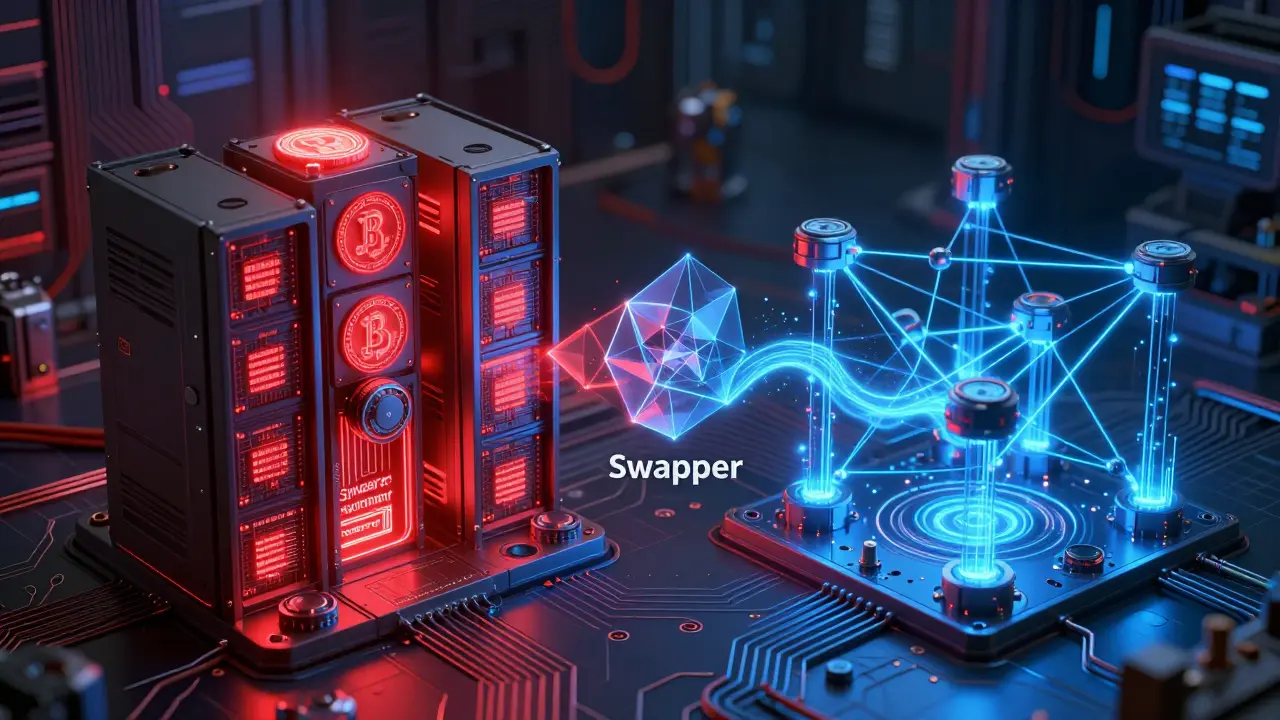
The second approach uses a separate vesting contract. This is often called an escrow model. The tokens are transferred from the main wallet to this separate vesting contract. The vesting contract then acts as a gatekeeper, releasing tokens back to the beneficiary's wallet according to the schedule. This is the method used by major projects like the Open Network (TON). In the TON ecosystem, different investor groups receive specific "share" tokens (like SeedTON or PrivateTON) that are distinct from the main TON token. These share tokens have individual pricing and payout schedules. Later, they are exchanged for the actual TON tokens through a special "Swapper" contract, burning the shares in the process. This separation allows for granular control over different investor classes without cluttering the main token code.
Custom Development vs. Standard Solutions
You might be tempted to use a pre-made vesting template to save money. While faster, this route carries hidden risks. Custom development offers complete control over your vesting mechanisms. You can tailor functionality to fit unique tokenomics. Maybe you want milestone-based unlocking instead of time-based. Perhaps you need dynamic adjustments based on real-time data from an oracle. Custom contracts allow for these specialized functionalities.
However, custom development is expensive and time-consuming. The biggest cost isn't writing the code; it's securing it. Smart contract security audits are non-negotiable. Firms like ConsenSys Diligence, Trail of Bits, or OpenZeppelin charge between $15,000 and $50,000 per audit. If you make changes to the code, you must pay for another audit. This ensures that vulnerabilities like reentrancy attacks or integer overflows are caught before deployment.
If you choose standard solutions, you rely on third-party providers. While convenient, this creates dependency. If the provider goes offline or raises fees, your project is stuck. Custom solutions eliminate this risk, giving you full ownership and flexibility for future updates.
Critical Security Considerations
Security is paramount. A vesting contract holds significant value, making it a target for hackers. You must implement rigorous safety measures. First, use multi-signature controls for administrative functions. No single person should have the power to pause or modify the contract. Second, include emergency pause mechanisms. If a bug is discovered, the ability to halt distributions temporarily can prevent catastrophic losses. Third, conduct extensive testing on testnets. Never deploy untested code on the mainnet.
Common vulnerabilities include improper access controls, which could allow unauthorized users to withdraw funds. Reentrancy attacks can drain the contract if not handled correctly. Integer overflow issues can result in incorrect token calculations. Professional audits check for these specific flaws. Additionally, consider gas costs. On networks like Ethereum, frequent small transactions can become prohibitively expensive. Some projects implement batch distribution systems to reduce costs, or they migrate to Layer 2 solutions like Polygon, Arbitrum, or Optimism, which offer lower fees and faster execution.
Implementation Challenges and Best Practices
During implementation, you will face difficult decisions. How will tokens be unlocked? Will you use a push or pull distribution model? In a push model, the contract sends tokens to beneficiaries automatically. This is user-friendly but incurs higher gas costs for the project. In a pull model, beneficiaries claim their tokens manually. This shifts gas costs to the user but saves the project money. For large-scale distributions, pull models are often preferred.
Another challenge is handling edge cases. What happens if a team member leaves before the cliff ends? Your contract needs logic to handle forfeited tokens. Do they return to the treasury? Are they burned? Clear rules must be defined upfront. Also, consider regulatory compliance. As jurisdictions develop frameworks like the EU's MiCA regulation, vesting contracts may need to incorporate features like investor accreditation verification or geographic restrictions. Planning for these requirements now saves headaches later.
Future Trends in Vesting Technology
The landscape is evolving. Cross-chain vesting solutions are emerging, allowing projects to distribute tokens across multiple blockchains simultaneously. This is crucial for projects operating on decentralized ecosystems. Another trend is DAO governance integration. Communities can vote on vesting parameter modifications within predetermined bounds. This balances flexibility with security, enabling community-driven adjustments while maintaining core contract integrity. As blockchain technology matures, expect vesting contracts to become more sophisticated, incorporating AI-driven analytics for dynamic schedule adjustments and enhanced regulatory reporting capabilities.
What is the difference between linear and cliff vesting?
Linear vesting releases tokens gradually and consistently over time, such as monthly increments. Cliff vesting includes an initial period where no tokens are released. Only after the cliff period ends do tokens begin to vest, often linearly thereafter. Cliffs ensure commitment by preventing early exits.
Why are smart contract audits so important for vesting?
Vesting contracts hold valuable assets, making them targets for hackers. Audits identify vulnerabilities like reentrancy attacks or access control flaws. Without an audit, a single bug could lead to the loss of all locked tokens, destroying investor trust and project viability.
Can I modify a vesting contract after deployment?
Generally, no. Vesting contracts are designed to be immutable to ensure trust. Any changes would require deploying a new contract and migrating funds, which is complex and risky. Parameters like duration and amounts are fixed at deployment.
What is a pull vs. push distribution model?
In a push model, the contract automatically sends tokens to beneficiaries, costing the project gas fees. In a pull model, beneficiaries must actively claim their tokens, shifting gas costs to them. Pull models are cheaper for projects distributing to many users.
How do Layer 2 solutions affect vesting costs?
Layer 2 networks like Polygon or Arbitrum offer significantly lower transaction fees and faster speeds compared to mainnets like Ethereum. Implementing vesting contracts on Layer 2s reduces gas costs for both the project and beneficiaries, making frequent distributions more feasible.