


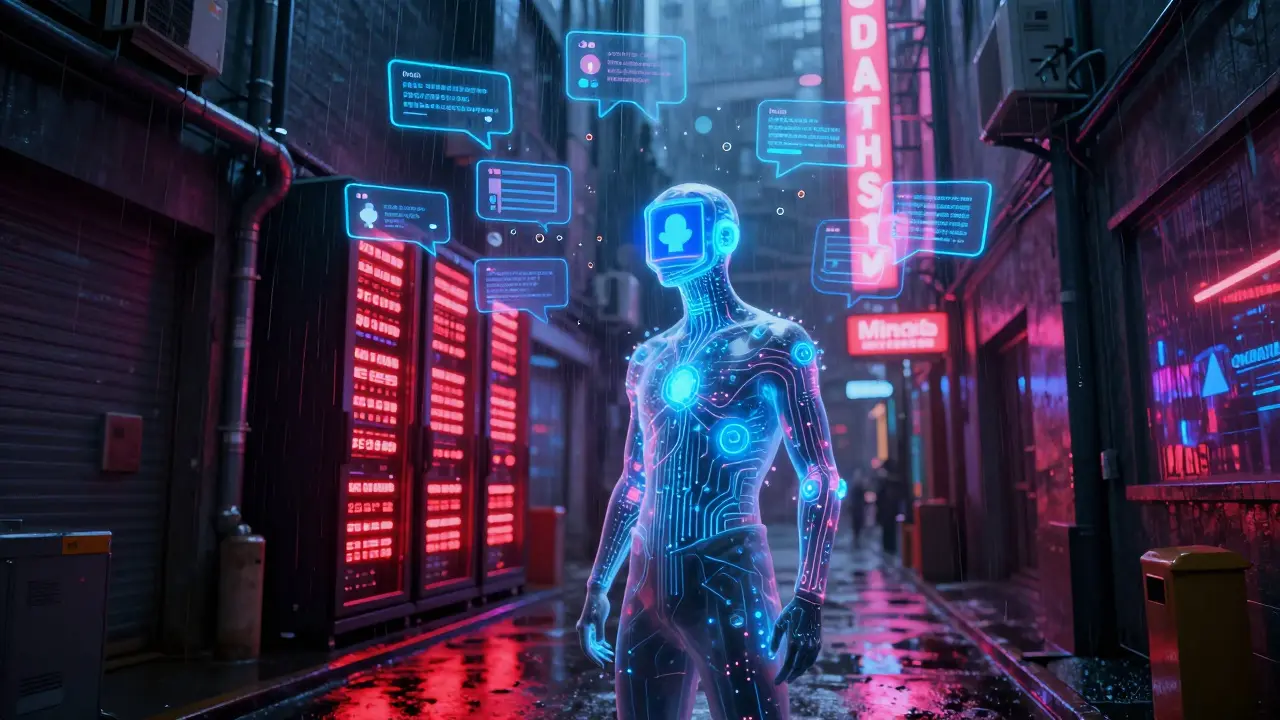
What if you owned your social media data instead of Facebook or Twitter?
Right now, every post you make, every like you give, every message you send - it’s not yours. It’s owned by the platform. Companies collect it, sell it, analyze it, and sometimes delete it without warning. You don’t get a say. But on blockchain social networks, that flips. Your data stays yours. No middleman. No hidden terms. Just you, your keys, and your content.
This isn’t science fiction. Platforms like Minds, Steemit, and Mastodon have been doing this for years. They run on blockchains - not servers owned by a single company - so your data isn’t stored in one place. It’s spread across thousands of computers worldwide. And you control who sees what, when, and for how long. No more surprise data leaks. No more shadow profiles. Just clear, transparent control.
How blockchain social networks actually work
Traditional social media works like a library where the librarian (the company) owns every book. You can read them, but you can’t take them home, change them, or stop the librarian from throwing them out. Blockchain social networks? They’re more like a public bookshelf where everyone has a copy. You write your book. You lock it with your own key. No one else can touch it unless you say so.
Here’s how it breaks down:
- Decentralized identity: Instead of signing up with an email, you create a digital identity tied to a private key. This key is your password, your ID, and your ownership certificate - all in one. Lose it? You lose access. No “forgot password?” button.
- Decentralized storage: Your photos and videos don’t live on Facebook’s servers. They’re stored on networks like IPFS or Filecoin, where files are split, encrypted, and scattered across nodes. Only people you give permission to can access them.
- Smart contracts for control: These are automated rules written in code. You set them once: “Allow my friend to see this post for 30 days,” or “Block advertisers from tracking my activity.” The blockchain enforces them. No exceptions.
Platforms like Lens Protocol and Farcaster use Ethereum-based smart contracts to manage who can comment, repost, or like your content. Every action is recorded on the chain - permanently, transparently, and unchangeable. If you delete a post, it’s still there, but only you can see it. Others see a message saying “content removed by owner.” That’s data sovereignty in action.
Why this matters more than ever
In 2023, the EU fined Meta €1.2 billion for violating GDPR by illegally sharing user data. Twitter removed over 1.2 million accounts in Q1 2024 - some permanently, with no appeal. Meanwhile, blockchain platforms like Steemit have maintained 100% content integrity since 2016. Not one post was deleted without the user’s permission.
That’s the difference. Centralized platforms can change rules overnight. They can ban you. They can sell your data to advertisers. They can even shut down. Remember Vine? Or Google+? Your content vanished with them.
On blockchain networks, your content can’t be censored by a CEO’s decision. It can’t be wiped because the company got bought. It’s yours. Forever. Unless you choose to delete it - and even then, you control how it’s removed.
A 2024 Pew Research survey found that 98% of blockchain social platforms use end-to-end encryption. Compare that to 42% of mainstream platforms. That’s not a small gap. That’s a chasm.
The hidden costs - and why most people still avoid it
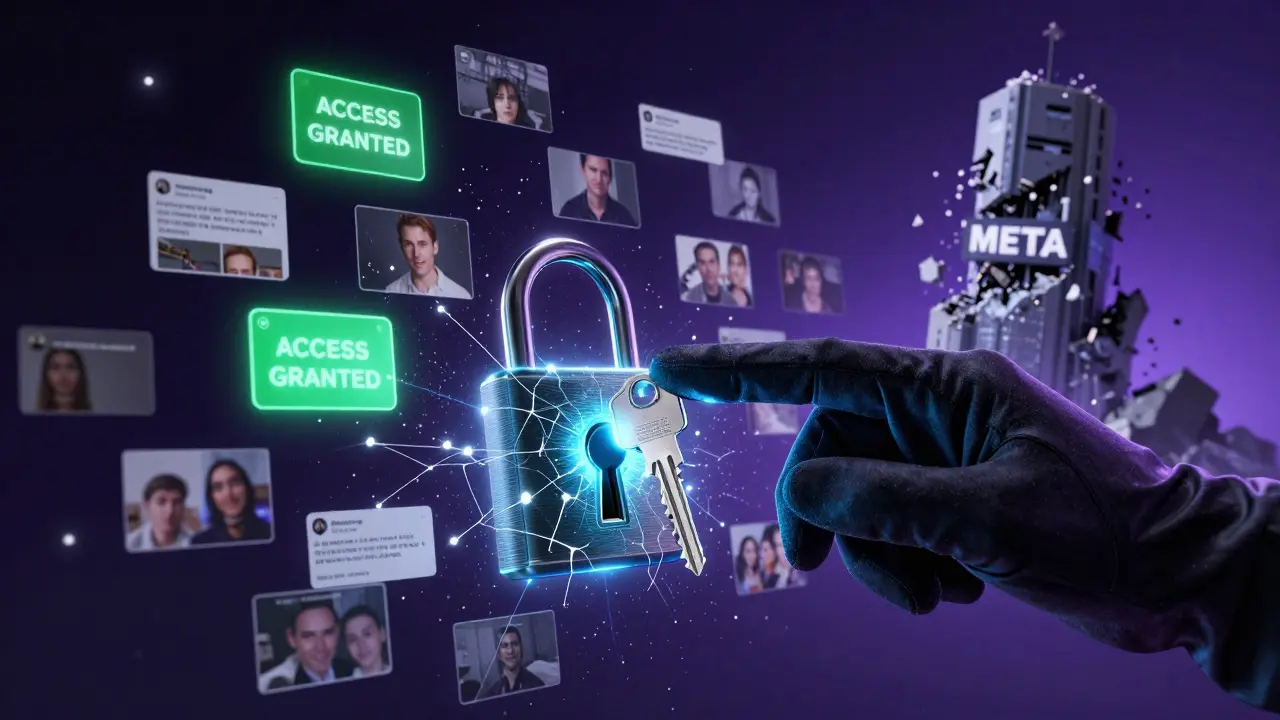
It’s not all perfect. If you’ve ever tried using a crypto wallet, you know the pain.
- Private keys are your responsibility. If you lose them, your account is gone. No customer service. No recovery email. A Trustpilot review from May 2024 says it all: “Lost my Steemit account after misplacing my key. No way back.”
- Slow and clunky. Posting a video on Instagram takes seconds. On a blockchain network? It might take 30 seconds to a minute. Some platforms charge small fees - $0.05 to $0.50 per transaction - to prevent spam. That’s not much, but it’s a barrier if you’re used to free, instant sharing.
- Limited features. Most blockchain social networks still can’t handle high-res video or live streaming well. Blaize Tech’s 2024 analysis found 78% of platforms restrict media to text and low-res images. Why? Storing large files on-chain is expensive. Even decentralized storage isn’t cheap enough yet.
- Onboarding is hard. A Peiko study found 63% of new users need help setting up their first wallet. The average setup takes 30-45 minutes. That’s a lot for someone just wanting to share a meme.
And that’s why adoption is still small. Only 18.7 million people use blockchain social networks globally - just 0.8% of the total social media market. Most users are crypto-savvy, male, and under 35. If you’re not already comfortable with wallets, seed phrases, and gas fees, this isn’t for you… yet.
Who’s winning - and who’s falling behind
Not all blockchain social networks are equal. Some are thriving. Others died quietly.
Minds has over 1.2 million users and a 4.2/5 rating on Trustpilot. People love that they can revoke advertiser access in two clicks. No other platform lets you do that.
Mastodon grew to 450,000 users after Twitter’s 2023 API changes. It’s not a single app - it’s thousands of independent servers, all connected. You can join a feminist server, a tech server, a poetry server. Your data stays within your chosen community unless you share it.
Steemit pays users in crypto for posting. It’s the original. Still running. Still immutable.
But look at the graveyard. Coinmetro’s 2024 index shows 68% of blockchain social platforms launched between 2021 and 2022 are dead. Why? They focused on tech, not people. They didn’t fix the login process. They didn’t make it easy to recover keys. They assumed users would learn - but most won’t.
The winners? They simplify. They hide the blockchain behind clean interfaces. They offer wallet recovery options (like social recovery or backup codes). They don’t talk about “decentralization.” They talk about “your data, your rules.”

What’s next? The hybrid future
Experts don’t think blockchain networks will replace Instagram or TikTok. They think they’ll replace the backend.
The World Economic Forum predicts a hybrid model by 2030: You’ll use a familiar app - maybe even Instagram - but your identity, your data permissions, and your content ownership will be handled by a blockchain protocol behind the scenes. Your private key controls who sees your photos. Your smart contract decides if an advertiser can target you. The app just shows you the feed.
That’s already happening. Lens Protocol’s v2.3 update lets you share a post with one friend, then take it back later. Microsoft’s ION project lets you use your blockchain identity to log into apps without passwords. Even Meta is quietly exploring decentralized identity standards.
Regulation is pushing this too. The EU’s Digital Services Act now requires data portability - something blockchain networks built in from day one. If you leave Instagram, you can’t take your photos with you. On a blockchain network? You already own them.
Should you try it?
If you care about privacy - really care - and you’re willing to learn a little tech, yes. Start with Minds or Mastodon. They’re the easiest. Don’t worry about crypto rewards or complex keys right away. Just post a message. See how it feels to control your data.
If you’re not ready? That’s fine. But ask yourself: Do you want to keep giving your life to companies that profit from your attention? Or do you want to own your digital footprint?
Blockchain social networks aren’t perfect. But they’re the only ones that let you say: “This is mine.” And that’s worth trying.

Comments
25 Comments
Kevin Pivko
This is just crypto bros pretending they're libertarians. You think I want to manage a seed phrase just to post a cat pic? 😒
Jessica Boling
So let me get this straight - you're selling me a system where I lose my data if I forget a password... and that's better than Facebook? lol
Tammy Goodwin
I like the idea but honestly? I just want to post memes without reading a whitepaper first. Can we make this easier?
Andy Simms
Actually, the storage part is way more efficient than people think. IPFS isn't perfect but it's way more resilient than centralized servers. The real issue is UX, not tech.
Bonnie Sands
You know who's behind this? The deep state. They want you to think you have control so you stop asking questions about the real surveillance state. Blockchain is just a distraction. 🕵️♀️
MOHAN KUMAR
In India we have 500 million users on WhatsApp. Who has time for blockchain? We just want to talk to family without ads.
Jennifer Duke
I mean, I love how Americans think they invented privacy. Meanwhile in Europe we've had GDPR for years. This is just tech bros copying regulation they didn't even vote for.
Anna Topping
It's funny how we romanticize decentralization but still crave the comfort of a single app. We want control without responsibility. We want freedom but still want someone to fix it when it breaks.
Jeffrey Dufoe
I tried Minds last year. Took me 45 minutes just to post a photo. Gave up. But I do like the idea of owning my stuff. Maybe one day it'll be simple.
Jen Allanson
The notion that individuals are capable of responsibly managing cryptographic keys is not only naive, it is dangerously irresponsible. This is not a consumer product; it is a cryptographic protocol requiring institutional-grade oversight.
Harshal Parmar
I know it sounds hard but trust me brother, once you get the hang of it, it's like waking up from a dream where someone else was controlling your life. I used to post on Facebook, now I post on Lens and I feel like I'm finally alive. No ads, no tracking, just me and my thoughts. It's beautiful. You can do it too. Just take it slow. Start with one post. You won't regret it. I promise.
Darrell Cole
This is the same garbage they sold us with Web 2.0. You think your data is safe on blockchain? They're just moving the surveillance from one server to another. The real power is still with the miners and the devs. You're just a pawn in a bigger game.
Matthew Kelly
You got this. It's tough at first but you'll get used to it. I lost my key once too. Took me a week to recover with social recovery. Worth it. You're not alone 🙌
Dave Ellender
I appreciate the vision but I worry about the emotional toll. What happens when someone you love dies and you can't recover their posts? Privacy shouldn't mean erasing memory.
Adam Fularz
This whole thing is a scam. Blockchain social media? More like blockchain scam. 78% can't even do video? You call that innovation? lol
george haris
I'm curious - what's the actual adoption rate among people over 50? I know my mom would never touch this. Is this just a young tech crowd thing?
Mark Estareja
The real issue isn't decentralization. It's the lack of economic incentives aligned with user behavior. You need tokenized engagement loops, not just philosophical purity. This is why adoption stalls.
David Zinger
America thinks it's leading the future. Meanwhile, China is building digital sovereignty with state control. Europe is regulating it. And we're over here arguing about seed phrases. We're not innovating. We're just being loud. 🤡
Sara Delgado Rivero
If you can't handle a password manager you don't deserve to own your data. This isn't a tech problem. It's a personal responsibility problem.
carol johnson
I'm not even going to try. I've seen the interfaces. They look like they were designed in 2012 by a grad student who hates humans. No thanks. I'll keep my ads.
Steve Fennell
I've been using Mastodon for two years now. It's not perfect but I've never felt more in control. I can mute entire servers. I can block advertisers. I can even delete my posts and know they're gone from my feed. It's quiet. It's mine. 🙏
Heather Crane
I know it's scary to try something new, but if you're even a little curious, just give Minds a shot. It's free. No crypto needed. Just post. See how it feels to own your words. You might be surprised. 💪
Catherine Hays
You're all delusional. The only thing blockchain gives you is a false sense of security. Your data is still being tracked. Your identity is still being mined. You just don't see the receipts.
Chidimma Catherine
In Nigeria we use WhatsApp because it works. We dont have time for blockchain. But i think the idea is good. Maybe one day we can have something simple for people like me who just want to talk to family without ads
Nathan Drake
The real question isn't whether you own your data. It's whether you're ready to bear the weight of that ownership. Freedom isn't a feature. It's a burden.
Write a comment