




Imagine wanting to launch your own cryptocurrency but having zero coding skills. For most people, that's a brick wall. You'd either have to spend thousands on a developer or spend months learning Solidity or Rust. Dexlab is a decentralized platform built on the Solana blockchain that removes these technical barriers, allowing anyone to create, launch, and trade tokens through a simple interface. Often referred to by its native token, XLAB, the platform acts as a one-stop shop for the "idea-to-trading" pipeline. If you've seen a viral meme coin pop up overnight on Solana, there is a high chance it started in a place like this.
The Core Engine: How Dexlab Works
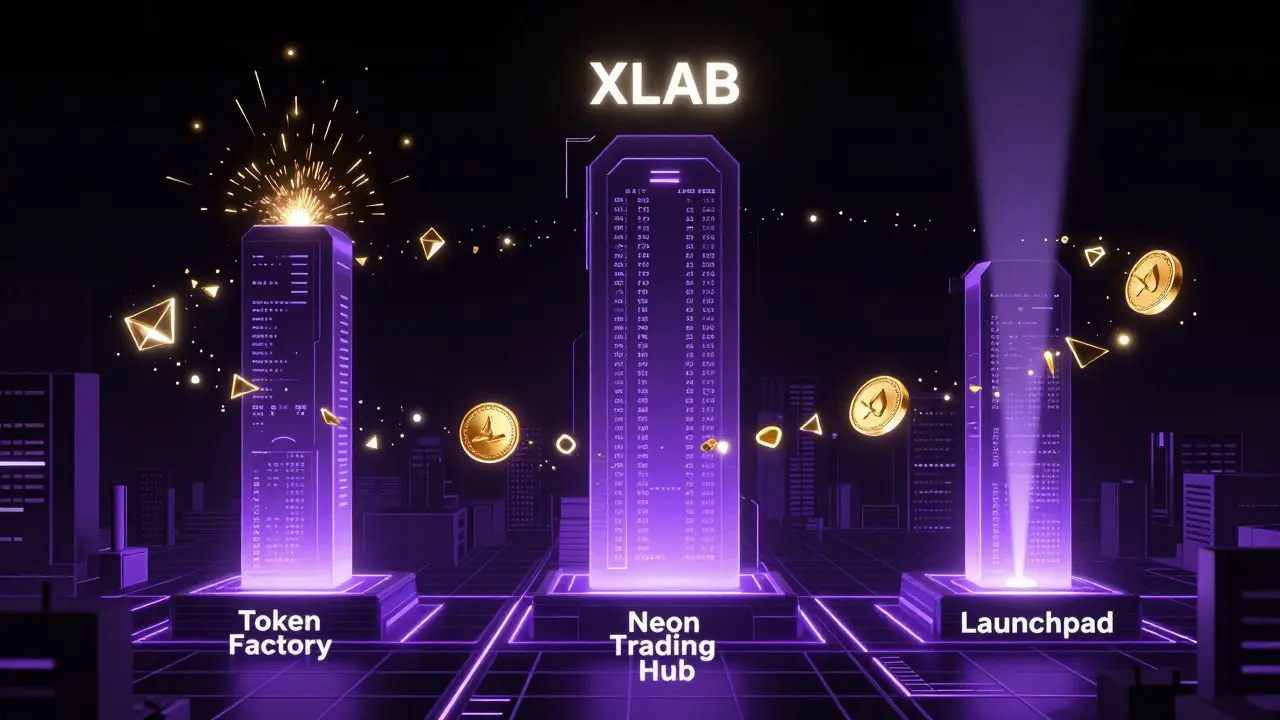
At its heart, Dexlab isn't just a coin; it's a suite of tools designed to make the Dexlab ecosystem a launchpad for innovation. The platform splits its functionality into three main pillars that handle the entire lifecycle of a crypto project.
First, there is the MintingLab, which is essentially a token factory. Instead of writing complex smart contracts, you fill out a form. You pick your token name, decide on the symbol (like BTC or ETH), set the total supply, and define the decimal places. The platform's backend handles the deployment to the Solana blockchain automatically. It's a "no-code" solution that has powered over 200,000 token launches.
Second, the platform integrates a Decentralized Exchange (DEX). This is where the peer-to-peer magic happens. Once a token is minted, it needs a place to be traded. By having a DEX built-in, creators don't have to jump through hoops to get their tokens listed on external markets.
Third, they provide a dedicated launchpad for Initial DEX Offerings (IDOs). This allows projects to raise capital and distribute tokens to early believers in a structured way, creating a seamless transition from a private project to a public asset.
The XLAB Token: More Than Just a Price Ticker
You can't talk about the platform without talking about the XLAB token. While many people just look at the price-which is hovering around $0.0624 as of April 2026-the token actually functions as the fuel for the entire ecosystem. It isn't just a speculative asset; it's a utility tool.
XLAB holders get a seat at the table through governance. This means you can vote on protocol upgrades, changes to the fee structures, or even decide which new projects get a featured spot on the launchpad. If you want to influence how the platform evolves, you need XLAB. Beyond voting, the token is used to pay trading fees and can be staked to operate validation nodes, which helps keep the network secure while earning the staker rewards.
| Feature | Function | Benefit to User |
|---|---|---|
| Governance | Voting on proposals | Direct influence over platform roadmap |
| Staking | Locking tokens in nodes | Passive rewards and network security |
| Fees | Payment for transactions | Reduced costs for ecosystem users |
| Liquidity | Providing asset pairs | Earning a share of trading volume fees |
Fueling the Meme Coin Economy
If you've followed the Solana craze, you know that meme coins move faster than almost anything else in finance. Dexlab leaned into this by creating a specific "meme coin factory." They realized that for a meme to go viral, the token needs to exist now, not in three weeks after a developer finishes the code.
Their system allows for token creation in just three clicks. This efficiency is why Dexlab became an incubator for some of the biggest names in the space. Early versions of viral hits like BONK and Slerf were hosted on the platform before they exploded into the mainstream. By lowering the barrier to entry, Dexlab essentially became the "garage" where many of Solana's most famous tokens were built.
Strategic Advantages Over Other Networks
Why build on Solana instead of Ethereum? It comes down to the "gas war." On Ethereum, minting a token or swapping a few coins can sometimes cost a fortune in transaction fees, especially during high traffic. Solana's architecture allows for lightning-fast speeds and fees that are fractions of a cent.
Dexlab leverages this by offering an integrated experience. In most other ecosystems, you'd go to one site to mint a token, another to create a liquidity pool, and a third to market your IDO. Dexlab collapses these into one interface. This vertical integration reduces "friction"-the small annoyances and technical hurdles that usually kill a project's momentum in its first week.
Tools for the Modern Trader
Dexlab isn't just for the people making the coins; it's for the people trading them. To keep users engaged, they've moved beyond the basic web browser. One of their smartest moves is the Telegram Bot integration. Instead of refreshing a chart every ten seconds, traders can get real-time alerts on new token creations and use tools directly within their chat app.
Looking forward, the platform is adding professional-grade tools like a full order book and the "Airdrop Burst" system. These features are designed to move Dexlab from a "simple tool for beginners" to a "powerhouse for professional traders," providing the depth and liquidity needed for larger-scale operations.

Market Presence and Availability
For those looking to acquire XLAB, the token has moved from niche liquidity pools to major global exchanges. It's available on platforms like Binance, OKX, and MEXC. This wide availability is a strong signal of legitimacy and liquidity, meaning traders can enter and exit positions without causing massive price swings.
The platform's commitment to transparency is a key selling point. Every token created and every trade made is recorded on-chain. You don't have to trust a CEO's word; you can verify the contract and the liquidity on the blockchain itself. This financial autonomy ensures that users maintain control over their assets without needing a central bank or a corporate entity as a middleman.
Do I need to know how to code to use Dexlab?
No, you don't. The MintingLab is designed specifically for non-developers. You simply fill out a form with your token's name and supply, and the platform's smart contracts handle the technical deployment for you.
What is the difference between DXL and XLAB?
They are essentially the same thing. DXL was the original ticker for the platform's native token, but it was later updated to XLAB (or Dexlab Classic) to better align with the brand as the ecosystem grew.
How does the XLAB token help the platform grow?
XLAB incentivizes long-term growth through staking and governance. By rewarding users who lock up their tokens, Dexlab ensures a committed community. Governance allows the community to steer the platform's development, making it more resilient to market shifts.
Can I launch a meme coin on Dexlab?
Yes, Dexlab is widely known as a primary infrastructure for Solana meme coins. They have a dedicated meme coin factory that allows you to launch a token in just three clicks.
Where can I trade XLAB tokens?
XLAB is listed on several major exchanges, including Binance, OKX, MEXC, and LBank, as well as decentralized options within the Solana ecosystem.
Next Steps for Users
If you are a creator, the best way to start is by exploring the MintingLab. Test the interface with a small supply to see how the process works before launching a full-scale project. Make sure you have a clear plan for your token's utility to avoid the "pump and dump" trap common in meme coins.
If you are a trader, consider integrating the Telegram Bot to get a head start on new launches. Since the Solana market moves incredibly fast, having real-time alerts can be the difference between catching a trend and missing it entirely. However, always remember to check the liquidity of any new token on the DEX before committing significant capital.
Comments
24 Comments
Surender Kumar
solana is realy fast and this tool makes it easy for everyone to start. looks like a gud way to get into crypto without coding
Omotola Balogun
Actually, the liquidity provisoning on these no-code platforms is often underestmated. Most people dont realze that without proper depth, your token just crashes. I've seen hundreds of these 'three-click' coins fail because the creator didnt understnad slippge.
Adam Auksel
This is such a great way to lower the entry barrier for new creators! 🚀 I love seeing tools that make the ecosystem more inclusive. If you're nervous about your first token, just start small and learn as you go! 🌟
Tracie and Matthew Hartley
idk why everyone is so hyped about this. its just another factory for spammy tokens and rugpulls. solana is already clogged with garbage coins and this just makes it fastar to make more
James Bone
The irony of 'democratizing' token creation is that it just democratizes the ability to lose money. We're basically funding a digital casino where the house is a smart contract and the players are hopeful rubes. It's a philosophical wasteland where value is replaced by 'vibes' and a few clicks on a website. This isn't innovation; it's just efficient gambling dressed up as financial autonomy. The obsession with meme coins is a symptom of a society that's given up on actual productivity in favor of lottery tickets. We pretend this is the future of finance while ignoring that the underlying utility is often nonexistent. It's a cycle of hype, pump, and inevitable dump that leaves the most vulnerable holding the bag. Truly a masterpiece of modern capitalism.
EDOZIEM MICHAEL
wealth is but a fleeting shadow and these tokens are just the wind blowing through the trees
ssjuul z
Keep that energy up! 💥 The ability to pivot from an idea to a trading asset in minutes is exactly why Solana is winning. Let's build something awesome! 📈
Chidinma Sandra okafor
Oh look, another way for people to pretend they're geniuses by clicking three buttons. How revolutionary. I'm sure the world desperately needed another 200,000 tokens with zero purpose. Just brilliant.
Aaliyah BROTHERS
THEY WANT US TO THINK IT'S EASY!!! 🚨 This is just a way for the globalists to track every single penny we move on-chain!!! Why is it so simple??? Because it's a TRAP!!! They are probably using these 'bots' to manipulate our minds while we sleep!!! WAKE UP PEOPLE!!! 🇺🇸🇺🇸🇺🇸
Lela Singh
Absolutely stellar utility! This is the gold standard for rapid deployment. Go get those gains!
Rob Mitchell
Integrating the Telegram bot is the real winner here. Speed is everything in SOL trading.
Terrance Hausmann
I can see both sides of this. On one hand, the ease of access is a wonderful thing for those who have great ideas but lack the technical skill to execute them, which creates a more open playground for creativity. On the other hand, the sheer volume of tokens can be overwhelming for a new trader, so it's important to move slowly and do your research. Maybe we can find a middle ground where the tools are easy to use but the quality is filtered better by the community. It's all about finding that balance between accessibility and security.
Will Dixon
i dont really get the tech stuff but it sounds cool that you dont need to code stuff
Jessie Tayaban
OMG this is actualy insane!! Imagine just making a coin in 3 clicks? I'm literally shaking thinking about the possibilities!! 😱 Totally gonna try this tonight!!
Rebecca Violette
i just lost everything on a solana coin and now i see this and i just feel empty inside
Emily H
The structural integration of the DEX and the MintingLab provides a highly efficient workflow for asset deployment.
Swati Sharma
The synergy between the liquidity pools and the IDO launchpad creates a robust flywheel effect for tokenomics optimization.
Scott Fenton
It is imperative that users exercise extreme caution regarding the liquidity of new tokens.
Stanly Hayes
Solana is absolutely crushing Ethereum right now! Who cares about the old guard when you have this kind of speed? Get on board or get left behind!
Lane Montgomery
What's your wallet address? I'll check your holdings.
Alan Seiden
Pure rubbish. Another American-style frenzy for useless digital beads. The lack of any real regulatory oversight here is pathetic and frankly embarrassing for the industry.
Tyler Webb
Glad to see people helping each other out with these guides. Stay safe out there everyone! 😊
Kieran Smith
this sounds like a lauwesome way to larn about how tokens work. i might try minting a small one just for fun!
Akshay Gorad
I appreciate the detailed breakdown of the XLAB utility. It helps in making an informed decision.
Write a comment