



You’ve probably seen a flood of new cryptocurrencies promising to change the world. Some claim to revolutionize finance; others promise real-world utility. Then there’s Empire Token (EMPIRE), which bills itself as a "super token" designed to bridge the gap between decentralized finance (DeFi) and everyday services like travel and ride-hailing.
But what is it really? Is it a legitimate project with staying power, or just another speculative micro-cap asset riding on hype? To answer that, we need to look past the marketing buzzwords and examine the tokenomics, the team behind it, and the actual utility it offers in the current crypto landscape.
The Core Concept: What Makes EMPIRE a "Super Token"?
Empire Token was launched on June 10, 2021. Its creators didn’t just want to build another payment coin. They aimed to create an ecosystem where crypto holders could use their tokens for tangible, real-world benefits. The central idea is simple: merge innovative real-world value-generating use cases with the crypto ecosystem.
Think of it this way. Most crypto projects exist only within the digital realm-you trade them, stake them, or use them in other apps. EMPIRE tries to step outside that box. The project’s roadmap includes integrations with ride-hailing apps, airline ticket search engines, and accommodation booking platforms. The goal is to allow users to pay for these services at discounted rates using EMPIRE. While ambitious, this strategy positions EMPIRE as more than just a store of value; it aims to be a medium of exchange in specific verticals.
The project also places a heavy emphasis on Non-Fungible Tokens (NFTs). One of its flagship features is the NFT Smart Platform. Unlike standard marketplaces where you buy and sell images, this platform allows NFT owners to license their assets to publishers. This creates a recurring revenue stream for creators, moving beyond the one-time sale model that dominates much of the NFT space.
Tokenomics: How the Deflationary Model Works
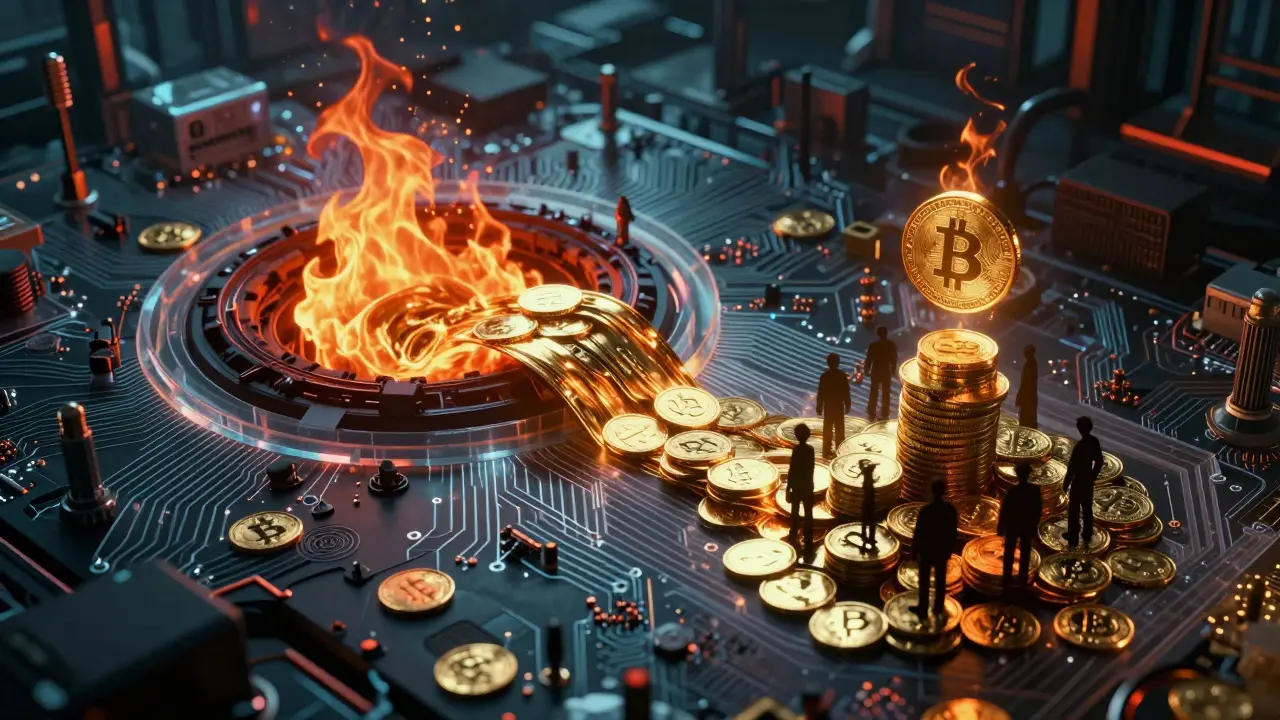
If you’re familiar with DeFi, you know that tokenomics-the economic structure of a token-are crucial for long-term viability. EMPIRE operates as a deflationary token, meaning its supply decreases over time. Here’s how the mechanics work:
- Total Supply: Capped at 1,000,000,000 (1 billion) EMPIRE tokens.
- Circulating Supply: Approximately 857,870,000 EMPIRE tokens are currently in circulation.
- Burn Mechanism: 2% of every transaction is permanently burned (removed from circulation).
- Reflections: 2% of every transaction is redistributed to existing holders proportionally based on their wallet balance.
- Liquidity Pool: 3% of transaction fees are automatically added to the liquidity pool to stabilize trading.
This adds up to a 7% tax on every transfer. For traders, this means higher costs when buying or selling. However, for long-term holders, the reflection mechanism rewards patience by increasing their holdings without requiring additional investment. The burn mechanism theoretically increases scarcity, which can drive price appreciation if demand remains constant or grows.
| Attribute | Value |
|---|---|
| Ticker Symbol | EMPIRE |
| Blockchain | Ethereum (ERC-20) & BNB Chain (BEP-20) |
| Max Supply | 1,000,000,000 |
| Circulating Supply | ~857,870,000 |
| Transaction Tax | 7% (2% Burn, 2% Reflection, 3% Liquidity) |
| All-Time High (ATH) | $0.30 (disputed, some sources cite $0.00874) |
Who Is Behind Empire Token?
In the crypto world, anonymity often raises red flags. Fortunately, EMPIRE has a named leadership team. The project was founded by Abdullah Ghandour, a professional with over a decade of experience in marketing and digital communications. He is supported by core team members including Lyka Chang, Tim Lee, and Ali Sulehna.
Ghandour’s background suggests a strong focus on community building and brand awareness rather than pure technical development. This aligns with the project’s heavy emphasis on marketing its "super token" status and real-world partnerships. While the team is public, it’s worth noting that independent expert analysis from major financial institutions or security auditors is scarce. Most information comes from exchange listings and educational platforms like BitDegree.
Where Does EMPIRE Live? Ethereum vs. BNB Chain
One confusing aspect of EMPIRE is its blockchain presence. Initially launched as an ERC-20 token on the Ethereum network, many exchanges and data providers now list it on the BNB Chain (formerly Binance Smart Chain). This isn’t necessarily a contradiction. It likely indicates a cross-chain strategy, allowing users to access EMPIRE on both networks via bridges or wrapped tokens.
This dual presence offers flexibility. Ethereum provides robust security and widespread developer support, while BNB Chain offers lower transaction fees and faster processing speeds-critical for a token aiming to facilitate frequent, small-value transactions like ride-hailing payments. However, for developers and users, it requires careful attention to ensure they are interacting with the correct contract address for their chosen chain.
Market Performance and Risk Assessment
Let’s talk numbers. As of mid-2026, EMPIRE is classified as a micro-cap cryptocurrency. Its market capitalization hovers between $170,000 and $400,000, depending on the data source and recent price fluctuations. The price per token typically ranges between $0.00004 and $0.0005.
Here’s the reality check: low market cap means high volatility and low liquidity. Daily trading volumes are often under $12,000. If you try to buy or sell a large amount of EMPIRE, you could significantly impact the price (slippage). Additionally, the all-time high of $0.30 represents a massive drop from peak levels, indicating that early investors have seen substantial losses.
Social sentiment scores for EMPIRE are often neutral or unclassified, reflecting a limited active community compared to top-tier DeFi projects. There are no major institutional endorsements or verified large-scale partnerships publicly documented yet. This makes EMPIRE a high-risk, speculative asset suitable only for those who understand the dangers of micro-cap investing.

How to Buy and Store EMPIRE
If you decide to proceed, here’s how you can acquire EMPIRE:
- Centralized Exchanges (CEX): Look for listings on platforms like Gate.io, KuCoin, or Binance (if available in your region). These require KYC verification but offer easier onboarding for beginners.
- Decentralized Exchanges (DEX): You can swap ETH for EMPIRE on Uniswap V2 (Ethereum) or BNB for EMPIRE on PancakeSwap V2 (BNB Chain). Ensure you connect a compatible wallet like MetaMask.
- Storage: Since EMPIRE exists on multiple chains, ensure your wallet supports the specific version you hold. Hardware wallets like Ledger or Trezor provide the highest security for long-term storage.
Always double-check the contract address before swapping. Scammers often create fake tokens with similar names. Verify the official address through reputable trackers like CoinMarketCap or CoinGecko.
Is Empire Token Worth Your Attention?
Empire Token presents an interesting case study in modern crypto design. Its deflationary model and focus on real-world utility are appealing concepts. The NFT licensing platform offers a unique angle in a saturated market. However, execution is key. So far, the lack of significant adoption metrics, low liquidity, and high price volatility suggest that the project is still in its early stages of proving its value proposition.
For seasoned crypto enthusiasts looking for high-risk, high-reward opportunities, EMPIRE might fit into a diversified portfolio. For conservative investors, the uncertainties surrounding its growth trajectory and competitive landscape warrant caution. Always do your own research (DYOR) and never invest more than you can afford to lose.
What is the primary use case for Empire Token (EMPIRE)?
EMPIRE is designed as a utility token for the Empire ecosystem. Its primary uses include paying for transaction fees, staking, governance voting, and potentially purchasing real-world services like travel and ride-hailing at discounted rates. It also powers the NFT Smart Platform, allowing creators to license their digital assets.
Is Empire Token safe to invest in?
Like all micro-cap cryptocurrencies, EMPIRE carries high risk. It has low liquidity, high volatility, and limited adoption data. While the team is public and the tokenomics are transparent, there is no guarantee of future price appreciation. It should be considered a speculative investment.
Which blockchain does EMPIRE run on?
EMPIRE was originally launched on Ethereum (ERC-20) but is also available on the BNB Chain (BEP-20). This cross-chain presence allows users to interact with the token on either network, though you must ensure you are using the correct contract address for your chosen chain.
How does the deflationary mechanism work?
Every EMPIRE transaction incurs a 7% fee. 2% is burned (destroyed), reducing the total supply. 2% is distributed to existing holders as reflections. 3% is added to the liquidity pool. This model aims to reward holders and increase scarcity over time.
Who founded Empire Token?
Empire Token was founded by Abdullah Ghandour, a marketing and digital communications expert. He is supported by a core team including Lyka Chang, Tim Lee, and Ali Sulehna.