


Imagine buying a share of JPMorgan Chase, the world’s largest bank by assets, at 3:00 AM on a Saturday. You can’t do that with a traditional brokerage account. The New York Stock Exchange is closed. But if you are holding JPMon, which is the Ondo tokenized version of JPMorgan Chase stock, you might be able to.
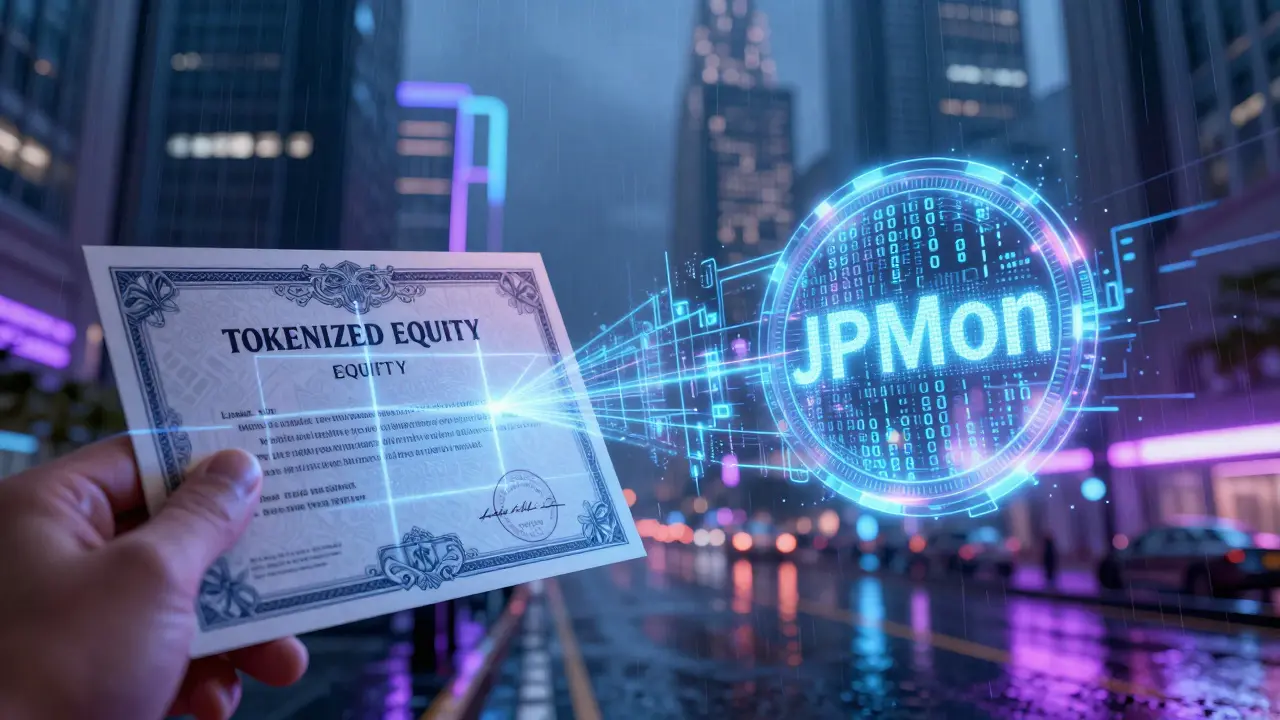
This isn't magic; it's the result of a growing trend called Real-World Asset (RWA) tokenization. JPMon represents a bridge between Wall Street and blockchain technology. It allows investors to gain economic exposure to JPMorgan Chase & Co. (ticker: JPM) without owning the actual shares in a traditional custodial account. Instead, you hold a digital token on a blockchain that tracks the value of the stock, including reinvested dividends.
If you’ve seen JPMon popping up on exchanges like Binance or tracked on aggregators like CoinMarketCap, you’re probably wondering how it works, who can buy it, and whether it’s safe. This guide breaks down the mechanics, risks, and practical steps for interacting with this unique asset class.
How JPMon Works: The Mechanics of Tokenized Equity
To understand JPMon, you first need to understand Ondo Finance, the platform that issues these tokens. Ondo specializes in bringing traditional financial instruments onto the blockchain. They don’t create new cryptocurrencies from thin air; they wrap existing assets.
When you buy JPMon, you aren’t buying a direct share of JPMorgan Chase. You are buying a token that represents a claim on the economic value of those shares. Here is the key distinction:
- Direct Ownership: If you buy JPM stock through Fidelity or E*TRADE, your name is registered as a shareholder. You have voting rights and receive cash dividends directly.
- Tokenized Exposure (JPMon): When you hold JPMon, you get price appreciation that mirrors JPM stock. However, you do not have voting rights. Furthermore, any dividends paid by JPMorgan are notionally reinvested into the underlying pool, which should theoretically increase the Net Asset Value (NAV) of the token over time, rather than paying you out in cash.
This structure is designed for efficiency and accessibility. It allows the token to track the total return of the stock (price + dividends) while simplifying the distribution process for global users. The token operates on an Ethereum-compatible blockchain, meaning it behaves like other ERC-20 tokens you might already know, such as USDC or UNI.
Who Can Buy JPMon? Eligibility and Restrictions
This is the most critical part to get right. Because JPMon is linked to U.S. securities law, it comes with strict geographic restrictions.
Ondo Finance explicitly states that their tokenized stocks are available to non-U.S. retail and institutional users. If you are a U.S. person (citizen, resident, or entity organized under U.S. law), you are generally prohibited from minting or trading these tokens. This is due to regulations enforced by the Securities and Exchange Commission (SEC) regarding unregistered securities offerings.
For eligible international users, the barrier to entry is lower than traditional banking. You don’t need a complex wire transfer setup or a margin account. You just need:
- A compatible Web3 wallet (like MetaMask or Trust Wallet).
- Access to a supported exchange or liquidity provider (such as Binance or specific Decentralized Exchanges).
- Fiat currency or stablecoins (like USDC) to purchase the token.
The platform enables minting and redemption 24 hours a day, five days a week. This aligns with traditional market operating days but extends the window beyond standard exchange hours, offering more flexibility for traders in different time zones.
Price, Supply, and Market Data
As of mid-2026, JPMon remains a niche product within the broader crypto market. It is classified as a small-cap Real-World Asset token. Understanding its metrics helps gauge its stability and liquidity.
| Metric | Value / Range | Note |
|---|---|---|
| Net Asset Value (NAV) | ~$304 | The theoretical value based on underlying JPM stock holdings. |
| Market Price | $299 - $317 | Fluctuates based on supply/demand; may trade at a slight premium or discount to NAV. |
| Total Supply | ~8,500 Tokens | Limited supply reflects the high per-token value. |
| Total Value Locked (TVL) | ~$2.6 Million | Total capital invested in the tokenized pool. |
| 24-Hour Volume | $1.9M - $4.2M | Indicates active trading relative to its small size. |
Notice the difference between the NAV ($304) and the market price (which varies). In efficient markets, these numbers should stay close. If the market price drops significantly below the NAV, arbitrageurs might buy the cheap token and redeem it for the underlying value, pushing the price back up. Conversely, high demand could push the price above NAV. For most holders, tracking the NAV is crucial because it reflects the true performance of the underlying JPMorgan stock.
JPMon vs. Traditional JPM Stock: What’s the Difference?
You might ask, "Why not just buy JPM stock directly?" For U.S. residents, that’s the only option. But for non-U.S. investors, JPMon offers distinct advantages and drawbacks compared to a traditional brokerage account.
Advantages of JPMon:
- Accessibility: No need to open a separate international brokerage account. If you already use crypto wallets, you can access this asset seamlessly.
- Liquidity Hours: Trade outside of standard NYSE hours (though limited to weekdays).
- Composability: You can potentially use JPMon in DeFi protocols (if supported) or easily swap it for other crypto assets without withdrawing to a bank account.
Disadvantages of JPMon:
- No Voting Rights: You cannot vote on shareholder proposals at JPMorgan’s annual meetings.
- Counterparty Risk: You are relying on Ondo Finance and its custodians to hold the actual JPM shares securely. If Ondo fails or is hacked, your token could lose value.
- Premium/Discount Volatility: Unlike a direct stock quote, your token’s price might deviate slightly from the actual stock price due to crypto market sentiment.
Is JPMon Related to JPMorgan’s Blockchain Projects?
A common point of confusion is the relationship between JPMon and JPMorgan Chase’s own blockchain initiatives. JPMorgan has developed Kinexys, a platform for programmable payments and asset tokenization used by institutional clients. However, JPMon is not issued or managed by JPMorgan Chase.
JPMon is a third-party product created by Ondo Finance. JPMorgan does not endorse, sponsor, or control this token. It is simply using JPMorgan’s publicly traded stock as the underlying reference asset. Think of it like an ETF that tracks the S&P 500; the S&P Dow Jones Indices company doesn’t manage the ETF, but the ETF tracks the index. Similarly, Ondo manages JPMon, but JPMorgan is just the source of the data and equity value.

How to Buy and Store JPMon
If you are eligible (non-U.S.) and decide to proceed, here is the general workflow:
- Choose a Platform: Currently, JPMon is accessible via major centralized exchanges like Binance, which supports fiat-to-crypto purchases, as well as through Web3 interfaces on decentralized platforms. Check current listings as availability changes.
- Complete KYC: Because this is a regulated security-like instrument, you will likely need to complete Know Your Customer (KYC) verification to prove you are not a U.S. person.
- Purchase: You can buy JPMon using credit cards, bank transfers, or by swapping stablecoins like USDC. Note that each token costs around $300+, so ensure you have sufficient funds.
- Storage: While you can leave tokens on an exchange, self-custody is recommended for long-term holds. Use a Web3 wallet like Trust Wallet or MetaMask. Ensure the wallet supports the specific blockchain network where JPMon resides (likely Ethereum or an L2 solution). Import the token using its contract address (starting with `0x03C1...`) to view it in your portfolio.
Always double-check the contract address from official Ondo channels before adding any token to your wallet to avoid phishing scams.
Risks and Considerations
Before investing, consider these factors:
- Regulatory Uncertainty: The legal framework for tokenized securities is still evolving. Changes in U.S. or local regulations could impact Ondo’s ability to operate or redeem tokens.
- Custodial Risk: The underlying JPM shares are held by a custodian. If that custodian faces insolvency or fraud, the backing of the token is compromised.
- Liquidity Risk: With a TVL of only ~$2.6 million, large buy or sell orders could cause significant price slippage. It is not as liquid as Bitcoin or even standard JPM stock.
- Smart Contract Risk: Like all crypto assets, there is a risk of bugs or exploits in the smart contract code governing JPMon.
JPMon is an innovative tool for global investors seeking exposure to blue-chip equities through crypto infrastructure. It offers convenience and extended trading hours but comes with regulatory restrictions and counterparty risks that differ from traditional investing. Always do your own research and understand the specific terms of service provided by Ondo Finance before participating.
Can U.S. residents buy JPMon?
No. JPMon is restricted to non-U.S. retail and institutional users due to U.S. securities laws. Attempting to bypass these restrictions can lead to account suspension and legal issues.
Does JPMon pay dividends?
Not directly in cash. Dividends from the underlying JPM stock are notionally reinvested into the pool, which should increase the Net Asset Value (NAV) of the token over time. You realize this gain when you sell the token at a higher price.
Is JPMon issued by JPMorgan Chase?
No. JPMon is issued by Ondo Finance. JPMorgan Chase is not involved in the creation, management, or endorsement of this token. It simply uses JPM stock as the underlying reference asset.
What happens if I want to exit my position?
You can sell JPMon on supported exchanges (like Binance) or redeem it through Ondo’s platform if you meet the eligibility criteria. Redemption converts the token back into stablecoins or fiat, subject to processing times and fees.
How does JPMon differ from a regular crypto coin?
Unlike Bitcoin or Ethereum, which derive value from network usage and speculation, JPMon derives its value from a real-world asset (JPMorgan stock). Its price is anchored to the performance of a traditional bank, making it a hybrid financial instrument rather than a pure cryptocurrency.