
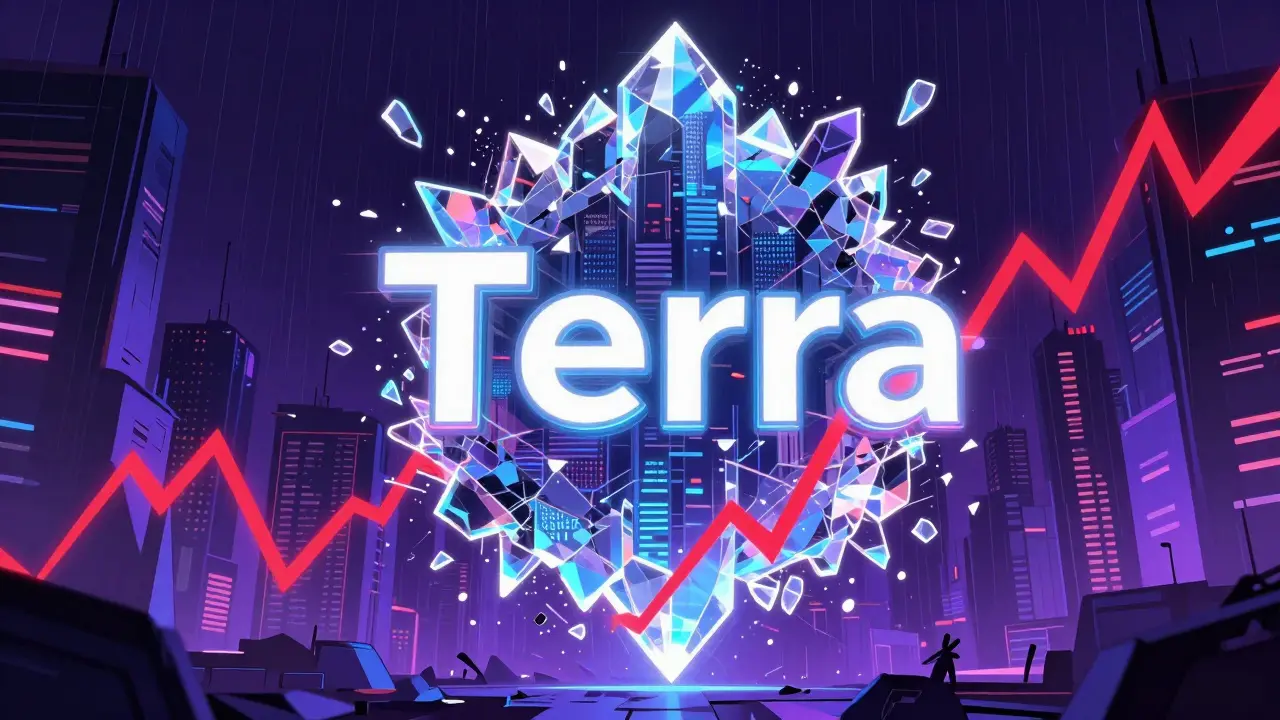
If you've spent any time in the crypto world, you've probably heard the name Terra (LUNA) associated with one of the biggest crashes in financial history. It's a story of meteoric rise, a $40 billion disappearance, and a complicated attempt at a comeback. But if you're looking at a chart today, you'll notice something confusing: there isn't just one LUNA. There are two entirely different versions of this project, and knowing the difference is the only way to avoid making a costly mistake.
The Core Concept: What Happened to Terra?
To understand where Terra stands today, we have to look at where it started. Launched in April 2019 by Terraform Labs and its founder Do Kwon, the project aimed to solve the "stablecoin problem." Most stablecoins use a reserve of real dollars in a bank, but Terra tried something different: an algorithmic stablecoin.
The system relied on two tokens. One was UST (TerraUSD), which was supposed to always be worth $1. The other was LUNA, the native token used to balance the system. If UST dropped to $0.99, you could buy it and burn it to get $1 worth of LUNA, pushing the price of UST back up. It sounded brilliant on paper, but in May 2022, the system hit a "death spiral." Confidence vanished, UST lost its peg, and the algorithm started printing trillions of LUNA tokens to save it, which crashed the price of LUNA to nearly zero in a matter of days.
LUNA vs. LUNC: The Great Divide
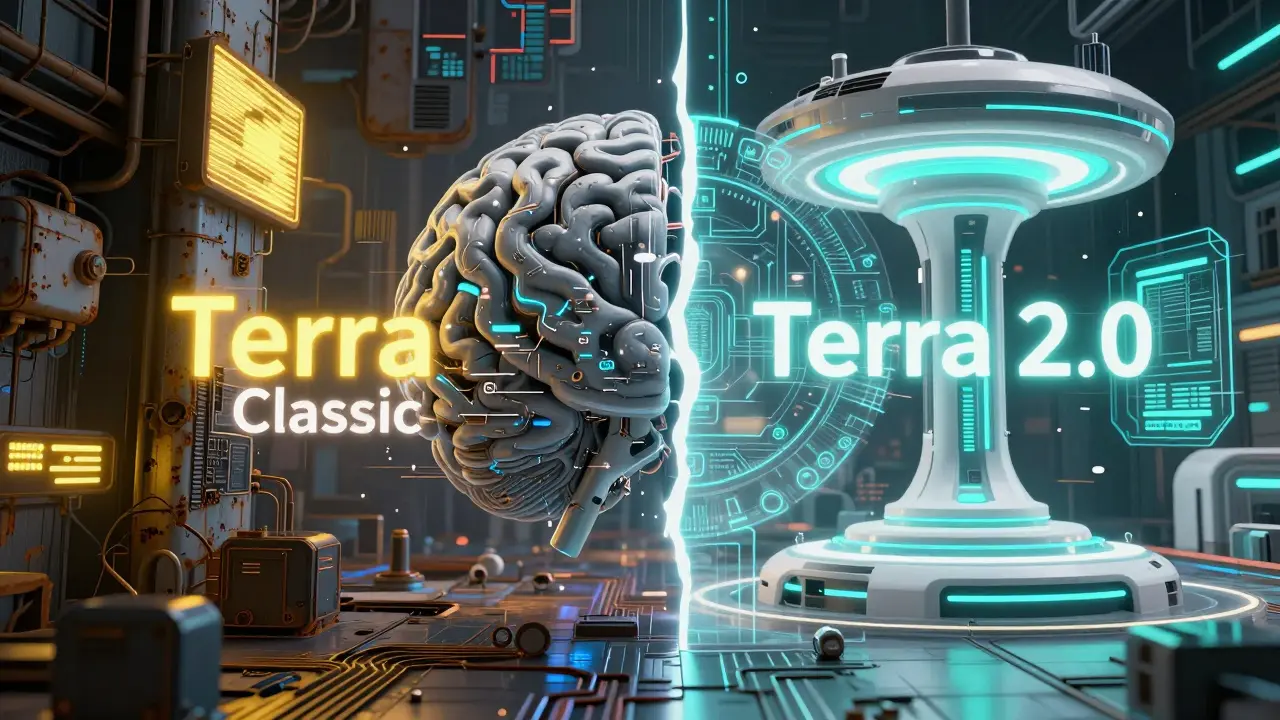
After the crash, the community didn't just walk away. They split the blockchain into two paths. Think of it like a company that goes bankrupt and is then split into a "legacy" shell and a brand-new startup.
First, there is Terra Classic, traded as LUNC. This is the original chain. It still exists, and it's where the original tokens live. It's largely a speculative asset now, with a massive circulating supply of about 6.49 trillion tokens. Most people holding LUNC are hoping for a miracle recovery or playing the volatility.
Then there is Terra 2.0, which keeps the original LUNA ticker. This is a completely new blockchain launched on May 28, 2022. The most important change? It completely scrapped the algorithmic stablecoin mechanism. Terra LUNA in its new form is a governance and staking token. It's no longer a tool to keep a stablecoin pegged to the dollar; it's now a platform for decentralized apps (dApps) and NFTs.
| Feature | Terra Classic (LUNC) | Terra 2.0 (LUNA) |
|---|---|---|
| Purpose | Legacy chain / Speculative | Governance, Staking, dApps |
| Stablecoin Link | Linked to failed UST | No algorithmic stablecoin |
| Circulating Supply | ~6.49 Trillion | ~1.12 Billion |
| Market Position | High risk / Low value per coin | Rebuilding ecosystem |
How Terra 2.0 Works Today
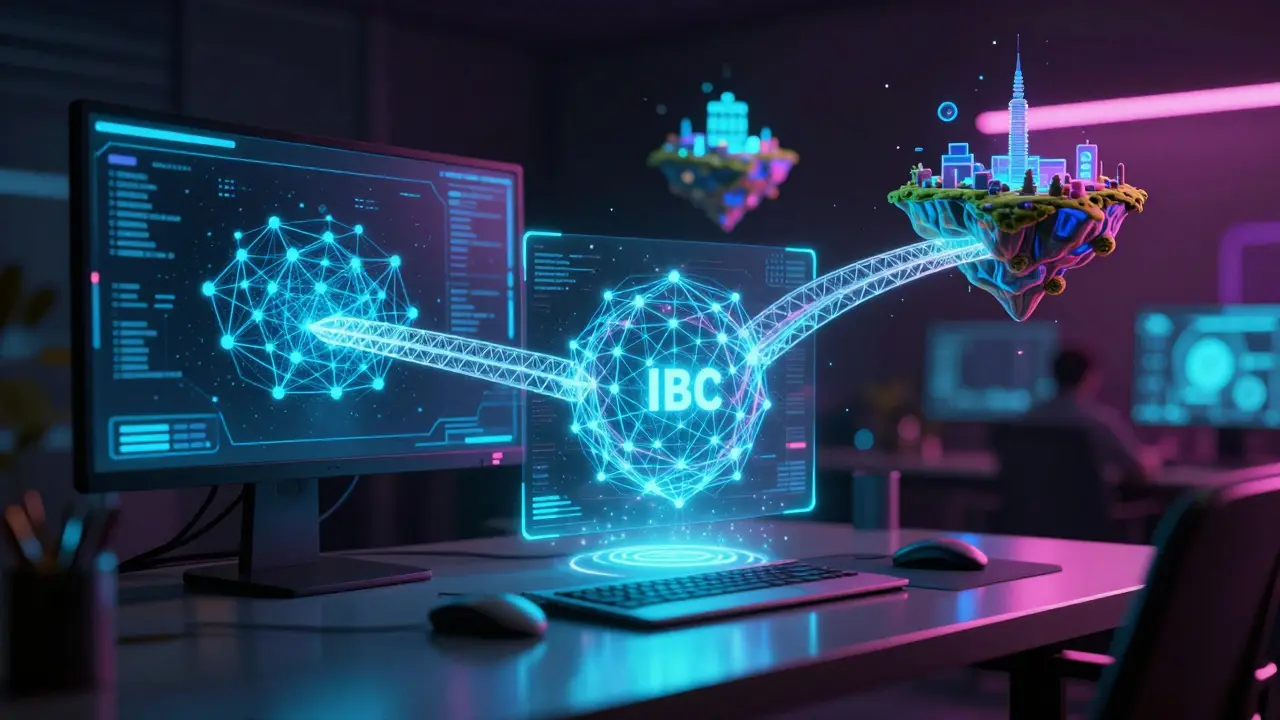
If you're looking at the new LUNA, you're looking at a project built using the Cosmos SDK. This is a framework that allows different blockchains to talk to each other. Because it uses the Inter-Blockchain Communication (IBC) protocol, Terra 2.0 can move assets and data across other networks in the Cosmos ecosystem, making it much more flexible than a standalone chain.
The goal now is to attract developers. While it's nowhere near the size of giants like Ethereum or Solana, it is trying to carve out a niche. For example, the upcoming "Aurora" upgrade is designed to bring EVM compatibility, which basically means developers can port their Ethereum-based apps over to Terra 2.0 with minimal effort. This is a critical move because, as of mid-2025, Terra's developer count is still quite low compared to the thousands of developers building on Solana.
The Risks and the Reality Check
Is it safe to jump back into LUNA? That depends on who you ask. On one hand, the network metrics show growth. Active wallet addresses jumped from 42,000 in early 2024 to over 318,000 by May 2025. That's a huge increase in user interest. On the other hand, the reputational damage is severe. Do Kwon's legal troubles and fraud charges have left a stain on the brand that no amount of technical upgrades can easily erase.
From a technical standpoint, the risk of another "death spiral" is gone because the algorithmic peg is gone. However, you're now dealing with standard crypto risks: market volatility, competition from faster chains (Solana's 65,000 TPS makes Terra's 1,000 TPS look slow), and regulatory pressure. The 2025 GENIUS Act actually helped Terra 2.0 by banning the very kind of unbacked tokens that caused the original crash, effectively clearing out some of the riskier competition.
Practical Tips for New Users
Getting started with Terra 2.0 is moderately simple, but there are a few pitfalls. If you're using hardware wallets like Ledger, make sure your firmware is updated to at least version 2.0.0, or you'll run into compatibility issues. The learning curve is slightly steeper than Ethereum's, taking most people around 10 hours to fully grasp the staking and governance process.
If you're deciding between LUNC and LUNA, ask yourself what your goal is. LUNC is essentially a lottery ticket-high risk, high volatility, and tied to a ghost of a network. LUNA is a bet on a rebuilt ecosystem and its ability to attract new apps. Neither is a "safe" investment, but they are very different animals.
What is the difference between LUNA and LUNC?
LUNA refers to Terra 2.0, a new blockchain focused on governance and dApps without a stablecoin mechanism. LUNC refers to Terra Classic, the original blockchain that experienced the 2022 crash and still carries the legacy of the UST algorithmic stablecoin.
Can Terra LUNA return to its all-time high?
It is highly unlikely. LUNA reached nearly $119 in April 2022 during a massive bubble. Since the ecosystem was completely reset and the total supply changed, comparing current prices to 2022 ATHs is misleading. Most analysts focus on whether it can reach $1.00 as a sign of stability instead.
Is Terra 2.0 safe from another crash?
The specific risk of an "algorithmic death spiral" is gone because Terra 2.0 does not use an algorithmic stablecoin. However, it still faces general cryptocurrency risks, such as market volatility, competition from other Layer 1 blockchains, and regulatory changes.
How do I stake LUNA tokens?
You can stake LUNA through a compatible wallet (like Terra Station) by choosing a validator to delegate your tokens to. This helps secure the network and earns you rewards in LUNA tokens, though the exact reward rate varies based on network participation.
What is the 'Aurora' upgrade?
Aurora is a scheduled upgrade for Terra 2.0 aimed at introducing EVM (Ethereum Virtual Machine) compatibility. This allows developers to easily migrate smart contracts and dApps from Ethereum to the Terra network, potentially increasing its utility and user base.
Comments
18 Comments
Greg Reynolds
The notion that EVM compatibility will magically save a brand with this much baggage is laughably naive. Developers aren't just looking for a place to port code; they're looking for trust and liquidity, neither of which Terra possesses in any meaningful capacity.
Miranda Jamieson
Imagine actually thinking that LUNC is anything other than a digital graveyard. If you're holding that, you're not "playing volatility," you're just delusional and waiting for a miracle that's never coming.
Keith Garcia
The sheer audacity of trying to rebrand a catastrophic failure as a "new startup" is truly an exercise in corporate gaslighting 🙄. It's a grotesque masquerade of utility designed to fleece the eternally optimistic 💅✨.
Findlay Duncan Lyon
Quite a concise breakdown of a messy situation.
Robert Mosolygo
The "Aurora" upgrade is clearly a distraction technique. Notice how the timeline aligns perfectly with regulatory shifts in the US. This isn't about developers; it's about creating a backdoor for institutional money to wash the blood off the original crash before the government fully clamps down on the remaining shells.
Ali Tate
who cares about 1000 tps when the whole thing is a joke anyway... just more bloat in the ecosystem
Jennifer Taylor
Do Kwon is probably laughing at us all from some hidden island while the new LUNA just sucks people back in. It is a trap. Do not trust the numbers of active wallets because they are just bots created by the labs to fake a recovery.
Sarah Fisher
It's interesting to think about the psychology of the LUNC holders. There is something almost poetic about clinging to a broken system in hopes of a reversal, though from a practical standpoint, it's obviously risky.
jill huyo-a
I appreciate the clarity on the Ledger firmware updates. That's a detail that could save someone a lot of stress when trying to move their assets around.
Alex Wan
I must say, the explination provided here is laudable in its thouroughness!! It is simply marvelous how the community persists despite such devestating losses. I believe we can all find a way to support the new builders in the ecosystem if we approach it with an open mind and a spirit of cooporation!
praveen subbiah
This is so dramatic but we must support our tech growth no matter where it comes from! My heart beats for the innovation in this space and I hope LUNA can rise like a phoenix from the ashes!
Larry Yang
LUNC is basically a meme coin now, let's be real. The only difference is it has a sad backstory instead of a dog on the cover. Totaly useless utility-wise.
Gary Lingrel
why do people keep falling for this garbage.. its just a cycle of greed and stupidity
honestly just a waste of energy 🙄
Guy Bianco
I would encourage anyone considering an entry into these assets to exercise extreme caution. It is prudent to only allocate capital that one is prepared to lose entirely, given the historical context. (^_^)
Clair Geary
The way they've pivoted to dApps and NFTs is a pretty clever move to distract from the UST disaster... definitely feels like a fresh start for some people!
Sara Ellis
money is just numbers on a screen anyway so who cares which luna you have
Sarah Ingrams
so sad that so many people lost their life savings in the first one
Paige Raulerson
It's just typical that the "community" decided to keep the original chain alive. It's a desperate attempt to maintain a sense of ownership over a worthless asset. I've seen this pattern in so many failed ventures, and it always ends with the retail investors holding the bag while the architects disappear into the ether. It is frankly exhausting to watch the same cycle of hope and disappointment repeat itself in the crypto space every six months. The lack of intellectual rigor in these speculative bubbles is staggering. People treat these tokens like lottery tickets because they refuse to engage with the actual underlying mathematics of the system. When the peg broke, the logic broke, and no amount of "community spirit" can fix a broken algorithm. The divide between LUNA and LUNC is just a psychological coping mechanism for people who can't admit they were wrong. It's a facade of progress that masks a total lack of fundamental value. If you actually analyze the developer activity, you'll see that the growth is superficial at best. They are trying to pivot to a generic L1 model because the original "innovation" was a house of cards. It is simply a matter of time before the market realizes that a rebuilt brand on a ruined reputation is still a ruin. I find the obsession with "recovery" to be completely devoid of logic. Just move on to something that actually works and stop pretending that a renamed token equals a new vision. The industry needs fewer "phoenixes" and more actual utility. Honestly, the whole situation is just a testament to how easily people are manipulated by a few buzzwords and a flashy interface.
Write a comment