



You hold Astar (ASTR) because you believe in the Polkadot ecosystem. But what happens when you want to use that asset in an Ethereum-based decentralized finance (DeFi) protocol? You can’t just send native ASTR to an Ethereum address. That’s where Wrapped Astar (WASTR) comes in.
WASTR is a version of ASTR that lives on the Ethereum blockchain. It allows you to take your Polkadot-native assets and use them in the massive Ethereum DeFi ecosystem, including platforms like Uniswap and Aave. This guide explains exactly what WASTR is, how it works, and whether it’s safe for your portfolio.
Understanding Wrapped Tokens and the Need for Interoperability
Blockchains are often isolated islands. Data and value don’t move between them easily by default. If you have Bitcoin, you can’t natively spend it on Ethereum. If you have ASTR on Polkadot, you can’t natively stake it in an Ethereum lending pool. This isolation creates a problem for users who want to diversify their yield or access specific applications across different networks.
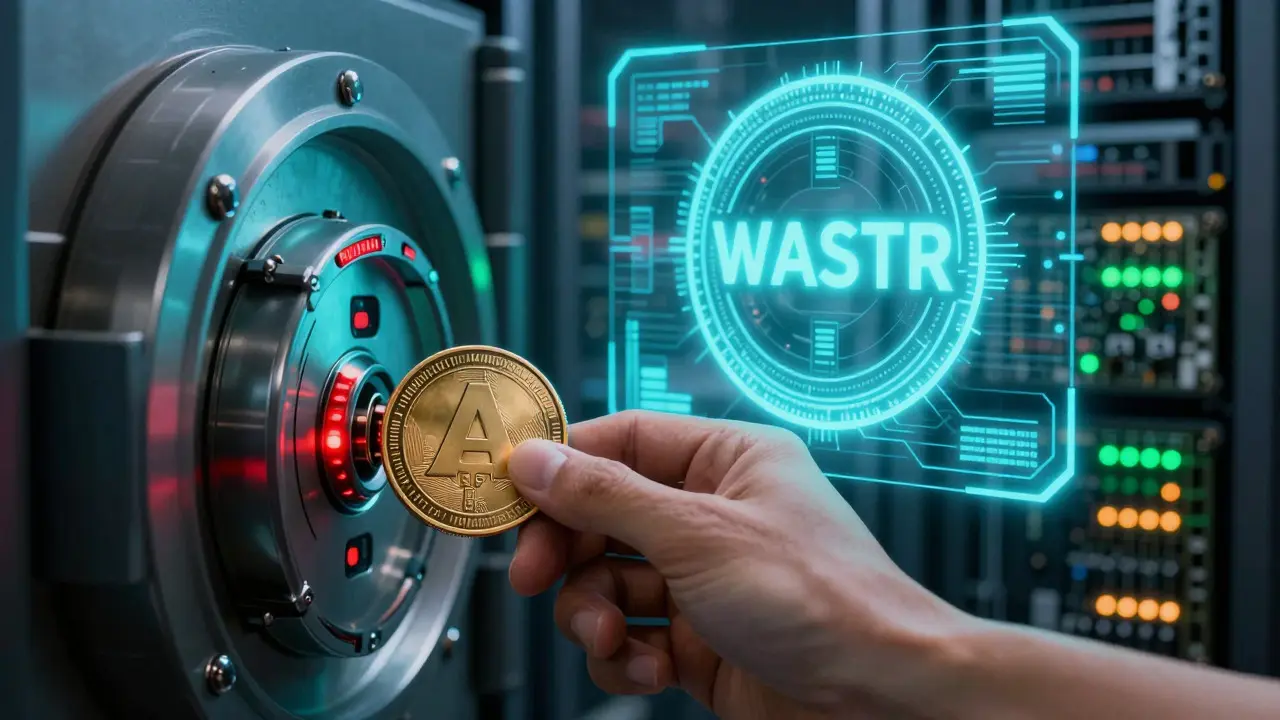
Wrapped tokens solve this. They act as digital receipts. When you deposit an asset into a secure vault on its home chain, a corresponding "wrapped" version is minted on the destination chain. This wrapped token represents the original asset but follows the technical rules of the new network.
In the case of WASTR, it is an ERC-20 token. ERC-20 is the standard format for tokens on Ethereum. By converting ASTR into WASTR, the asset becomes compatible with any wallet or application that supports Ethereum standards. This includes MetaMask, Trust Wallet, and thousands of dApps built on Ethereum.
How WASTR Works: The Bridging Mechanism
The process of getting WASTR involves a cross-chain bridge. Here is the step-by-step flow:
- Deposit: You connect your Polkadot wallet (like Polkadot.js) to the Astar Network bridge.
- Locking: You send your native ASTR tokens to a designated custodial contract on the Polkadot side. These tokens are locked in reserve.
- Minting: The bridge protocol verifies the deposit. Once confirmed, it mints an equivalent amount of WASTR on the Ethereum blockchain.
- Receiving: The WASTR tokens appear in your Ethereum-compatible wallet (like MetaMask).
To get your ASTR back, you reverse the process. You send WASTR to the burn address on Ethereum. The bridge detects the burn event and releases the locked ASTR from the Polkadot reserve back to your wallet.
This mechanism maintains a strict 1:1 peg. One WASTR should always equal one ASTR in value. As of recent data, WASTR has maintained over 99.9% peg stability, meaning the value tracks the underlying asset closely without significant deviation.
WASTR vs. Native ASTR: Key Differences
| Feature | Native ASTR | Wrapped Astar (WASTR) |
|---|---|---|
| Blockchain | Polkadot / Astar Network | Ethereum |
| Token Standard | Substrate (Native) | ERC-20 |
| Transaction Speed | ~0.1-0.5 seconds finality | ~13-15 seconds (Ethereum block time) |
| Gas Fees | Low (paid in ASTR) | Variable (paid in ETH) |
| Primary Use Case | Governance, staking on Polkadot | DeFi, trading on Ethereum DEXs |
| Custody Model | Self-custody (native) | Custodial bridge (locked reserves) |
The most critical difference is the gas fee structure. When you use WASTR, you pay Ethereum gas fees in ETH. During periods of high network congestion, these fees can spike significantly, potentially making small transactions uneconomical. Native ASTR transactions on Polkadot remain consistently cheap and fast.
Use Cases for Wrapped Astar
Why go through the trouble of wrapping? There are three main reasons users choose WASTR:
- Access to Ethereum DeFi: Protocols like Aave, Compound, and Uniswap are built on Ethereum. By holding WASTR, you can lend your assets to earn interest or provide liquidity to earn trading fees. Some users report APYs ranging from 4.7% to 8.2% depending on market conditions.
- Liquidity Provision: If you want to trade ASTR against other major assets like USDT or ETH on a decentralized exchange, doing so via WASTR often provides deeper liquidity pools than smaller Polkadot-native exchanges.
- Portfolio Diversification: Holding assets across multiple chains reduces reliance on a single network’s performance. WASTR allows you to keep exposure to the Astar project while participating in the broader Ethereum economy.
Risks and Security Considerations
No wrapped token is risk-free. Understanding the risks is crucial before moving significant capital.
Counterparty Risk: Unlike native ASTR, which you control directly, WASTR relies on the bridge operator to keep the underlying ASTR in reserve. If the bridge is hacked or the operator fails, your WASTR could become worthless. While Astar Network uses proprietary bridge technology and has undergone security audits (including checks by firms like CertiK), no system is immune to bugs.
Smart Contract Risk: WASTR exists as a smart contract on Ethereum. If there is a vulnerability in the ERC-20 code itself, funds could be at risk. Always verify the official contract address on Etherscan before interacting with WASTR to avoid scams.
Regulatory Uncertainty: Regulatory bodies like the SEC have expressed concerns about centralized custody models in wrapped tokens. Future regulations could impact the availability or legality of WASTR in certain jurisdictions, particularly for US-based users.

How to Get Started with WASTR
If you decide to wrap your ASTR, follow these steps carefully:
- Set Up Wallets: Ensure you have a Polkadot-compatible wallet (e.g., Polkadot.js extension) and an Ethereum-compatible wallet (e.g., MetaMask). Fund your MetaMask with enough ETH to cover gas fees.
- Verify the Bridge: Navigate to the official Astar Network bridge portal. Double-check the URL to avoid phishing sites.
- Connect and Deposit: Connect your Polkadot wallet. Enter the amount of ASTR you wish to wrap. Confirm the transaction. Wait for the 12-block confirmation on Polkadot (approx. 24 seconds).
- Claim WASTR: Once the bridge processes the request, WASTR will be minted on Ethereum. Connect your MetaMask to the bridge interface and claim your tokens.
- Interact with DeFi: You can now swap, lend, or stake your WASTR on Ethereum protocols.
For beginners, the learning curve is estimated at 4-6 hours to understand wallet management and gas mechanics. Start with a small amount to test the process before moving larger sums.
Future Developments and Market Outlook
The cross-chain landscape is evolving rapidly. Astar Network has announced plans for WASTR 2.0, which aims to extend support beyond Ethereum to include BNB Chain and Avalanche. This multi-chain approach would reduce dependency on a single bridge and increase utility.
Integration with protocols like Chainlink’s CCIP (Cross-Chain Interoperability Protocol) is also underway, promising faster and more secure cross-chain transactions. As the total value locked in wrapped tokens grows, WASTR is positioned to capture a share of the increasing demand for Polkadot-Ethereum interoperability.
However, competition is fierce. Established wrapped tokens like WBTC dominate the market. WASTR must continue to demonstrate reliability, low costs, and strong security to gain wider adoption among retail and institutional investors alike.
Is WASTR the same as ASTR?
No. ASTR is the native token of the Astar Network on Polkadot. WASTR is a wrapped version of ASTR that exists on the Ethereum blockchain. They represent the same value (1:1 peg) but operate on different networks with different technical standards (Substrate vs. ERC-20).
How do I convert WASTR back to ASTR?
To unwrap WASTR, you need to use the official Astar Network bridge. Connect your Ethereum wallet (holding WASTR) and your Polkadot wallet. Initiate the "unwrap" transaction, which burns your WASTR on Ethereum and releases the equivalent amount of native ASTR to your Polkadot wallet. You will need to pay Ethereum gas fees for this process.
Are there fees for wrapping ASTR?
Yes. You will pay two types of fees: 1) A small transaction fee on the Polkadot side (in ASTR) to lock your tokens. 2) Ethereum gas fees (in ETH) to mint and receive the WASTR tokens. Gas fees vary based on Ethereum network congestion.
Is WASTR safe to hold?
WASTR is generally considered safe if used through official channels, but it carries higher risk than native ASTR due to counterparty and smart contract risks associated with the bridge. Always verify contract addresses and stay updated on security audits conducted by firms like CertiK.
Can I use WASTR on Binance Smart Chain?
Currently, WASTR is primarily an ERC-20 token on Ethereum. However, Astar Network has announced future plans (WASTR 2.0) to expand support to other chains like BNB Chain and Avalanche. Check the official Astar documentation for the latest multi-chain updates.