
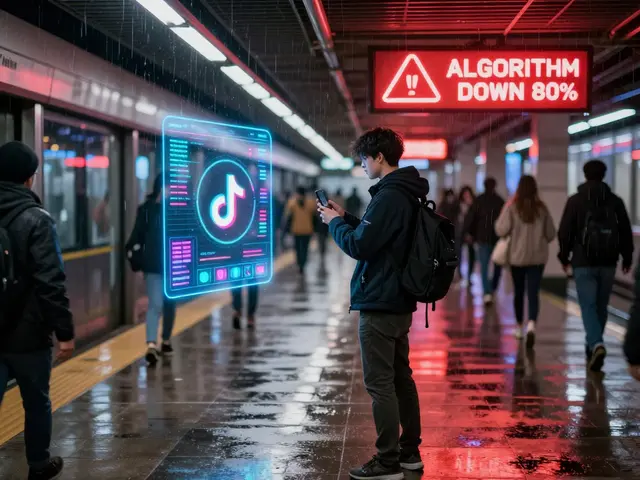



It’s 2026, and you’re in Ho Chi Minh City trying to pay for your morning coffee with Bitcoin. The barista smiles, scans the QR code, and you’re about to complete the transaction-until you remember: in Vietnam, that’s not just risky. It’s illegal. And the fine? Between 150 million and 200 million Vietnamese Dong-roughly $6,500 to $8,900 USD.
Why Can’t You Pay With Crypto in Vietnam?
It’s not about banning Bitcoin itself. Vietnam doesn’t stop you from holding it, trading it, or even mining it. The problem is using it to buy things. Since January 1, 2018, the State Bank of Vietnam (SBV) has made it clear: cryptocurrency as a payment method is illegal. That means if you run a shop and accept Ethereum for shoes, or a university takes Dogecoin for tuition, you’re breaking the law.
The legal basis comes from Decree No. 96/2014/ND-CP, which outlines administrative penalties for violations in banking and monetary activities. Specifically, Clause 6, Article 27 says using Bitcoin or similar digital assets as payment is prohibited. This rule was reinforced by Decree 101/2012/ND-CP, which only lists approved payment tools-bank cards, checks, payment orders-and everything else is automatically illegal.
Why? The SBV’s reasoning is simple: control. Bitcoin is decentralized. No government can track every transaction, freeze accounts, or tax it easily. As Le Truong Tung from FTP University explained, accepting crypto opens the door to tax evasion, money laundering, and loss of monetary sovereignty. If people start paying with crypto, the central bank loses its grip on the economy.
What Exactly Gets You Fined?
The fine isn’t for owning Bitcoin. It’s for using it as currency. Here’s what triggers the 150-200 million VND penalty:
- Accepting Bitcoin, Ethereum, or any crypto as payment for goods or services
- Advertising that your business accepts cryptocurrency
- Operating a payment gateway that processes crypto transactions
- Using crypto to pay employees or settle debts
But here’s the catch: if you buy Bitcoin on a peer-to-peer exchange like Paxful or LocalBitcoins and hold it in your wallet? That’s fine. If you sell it later for VND? Also fine. The law doesn’t touch ownership-it only targets usage as money.
That’s why you’ll still see Vietnamese traders buying crypto daily. They just don’t use it to pay for groceries. They trade it like stocks or gold, then cash out through local banks. The ban only applies when crypto replaces VND in a transaction.
Has Anyone Actually Been Fined?
Officially, the SBV hasn’t published a list of fined businesses. But enforcement isn’t theoretical. In 2017, a university in Hanoi planned to accept Bitcoin for tuition. The SBV stepped in within days and forced them to cancel. No fine was issued-because the plan never went live. But the message was clear: don’t even try.
By 2019, the SBV confirmed it had coordinated “additional penal sanctions” for crypto payment violations. While exact numbers aren’t public, customs data from 2017 showed thousands of dollars in daily crypto transactions flowing through Vietnam. That means people are still doing it-just quietly.
Most enforcement happens in two ways: complaints from competitors or audits by tax authorities. If your business is growing fast and your bank notices strange cash deposits with no clear source, they might flag you. That’s when the SBV comes knocking.

How Does This Compare to Other Countries?
Vietnam’s approach is one of the strictest in Southeast Asia. Thailand lets crypto exchanges operate under license. Singapore created a full regulatory framework for digital payment tokens. Even China, which cracked down hard on mining, still allows crypto trading and holds it as an asset.
Vietnam chose to block the payment function entirely. Experts like Dr. Nguyen Xuan Thanh from Harvard argue this misses the point. Cryptocurrency isn’t just money-it’s blockchain technology. Banning payments doesn’t stop innovation; it just pushes it underground.
Le Hong Hiep from ISEAS-Yusof Ishak Institute pointed out the irony: Vietnam has one of the highest crypto adoption rates in the world-ranked 8th globally by Chainalysis in 2021. But the government refuses to acknowledge it. Instead of regulating, they’re punishing.
What’s Changing in 2026?
There’s pressure to change. The 150-200 million VND fine was designed for a time when crypto was a fringe curiosity. Today, over 43% of Vietnamese adults use digital payments. Millions trade crypto daily. The fine is still on the books-but it’s rarely applied.
In 2021, the government drafted a new decree to treat crypto as an asset, not currency. That’s a big shift. In 2022, the Ministry of Finance started working on tax rules for crypto transactions. That means they’re preparing to tax it-not ban it.
Dr. Tran Ngoc Ca from Vietnam’s Academy of Finance said in 2023: “The fine is still enforceable, but it’s becoming impossible to apply. The demand for crypto isn’t going away. The law needs to catch up.”
Right now, the SBV is stuck between two realities: public demand for digital freedom and its own need for control. They’ve chosen control-for now. But the writing is on the wall. If Vietnam wants to stay competitive, it can’t keep pretending crypto doesn’t exist.
What Should You Do?
If you’re a business owner in Vietnam:
- Don’t accept crypto as payment. Even if you think no one will notice, the risk isn’t worth it.
- Don’t advertise crypto payments on your website or social media.
- If you’re trading crypto, keep records. Tax authorities are coming.
- Use approved digital payment tools: ZaloPay, Momo, or bank transfers.
If you’re a user:
- You can buy and hold crypto safely.
- You can sell it for VND through licensed exchanges.
- You cannot use it to pay for anything-restaurants, apps, services, or rent.
- Peer-to-peer trades are legal, but only if no goods or services change hands.
The bottom line: Vietnam doesn’t hate crypto. It hates losing control. Until the law changes, the 150-200 million VND fine is a warning sign-not a dead rule. Play it safe. Use VND for payments. Keep crypto as an investment.
What’s Next for Crypto in Vietnam?
Don’t expect a full legalization anytime soon. But you can expect a shift from punishment to regulation. The SBV is likely to follow the path of Singapore: license exchanges, require KYC, tax profits, and ban payments. That’s the only way to bring crypto out of the shadows without losing control.
For now, the fine remains. But the game is changing. The real question isn’t whether you can pay with Bitcoin in Vietnam. It’s whether Vietnam will let you soon.
Comments
26 Comments
Bill Sloan
Bro this is wild 🤯 I just bought my first Bitcoin last week and thought I could use it at that little pho spot downtown. Turns out I'm basically a criminal now? 😅
Callan Burdett
Vietnam’s got the right idea. Crypto’s not money, it’s digital gold. If you want to pay for coffee, use your damn VND. Let the tech evolve without turning every bodega into a blockchain node.
ASHISH SINGH
The real conspiracy? They dont want you to know that the state bank is just scared of losing control. Theyre not protecting the economy theyre protecting their own power. Crypto is the people's money and they know it
Stephen Gaskell
If you're breaking the law to buy coffee you deserve the fine. End of story.
Patricia Chakeres
Of course they fine you. The State Bank of Vietnam is just another authoritarian relic clinging to 19th-century monetary control. They fear decentralization because it exposes their incompetence. This isn't about financial stability-it's about ego. They'd rather see a generation of tech-savvy youth get fined than admit the world has moved on.
Vinod Dalavai
I live in Bangalore and we got the same vibe here. You can trade crypto all day but try paying your chaiwala with ETH and you'll get a stare like you just asked for a unicorn latte 😅
Katherine Melgarejo
So let me get this straight… you can own Bitcoin like it’s a rare Pokémon card, but if you try to use it to buy a sandwich you get fined like you robbed a bank? Sounds like a government that doesn’t trust its own people.
Stephanie BASILIEN
The legal framework is quite clear: Decree No. 96/2014/ND-CP explicitly prohibits the use of cryptocurrency as a medium of exchange. The State Bank of Vietnam operates within a well-defined monetary sovereignty framework, and any deviation undermines macroeconomic stability. One must respect institutional integrity.
Chidimma Okafor
This is the kind of policy that makes me proud of my Nigerian roots-we don't ban innovation, we adapt. In Lagos, we use crypto to pay for airtime, send remittances, even buy rice. Vietnam’s fear is not crypto-it’s change. And change? It’s the only thing that keeps nations alive.
Deb Svanefelt
There's something deeply poetic about a government that treats a decentralized technology like a dangerous drug. We regulate gasoline, not ideas. If the central bank can't adapt to a world where value flows without permission, maybe it's not the economy that needs fixing-it's the institution.
Haley Hebert
I just moved to Hanoi last year and I was so excited to use crypto for everything… then I found out I’d be fined more than my monthly rent if I paid for my pho with Dogecoin. Now I just use Momo and pretend I’m not secretly a crypto degenerate. I miss my freedom 😭
Jill McCollum
I lived in Ho Chi Minh for 2 years and every time I tried to pay with crypto, the vendor would laugh and say ‘You’re so American!’ then take VND. The people get it. The government doesn’t. The gap is getting wider.
Ashlea Zirk
The fine structure is intentionally disproportionate to deter adoption, not to punish. It’s a policy of deterrence, not enforcement. The SBV is signaling that the cost of noncompliance exceeds any perceived benefit. This is standard regulatory behavior in emerging economies transitioning toward formalized digital finance.
Lauren Bontje
This is why America needs to stay out of this. Vietnam knows what’s best for its people. Crypto is a Western scam designed to destabilize sovereign nations. We don’t need foreign digital chaos in our markets. Stay patriotic. Use VND.
Dustin Secrest
If you think a government should control every transaction, then you don’t believe in freedom-you believe in surveillance. Crypto isn’t about avoiding taxes. It’s about avoiding control.
Hailey Bug
The real story here isn’t the fine-it’s the 43% of Vietnamese adults using digital payments. The government is clinging to a 2018 rule while the country sprinted past it in 2023. Regulation is coming. The fine is just the last gasp of an outdated system.
Alexis Dummar
they say crypto is illegal to use as money but you can trade it like stocks? so its like owning a gun but you cant shoot it? what kind of logic is that? i mean… if its not money then what is it? a digital collectible? why not just say its a non-fungible token and be done with it
CHISOM UCHE
The regulatory architecture here reflects a classic tension between technological adoption and institutional inertia. The SBV's stance is not anti-innovation per se, but anti-disruption. The fine functions as a transaction-cost barrier to prevent the erosion of fiat-based monetary policy frameworks. It’s a classic case of regulatory lag.
Nishakar Rath
You think this is bad wait till they ban VPNs next then youll see what real freedom looks like
Andre Suico
The distinction between ownership and usage is legally sound. Many jurisdictions treat digital assets as property, not currency. Vietnam’s approach aligns with the IMF’s guidance on preserving monetary sovereignty while allowing private investment. Enforcement may be light now, but the framework is deliberate.
Josh V
I dont care if its illegal i paid for my phone with btc last week and no one said a word
kristina tina
I just want to say-this is why I love crypto. It doesn’t care about borders or laws. You can be in Vietnam, Nigeria, or Nebraska, and if you believe in it, you find a way. The fines won’t stop the movement. They’ll just make it quieter. And quieter things are harder to control.
Jason Zhang
So they fine you for using crypto as money but let you trade it? That’s like banning someone from driving a car but letting them own a garage full of engines. The policy is incoherent. It’s not about safety-it’s about control.
Alexis Dummar
i just read this again and now i get it. its not about banning crypto. its about banning the idea that money can exist without a government stamp on it. thats why they dont care if you hold it. they only care if you use it to say 'i dont need you' and thats the real crime
Deb Svanefelt
Alexis, you just articulated the entire philosophical core of this issue. The state doesn't fear Bitcoin. It fears the moment a child in Hanoi realizes they don't need permission to value something. That’s the revolution. And revolutions don't need permission.
Dustin Secrest
The most dangerous thing about crypto isn’t volatility or fraud. It’s that it makes people think for themselves. And governments hate that more than anything.
Write a comment