



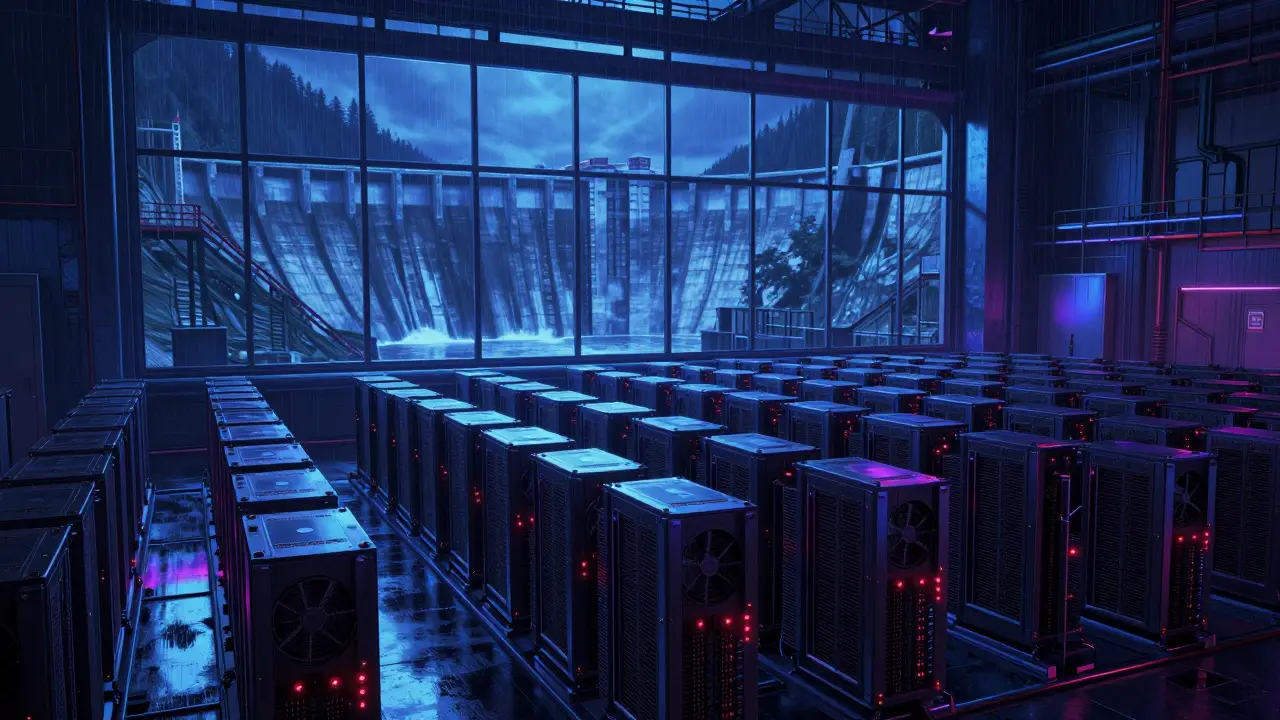
Imagine spending millions on high-end ASIC miners, securing a warehouse with perfect cooling, and then realizing you can’t plug it in. For cryptocurrency miners eyeing British Columbia, this isn’t a hypothetical nightmare-it’s the reality of living under one of North America’s strictest energy policies. If you are looking for cheap hydroelectric power to fuel your next mining farm, you need to understand that British Columbia crypto mining restrictions have fundamentally changed the game.
As of mid-2026, the province remains closed to new large-scale mining connections. The temporary suspension that began in late 2022 was extended through December 2025, and while permanent legislation is being finalized, the door remains firmly shut for most commercial operations. This article breaks down exactly why the government took this stance, what it means for your bottom line, and where you might look instead if you’re determined to mine in Canada.
The Core Restriction: No New Power Connections
To understand the barrier, you first have to understand the resource. BC Hydro is the provincial Crown corporation responsible for generating and distributing electricity in British Columbia. It provides over 90% of its power from renewable hydroelectric sources, making it historically attractive for energy-intensive industries. However, the sheer volume of requests from crypto miners overwhelmed the system.
In December 2022, the provincial government initiated an 18-month suspension of electricity connection requests from cryptocurrency mining operations. By Spring 2024, this was extended to 36 months, pushing the current restriction period to expire in December 2025. The impact was immediate and massive. Twenty-one major mining projects were halted, collectively requesting 1,403 megawatts (MW) of capacity. To put that in perspective, that amount of electricity could power approximately 570,000 homes or charge 2.1 million electric vehicles annually.
The rule is simple: if you are a large-scale miner seeking a new connection to the grid, you will be denied. Existing small-scale residential setups generally continue, but the industrial-scale operation-the kind that moves needles in profitability-is effectively banned until a new permanent framework is established. The government’s logic is straightforward. They view electricity as a finite public good that must prioritize human needs and economic diversification over speculative digital asset extraction.
Why the Ban? The CleanBC Priority Shift
You might wonder why a province with abundant renewable energy would restrict access. The answer lies in the CleanBC is British Columbia's comprehensive climate action plan aimed at reducing greenhouse gas emissions by 40% below 2007 levels by 2030. The government, led by Minister of Energy, Mines and Low Carbon Innovation Josie Osborne, argues that crypto mining consumes massive amounts of electricity to run and cool banks of high-powered computers 24/7/365, while creating very few local jobs.
The priority has shifted toward electrification projects that support broader societal goals. Residents are transitioning to electric vehicles (EVs) and heat pumps. Businesses are undertaking electrification to reduce their carbon footprint. These initiatives generate substantial employment and long-term economic development benefits compared to the relatively job-light nature of automated mining farms.
Consider the Site C dam, a major infrastructure project in BC. When Conifex Timber sought to consume approximately 2.5 million megawatt-hours of electricity annually-nearly half the output of the new dam-for Bitcoin mining, the government pushed back hard. They argued that allowing such a draw would erode the available energy needed for strategic CleanBC goals. The fear wasn't just about running out of power; it was about locking up cheap, clean energy in a way that didn't align with the province's long-term vision for sustainable growth and community benefit.
Legal Battles and Government Authority
Restrictions don't always sit well with investors who have already committed capital. The most significant legal challenge came from Conifex Timber, a forestry company operating Bitcoin mining colocation facilities for Greenidge Generation. Conifex argued that the suspension violated property rights and regulatory fairness. They wanted unrestricted power access to fulfill contracts with mining firms.
However, the courts sided with the province. In early 2024, both the B.C. Supreme Court and the British Columbia Court of Appeal ruled that the provincial policy was reasonable. The judges emphasized BC Hydro's mandate to act in the public interest by preserving electricity supply and preventing higher consumer rates. The decisions definitively upheld the government's authority to limit electricity supply to Bitcoin mining operations.
This legal clarity is crucial for anyone considering entering the market. It signals that the government is not bluffing. They have the legislative backing to enforce these limits. The Energy Statutes Amendment Act (Bill 24) grants the provincial government authority to regulate electricity service for cryptocurrency mining while bypassing the BC Utilities Commission. This streamlined process allows the Cabinet to make rapid regulation-making decisions regarding mining electricity service provision without getting bogged down in traditional utility commission delays.

Vancouver’s Pro-Bitcoin Stance vs. Provincial Reality
If you follow local news, you might see conflicting messages. Vancouver City Council passed a motion introduced by Mayor Ken Sim to position Vancouver as a 'bitcoin-friendly city.' The motion emphasized Bitcoin's potential financial benefits and mining advantages for the region. On paper, this sounds like an invitation.
But here is the catch: municipal initiatives cannot override provincial jurisdiction over electricity regulation. Vancouver may welcome the industry rhetorically, but they do not control the wires. BC Hydro operates under provincial law. So, while Vancouver might offer tax incentives or zoning flexibility, they cannot grant you the megawatts you need to run a profitable operation. This disconnect creates confusion for newcomers, but the provincial hold on energy distribution remains the ultimate gatekeeper.
How BC Compares to Other Canadian Provinces
British Columbia is not alone in tightening the screws, but it is among the most restrictive. Understanding the national landscape helps you decide where to pivot your strategy. Canada has traditionally been a welcoming host for miners due to cold temperatures (which aid cooling) and low electricity costs. That era is ending in many regions.
| Province | Policy Status | Key Details |
|---|---|---|
| British Columbia | Restricted | 36-month suspension on new connections; expires Dec 2025. Permanent policy pending. |
| Manitoba | Restricted | Suspended new electricity connections for mining firms since 2022 to protect residential rates. |
| Quebec | Limited | Hydro Quebec raised rates significantly for miners and capped electricity allocations. |
| New Brunswick | Moratorium | Issued a moratorium on large-scale electricity requests from crypto miners. |
| Ontario | Neutral/Excluded | Considered excluding miners from electricity cost-reduction programs; no outright ban but less incentive. |
| Alberta | Friendly | Deregulated energy market; government support for miners. The primary haven for Canadian mining. |
Alberta stands out as the notable exception. With a deregulated energy market and government support, it has become a haven for crypto miners seeking operational jurisdiction. If BC is closing doors, Alberta is throwing them open. This contrast highlights a broader trend: provinces are using energy policy as a tool for economic steering. BC wants green tech and manufacturing; Alberta wants to monetize its surplus natural gas and electricity.

What Comes After December 2025?
The current suspension is set to expire in December 2025. Does this mean miners can rush back in January 2026? Not necessarily. The Ministry of Energy, Mines and Low Carbon Innovation has been conducting extensive stakeholder engagement to develop a permanent policy framework. During summer and fall 2023, they invited over 400 First Nations groups, municipalities, utilities, and industry associations to participate in discussion sessions.
In Spring 2024, the Ministry amended the Utilities Commission Act to provide Cabinet with regulation-making authority. This suggests that when the temporary ban lifts, it will likely be replaced by a structured, regulated regime rather than a free-for-all. Expect caps on total capacity, tiered pricing structures, or requirements for miners to contribute to grid stability during peak demand periods. The goal is to integrate mining into the energy mix without compromising the priorities of residents and other industries.
For miners, this uncertainty is a risk. You cannot build a business case on a moving target. The government maintains an open communication channel at [email protected] for stakeholders, but until formal regulations are published, any investment in BC-based infrastructure is speculative.
Strategic Alternatives for Miners
If your goal is efficient, profitable mining in Canada, you need to adjust your location strategy. Here are practical steps based on the current regulatory environment:
- Pivot to Alberta: As the most pro-mining jurisdiction, Alberta offers competitive rates and political support. The climate is colder than BC, which reduces cooling costs, and the energy market is flexible.
- Explore Remote Indigenous Communities: Some First Nations communities in Northern BC and other provinces are developing their own microgrids using solar or wind. Partnering with these entities might offer off-grid opportunities that bypass provincial utility restrictions, though this requires complex negotiation and community consent.
- Focus on Small-Scale Residential: If you are a hobbyist miner with a small setup (under a certain kW threshold), you may still operate legally in BC. However, do not expect to scale this into a commercial enterprise.
- Monitor Policy Developments: Keep a close watch on the Ministry of Energy’s announcements leading up to December 2025. Early movers in the new permanent framework could secure advantageous terms.
The days of plugging into BC Hydro’s cheap hydro and printing Bitcoin are over-at least for now. The province has made a clear choice: energy for people and green industry first, crypto second. Successful miners adapt. They look to Alberta, they negotiate directly with remote producers, or they wait for the dust to settle in Victoria before committing capital.
When do the crypto mining restrictions in British Columbia end?
The current 36-month suspension on new electricity connections for cryptocurrency mining is set to expire in December 2025. However, this does not guarantee an immediate return to unrestricted access. The provincial government is working on a permanent policy framework that may include caps, tiered pricing, or other regulations to replace the temporary ban.
Can I still run a small crypto mining rig at home in BC?
Yes, small-scale residential mining operations are generally not affected by the ban. The restrictions target large-scale commercial projects seeking new industrial connections to the BC Hydro grid. However, you should check your specific electricity rate plan, as some residential plans have limits on high-draw appliances or may impose surcharges for excessive usage.
Why did British Columbia ban crypto mining?
The ban was implemented to preserve electricity supply for residents transitioning to electric vehicles and heat pumps, as well as businesses undertaking electrification projects. The government prioritized CleanBC climate goals, aiming to reduce greenhouse gas emissions while generating more substantial local employment and economic development benefits compared to the relatively job-light crypto mining sector.
Is Vancouver really a "bitcoin-friendly city"?
Vancouver City Council passed a motion to position the city as bitcoin-friendly, but this is largely symbolic. Municipalities in BC do not control electricity distribution; that is the jurisdiction of the provincial government and BC Hydro. Therefore, despite Vancouver's pro-crypto rhetoric, miners still face the same provincial restrictions on power access.
Which Canadian province is best for crypto mining in 2026?
Alberta is currently the most favorable jurisdiction for cryptocurrency mining in Canada. Unlike BC, Manitoba, and Quebec, which have imposed restrictions or rate hikes, Alberta has a deregulated energy market and government support for the industry. Its combination of competitive electricity prices and political goodwill makes it the primary hub for Canadian mining operations.
Did the courts uphold the BC mining ban?
Yes. Both the B.C. Supreme Court and the British Columbia Court of Appeal ruled in favor of the provincial government in early 2024. The courts rejected challenges from companies like Conifex Timber, stating that the policy was reasonable and aligned with BC Hydro's mandate to act in the public interest by preserving electricity supply and preventing higher consumer rates.