

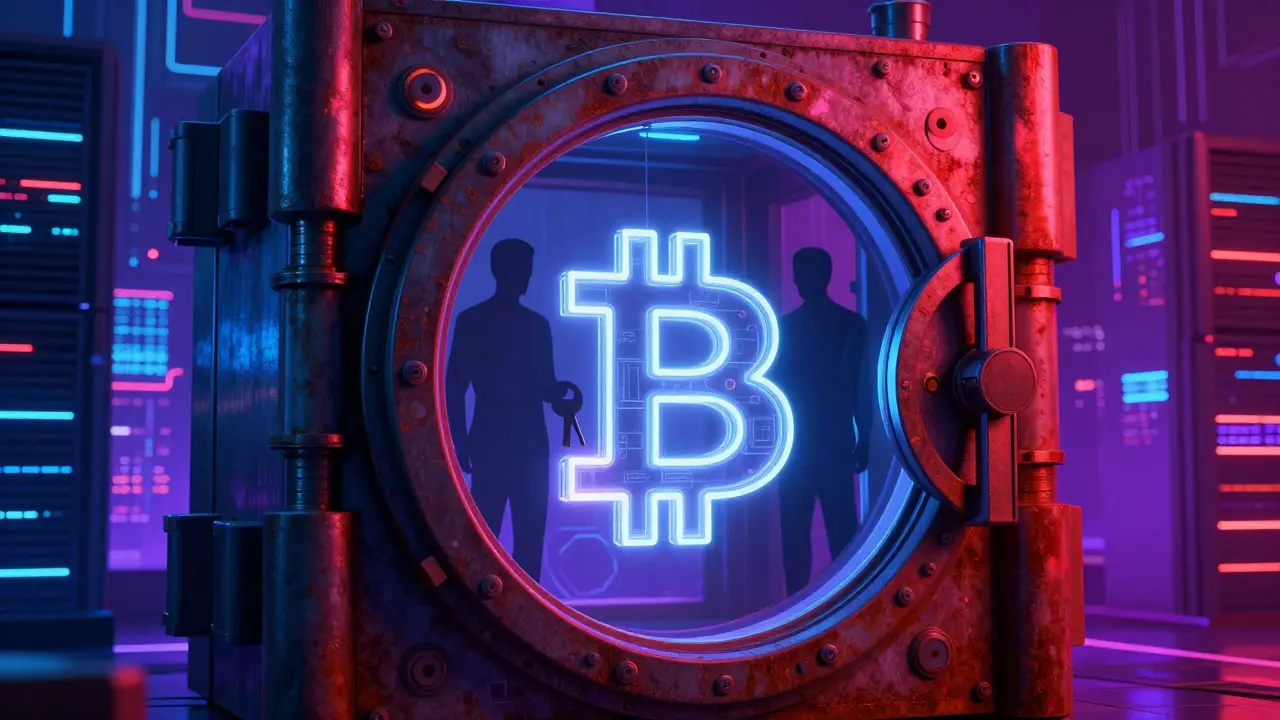
Imagine locking your Bitcoin in a digital vault so you can use it as collateral for a loan on Ethereum. That is exactly what wrapped tokens are designed to do. They bridge the gap between isolated blockchains, allowing assets like Bitcoin to participate in the smart contract ecosystems of networks like Ethereum or Solana. But there is a catch. To make this magic happen, someone has to hold the keys to that vault. This introduces custodial risk-the danger that the entity holding your original assets might fail, get hacked, or act maliciously. For many users, this feels like a step backward from the core promise of cryptocurrency: self-custody and trustlessness.
When you wrap an asset, you aren't just moving it; you are exchanging it for a representative token issued by another system. If that system breaks, your wrapped token becomes worthless paper. Understanding these risks is not just academic; it is essential for anyone navigating the world of decentralized finance (DeFi). Let’s look at how these systems work, where they break, and what you can do to protect your capital.
How Wrapped Tokens Work and Why Custody Matters
To understand the risk, you first need to understand the mechanism. The concept gained massive traction around 2019 with the launch of Wrapped Bitcoin (WBTC), which was created by BitGo in collaboration with Kyber Network and Ren. The goal was simple: bring Bitcoin’s liquidity into Ethereum’s DeFi ecosystem. Bitcoin doesn’t have native smart contracts, so it can’t easily interact with lending protocols or automated market makers on Ethereum. WBTC solves this by minting an ERC-20 token on Ethereum for every Bitcoin locked in a secure wallet.
The process relies heavily on a custodian. In the case of WBTC, BitGo acts as the central custodian. When you want to wrap your BTC, you send it to BitGo’s address. They verify the deposit and then mint the equivalent amount of WBTC on Ethereum, sending it to your wallet. When you want your Bitcoin back, you burn the WBTC, and BitGo releases the underlying BTC from cold storage. This 1:1 peg is maintained by trust in the custodian. According to data from Tiger Research’s BTCFi #3 report (October 2023), approximately $11.2 billion in wrapped Bitcoin existed across multiple implementations, with WBTC holding a dominant 62.5% market share. That is a lot of value resting on the shoulders of a single entity’s security practices.
The problem arises because this model reintroduces a trusted third party. Blockchain technology was designed to eliminate intermediaries, yet wrapped tokens rely on them. If BitGo loses the private keys, goes bankrupt, or decides to freeze withdrawals, your WBTC is effectively frozen too. This creates a single point of failure in an otherwise decentralized network.
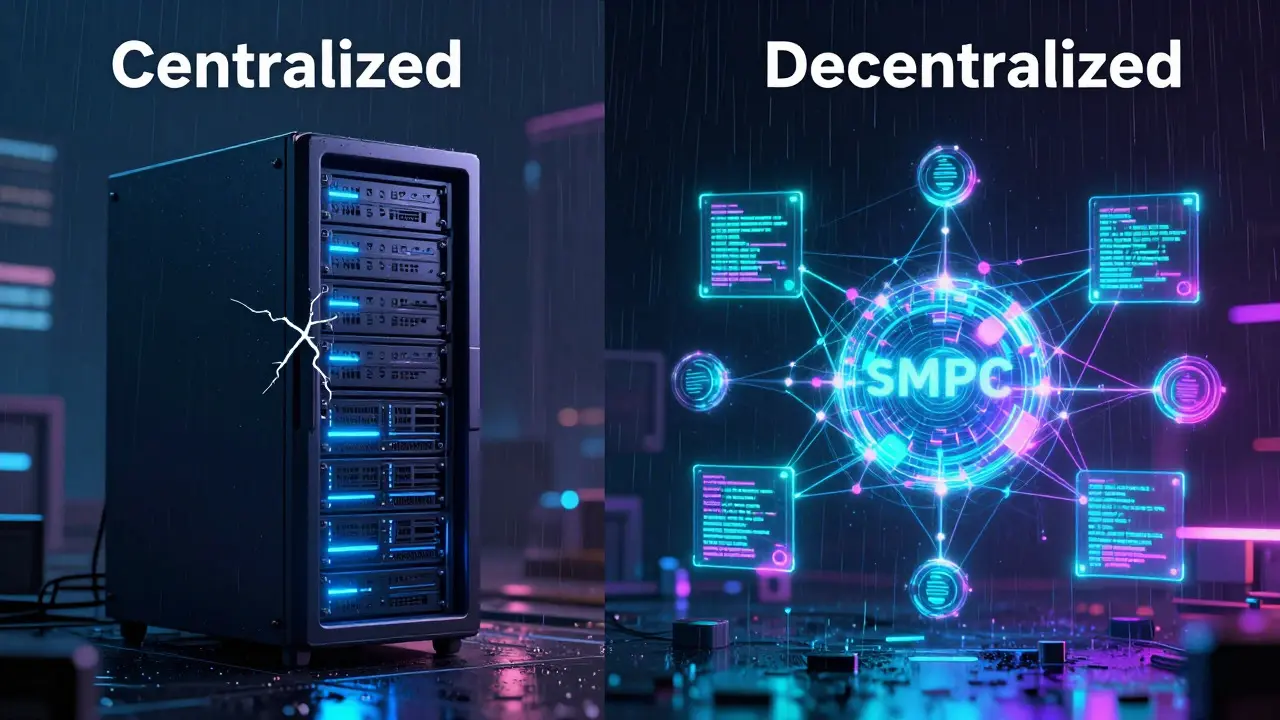
Centralized vs. Decentralized Custody Models
Not all wrapped tokens are created equal. The level of custodial risk depends entirely on the custody model used. We can broadly categorize these models into centralized, decentralized, and hybrid approaches.
| Model Type | Example | Custodian | Risk Profile | Efficiency/Cost |
|---|---|---|---|---|
| Centralized | WBTC | BitGo (Single Entity) | High Counterparty Risk | Fast (15-30 mins), Low Fee (0.25%) |
| Decentralized | renBTC | RenVM (sMPC Protocol) | Smart Contract/Crypto Risk | Slower (2-4 hours), Higher Fee (0.5-0.8%) |
| Hybrid | sBTC | Stacks Miners (PoT) | Moderate (Sidechain Risk) | Moderate Speed, Moderate Liquidity |
Centralized Custody: As seen with WBTC, a single company holds the assets. The advantage is operational efficiency. Redemptions are fast, and the user experience is smooth. However, you must trust BitGo’s security audits, insurance coverage, and regulatory compliance. In September 2023, the WBTC DAO updated its multisignature scheme to require 12 of 18 signatures for custody changes, up from 8 of 15, to mitigate insider risk. While better, it is still a centralized bottleneck.
Decentralized Custody: Projects like renBTC use Secure Multi-Party Computation (sMPC) via RenVM. No single entity holds the keys; instead, a network of nodes collectively manages the custody. This removes the single point of failure but introduces complexity. RenVM suffered a $0.5 million exploit in June 2021 due to cryptographic vulnerabilities, proving that decentralized code is not immune to bugs. Additionally, transaction times are longer, and fees are higher, making it less practical for small trades.
Hybrid Models: sBTC, developed by Stacks, uses a sidechain secured by proof-of-transfer miners. It attempts to balance security and decentralization but suffers from lower liquidity ($187 million TVL vs. WBTC’s $9.8 billion as of late 2023). Lower liquidity means slippage and fewer opportunities to use the asset in DeFi protocols.
Real-World Examples of Custodial Failure
Theoretical risks become terrifying when they hit your portfolio. History provides several cautionary tales about what happens when custodial mechanisms fail.
The most famous example is the Wormhole exploit on February 2, 2022. Attackers stole approximately $320 million in wrapped ETH by exploiting a validation flaw in the protocol’s custody mechanism. Wormhole acts as a bridge between chains, similar to a wrapping service. The flaw allowed attackers to mint more wrapped tokens than they deposited, breaking the 1:1 peg instantly. This wasn’t just a hack of a wallet; it was a failure of the verification logic that underpins trust in cross-chain assets.
On a smaller scale, user experiences highlight operational friction. On March 15, 2023, during a period of high Ethereum network congestion, gas fees spiked to 150 gwei. A user attempting to unwrap WBTC faced a race condition: their transaction failed due to cost, but the custodian’s time window for validation expired. They lost $7,850 in the process. Another user reported losing access to $15,000 in WBTC when BitGo suspended withdrawals for 72 hours during a routine security audit. These incidents show that even without a catastrophic hack, centralized control can freeze your funds unexpectedly.
Regulatory Scrutiny and Market Consolidation
As wrapped tokens grow, so does the attention of regulators. The SEC issued 17 subpoenas to wrapped token custodians in Q2 2023 regarding asset segregation practices. The European Banking Authority included wrapped tokens in its MiCA regulatory framework under “asset-referenced tokens.” This means custodians face stricter KYC (Know Your Customer) and AML (Anti-Money Laundering) requirements. For instance, BitGo requires identity verification for deposits exceeding 0.5 BTC. This clashes with Bitcoin’s pseudonymous nature, forcing users to choose between privacy and utility.
Market consolidation is also increasing systemic risk. Gartner forecasts that by 2025, 3-4 major custodians will control 85% of the $15 billion wrapped BTC market. While this may improve security standards through institutional-grade infrastructure (like BitGo’s partnership with Fireblocks in August 2023), it concentrates power. If one major custodian fails, the shockwaves could ripple through the entire DeFi ecosystem, affecting billions in total value locked.
Mitigating Custodial Risk: Practical Steps for Users
You cannot eliminate custodial risk entirely if you use wrapped tokens, but you can manage it. Here are actionable strategies to reduce your exposure:
- Diversify Custodians: Don’t put all your wrapped assets in one basket. Split holdings across WBTC, tBTC, and sBTC. Chainalysis’ 2023 DeFi risk management guide recommends this multi-custodian strategy to mitigate single-point failure risk.
- Use Native Assets When Possible: If you are trading on Ethereum, stick to ETH. If you are on Bitcoin L2s like Stacks, use native BTC or sBTC. Only wrap when necessary for specific DeFi yields.
- Monitor Liquidity and Audits: Check DefiLlama for Total Value Locked (TVL) trends. High TVL usually indicates deeper liquidity and more scrutiny. Look for recent security audits from firms like OpenZeppelin or CertiK. Dr. Anastasia Melnikova of OpenZeppelin noted that wrapped tokens create a “fundamental contradiction” in DeFi principles, emphasizing the need for rigorous code reviews.
- Understand Redemption Windows: Read the fine print. How long does it take to unwrap? Are there daily withdrawal limits? BitGo caps daily withdrawals at 100 BTC without special approval. During a crisis, these limits can trap your funds.
- Consider Decentralized Alternatives for Small Amounts: For transactions under $5,000, the higher fees of renBTC or other decentralized bridges may be worth the reduced counterparty risk.
The Future: Towards Trustless Interoperability
The industry is aware of these flaws. New protocols aim to remove custodians altogether. Chainlink’s Cross-Chain Interoperability Protocol (CCIP), launched in October 2023, uses Proof-of-Reserve oracles to verify asset backing without centralized custodians. While currently supporting only $420 million in TVL, it represents a shift toward cryptographic proofs rather than trusted intermediaries.
Long-term, the Ethereum Foundation’s roadmap includes proposals for native cross-chain verification mechanisms. These could eventually allow assets to move between chains without wrapping, eliminating custodial risk entirely. Until then, wrapped tokens remain a necessary evil-a bridge built on trust that we must cross carefully.
What is the biggest risk with wrapped tokens?
The biggest risk is custodial risk, where the entity holding the underlying assets (like BitGo for WBTC) fails, gets hacked, or freezes withdrawals. Since you don’t hold the private keys to the original asset, you are entirely dependent on the custodian’s integrity and security.
Is WBTC safe to use?
WBTC is considered relatively safe due to its established track record, regular audits, and institutional backing. However, it is not risk-free. It relies on a centralized custodian (BitGo), meaning you must trust their security practices and solvency. Diversifying across multiple wrapped token providers can reduce this concentration risk.
How do decentralized wrapped tokens differ from centralized ones?
Decentralized wrapped tokens (like renBTC) use protocols like Secure Multi-Party Computation (sMPC) where no single entity holds the keys. This removes single points of failure but often results in slower transaction times, higher fees, and potential smart contract vulnerabilities, as seen in RenVM’s past exploits.
Can I lose money if the wrapped token de-pegs?
Yes. If the custodian loses the underlying assets or if the bridge protocol is exploited (like the Wormhole hack), the wrapped token may lose its 1:1 peg to the original asset. In severe cases, the wrapped token can become worthless, leading to total loss of the invested capital.
Are there any regulations for wrapped tokens?
Yes, regulatory scrutiny is increasing. The SEC has investigated custodians for asset segregation, and the EU’s MiCA framework classifies some wrapped tokens as asset-referenced tokens. This leads to stricter KYC requirements and operational transparency for custodians, impacting user privacy.