




Blockchain Aid Savings Calculator
Estimate how much money could be saved by using blockchain technology for aid distribution. Based on real-world data from organizations like WFP and Oxfam.
Every year, billions of dollars in humanitarian aid are sent to people fleeing war, famine, and natural disasters. But how much of that money actually reaches them? Studies show up to 30% gets lost to corruption, bureaucracy, or inefficiency. That’s not just waste - it’s lives lost because aid never arrived. Now, blockchain aid is stepping in to fix this. It’s not about crypto speculation or NFTs. It’s about using a secure, transparent ledger to get food, cash, and medicine directly into the hands of people who need it - no middlemen, no delays, no theft.
How Blockchain Solves Real Problems in Aid
Traditional aid systems rely on paper vouchers, cash handouts, or bank transfers that go through multiple layers of agencies, banks, and contractors. Each step adds cost, delay, and risk. A refugee might wait weeks for a voucher, then travel miles to exchange it - only to find the vendor ran out of stock or the system crashed. In some cases, aid workers are forced to pay bribes just to release supplies. Blockchain changes that. Instead of paper or centralized databases, every transaction is recorded on a tamper-proof digital ledger. When the World Food Programme (WFP) launched its Building Blocks a blockchain-based aid distribution system using private Ethereum technology that tracks cash transfers to refugees via biometric iris scans in 2017, they started small: 100 refugees in Pakistan. Today, it’s the largest blockchain humanitarian project in the world. By 2023, WFP had distributed over $325 million in aid to more than 1 million people across Jordan and Bangladesh. The key? No cash changes hands. Instead, refugees use their eyes - literally. Their iris is scanned at a distribution point, and the system instantly authorizes a transfer of funds to a vendor’s digital wallet. The money arrives in seconds. No receipts. No signatures. No middlemen taking cuts. In Jordan alone, WFP saved $2.4 million in transaction fees within two years. That’s money that went straight back into feeding families.How It Works: Beyond the Hype
Don’t think Bitcoin. This isn’t public blockchain. WFP uses a private Ethereum network - controlled, secure, and designed for humanitarian use. The system connects NGOs, vendors, and beneficiaries through encrypted nodes. Each refugee gets a unique, anonymous digital ID tied to their iris scan. No name, no address, no passport number stored on the chain. Just a code that says, “This person is eligible for $50 in food vouchers this month.” Vendors - local grocery stores or pharmacies - use a simple app to confirm payments. When a refugee scans their eye, the vendor’s phone receives an instant notification: “Payment approved.” The transaction is recorded on the blockchain, visible only to authorized parties. No one can alter it. No one can duplicate it. Oxfam’s UnBlocked Cash a blockchain-powered cash transfer system using tap-and-pay cards and vendor apps to deliver aid without physical cash works similarly. Beneficiaries get a plastic card with a chip. They tap it at a registered store, and the payment is sent directly to the vendor’s account. No smartphone needed for the recipient - just the card and a reader. This makes it accessible even to older people or those without phones.Why It’s Better Than Cash or Vouchers
Let’s compare:- Physical cash: Easy to steal. Hard to track. Requires armored trucks, security guards, and banks. Costs $1-$2 per transaction. In Jordan, WFP found 98% less fund diversion with blockchain than with cash.
- Paper vouchers: Can be forged, sold on black markets, or expire. Setting up a voucher network takes weeks and costs 15-20% in admin fees. In Syria, vouchers were being resold for 40% less than their value.
- Blockchain aid: No physical items to lose. No cash to steal. Payments are instant. Fees are near zero. And every dollar spent is traceable - from donor to dinner table.

The Hidden Costs: Tech Isn’t Magic
But here’s the catch: blockchain isn’t a silver bullet. It needs infrastructure. And most refugee camps don’t have it. To run these systems, you need:- Reliable internet - often unavailable in remote areas
- Smartphones or card readers for vendors
- Biometric scanners - expensive, fragile, and sensitive to dirt, dust, or malnutrition
- Trained staff to fix tech issues
Who’s Using It - And Who’s Not
Right now, only major players like WFP, Oxfam, and the UN are running these systems. Out of all humanitarian organizations, just 12% have tried blockchain. Smaller NGOs can’t afford the setup cost or technical staff. WFP needs 3-5 dedicated tech experts per deployment. Smaller groups? They struggle to even get the software running. Regulations are another wall. In 78% of countries where aid is sent, there’s no legal framework for blockchain payments. Banks won’t accept digital transfers. Governments fear losing control. Only 22 countries have clear rules. That’s why most systems are private - controlled by the UN, not open to the public. Even WFP’s success has limits. Their system handles only 15-20 transactions per second. A regular credit card network does 2,000. During peak distribution times, delays happen. And while donors love the transparency, many don’t realize how much it costs to maintain.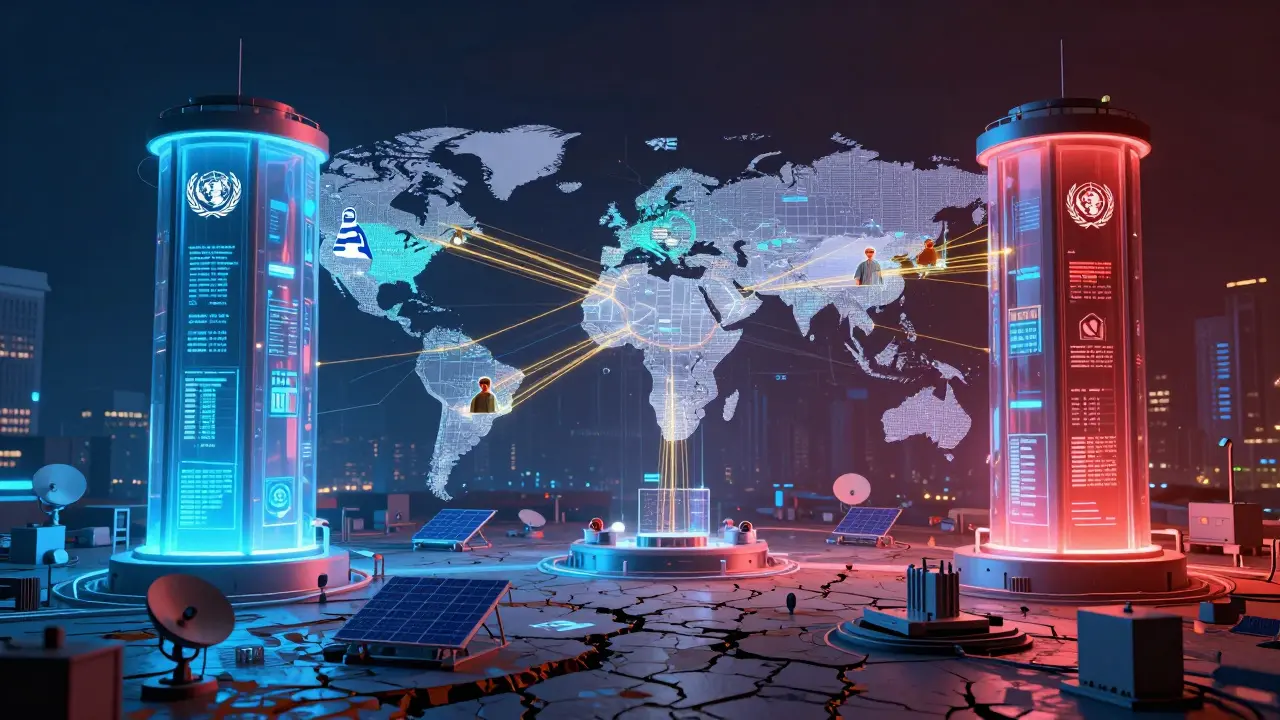
The Bigger Picture: Is This Really Progress?
Some experts warn we’re falling for “techno-solutionism” - the idea that tech alone can fix broken systems. Dr. James Morris, former WFP director, said blockchain addresses symptoms, not causes. Why do aid systems leak money? Because of corruption, poor governance, and lack of accountability. Blockchain can’t fix a government that won’t enforce laws. Dr. Sarah Smith from Oxford University puts it bluntly: “Blockchain’s benefits are often oversold. In places with good banking, it’s more expensive than traditional methods.” But others argue the value isn’t just in money saved - it’s in dignity. For the first time, refugees have control over their own aid. They don’t have to beg, wait, or prove their worth. They get help because they’re human - not because they’re lucky enough to be in the right camp.What’s Next?
In June 2023, WFP partnered with Baltic Data Science to boost their system’s speed to 50 transactions per second by mid-2024. Oxfam expanded UnBlocked Cash to three countries, distributing $2 million in aid by December 2023. The biggest step? The UN’s Interagency Blockchain Framework a 2023 initiative to create interoperability between different humanitarian blockchain systems, allowing WFP, UNHCR, and others to share data securely, launched in September 2023. This means one day, a refugee moving from Jordan to Greece might keep their digital aid ID - no re-registration, no delays. The global market for blockchain aid is small - $147 million in 2022 - but growing fast. Analysts predict it’ll hit $700 million by 2027. But adoption will stay limited to big agencies unless costs drop and infrastructure improves.Will This Become the Norm?
By 2030, there’s a 68% chance major UN agencies will use blockchain as standard. But only 32% for the wider humanitarian sector. Why? Because tech alone doesn’t solve poverty. But when paired with real policy change, it can be powerful. The real win isn’t the blockchain. It’s that aid is finally being designed around people - not systems. No more vouchers. No more lines. No more stolen money. Just a scan, a tap, and food on the table.It’s not perfect. But it’s progress.
How does blockchain help reduce corruption in aid distribution?
Blockchain reduces corruption by making every transaction visible and unchangeable. Instead of cash passing through multiple hands, funds go directly from donor to vendor, with each step recorded on a secure digital ledger. Only authorized parties can see the data, and no one can delete or alter records. In WFP’s Building Blocks program in Jordan, fund diversion dropped by 98% compared to traditional cash handouts.
Do refugees need smartphones to use blockchain aid?
Not always. WFP’s system uses iris scanning at distribution points - no phone needed for the beneficiary. Oxfam’s UnBlocked Cash uses tap-and-pay cards, which work like debit cards. Vendors need smartphones or card readers to process payments, but recipients just need to scan their eye or tap their card. This makes it accessible to older people and those without access to mobile technology.
Why isn’t blockchain aid used everywhere?
Most refugee camps lack the infrastructure: reliable internet, electricity, biometric scanners, and trained staff. Setting up the system takes weeks and costs more than cash distribution in areas with existing banking. In remote regions, implementation fails 43% more often than in urban camps. Also, 78% of countries have no legal framework for blockchain payments, making it risky for organizations to adopt.
Is blockchain aid more expensive than traditional methods?
It depends. In places with weak banking and high corruption, blockchain saves money - WFP saved $2.4 million in Jordan by cutting transaction fees and reducing fraud. But in areas with good infrastructure, traditional systems can be cheaper. The upfront cost of scanners, software, and training is high. For small NGOs, the cost often outweighs the benefits. It’s cost-effective only at scale and in high-risk environments.
Can refugees access their aid if the system goes down?
Yes. All major systems have backup protocols. If the blockchain network fails, aid agencies switch to offline vouchers or cash distributions. WFP and Oxfam maintain emergency reserves and manual approval lists. However, delays can last days or weeks - which is why reliability is a top priority. The system’s uptime is 99.9%, but when it fails, resolution takes 4-6 weeks on average.
Are there privacy risks with iris scanning?
No - and that’s by design. Biometric data (like iris scans) is never stored on the blockchain. Instead, the system creates a unique, anonymous digital code based on the scan. Only the humanitarian agency holds the key to link that code to a person’s identity. The blockchain only records: “ID #8723 received $50 on May 12.” No names, no locations, no personal data. This protects privacy while ensuring accountability.
How do vendors get paid through blockchain aid systems?
Vendors register with the aid organization and install a simple app on their phone or use a card reader. When a refugee scans their eye or taps their card, the system instantly verifies eligibility and sends payment directly to the vendor’s digital wallet. Payments arrive in minutes, not weeks. Vendors report 78% satisfaction because they get paid immediately, with no disputes or delays - unlike traditional systems where payments take 2-3 weeks to clear.
Is blockchain aid only for cash transfers?
Mostly, yes. Over 89% of current blockchain aid projects focus on cash transfers - giving people the freedom to buy what they need. But pilots are testing food vouchers, medicine tracking, and even school meal programs. The core idea is the same: use blockchain to ensure the right item reaches the right person, with full traceability. WFP is exploring blockchain for tracking medical supplies in conflict zones, where counterfeit drugs are a major problem.
Comments
15 Comments
Holly Cute
Okay but let’s be real - this isn’t ‘progress,’ it’s just tech bros repackaging colonialism with blockchain emojis 🤡. You think a refugee in Bangladesh cares about ‘tamper-proof ledgers’ when they’re starving? The real problem isn’t the system - it’s that the world keeps funding Band-Aids instead of fixing the war machine that creates the crises in the first place. #TechnoColonialism
Neal Schechter
Honestly, I’ve seen this play out in a few refugee camps near the Jordan-Syria border. The tech works *when* it works - iris scans can fail if someone’s dehydrated or has eye infections, which is way more common than people realize. But the real win? Women don’t have to walk through camp gates to get food anymore. That’s huge. It’s not magic, but it’s a step - and that’s more than we had 10 years ago.
Madison Agado
There’s a philosophical layer here that’s being ignored. Blockchain doesn’t just track money - it transfers agency. For the first time, aid recipients aren’t passive objects of charity but active participants in their own survival. That’s not a technical upgrade - it’s a moral one. We’ve spent centuries treating the poor as problems to be managed. This system, flawed as it is, treats them as people with rights. That shift matters more than any dollar saved.
Tisha Berg
I just want to say thank you for writing this. So many people think tech is the answer, but you actually showed the *real* challenges - the internet, the scanners, the training. It’s not perfect, but it’s trying. And that’s okay. We don’t need miracles. We just need to stop pretending aid is simple. It’s hard. And people deserve better than that.
Billye Nipper
I’m so moved by this!!! I literally cried reading about the woman in Bangladesh who doesn’t have to walk two hours anymore!!! This is the kind of innovation that gives me hope!!! We need MORE of this!!! Please share this with everyone you know!!! 🙏💖✨
Roseline Stephen
I appreciate the nuance here. Most articles either glorify blockchain as the savior or dismiss it as useless. The truth is in the middle. It’s a tool. Like a hammer. Useful in the right hands, dangerous in the wrong ones. And the hands holding it right now? Mostly big NGOs. That’s a problem too.
Isha Kaur
In India, we’ve seen similar tech rollouts in rural health programs - biometric IDs for medicine distribution, QR codes for supply chains. The same issues come up: power outages, staff turnover, elderly people struggling with new systems. But when it works, it’s transformative. I think the key isn’t scaling fast - it’s scaling smart. Pilot, learn, adapt. Don’t just throw tech at a problem and call it done.
Glenn Jones
BLOCKCHAIN AID?? LOL. So now we’re using IRIS SCANS TO FEED PEOPLE? WHAT’S NEXT? NFTS FOR WATER? THIS IS THE MOST RIDICULOUS THING I’VE EVER HEARD. YOU THINK A PERSON WHO’S HUNGRY CARES ABOUT ‘PRIVATE ETHEREUM’? THEY CARE ABOUT FOOD. NOT TECH. THIS IS JUST A WAY FOR TECH COMPANIES TO GET GRANTS AND LOOK SMART. #CANCELLATIONCULTURE #WFPISWASTEFUL
Nelson Issangya
You’re all missing the point. This isn’t about whether it’s perfect. It’s about whether it’s better than what we had. Before blockchain, kids were dying because aid got stolen in transit. Now? They’re eating. That’s not hype - that’s survival. Yeah, the tech’s clunky. Yeah, it fails sometimes. But it’s saving lives. And if you’re too busy complaining about the interface to help fix it, then maybe you’re part of the problem.
Joe West
Quick note: the $2.4M saved in Jordan? That’s real. And that money went straight to food, not salaries or consultants. That’s the real win. Also, vendors love it - no more waiting 3 weeks to get paid. They can reinvest in their businesses. It’s a quiet ripple effect.
Richard T
What’s the long-term plan? If a refugee moves from Jordan to Greece, will their digital ID work? Right now, every system is siloed. That’s the next hurdle - interoperability. The UN’s new framework is promising, but it’s still in beta. We need global standards, not 12 different blockchain apps for 12 different NGOs.
jonathan dunlow
Let me tell you something - I worked with a small NGO in Uganda that tried to use blockchain for school meal vouchers. We spent six months setting it up. Cost $200k. Got one tablet to work. Two teachers quit because they couldn’t figure out the app. Kids got hungry. We went back to paper. The tech sounded amazing on paper. Reality? It’s not ready for most places. But we didn’t give up. We learned. Now we’re piloting a hybrid system - QR codes + SMS alerts. It’s slower. It’s cheaper. And it works. Sometimes, the best tech is the one you can fix with a screwdriver and a smile.
Chris Mitchell
It’s not about blockchain. It’s about trust. People don’t trust aid systems. This rebuilds that - slowly. One scan. One tap. One verified transfer. That’s dignity.
rita linda
This is why America should stop funding global aid. You’re handing over billions to UN bureaucrats who use it to test Silicon Valley’s latest toys. Real aid is food trucks. Real aid is planes. Real aid is not asking refugees to stare into a camera so some tech guy in Geneva can check a ledger. This is performative virtue signaling dressed up as innovation.
nicholas forbes
I’m conflicted. On one hand, the transparency is revolutionary. On the other, we’re outsourcing humanitarian ethics to algorithms. Who decides who gets scanned? Who audits the system if it’s biased? What if the iris tech misreads darker irises? We’re building a future where human lives are reduced to data points - and we’re calling it progress.
Write a comment