



Venezuela Currency Converter
Venezuela Currency Converter
See how the value of the Venezuelan bolivar compares to USDT and oil
When the U.S. slapped sanctions on Venezuela’s oil industry in 2019, the government didn’t just sit back and wait for the economy to collapse. Instead, it turned to something no one expected: crypto. Not as a speculative investment, not as a tech experiment-but as a lifeline to keep money flowing when banks refused to touch them.
It started with the PETRO. Launched in 2018, the PETRO was Venezuela’s answer to hyperinflation and isolation. Backed by oil reserves, it was supposed to be a digital version of the bolívar. But the real goal? Get around sanctions. The Maduro regime didn’t hide it. Officials said outright: if the U.S. blocks our oil sales, we’ll sell oil for Bitcoin and Tether instead.
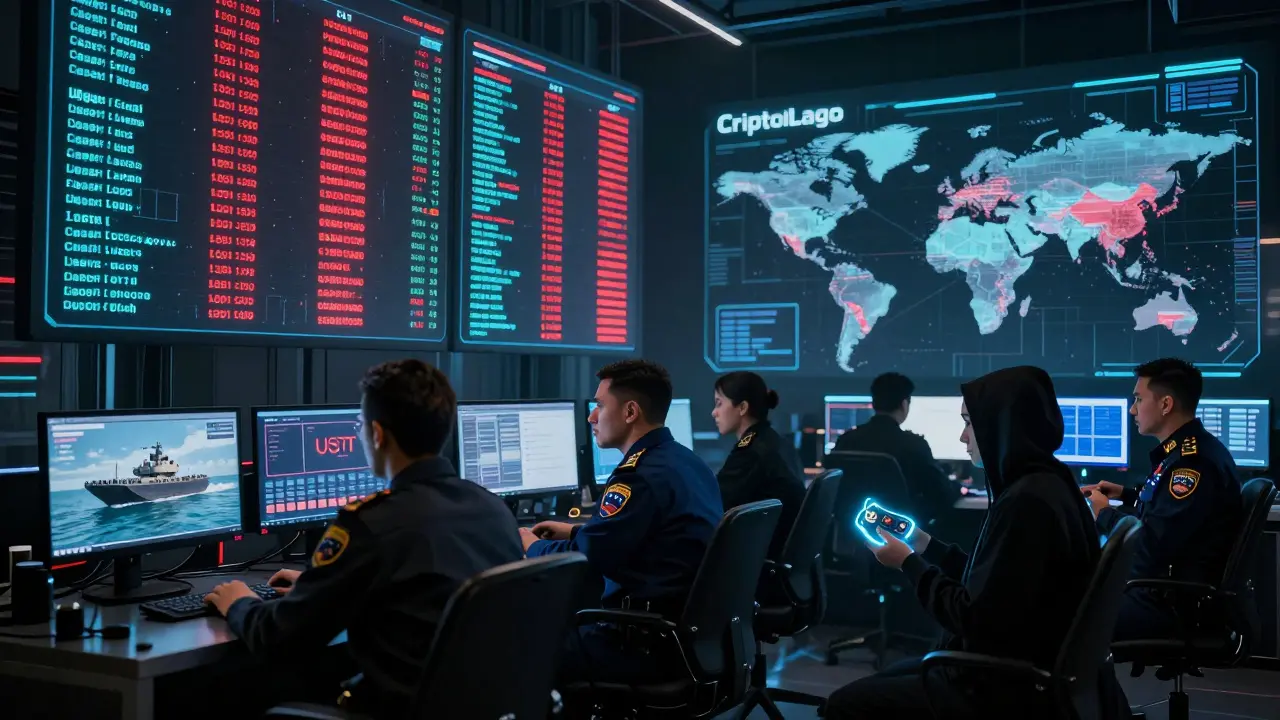
And it worked-sort of. While no one outside Venezuela wanted to buy PETROs directly (U.S. sanctions made it illegal), the real action happened in the shadows. The government set up seven state-controlled crypto exchanges. One of them, Criptolago, is owned by the governor of Zulia state-himself sanctioned by the U.S. for blocking humanitarian aid. These weren’t just platforms. They were gateways. People in Caracas could walk into a shop, hand over cash, and walk out with USDT-Tether, the stablecoin pegged to the U.S. dollar. That money could then be sent overseas, used to buy fuel, medicine, or food, and eventually end up back in the hands of PDVSA, Venezuela’s state oil company.
The oil connection is key. PDVSA didn’t just sit on its reserves. It started shipping crude in secret, using ship-to-ship transfers in international waters. No port, no paperwork, no traceable invoices. Instead, they’d receive payments in crypto. U.S. prosecutors later uncovered a network of five Russian nationals helping PDVSA launder hundreds of millions through crypto exchanges. One of them admitted in court: "Crypto is the only way we can move money without banks watching."
Why Tether? Because it’s stable. Bitcoin swings too much. You can’t pay for diesel if your payment drops 20% overnight. USDT acts like digital cash. And in Venezuela, where the bolívar lost 99% of its value since 2016, people don’t trust their own currency anymore. They trust USDT. Even if they know it’s tied to a company based in the Cayman Islands. Even if they know the U.S. government might freeze accounts later. It’s still better than holding a stack of bills that buy you half a loaf of bread.
For ordinary Venezuelans, crypto became survival. A grandmother in Maracaibo uses WhatsApp to connect with a local OTC broker. She hands over bolívares. He gives her USDT. She sends it to her daughter in Colombia. Her daughter cashes out, buys groceries, and sends photos of meals. No bank involved. No wire transfer. No sanctions flag. It’s not legal. But it’s the only thing keeping families fed.
But here’s the twist: the same system that helps a grandmother feed her kids also helps a regime fund its military, buy weapons, and evade accountability. The U.S. Treasury’s OFAC has repeatedly warned that crypto transactions involving Venezuelan entities violate sanctions. In 2022, they indicted Russian nationals for laundering PDVSA oil profits through crypto. Israeli authorities found Hezbollah-linked launderers using USDT to move money from Venezuela to the Middle East. Chainalysis reports that Venezuela remains one of the top five countries for crypto-related sanctions evasion.
It’s not just Venezuela. Russia started experimenting with crypto after its own sanctions in 2022. Iran and North Korea have followed. But Venezuela is the blueprint. It’s the first country to turn crypto into national policy. Not just a tool for individuals. Not just a workaround for businesses. A full-scale economic strategy built on blockchain.
Financial institutions around the world are now terrified of anything tied to Venezuela. Banks shut down accounts. Crypto exchanges like Binance and Kraken quietly block Venezuelan IPs. Compliance teams spend hours analyzing blockchain trails, looking for red flags: large USDT transfers from Caracas OTC brokers, sudden spikes in crypto activity linked to oil ports, transactions routed through mixers or privacy coins. One fintech analyst told me: "If a transaction touches Venezuela, we assume it’s dirty until proven clean. And proving it clean is almost impossible."
The regime keeps adapting. As blockchain analytics get better, they’re shifting toward Monero and other privacy coins. They’re testing decentralized finance (DeFi) protocols to bypass centralized exchanges entirely. They’re using NFTs as digital receipts for oil deals. The game is evolving. But the goal hasn’t changed: keep the money flowing, no matter who’s watching.
Meanwhile, the people in Venezuela are caught in the middle. They’re not criminals. They’re just trying to eat. But their survival depends on a system that fuels corruption. Every USDT they buy helps the government stay in power. Every crypto transaction they make makes it harder for the world to isolate them.
There’s no clean solution. Sanctions were meant to pressure the regime. But instead, they pushed Venezuela into crypto-and now, the world is stuck with a digital underground economy that’s harder to shut down than a bank.
For now, the PETRO is fading. No one trades it. But the infrastructure remains. The exchanges still operate. The OTC brokers still meet in cafés. The oil still moves. And the USDT keeps flowing.
It’s not a revolution. It’s a workaround. And it’s working.
How Venezuela’s Crypto System Actually Works
The system isn’t complicated. It’s brutal in its simplicity.
- Step 1: Oil gets shipped. PDVSA sends crude via tanker to international waters. No port. No customs. No paper trail.
- Step 2: Buyers pay in crypto. Foreign buyers-often shell companies in Dubai, Turkey, or Russia-send USDT or Bitcoin directly to Venezuelan crypto wallets.
- Step 3: Crypto enters the state network. Funds go to Criptolago or other government-run exchanges. These aren’t private platforms. They’re run by state officials.
- Step 4: Funds are converted or laundered. Some stays as crypto. Some is swapped for bolívares through OTC brokers. Some is moved to offshore accounts via intermediaries.
- Step 5: Money fuels the regime. The cash pays for weapons, salaries, and political control. The crypto keeps the economy from collapsing.
It’s not magic. It’s logistics. And it’s working because the world’s financial system still treats crypto like a wild west-hard to track, harder to stop.
Why Crypto Works Better Than Old-School Sanctions Evasion
Before crypto, sanctioned countries used barter, third-country banks, or fake invoices. Venezuela tried all of that. But it was slow. Expensive. Risky.
Crypto changed everything:
- No intermediaries. No Swiss banks. No Chinese shell companies. Just direct transfers.
- 24/7 access. Transactions happen anytime. No banking hours. No holidays.
- Lower cost. No wire fees. No currency conversion losses. Just network fees.
- Harder to trace. Even though blockchains are public, mixing services and privacy coins make it tough to link wallets to individuals.
It’s like switching from sending a letter through the postal service to texting someone directly. The government didn’t just adapt to sanctions. It outmaneuvered them.
Who’s Really Using Crypto in Venezuela?
Two groups. Very different.
Group 1: The Regime and Its Allies
PDVSA. The military. Government ministers. Their wallets are linked to state exchanges. Their transactions are large, frequent, and often routed through Russian or Iranian intermediaries. They’re not trying to hide from the law-they’re trying to bypass it entirely.
Group 2: Ordinary Citizens
A teacher in Valencia uses crypto to get paid in USDT instead of bolívares. A nurse in Caracas buys insulin with Bitcoin sent from her brother in Miami. A student in Maracay pays for online courses with USDT. They’re not breaking the law to help a dictator. They’re breaking it to survive.
That’s the moral mess of this whole system. The same technology that helps a family eat also helps a regime stay in power.

What the U.S. and EU Are Doing About It
The West isn’t sitting still.
- OFAC has sanctioned over 100 Venezuelan crypto entities since 2019.
- The DOJ has indicted Russian nationals, Iranian brokers, and Venezuelan officials.
- Major exchanges now block Venezuelan IPs and flag transactions linked to known OTC brokers.
- Blockchain analytics firms like Chainalysis and Elliptic have built special tools to detect Venezuelan crypto patterns.
But here’s the problem: you can’t sanction a blockchain. You can’t shut down a wallet. You can’t arrest a USDT transfer. The best you can do is make it harder. And even that’s failing.
Since October 2024, Venezuela’s crypto activity has increased by 47% compared to the previous year, according to blockchain data. Why? Because sanctions were briefly lifted after Maduro promised elections-and the regime used that window to rebuild its crypto infrastructure.
The Bigger Picture: Is This the Future of Sanctions?
Venezuela didn’t invent crypto. But it did invent something new: state-sponsored crypto sanctions evasion.
Other countries are watching. Russia is testing crypto payments for oil to India and China. Iran is using crypto to bypass SWIFT. North Korea is stealing crypto to fund its missile program.
If this keeps going, the next decade could see a world where:
- Sanctions are less effective because money flows through crypto.
- Central banks start issuing their own digital currencies to compete.
- Financial systems split into two: one for the West, one for everyone else.
Venezuela isn’t just a cautionary tale. It’s a preview.
Comments
13 Comments
Amy Copeland
Oh wow, what a revolutionary idea - using digital cash to dodge sanctions. Next they’ll invent a horse that flies and calls it ‘economic innovation.’ 🙄
Timothy Slazyk
This isn’t just about Venezuela - it’s about the failure of centralized financial control. Sanctions were meant to isolate, but they forced innovation. Crypto isn’t the problem; it’s the symptom of a broken global system that still thinks banks are the only way to move value. The real question: why did it take a sanctioned nation to show us how inefficient the old model is?
Blockchains don’t care about borders. They don’t need SWIFT. They don’t need permission. And now, for the first time in history, a population under siege has built a parallel economy that’s faster, cheaper, and more resilient than the one imposed on them. That’s not a loophole - it’s a wake-up call.
Western policymakers still treat crypto like a fad. They’re not seeing the shift. The future isn’t about banning wallets. It’s about adapting to a world where money flows like data - and trying to stop it is like trying to censor the wind.
Sean Kerr
brooooooo… this is wild 😱 I had no idea people were using WhatsApp to send USDT like it’s a grocery list 😂 my abuela would’ve been so confused but also so grateful… this is real life crypto, not just NFT monkeys 💪
Jonny Cena
It’s easy to judge from the outside, but imagine if your currency lost 99% of its value overnight. You’d do whatever it takes to feed your kids. The grandmother sending USDT to her daughter? She’s not a criminal - she’s a survivor. The real crime is forcing people into this impossible choice.
Let’s not confuse the tool with the tyrant. Crypto didn’t create this crisis. Sanctions did. And now we’re punishing the innocent because the powerful don’t know how to fix their own mistakes.
We need to rethink this. Not ban crypto. Not block IPs. But build bridges - humanitarian exemptions, safe channels for essential goods, real accountability for the regime, not the people.
Emma Sherwood
What’s fascinating is how Venezuela’s crypto ecosystem mirrors the resilience of its people - resourceful, adaptive, and deeply human. The fact that OTC brokers operate in cafés like street vendors selling coffee? That’s not just economics - that’s culture. That’s community. That’s dignity in the face of collapse.
And yet, the West keeps treating this like a cybersecurity issue instead of a humanitarian one. We’re so obsessed with tracking transactions that we forget we’re tracking *people*. Real people. With names. With children. With hunger.
Maybe the real lesson isn’t how crypto bypasses sanctions - it’s how human beings bypass despair.
Tom Joyner
Let’s be honest - this is just a sophisticated money-laundering scheme disguised as ‘economic innovation.’ The fact that you’re calling it a ‘lifeline’ while ignoring that the same system funds weapons and repression is either willful ignorance or moral bankruptcy.
There’s no moral high ground here. Just a regime exploiting a technological blind spot. And you’re celebrating it.
Mark Cook
Wait wait wait - so you’re saying crypto is *better* than banks? 😏 I thought you were supposed to hate crypto. You’re basically saying the system works better when it’s unregulated. That’s… kinda the whole libertarian dream. Are you secretly a Bitcoin Maxi? 🤔
Jack Daniels
They’re all watching you. Every USDT transfer. Every OTC broker. Every WhatsApp message. They’re tracking your grandma’s wallet. They know where you live. They’re already building algorithms to predict your next transaction. You think you’re free? You’re just another data point in a surveillance state that doesn’t even know it’s controlling you.
Samantha West
It is, however, profoundly concerning that the structural integrity of global financial governance is being undermined by non-state actors leveraging decentralized ledger technology to circumvent legally mandated economic restrictions. The absence of centralized oversight, coupled with the pseudonymous nature of cryptographic transactions, creates an epistemological vacuum wherein accountability becomes not merely difficult, but functionally impossible.
And yet - paradoxically - the very mechanism that enables this evasion is also the only mechanism that permits the survival of millions of non-combatants. A moral contradiction of staggering magnitude.
Donna Goines
Did you know the CIA funded early Bitcoin development to destabilize rogue states? And now Venezuela’s using it? Coincidence? Or is this all part of a bigger plan to collapse the dollar? Tether isn’t even backed by dollars - it’s backed by shell companies and shady offshore debt. The whole thing’s a Ponzi scheme run by the deep state to control the global economy. They want you to think crypto is freedom - but it’s just a new leash. They’re watching your wallet. They’re tracking your IP. They’re waiting for you to slip up. And when you do? They’ll freeze it. And then they’ll say ‘we warned you.’
Greg Knapp
Everyone’s so obsessed with the regime they forget the people are suffering. But here’s the thing - the people don’t even know they’re helping the dictatorship. They think they’re just buying food. But every time they use USDT, they’re fueling the same people who arrested their neighbors. You think you’re innocent? You’re part of the machine. And you don’t even realize it.
Shruti Sinha
Very insightful breakdown. The shift from traditional sanctions evasion to crypto-based logistics is indeed a watershed moment. The fact that PDVSA is using ship-to-ship transfers with crypto payments shows a level of operational sophistication rarely seen in sanctioned economies. What’s more impressive is how the system leverages existing informal networks - OTC brokers, WhatsApp - to scale. It’s not tech-driven; it’s human-driven tech. Brilliant, in a tragic way.
Cheyenne Cotter
Okay but let’s be real - this whole thing is just a giant loophole that’s going to come back and bite everyone. You think the U.S. is just going to sit there while Venezuela turns into a crypto haven? They’re already working on AI-powered blockchain surveillance tools that can trace every single USDT transaction back to the person who cashed it out. And guess what? They’re going to start freezing accounts of regular people who just wanted to buy medicine. You think your grandma’s WhatsApp transfer is safe? It’s not. The government already has a database of all OTC broker locations in Caracas. They’re building facial recognition to identify who’s handing over bolívares. This isn’t freedom - it’s a trap. And we’re all being lured into it with the promise of ‘stability’ while they quietly prepare to shut it all down and blame the victims. You’re not helping anyone. You’re just making it easier for them to control you later.
Write a comment