
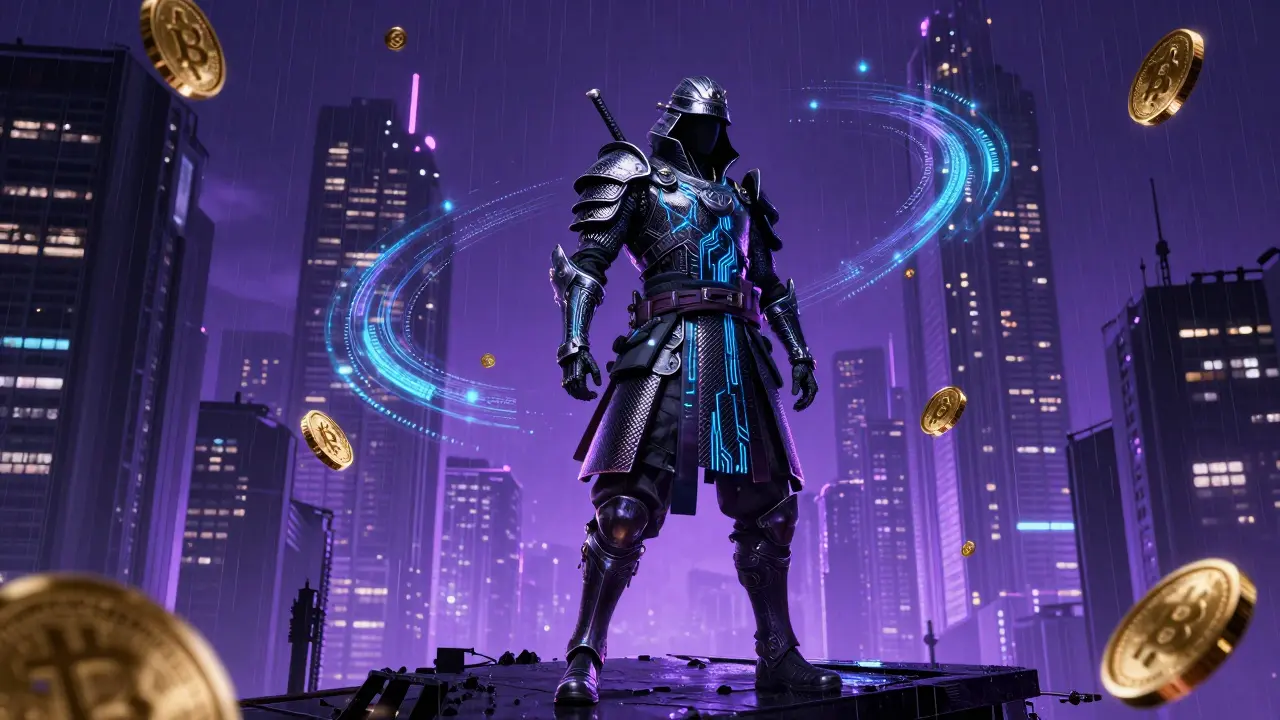
Imagine a world where your gaming hours actually pay your rent. For a long time, blockchain games looked like glorified spreadsheets or 8-bit clones. Then comes Katana Inu is a blockchain-based gaming and trading ecosystem that blends high-end graphics with decentralized finance (DeFi) and NFTs. Also known as KATA, this project attempts to bridge the gap between hardcore AAA gaming and the crypto economy. Instead of just playing for fun, you're playing for assets that have real-world value.
What Exactly is the KATA Token?
At the heart of the ecosystem is the KATA token is the native utility and governance token used for all transactions within the Katana Inu universe. It's not just a currency to speculate on; it's the fuel for the entire machine. Whether you're buying a legendary sword in the marketplace or voting on the future of the game's development, you'll need KATA.
The token operates on two major networks: Ethereum is the primary blockchain where KATA exists as an ERC-20 token and the Binance Smart Chain (BSC) where it functions as a BEP-20 token. This dual-chain approach is a smart move because it allows users to choose between the prestige of Ethereum and the speed/lower costs of BSC.
Breaking Down the Gaming Experience
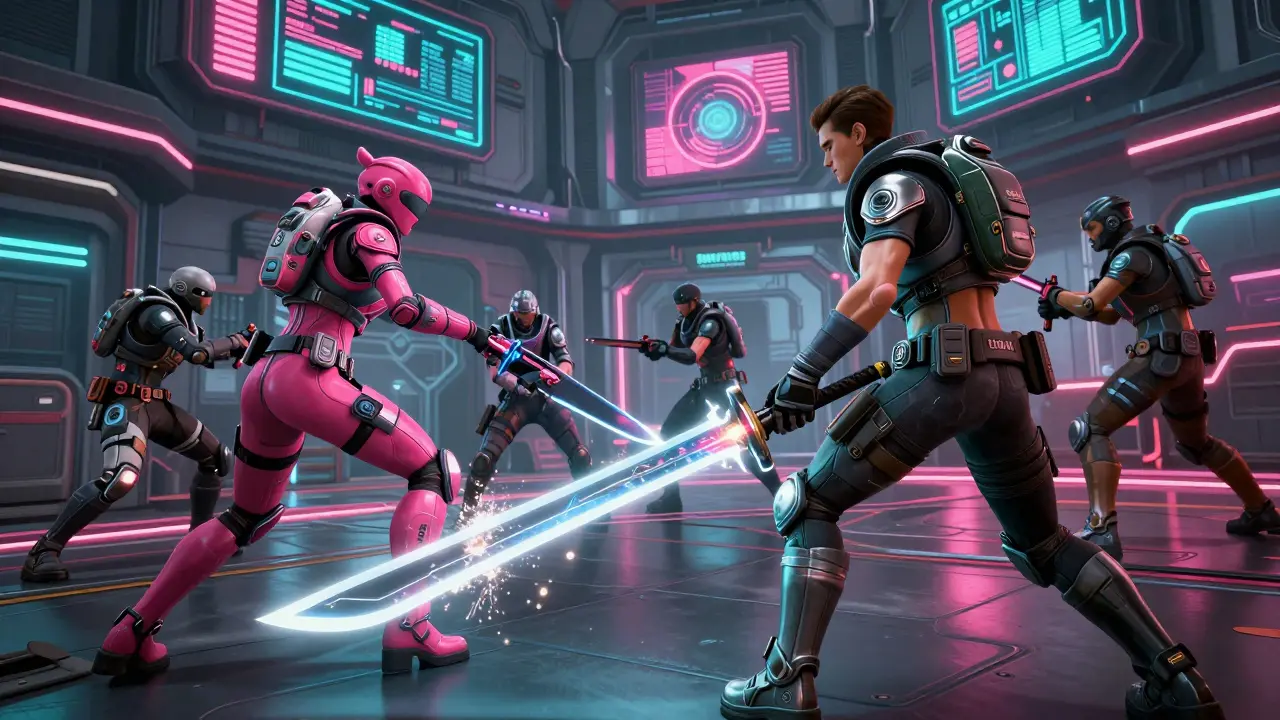
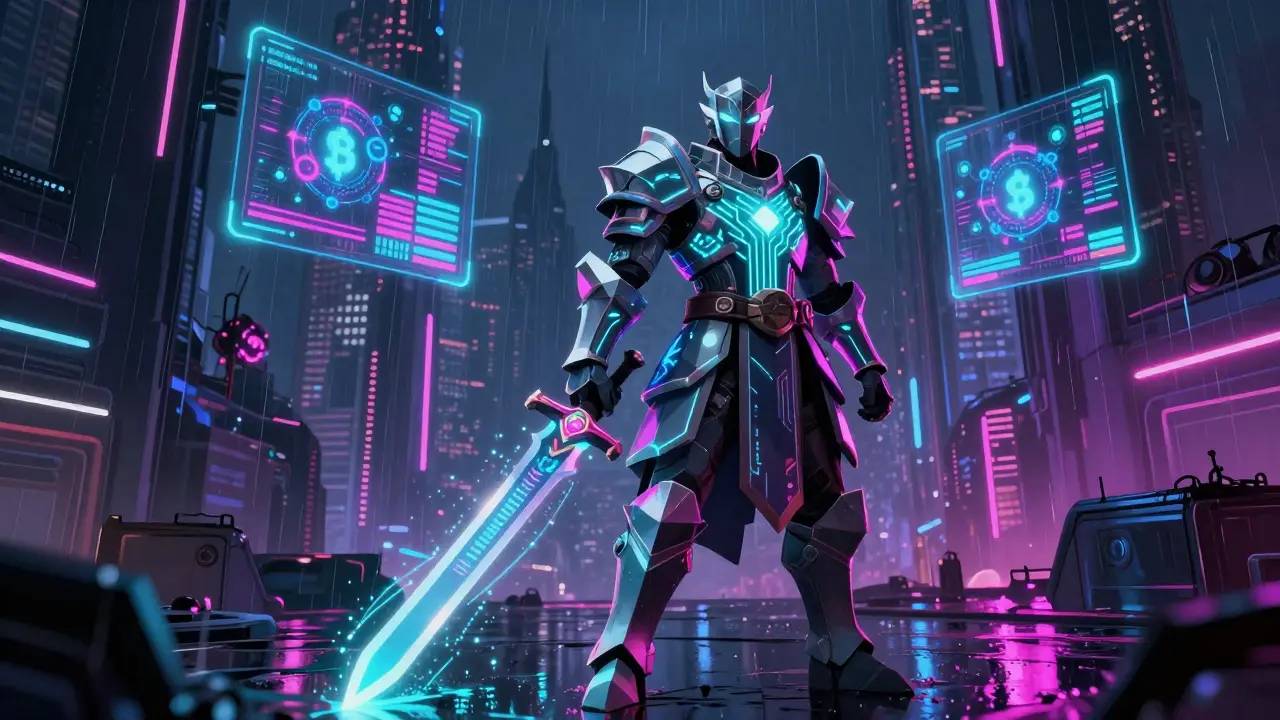
Most KATA crypto projects focus on the "crypto" part and forget the "game" part. Katana Inu does the opposite. They've built an open-world Battle Royale experience. We're talking photorealistic visuals and 3D characters that don't look like they were made in a basement. You can jump into a 100-player combat arena, join a 5v5 battle, or compete in monthly tournaments to climb the leaderboard.
The magic happens when you realize that your gear isn't just a bunch of pixels. Every skin, weapon, and special power you earn is minted as an NFT is a unique digital asset that proves ownership of a specific in-game item on the blockchain. If you find a rare katana with a unique skill set, you don't just use it-you own it. You can trade it, sell it, or stake it to earn more rewards.
How the Play-to-Earn Model Works
If you've ever spent $20 on a "skin" in a traditional game, you know that money is gone forever. In Katana Inu, the economy is flipped. By completing challenges and winning matches, you unlock hidden abilities and earn rewards. This creates a loop where skill leads to assets, and assets lead to income.
The ecosystem uses a variety of DeFi mechanisms to keep holders interested:
- Auto-staking: Some holders receive rewards in ETH just for keeping their tokens.
- NFT Staking: You can lock up your rare in-game items to generate a passive stream of KATA.
- Liquidity Pools: Advanced traders can provide liquidity to DEXs to earn a slice of the trading fees.
| Attribute | Value / Detail |
|---|---|
| Max Supply | 50 Billion KATA |
| Circulating Supply | ~37.3 Billion KATA |
| All-Time High (ATH) | $0.0031 (March 16, 2024) |
| Network Compatibility | Ethereum (ERC-20) & BSC (BEP-20) |
| Consensus Mechanism | Proof-of-Stake (on BSC) |
The NFT Marketplace: Trading Beyond the Game
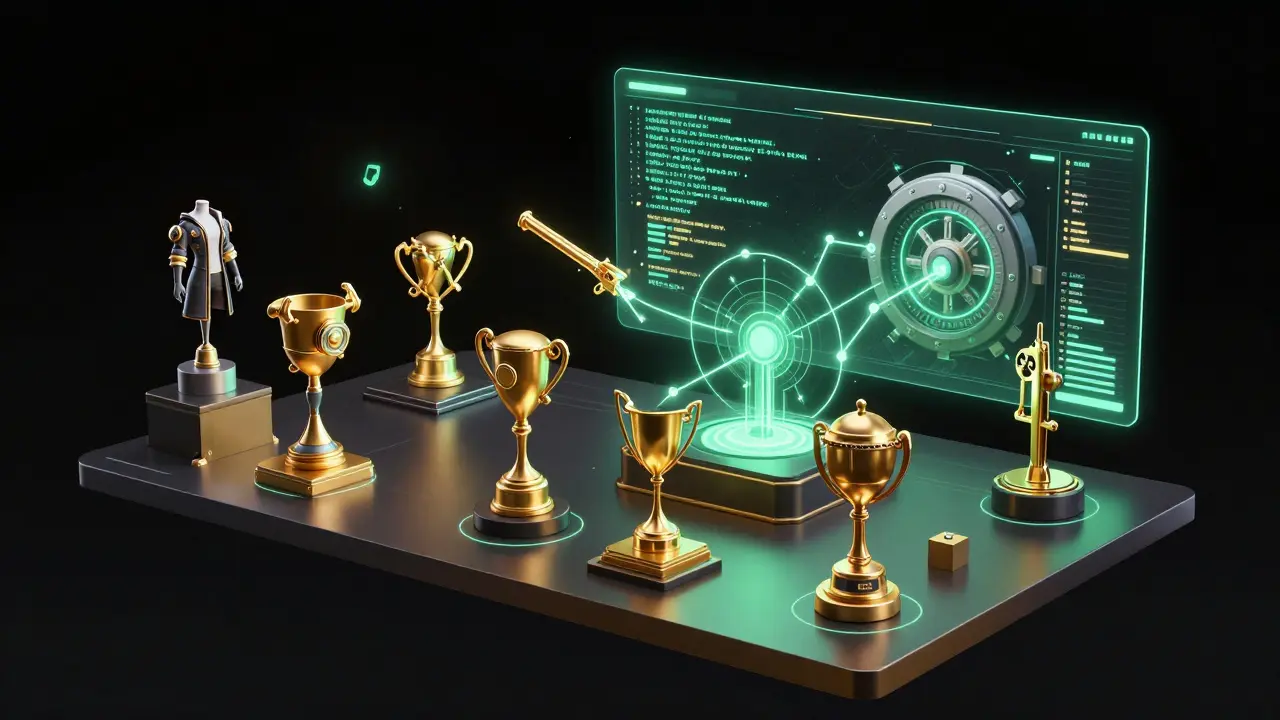
The NFT Marketplace is the central hub where KATA users trade character models, skins, and gear. It's essentially the eBay of the Katana Inu world. Because the platform is built on an Ethereum sidechain, the developers have worked to minimize the dreaded "gas fees" that usually eat up a trader's profit. This makes the transition from gaming to trading seamless.
With over 10,000 unique NFTs in the initial collection, the scarcity is managed to prevent the market from crashing due to oversupply. Whether you're a casual player looking for a cool cap for your character or a "whale" investor looking for the rarest 3D model, the marketplace is where the token's utility becomes most apparent.
The Hard Truth: Price Volatility and Risks
We can't talk about KATA without talking about the elephant in the room: the price. If you look at the charts from March 2024, the coin hit a peak of $0.0031. Fast forward to April 2026, and it's trading significantly lower, often around $0.0001. That's a drop of roughly 96%. Why did this happen?
Low-cap altcoins in the GameFi is the intersection of gaming and decentralized finance, focusing on blockchain-integrated economies sector are notoriously volatile. Many projects hype up the "earn" part but struggle to maintain a player base once the initial craze dies down. For KATA, the challenge has been maintaining liquidity across exchanges like Coinbase and Kraken while fighting the general bear trends of the gaming sector.
Technical Backbone and Security
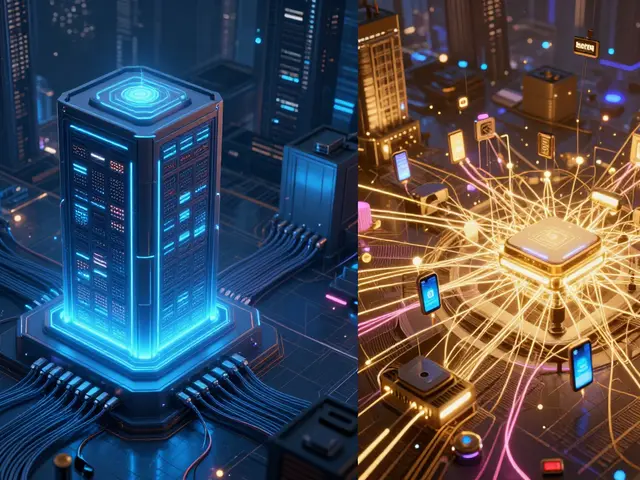
To keep the game running smoothly, Katana Inu utilizes a Proof-of-Stake is a cryptocurrency consensus mechanism that requires validators to hold and "stake" coins to verify transactions system on the Binance Smart Chain. Every 24 hours, 21 validators are elected to keep the network secure. These validators aren't just random; they must stake a specific amount of BNB to prove they have "skin in the game."
This setup ensures that the game doesn't lag every time someone buys a new sword. By offloading the heavy lifting to a sidechain, they ensure that the user experience feels like a real game, not a slow-motion blockchain experiment.
Is Katana Inu a safe investment?
Like any low-cap GameFi token, KATA is high-risk. It has shown extreme volatility, dropping over 90% from its all-time high. While the tech and graphics are impressive, the financial value depends heavily on player adoption and market sentiment.
How do I earn money playing Katana Inu?
You earn by winning Battle Royale matches, completing challenges to unlock rare abilities, and acquiring NFT items that can be sold on the marketplace or staked for passive KATA rewards.
Where can I buy KATA tokens?
KATA is available on several platforms. You can use decentralized exchanges like Uniswap V3 (for the WETH pair) or check centralized exchanges such as Coinbase and Kraken, though availability and trading pairs may vary.
What makes Katana Inu different from other P2E games?
The primary differentiator is the graphical quality. While most blockchain games use simple art, Katana Inu focuses on photorealistic 3D models and a high-end Battle Royale format similar to mainstream titles.
Do I need a special wallet to use KATA?
Yes, you typically need a non-custodial wallet. MetaMask is the most common choice for accessing the KATA ecosystem, as it supports both Ethereum and Binance Smart Chain networks.
Next Steps for New Users
If you're just getting started, don't jump in by buying a huge bag of tokens immediately. Instead, explore the gameplay. Download the game, see if the Battle Royale loop actually appeals to you, and check out the current listings on the NFT marketplace to see what assets are actually moving. If you're a developer or a DeFi enthusiast, look into the staking rewards and the validator cycle on BSC to understand how the security layer functions. Remember, in the world of GameFi, a game that people actually enjoy playing is always a better bet than one that only promises money.
Comments
24 Comments
Surender Kumar
looks like a cool project actually, hope it bounces back soon
Samson Selleck
The systemic devaluation of the asset is a textbook example of liquidity hemorrhaging in a saturated GameFi market. The tokenomics are fundamentally flawed if the utility doesn't outpace the inflationary pressure of the reward emissions. It's a classic pump-and-dump architecture masked by high-fidelity textures. One must analyze the volatility coefficient before entertaining such a high-beta play in a bear cycle.
Omotola Balogun
Actually the dual chain stratagy is the only reason this thing is still breatheing. Most people dont realize that BEP-20 is way more efficient for these types of high-volume gaming transactions. Its basic la blockchain logic. If you dont get that then you're just gambling not investing.
Rob Mitchell
MetaMask is definitely the easiest way to get started here. Just make sure you add the BSC network manually if you're using the BEP-20 tokens.
Heather Warren
I think it's great that they are focusing on the actual gameplay and graphics. Most of these other games are just boring clickers, so having a real Battle Royale is a huge win for the community!
Alan Seiden
Rubbish. Another useless coin designed to bleed people dry while some developer in a basement gets rich. Absolute waste of electricity.
Tracie and Matthew Hartley
honestly who cares about the graphics lol just another scam coin if u ask me. its all just pixels anyway
Agnessa Dale
I love the idea of earning while playing! It's such a positive way to engage with gaming. I'm sure the community will help it grow again.
daniella davis
omg as if any of us actually think this is "safe" investment lol. the chart is literally a slide down to zero’s and everyone is just pretending its fine
Chidinma Sandra okafor
Typical. They talk about "global ecosystems" but we all know where the real money goes. This is just another way to fleece people while pretending to be innovative. So revolutionary, really.
william manes
Just buy and hold! 🚀 The dip is for buying! 📉 Stop listening to the haters and trust the process! 💎🙌
Carroll Foster
The juxtaposition of AAA visuals with a collapsing token price is just poetic. I'm fascinated by the sheer audacity of the tokenomics. It's like they're trying to build a skyscraper on a swamp and wondering why the walls are cracking.
Jason Davis
I've used the marketplace and its actually pretty smooth. Just be carefull with the gas fees on the Ethereum side, definitely stick to BSC if you're trading smaller items.
Emily H
It is imperative to approach these assets with a high degree of caution. The historical price data suggests an extreme level of risk that may not be suitable for all investors.
Swati Sharma
The synergy between the NFT utility and the KATA token's governance framework is quite promising. If they can optimize the liquidity provisioning, we might see a sustainable equilibrium in the tokenomics.
Jonathan Chamma
It's really all about the journey, isn't it? Whether the coin goes up or down, the chance to explore a new digital world with other people is where the real magic happens.
Kieran Smith
i just tried the demo and it actually feels good to play! maybe the price will go back up if more people just try the game first?
7stargee Emmanuel Obani
trash project 🗑️’ just another way to lose money fast lol
Kelly Cantrell
I bet the 21 validators are all in on it. They probably manipulate the price in the shadows while we're just playing a game. Be careful, the system is rigged.
ssjuul z
Let's keep it positive guys! There's plenty of room for everyone to make some gains if we just support the project! :)
Rima Dinar
If you are looking for a way to get into the game without spending too much, I highly suggest starting with the basic challenges because it allows you to understand the core loop of the play-to-earn model without risking your entire portfolio, and once you feel comfortable with how the NFT marketplace operates, you can slowly scale up your investments into the rarer assets which typically hold more value over the long term as the player base grows and the demand for high-tier gear increases across the ecosystem.
Hope Johnson
We must ask ourselves what the true value of ownership is in a digital space. Is the value derived from the financial gain, or from the identity we forge through our achievements in the virtual realm? By tying our successes to a blockchain, we are essentially attempting to quantify our leisure time into a currency, which creates a strange paradox where the joy of gaming is replaced by the stress of market volatility, yet it also opens a door to a future where our digital footprints have tangible, real-world consequences for our livelihood.
aletheia wittman
i literally cannot believe people are still buying this lol like look at the chart its a disaster 💀
Akshay Gorad
I appreciate the detailed breakdown of the tokenomics in the post. It helps a lot to see the specifications clearly before deciding whether to participate.
Write a comment