


Imagine finding a new trading platform that promises high returns but only lists three coins. Sounds too good to be true? It probably is. That’s the reality of LFGSwap (Core), a decentralized exchange launched in 2023 that has struggled to find its footing in the crowded DeFi space. If you’re looking at this project today, you need to look past the hype and stare directly at the data. The numbers tell a story of extreme volatility, thin liquidity, and significant risk.
This isn’t just another generic crypto review. We are digging into why a platform with such limited utility exists, what happened to its native token, and whether it makes sense for your portfolio right now. Spoiler alert: for most traders, the answer is no. But if you are curious about micro-cap gems or want to understand the risks of early-stage DEXs, read on.
The Reality of Trading on LFGSwap
Let’s start with the basics. What can you actually do on LFGSwap? Very little. As of mid-2026, the platform supports a mere three cryptocurrencies and four trading pairs. Compare that to giants like Uniswap or PancakeSwap, which host thousands of tokens and process billions in daily volume. LFGSwap operates more like a niche experiment than a functional exchange.
Why does this matter? Liquidity. In decentralized finance, liquidity is king. Low liquidity means two things:
- High Slippage: When you try to swap even a small amount, the price moves against you because there aren't enough buyers or sellers in the pool.
- Price Manipulation Risk: With so few participants, large trades can drastically swing prices, allowing whales to pump and dump easily.
If you connect your wallet to LFGSwap expecting a smooth experience similar to Binance or Coinbase, you will be disappointed. The interface may work, but the underlying market depth is virtually non-existent. You are essentially trading in an empty room.
The LFG Token: A Cautionary Tale
The heart of any DEX is its native token. For LFGSwap, that’s the LFG token. Let’s look at the hard facts, because they paint a grim picture for investors who bought near the top.
| Metric | Value |
|---|---|
| Current Price | ~$0.000101 |
| All-Time High (ATH) | $0.102176 (March 2023) |
| All-Time Low (ATL) | $0.00008309 (June 2025) |
| Total Supply Cap | 500 Million Tokens |
| Market Rank | #5818+ |
| 24h Volume | ~$400 - $576 |
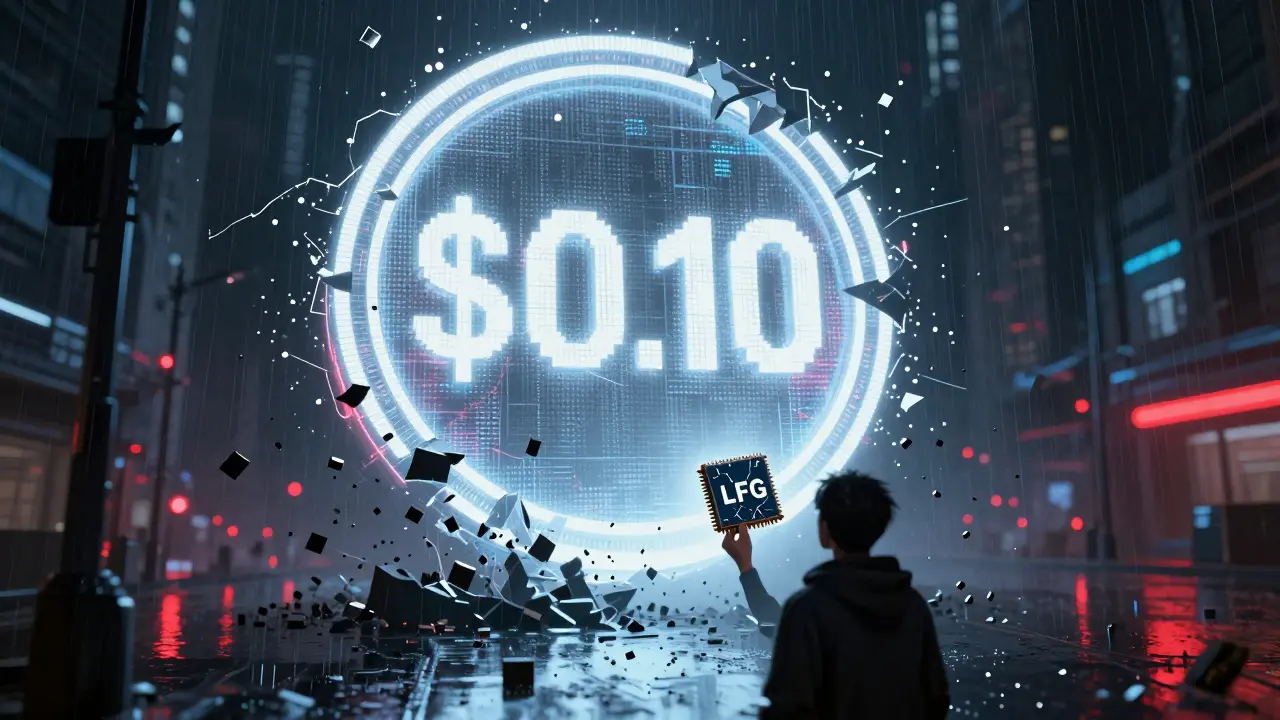
Look at that drop. From an ATH of over $0.10 to roughly $0.0001, the LFG token has lost approximately 99.9% of its value. That is not a correction; that is a collapse. While some altcoins dip 50% during bear markets, losing nearly all value suggests a fundamental failure in adoption, utility, or team execution.
Technical indicators offer mixed signals, which is typical for dead money. The RSI sits around 56 (neutral), while the MACD shows a slight buy signal. However, these indicators are meaningless without volume. With daily trading volumes hovering under $600 across major aggregators, there is no real momentum here. You might see a green candle on the chart, but it’s likely driven by a single whale moving pennies, not genuine market interest.
Security and Transparency: The Missing Pieces
In DeFi, trust is code. But what code are you trusting? Here is where LFGSwap falls short significantly. Established protocols like Uniswap or Aave publish regular audit reports from firms like CertiK or Trail of Bits. They have active GitHub repositories showing constant development.
LFGSwap lacks visible transparency. There are no prominent third-party security audits cited in public documentation. No bug bounty programs are advertised. The development team remains largely anonymous, and community engagement on platforms like Discord or Twitter is minimal. This absence of social proof is a massive red flag.
When a project doesn’t communicate regularly, how do you know if the smart contracts are secure? How do you know the developers haven’t abandoned the project? In the world of crypto, silence often equals trouble. Without verified audits, you are taking on unnecessary risk by interacting with their contracts.

Where Can You Buy LFG?
Despite its struggles, the LFG token is listed on several centralized exchanges (CEXs). This provides a secondary market for those who already hold the token or want to speculate on a rebound. The primary venues include:
- Bybit: Offers spot trading with market and limit orders.
- Crypto.com: Lists the token with low liquidity.
- MEXC: Provides access to smaller cap assets like LFG.
However, being listed on these platforms doesn’t validate the project’s quality. CEXs list thousands of tokens, many of which fail. The presence on Bybit or MEXC simply means someone paid a listing fee or met minimum technical requirements. It does not mean the token has intrinsic value or a bright future.
Is LFGSwap Worth Your Attention?
Let’s be direct. For the average investor or trader, LFGSwap (Core) is not a viable option. The combination of ultra-low liquidity, lack of security audits, and a token that has crashed 99.9% makes it a high-risk, low-reward proposition. You are better off sticking to established DEXs with deep liquidity pools and proven track records.
Who might still care? Perhaps die-hard fans of the original team, or degenerate traders looking for lottery-ticket style gains. Even then, the odds are stacked heavily against you. The wide range of price predictions-from $0.000022 to $0.148-shows that analysts themselves have no idea where this token is going. Uncertainty is not a feature; it’s a bug.
If you are exploring DeFi, focus on platforms that solve real problems. Look for projects with active communities, transparent teams, and robust security measures. LFGSwap serves as a reminder that not every new launch survives the first year, let alone thrives.
Is LFGSwap safe to use?
Safety is questionable. LFGSwap lacks publicly available third-party security audits and has minimal community oversight. While the platform may function technically, the absence of verified security measures increases the risk of smart contract exploits or rug pulls. Use extreme caution and never invest more than you can afford to lose.
Why did the LFG token crash so much?
The LFG token dropped ~99.9% from its all-time high due to a combination of factors including low adoption, lack of utility, poor marketing, and broader market conditions affecting small-cap DeFi projects. Without strong demand or liquidity, the price became highly volatile and susceptible to downward pressure.
What coins can I trade on LFGSwap?
Currently, LFGSwap supports a very limited selection of only three cryptocurrencies and four trading pairs. This severely restricts trading options and indicates the platform is in an early or stalled stage of development compared to major DEXs.
Can I buy LFG token on Binance?
No, LFG token is not listed on Binance. It is available on smaller centralized exchanges like Bybit, Crypto.com, and MEXC. Always verify listings directly on the exchange website as availability can change rapidly.
Is LFGSwap a scam?
There is no definitive proof that LFGSwap is a scam, but it exhibits many red flags associated with failed projects. These include lack of transparency, no security audits, low liquidity, and a massive decline in token value. Proceed with skepticism and assume the worst-case scenario.