Remember when RadioShack was everywhere? For decades, those blue storefronts were the go-to spot for batteries, wires, and basic electronics. Then came the smartphone era, and the brand faded into obscurity. But in late 2023, something unexpected happened. The company announced it wasn’t just pivoting; it was launching a decentralized cryptocurrency exchange. Fast forward to mid-2026, and you might be seeing ads for their RADIO token or wondering if this is a legitimate comeback or another cash grab. If you are considering putting money into this platform, you need to look past the nostalgia and examine the hard data. This review breaks down whether RadioShack’s entry into the world of DeFi is a smart move for your portfolio or a risky gamble.
The Core Problem: Brand vs. Blockchain Expertise
The biggest selling point of RadioShack DeFi is the name. In a space filled with anonymous developers and complex acronyms, a recognizable household name feels safe. However, having a famous logo doesn’t mean you have the technical infrastructure to handle millions of dollars in daily transactions. According to Dr. Sarah Kim from the Harvard Blockchain Lab, RadioShack’s greatest strength is its brand recognition, but its greatest weakness is a lack of deep blockchain expertise. This creates what experts call "execution risk." When you trade on a platform like Uniswap or Raydium, you are using software built by teams who have lived and breathed code for years. RadioShack is essentially learning to walk while running a financial institution.
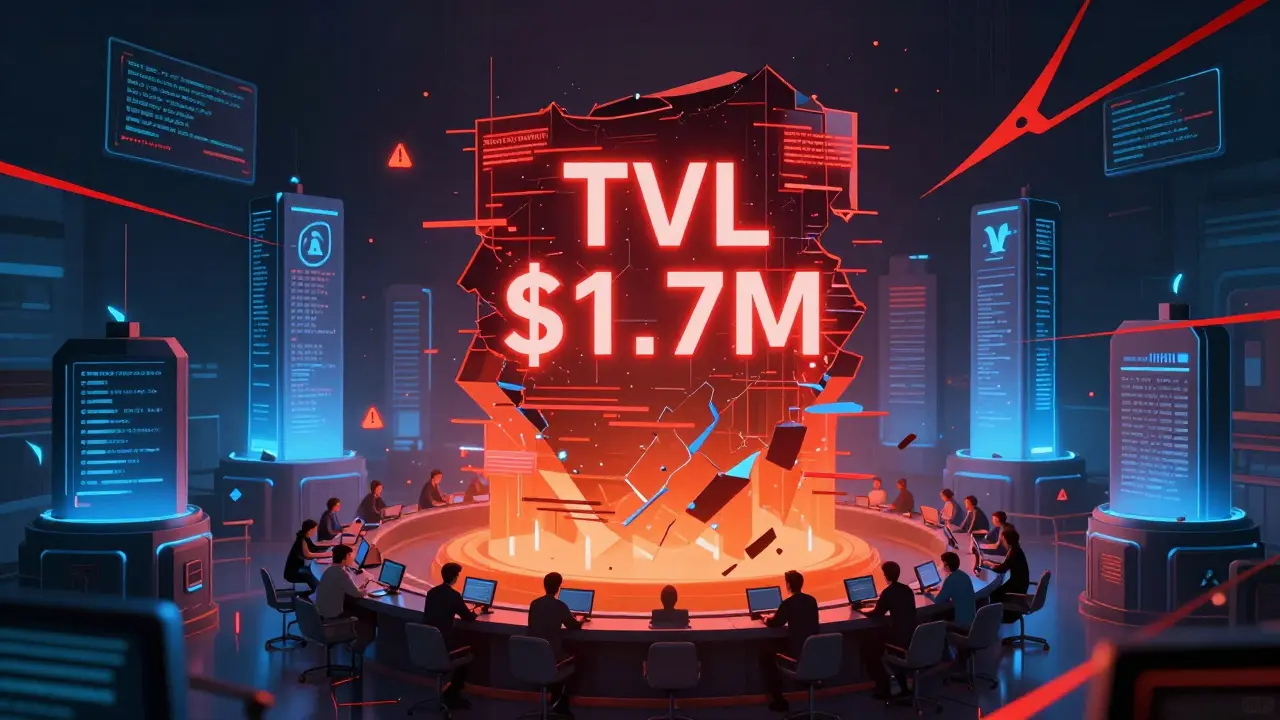
Let’s look at the numbers. As of early 2025, the RADIO token started trading around $0.000350. By late 2024, the Total Value Locked (TVL) in their ecosystem was only $1.7 million. Compare that to Uniswap, which holds over $5.2 billion. That isn’t just a gap; it’s an ocean. Low TVL means low liquidity. In simple terms, there aren’t enough buyers and sellers in the pool. If you try to sell a significant amount of RADIO tokens, you could face massive slippage, meaning you get much less than the market price suggests because your trade moves the needle too much. For a beginner, this can turn a profitable-looking trade into a loss instantly.
Technical Performance: Speed vs. Stability
On paper, RadioShack DeFi looks impressive. Their whitepaper claims they can handle tens of millions of transactions daily with minimal costs. They utilize a custom architecture that incorporates Algorand Standard Assets (ASAs) for fast settlements. Internal benchmarks show average transaction confirmation times of just 2.3 seconds, with gas fees averaging a tiny $0.0007 per transaction. That is significantly cheaper than Ethereum’s average of $1.85 during the same period. If you are moving small amounts of money frequently, the cost savings are real.
However, speed means nothing if the system crashes under pressure. User reports from late 2024 highlighted a critical flaw: transaction failures during peak hours. Approximately 31% of attempted swaps failed due to network congestion. Imagine trying to buy a concert ticket online when everyone else is clicking "buy" at the same time, but instead of just missing out, your credit card gets charged and the ticket never arrives. That is the experience many early users faced. The platform simply couldn’t handle the load, leading to frustration and lost funds. While version 1.2, released in January 2025, promised improved liquidity aggregation algorithms, user sentiment remains cautious. The technology is promising, but it hasn’t been battle-tested at scale yet.
| Feature | RadioShack DeFi | Uniswap (Ethereum) | PancakeSwap (BSC) |
|---|---|---|---|
| Total Value Locked (TVL) | $1.7 Million | $5.2 Billion+ | $2.1 Billion+ |
| Average Gas Fee | $0.0007 | $1.85+ | $0.05 - $0.10 |
| Trading Pairs | 12 | 250,000+ | 10,000+ |
| Slippage (Medium Trade) | 1.8% | <0.5% | 0.35% |
| Max Single Trade Capacity | $7,300 | Unlimited | High |
User Experience and Support Challenges
If you are new to crypto, the interface of RadioShack DeFi is likely where you will feel most comfortable. Early testers rated the learning curve as "Easy," with 82% saying they could figure it out in 1-2 hours. The design is clean, intuitive, and avoids the cluttered dashboards typical of hardcore trading platforms. You connect your MetaMask, Trust Wallet, or Ledger, complete a quick KYC verification (taking about 22 minutes), and you are ready to swap. It feels like shopping, not coding. That is a deliberate choice to onboard traditional retail customers.
But what happens when things go wrong? Here is where the cracks appear. Customer support is notoriously slow. Negative reviews consistently cite response times averaging 72 hours. One user on Trustpilot, "CryptoNewbie42," noted losing $37 in failed transactions due to low liquidity and receiving no timely help to resolve it. With only 12 active moderators managing a Discord server of nearly 4,000 members, getting a human answer is a struggle. Furthermore, their documentation is sparse. They offer just 12 help articles compared to Uniswap’s 217. If you run into a unique error, you are largely on your own. For a platform handling real money, this level of support is unacceptable.
Is the RADIO Token a Good Investment?
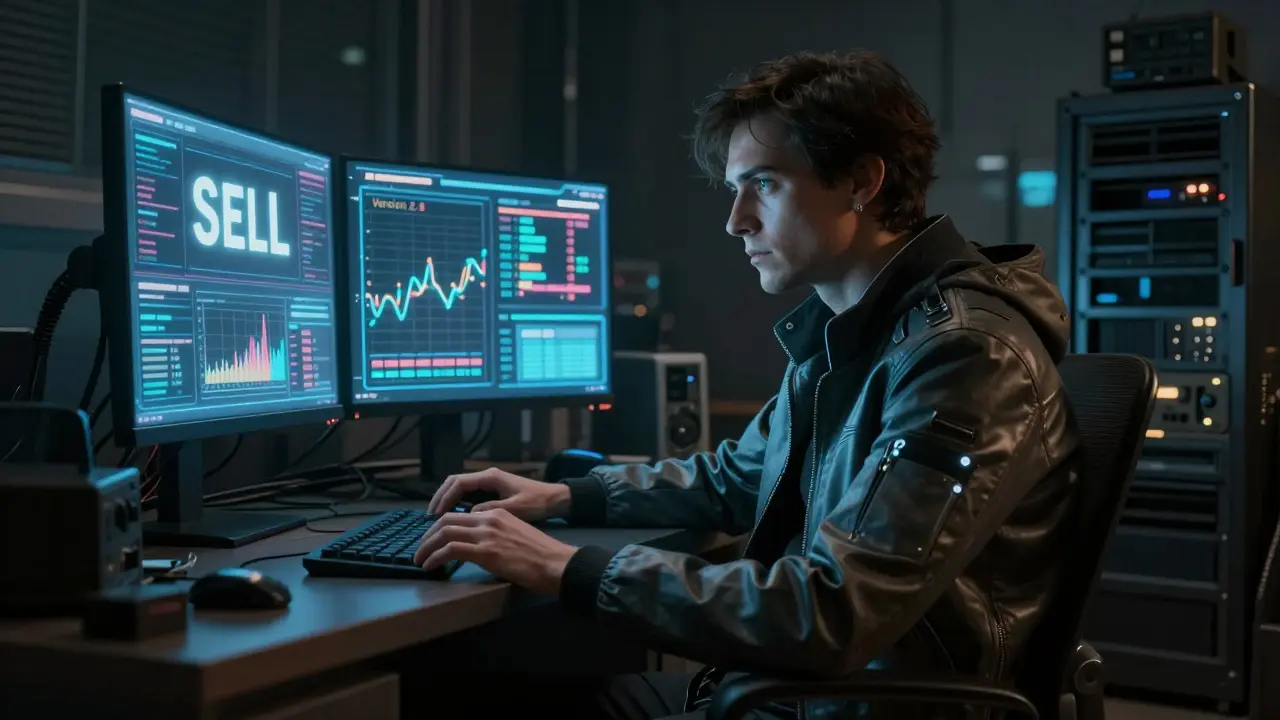
The RADIO token serves multiple purposes: governance voting, fee discounts (ranging from 0.15% to 0.30%), and liquidity incentives. But should you buy it? Analysts are divided. Elena Rodriguez from DigitalCoinPrice projected the token could reach $0.00289 by 2031, citing RadioShack’s potential to onboard traditional businesses. On the flip side, Mark Chen from CoinDataFlow gave it a "SELL" rating, predicting a drop to $0.00012 by the end of 2025. His technical indicators showed the token was overvalued relative to its usage.
Consider the market context. The top five decentralized exchanges control 83% of the monthly trading volume. RadioShack is fighting for scraps in a highly consolidated market. Unless they successfully leverage their remaining 400 physical stores as fiat on-ramps-a strategy Slashdot called their "unique advantage"-they risk becoming irrelevant. The token’s value is tied directly to the platform’s success. If the platform fails to attract serious traders due to low liquidity, the token has little utility. Currently, it ranks 5,830th globally by market cap. That is not a position of strength; it is a position of obscurity.
Regulatory Risks and Future Roadmap
Operating in crypto means navigating a minefield of regulations. RadioShack has taken steps to comply with FinCEN’s 2024 Travel Rule requirements, implementing identity verification for transactions over $3,000. This is a good sign for legitimacy, but it also adds friction for users who prefer anonymity. The roadmap for 2025 includes Version 2.0, which promises limit orders, stop-loss functionality, and cross-chain swaps connecting Ethereum, Polygon, and Binance Smart Chain. These features are essential for competing with established players. Without them, RadioShack remains a novelty rather than a tool.
However, Delphi Digital’s report assigns RadioShack only a 58% probability of surviving beyond three years. In the blockchain startup world, 73% of new entrants fail within 18 months. RadioShack is betting everything on bridging the gap between old-school retail and new-school finance. It is a bold move, but boldness doesn’t guarantee profit. For now, the platform is best suited for microtransactions under $50, where its low fees shine. For anything larger, the lack of liquidity makes it a poor choice compared to competitors.
Verdict: Proceed with Extreme Caution
RadioShack DeFi is not a scam in the traditional sense-it has a real team, a working product, and regulatory compliance efforts. But it is an immature product in a mature market. The low fees are attractive, but the hidden costs of slippage, failed transactions, and poor support outweigh them for most users. If you are curious, use a tiny amount of money you can afford to lose to test the waters. Do not treat RADIO as a serious investment vehicle yet. Wait for Version 2.0, watch the TVL grow, and see if the support issues are resolved. Until then, stick to established exchanges for your primary trading needs.
Is RadioShack DeFi safe to use?
Safety depends on how you define it. Technically, the platform uses standard web3 wallet connections and complies with basic KYC regulations. However, "safe" also implies reliability. With 31% of swaps failing during peak hours and limited customer support, there is operational risk. Your funds are in your wallet until you swap, but the execution of trades is not guaranteed to succeed.
What is the RADIO token used for?
The RADIO token is a utility token for the RadioShack DeFi ecosystem. It provides governance rights, allowing holders to vote on platform changes. It also offers fee discounts on swaps (up to 0.30%) and can be staked in liquidity pools to earn rewards. Its value is speculative and tied to the platform's adoption.
Why are transaction fees so low on RadioShack?
RadioShack uses a custom blockchain architecture incorporating Algorand Standard Assets, which allows for high throughput and instant settlement. This reduces the computational cost of processing transactions, enabling gas fees as low as $0.0007. However, this efficiency comes with current limitations in liquidity depth.
Can I use RadioShack DeFi for large trades?
No. Due to low Total Value Locked (TVL) of only $1.7 million, the platform suffers from high slippage. Trades over $7,300 face significant price impact. For large volumes, established DEXs like Uniswap or centralized exchanges are far safer and more cost-effective despite higher base fees.
When will advanced features like limit orders arrive?
According to the official roadmap published in February 2025, Version 2.0 is scheduled for Q3 2025. This update aims to introduce limit orders, stop-loss functionality, and cross-chain swaps. Until then, users are limited to basic spot swaps.