
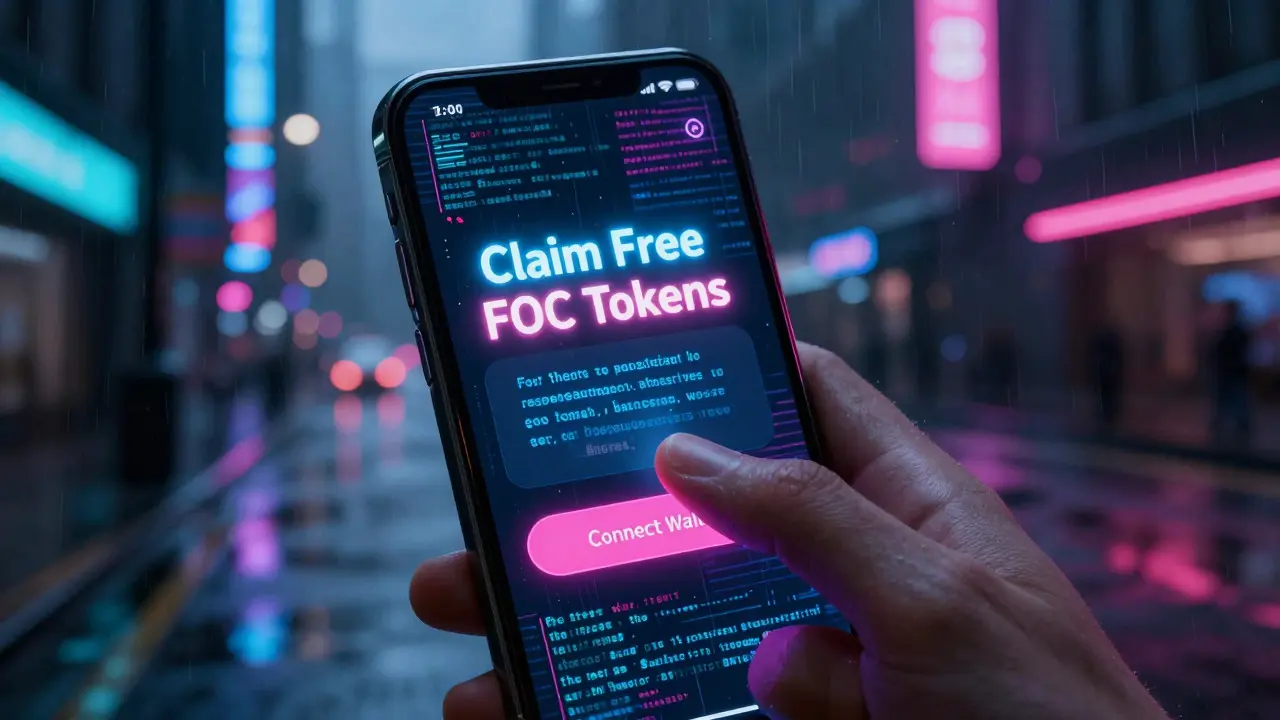
You see a notification about the TheForce.Trade airdrop. It promises free tokens. Your wallet is ready. But before you click "Claim," pause. In the world of cryptocurrency, free often comes with a hidden price tag. Specifically for TheForce Trade (FOC), a project that launched years ago but struggles with visibility today, the situation is murky.
Most users searching for this airdrop are looking for two things: proof that it exists and instructions on how to get paid. The hard truth? There is no verified, official large-scale airdrop campaign currently running for TheForce.Trade in 2026. What you are likely seeing are either outdated references to old marketing stunts or, more dangerously, phishing scams designed to drain your wallet.
This guide breaks down exactly what TheForce.Trade is, why the "airdrop" buzz might be misleading, and how to protect yourself while navigating low-cap Binance Smart Chain (BSC) tokens.
What Is TheForce.Trade (FOC)?
To understand the risk, you first need to know the asset. TheForce Trade is a cryptocurrency token operating on the Binance Smart Chain (BSC). Its ticker symbol is FOC.
Here are the hard facts about the project:
- Launch Date: May 15, 2021.
- Funding Raised: Approximately $3.59 million across initial funding rounds.
- Current Price: Roughly $0.0005 USD (extremely volatile).
- Market Cap: Under $50,000 USD.
- Liquidity: Very low. Daily trading volume often sits between $1 and $20.
When a project raises millions in funding but trades only $20 a day, something is wrong. This disconnect suggests that most early investors have already exited, leaving retail traders with a "zombie" token-a project that is technically alive but economically dead.
The "Airdrop" Myth vs. Reality
Why do people talk about a TheForce.Trade airdrop if there isn't one? Three reasons explain the confusion.
1. Outdated "Trade-to-Earn" Campaigns
In earlier years, CoinMarketCap listed a program called "Trade to Earn 100,000 FOC tokens." This was likely a promotional mechanic where users earned small amounts of FOC by trading on specific platforms. These campaigns usually expire quickly. If you are reading about this in 2026, the window has almost certainly closed.
2. Phishing Scams
Scammers love obscure tokens. They create fake websites mimicking TheForce.Trade. You visit the site, connect your MetaMask or Trust Wallet, and approve a transaction. Instead of receiving FOC, you sign a malicious contract that drains your USDT or BNB. Always verify URLs. Official domains are rare for dead projects; scammers use new, look-alike domains daily.
3. Community Hype Cycles
Crypto Twitter and Telegram groups sometimes revive interest in old tokens hoping for a "pump." Traders spread rumors of upcoming airdrops to drive up the price so they can sell their holdings. This is a classic "exit liquidity" trap.
How to Verify Any Crypto Airdrop
Since official information is scarce, you must become your own detective. Use this checklist before interacting with any FOC-related link.
- Check Official Socials: Go to the verified Twitter (X) account of TheForce.Trade. Look for recent posts (within the last 30 days). If the last post was from 2024, the project is inactive. An active team announces airdrops loudly.
- Inspect the Contract Address: Find the official FOC contract address on a reliable tracker like BscScan. Compare it to the address provided in the airdrop claim page. If they differ, it is a scam.
- Analyze Liquidity: Check PancakeSwap. If the FOC/WBNB pair has less than $100 in liquidity, you might not be able to sell the tokens even if you receive them. Illiquid tokens are worthless paper.
- Search for Recent News: Use Google News with the query "TheForce.Trade airdrop 2026." If no reputable crypto news sites (like CoinDesk or Cointelegraph) mention it, it likely doesn't exist.
Risks of Trading Low-Cap BSC Tokens
If you decide to buy FOC instead of waiting for an airdrop, understand the risks. Trading micro-cap tokens on decentralized exchanges (DEXs) like PancakeSwap carries unique dangers.
| Risk Factor | Description | Impact Level |
|---|---|---|
| Liquidity Risk | Low trading volume means you cannot sell large amounts without crashing the price. | High |
| Smart Contract Risk | Older contracts may have unevaluated vulnerabilities or hidden admin functions allowing the team to freeze funds. | Medium-High |
| Abandonment Risk | No development updates since 2021-2022 indicate the team may have left the project. | Very High |
| Price Volatility | A single trade of $50 can move the price by 50% due to thin order books. | Extreme |
Comparison: FOC vs. Active Airdrop Projects
Not all airdrops are created equal. Comparing TheForce.Trade to healthy, active projects highlights why FOC is a poor candidate for speculative investment.
| Metric | TheForce.Trade (FOC) | Typical Healthy Airdrop Project |
|---|---|---|
| Active Development | Inactive (GitHub quiet) | Regular commits and updates |
| Community Engagement | Low (Bot-heavy Discord) | High organic discussion |
| Exchange Listings | None (Only DEXs) | CEX listings or imminent plans |
| Transparency | Poor (No clear roadmap) | Clear vesting schedules and audits |
Steps to Protect Your Wallet
If you are determined to interact with TheForce.Trade or similar BSC tokens, follow these security protocols. Treat every interaction as potentially hostile.
- Use a Burner Wallet: Never connect your main holding wallet to unknown dApps. Create a separate MetaMask instance with only the funds you are willing to lose.
- Revoke Permissions: After claiming any potential reward, immediately go to Revoke.cash or a similar tool to revoke the spending allowance granted to the contract. This prevents future drainage.
- Verify Gas Fees: On BSC, gas fees are low. If a transaction asks for unusually high gas or requires a manual approval for a huge amount, cancel it.
- Ignore DMs: Support teams rarely message users directly on Telegram or Twitter. Unsolicited messages offering help with claims are 100% scams.
Conclusion: Should You Participate?
The evidence points to a simple answer: proceed with extreme caution. TheForce.Trade lacks the activity, liquidity, and transparency required for a legitimate, valuable airdrop in 2026. The "airdrop" you are hearing about is likely a relic from the past or a trap set by bad actors.
Instead of chasing ghost tokens, focus on projects with active development, audited smart contracts, and visible community growth. In crypto, your attention is as valuable as your capital. Don't waste it on zombies.
Is there an official TheForce.Trade airdrop in 2026?
There is no verified, active official airdrop campaign for TheForce.Trade (FOC) in 2026. Most references are outdated or potential phishing scams. Always check the project's verified social media channels for current announcements.
Where can I buy FOC tokens?
FOC is not listed on major centralized exchanges like Binance. It can only be traded on decentralized exchanges like PancakeSwap using the Binance Smart Chain (BSC). Be aware of extremely low liquidity and high slippage.
Is TheForce.Trade a scam?
While not necessarily a "rug pull" in the traditional sense, the project shows signs of abandonment. With minimal trading volume and no recent development, it poses a high risk of being a valueless asset. Treat it as high-risk speculation at best.
How do I check if an airdrop link is safe?
Compare the URL with the official links found on the project's verified Twitter or GitHub. Use tools like Revoke.cash to manage permissions. Never connect your primary wallet to unverified sites. If the site looks generic or has spelling errors, avoid it.
What is the current market cap of FOC?
As of mid-2026 data, the market cap of FOC is approximately $42,000 USD, indicating it is a micro-cap token with very low market presence and high volatility.