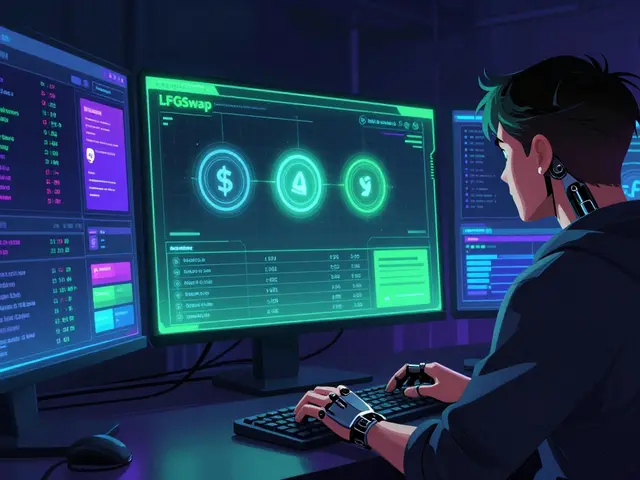

You've probably heard of Bitcoin and maybe even Ethereum. But what happens when you combine decentralized networks with the hot trend of AI-generated 3D content? Enter 404-GEN, also known as SN17. This isn't just another meme coin; it's the native utility token for Bittensor Subnet 17, a specialized network designed to let users create 3D assets using simple text prompts.
If you're wondering why this specific token matters in the crowded crypto space, you're asking the right question. It’s not about hype-it’s about solving a real bottleneck: creating high-quality 3D models for games and VR without needing a team of expensive artists. Let's break down exactly what this token does, how it works, and whether it has legs beyond the current market noise.
The Core Concept: Text-to-3D on a Decentralized Network
At its heart, Gen 404 is a subnet within the larger Bittensor ecosystem. Think of Bittensor as a massive, decentralized marketplace for machine learning. Most subnets focus on language or image generation. Gen 404 focuses exclusively on 3D geometry.
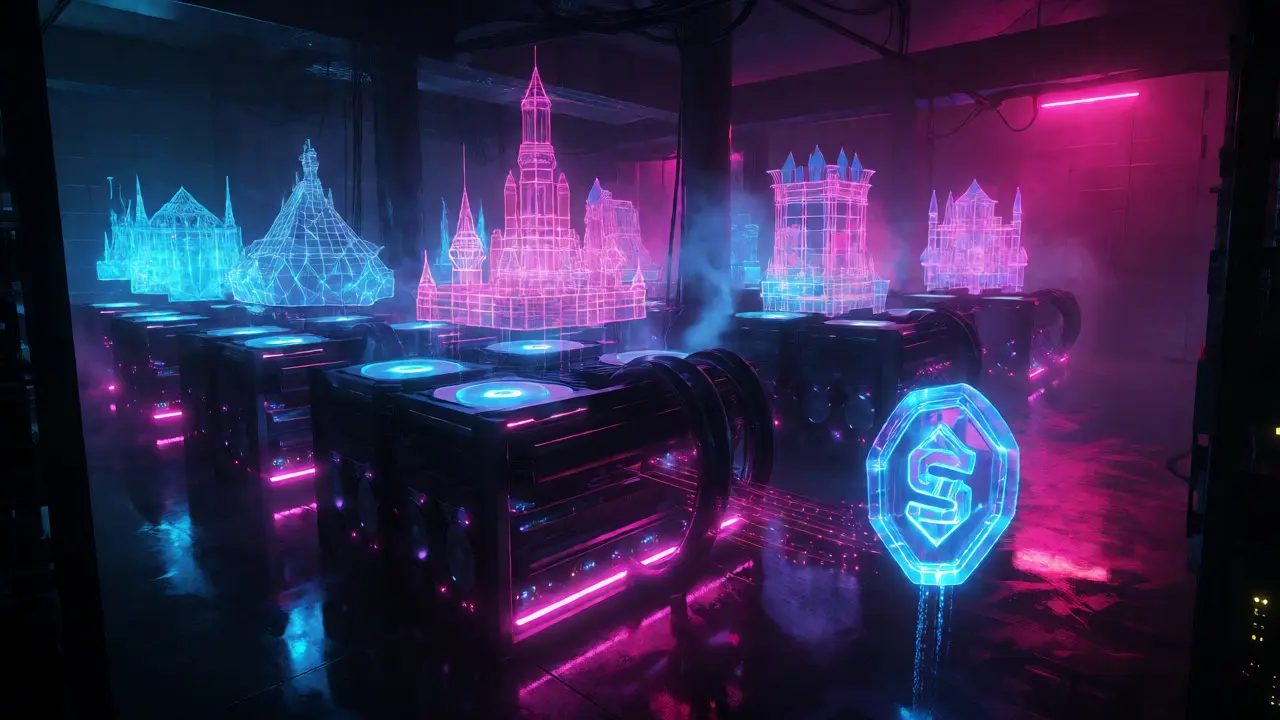
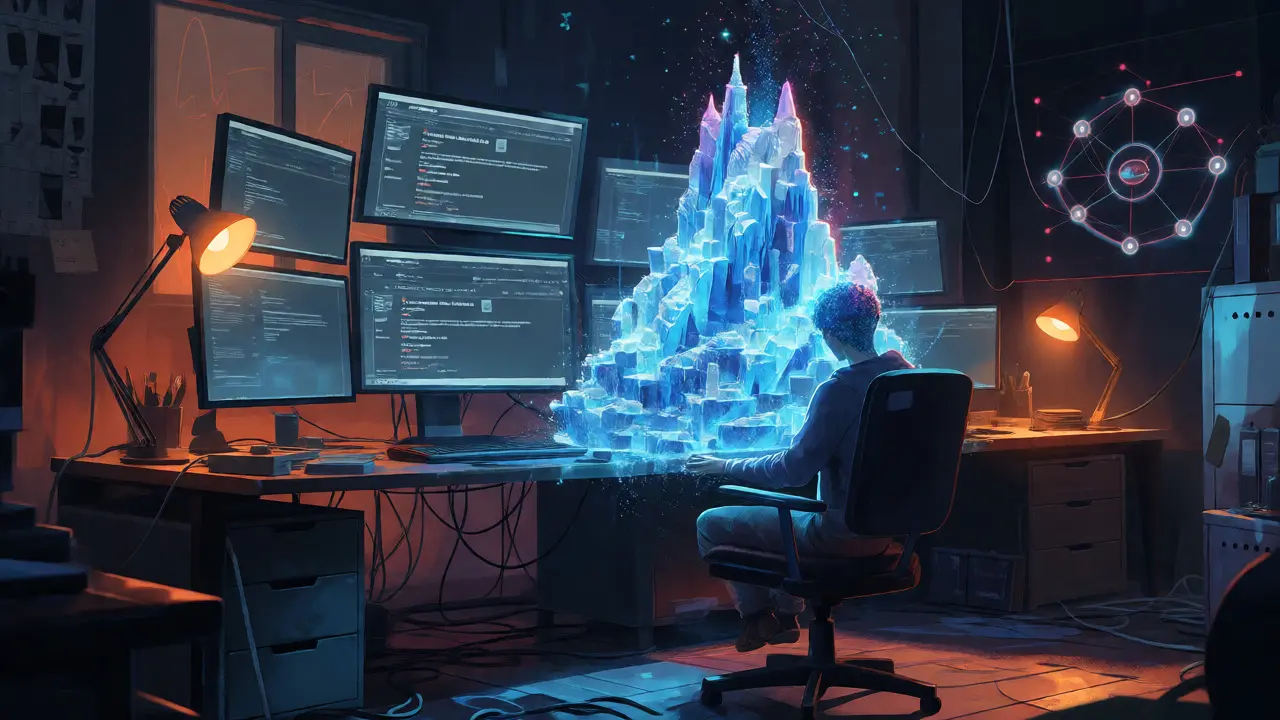
Here’s the problem it solves: Traditional 3D modeling is slow and expensive. You need skilled artists, heavy software like Blender or Maya, and weeks of work. Gen 404 aims to democratize this. By leveraging open-source generative models like Gaussian Splatting and Neural Radiance Fields (NeRFs), the network allows anyone to type "a medieval castle made of ice" and receive a usable 3D asset.
The SN17 token acts as the fuel for this engine. Miners contribute their GPU power to generate these 3D models, while validators check the quality of the output. In return, they earn SN17. It’s a permissionless loop where the community polices itself, ensuring that bad generations don’t clog the network.
Technical Underpinnings: How SN17 Actually Works
You don't need a PhD in computer science to understand the basics, but knowing the tech helps you judge the project's longevity. The subnet doesn't just use one algorithm. It aggregates several cutting-edge techniques:
- Gaussian Splatting: This is the star player. Unlike traditional meshes which are heavy and hard to render, Gaussian splats represent scenes as millions of tiny, translucent points. This makes rendering incredibly fast, which is crucial for real-time applications in gaming and AR.
- Neural Radiance Fields (NeRFs): These provide high-fidelity detail from multiple camera angles, though they are computationally heavier.
- 3D Diffusion Models: Similar to how Midjourney creates images, these models diffuse noise into structured 3D shapes based on text inputs.
The architecture rewards miners who produce the most accurate and efficient representations. If your generated model looks like a blob instead of a castle, validators will reject it, and you won't get paid. This incentive structure is key to maintaining quality in a decentralized system where no central authority is checking every file.
Tokenomics: Supply, Demand, and the 'Scarcity' Myth
Let's talk numbers, because this is where things get tricky for investors. The maximum supply of SN17 is capped at 21,000,000 tokens. That sounds familiar, right? It mirrors Bitcoin's scarcity model. However, the circulating supply tells a different story.
| Metric | Value / Status | Source Context |
|---|---|---|
| Max Supply | 21,000,000 SN17 | Fixed cap by protocol |
| Circulating Supply | ~1.25M - 4.07M | Varies by data provider (CoinGecko vs Holder.io) |
| Fully Diluted Valuation | ~$57 Million | Assumes max supply issuance |
| All-Time High | $12.33 | Reached July 2025 |
| Active Miners | ~47 | Bittensor Dashboard, Jan 2026 |
Notice the discrepancy in circulating supply. Some sources say 1.2 million tokens are out there; others claim over 4 million. Why? Because distribution mechanics in new subnets can be opaque. More importantly, with only about 47 active miners contributing compute power, the network usage is still very early stage. Analysts like Michael Chen from Messari have pointed out that the low circulating supply creates artificial scarcity. Just because there are few tokens available doesn't mean demand is high enough to sustain the price if actual usage remains low.
Market Reality: Liquidity and Volatility Risks
If you try to buy SN17 today, you might face some friction. Unlike Bitcoin or Solana, you can't just click "Buy" on Coinbase or Binance. As of early 2026, SN17 is primarily traded on niche platforms like Subnet Tokens exchange or WEEX. Binance lists it for information purposes but doesn't offer direct trading services yet.
This limited exchange availability leads to two major issues:
- High Volatility: With thin order books, a single large sell order can crash the price by 20% in a day. We've seen swings from $2.67 to $10.88 depending on which aggregator you look at. Always check multiple sources before making a move.
- Wash Trading Concerns: A January 2026 investigation by Decrypt suggested that up to 82% of the reported volume on certain exchanges was wash trading. This means bots were buying and selling to themselves to fake activity. For a serious investor, this is a red flag. It suggests the organic interest in the token might be much lower than the charts imply.
Use Cases: Who Actually Needs SN17?
Despite the market mess, the technology has genuine appeal. Who is actually using Gen 404?
Indie Game Developers: This is the sweet spot. Small studios often lack the budget for dedicated 3D artists. A case study from January 2026 showed a small team generating over 200 unique 3D objects in just 48 hours. They used these for background props and environmental details, saving thousands of dollars in outsourcing costs.
Metaverse Builders: Platforms looking to populate virtual worlds quickly can leverage SN17-powered assets. While photorealistic architectural visualization still favors traditional methods, rapid prototyping of game assets is where Gen 404 shines.
AR/VR Creators: Since Gaussian Splatting renders so efficiently, these assets are perfect for mobile AR experiences where processing power is limited. Imagine pointing your phone at a table and instantly seeing a 3D model of a chair generated via text prompt-that’s the future Gen 404 is building toward.
How to Get Involved: Mining and Validation
Do you want to earn SN17 rather than just buy it? You can become a miner or validator, but be warned: the barrier to entry is technical.
To run a validator node, you need decent hardware. According to developer updates, you'll need at least 32GB of RAM, an 8-core CPU, and an NVIDIA GPU with 8GB+ VRAM. That’s roughly $1,200-$1,800 in hardware alone. Plus, you need to stake SN17 tokens to participate in validation. If you validate poorly, you lose your stake. It’s not passive income; it’s active work.
For those less technically inclined, simply holding SN17 gives you exposure to the subnet’s growth. But remember, holding doesn't guarantee rewards unless the network adoption increases significantly.
Competitive Landscape: SN17 vs. Render & Fetch.ai
How does SN17 stack up against bigger names in the AI-crypto sector?
- Render Network (RNDR): RNDR is the giant here, focusing on general GPU rental for rendering tasks. It has a market cap in the billions. SN17 is a micro-cap by comparison (<$15M). RNDR is broader; SN17 is hyper-specialized in 3D generation.
- Fetch.ai (FET): FET focuses on autonomous agents and general AI coordination. Its utility is wider, covering logistics, finance, and more. SN17 is narrower, targeting only the visual creation pipeline.
- AI Power (AIP): Another competitor in the AI token space, but lacks the specific integration with Bittensor’s decentralized inference network that SN17 enjoys.
SN17’s advantage is its specialization. By focusing solely on 3D, it can optimize its algorithms better than generalists. Its disadvantage is scale. It relies entirely on the success of the Bittensor ecosystem and the niche demand for decentralized 3D assets.
Future Outlook: Project Atlas and Roadmap
The team hasn't been idle. In January 2026, they announced "Project Atlas," slated for Q2 2026. This update aims to introduce real-time collaborative 3D modeling. Imagine multiple users editing the same AI-generated scene simultaneously, with changes reflected instantly across the network.
They’re also targeting integrations with Unity and Unreal Engine, the two biggest game engines in the world. If they pull this off, SN17 moves from being a speculative token to a necessary infrastructure piece for developers. However, execution risk is high. The developer community is small (around 47 active devs), and delays are common in such complex projects.
Regulatory clarity is another factor. Recent SEC guidance suggests that tokens with clear utility functions (like paying for computation) are less likely to be classified as securities. This could benefit SN17, allowing it to list on major US exchanges sooner than governance-heavy tokens.
Verdict: Is SN17 Worth Your Attention?
So, should you buy SN17? It depends on your risk tolerance.
If you believe in the convergence of AI and gaming, and you think decentralized networks will eventually disrupt centralized cloud providers like AWS for creative workflows, then SN17 offers asymmetric upside. It’s early, it’s volatile, and it’s small. But the tech is legitimate.
On the flip side, if you’re looking for stable returns or hate dealing with obscure exchanges and potential wash trading, stay away. The liquidity is poor, and the network usage metrics (1,842 daily requests) are modest compared to the valuation.
Treat SN17 as a venture capital bet, not a blue-chip investment. Keep an eye on the number of active miners and the release of Project Atlas. Those are your real signals, not the price ticker.
What is the main purpose of the SN17 token?
The SN17 token serves as the native currency for Bittensor Subnet 17 (Gen 404). It is used to incentivize miners who provide computational power to generate 3D assets and to reward validators who verify the quality of those assets. Essentially, it fuels the decentralized text-to-3D generation network.
Where can I buy 404-GEN (SN17)?
As of early 2026, SN17 is not listed on major tier-1 exchanges like Coinbase or Binance for direct trading. It is primarily available on specialized platforms such as Subnet Tokens exchange and WEEX. Investors should be cautious of low liquidity and significant price discrepancies between different data aggregators.
Is Gen 404 better than traditional 3D modeling software?
It depends on the use case. For rapid prototyping, background assets, and indie game development, Gen 404 is faster and cheaper. However, for high-end, photorealistic architectural visualization or complex character animation, traditional tools like Blender or Maya still offer superior control and fidelity. Gen 404 complements rather than replaces professional tools currently.
What are the risks of investing in SN17?
Key risks include extremely low liquidity, potential wash trading inflating volume figures, reliance on a small developer community, and competition from larger AI infrastructure projects like Render Network. Additionally, the circulating supply data varies between sources, indicating potential transparency issues in token distribution.
Can I mine SN17 on my home PC?
Yes, but it requires specific hardware. To run a validator node effectively, you generally need at least 32GB of RAM, an 8-core CPU, and an NVIDIA GPU with 8GB or more of VRAM. Setting up also requires technical knowledge of the Bittensor ecosystem and staking mechanisms.
Comments
2 Comments
Steve McNeil
Listen up because I am tired of seeing people throw their life savings at this without understanding the absolute disaster that is the liquidity situation.
We are talking about a token with less than 50 active miners on the entire network. FIFTY. That is not a decentralized network; that is a group chat with a GPU attached to it. You think you are buying into the future of AI 3D generation? No, you are buying into a ghost town where one whale can dump and wipe out your portfolio before you even finish your morning coffee. The volatility mentioned here isn't a feature; it's a bug caused by the sheer lack of organic interest. If Binance doesn't list it for direct trading, you are essentially gambling in a casino where the house knows exactly what cards they are holding. Wake up.
Zach Evans
Actually, if you bothered to read the technical underpinnings section instead of just screaming about whales, you would see that Gaussian Splatting is revolutionizing real-time rendering. It’s not about the number of miners right now; it’s about the efficiency of the output. Traditional mesh generation is dead weight. NeRFs are heavy. This is the middle ground. People ignore the tech stack because they are too busy crying about exchange listings. 🙄
Write a comment