


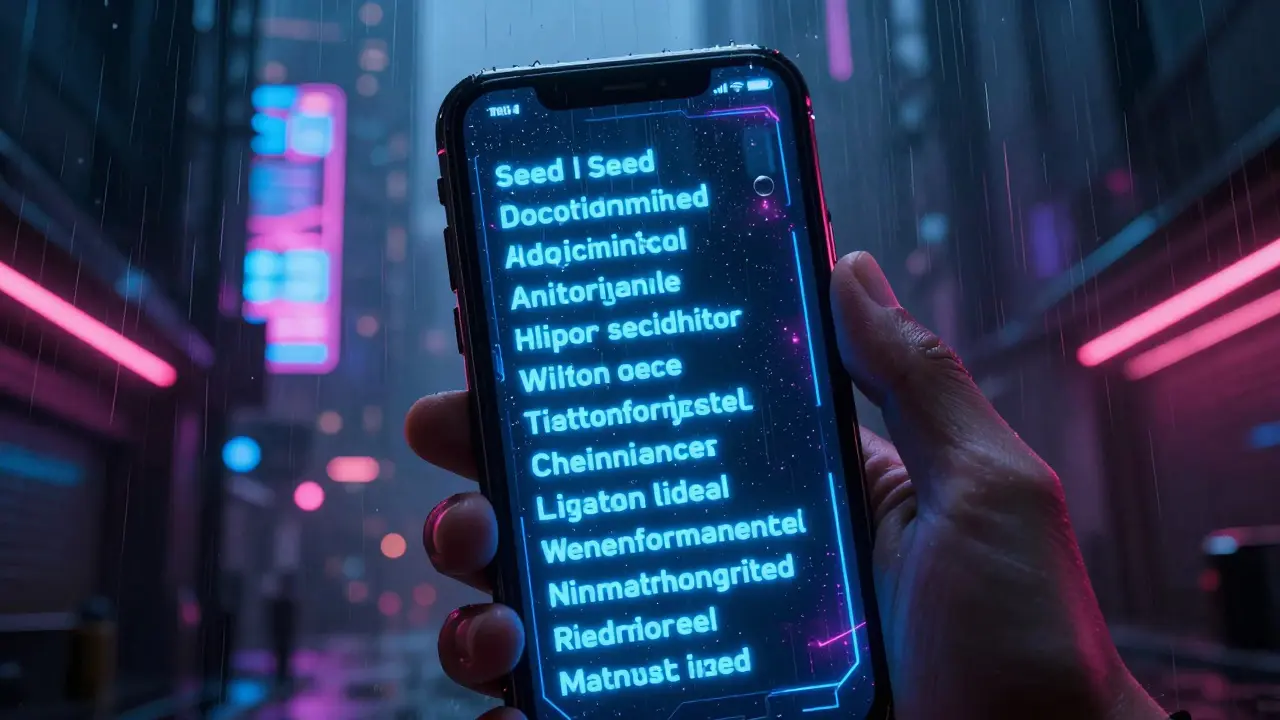
You just bought your first Bitcoin. You set up a new wallet on your phone. The screen flashes a list of twelve random words. "Write these down," it says. "Never share them." If you ignore this warning, you aren't just risking a password reset-you're risking the permanent loss of your entire digital fortune. That list is your seed phrase, and it is the single most important thing you will ever hold in the world of cryptocurrency.
A seed phrase, also known as a recovery phrase or mnemonic phrase, is a sequence of 12 to 24 words generated from a standardized dictionary of 2,048 words. It acts as the master key to your cryptocurrency wallet. Unlike a traditional bank password that you can reset by calling customer service, a seed phrase is the only way to recover your funds if your device breaks, gets stolen, or crashes. Lose it, and your crypto is gone forever. Share it, and hackers will drain your account in seconds.
How a Seed Phrase Actually Works
To understand why a seed phrase matters, you need to look under the hood of how wallets function. In the early days of Bitcoin, users had to manage individual private keyslong strings of hexadecimal characters used to sign transactions for every single address they created. This was messy and prone to error. If you lost one key, you lost those specific coins.
The industry solved this with BIP-39Bitcoin Improvement Proposal 39, the standard for generating mnemonic seed phrases. Introduced in 2013 by Marek Palatinus and others at SatoshiLabs, BIP-39 allows a wallet to generate all your private keys from one single source: the seed phrase. This creates what is called a Hierarchical Deterministic (HD) wallet.
Here is the process simplified:
- Entropy Generation: Your wallet generates random data (entropy). For a 12-word phrase, this is 128 bits of randomness.
- Checksum Addition: A small piece of error-checking data is added to ensure the words are correct.
- Word Mapping: Each chunk of data is converted into one word from the official BIP-39 wordlist of 2,048 English words.
- Key Derivation: When you enter these words into a wallet, the software uses a mathematical formula (PBKDF2 with HMAC-SHA512) to recreate your master private key.
This means your 12-word phrase isn't just a backup; it's a blueprint. It can regenerate hundreds of addresses across different blockchains-Bitcoin, Ethereum, Litecoin-all from that same list of words.
Seed Phrase vs. Private Key: What’s the Difference?
New users often confuse seed phrases with private keys. They are related but serve different purposes. Think of the seed phrase as the root of a tree, and the private keys as the branches.
| Feature | Seed Phrase (Mnemonic) | Private Key |
|---|---|---|
| Format | 12-24 human-readable words | 64-character hexadecimal string (e.g., E987...3262) |
| Scope | Masters all accounts and addresses in the wallet | Controls only one specific address |
| Usability | Easy to write down and memorize (though not recommended) | Nearly impossible to memorize accurately |
| Risk | If compromised, ALL funds are lost | If compromised, only funds in that specific address are lost |
| Standard | BIP-39 (mostly) | Varies by blockchain protocol |
The trade-off is clear. Seed phrases offer massive convenience because one backup covers everything. However, they create a single point of failure. As security researcher Andreas Antonopoulos noted, the seed phrase is simultaneously the greatest usability advancement and the greatest security vulnerability in crypto. If a hacker gets your seed phrase, they don't just steal one coin; they steal your entire portfolio.
Security Levels: 12 Words vs. 24 Words
Most wallets let you choose between 12 words and 24 words. Does it matter? Yes, but maybe not in the way you think.
A 12-word seed phrase provides 128 bits of entropy. This means there are $2^{128}$ possible combinations. To put that in perspective, guessing a 12-word seed phrase by brute force would take longer than the age of the universe, even with supercomputers. For 99% of users, 12 words are mathematically secure enough.
A 24-word phrase offers 256 bits of entropy ($2^{256}$ combinations). This is considered "quantum-resistant" for practical purposes today and provides an extra layer of safety against future computational advances. However, the main benefit of 24 words is often psychological comfort and slightly better protection against physical damage (if you lose a few words, having more redundancy helps, though the checksum usually catches errors).
Regardless of length, the strength comes from the randomness of the generation process. If your wallet app has a bug that doesn't generate truly random numbers, neither 12 nor 24 words will save you. Always use reputable, open-source wallet providers like Ledger, Trezor, or MetaMask.

The Biggest Mistakes People Make
Datarecovery.com analyzed over 1,200 recovery cases and found that human error is far more common than hacking. Here are the critical mistakes to avoid:
- Taking Photos: Never photograph your seed phrase. Cloud backups, iCloud, and Google Photos are vulnerable to hacks and subpoenas. If your phone is compromised, your photo is too.
- Digital Storage: Do not save your seed phrase in a text file, email, or note-taking app. Digital files can be copied, stolen, or corrupted without you knowing.
- Single Physical Location: Writing it on paper and leaving it in your desk drawer is risky. House fires, floods, or theft can destroy that single copy. One user on Reddit reported losing 2.5 BTC ($80,000) after a house fire destroyed their only paper backup.
- Sharing Online: Scammers constantly target social media. Kaspersky documented scams where fraudsters post fake support videos on YouTube, tricking users into commenting their seed phrases. Within 72 hours, 287 wallets were drained, totaling over $1.2 million in losses.
Remember: No legitimate support team, exchange, or government agency will ever ask for your seed phrase. If someone asks, they are stealing from you.
Best Practices for Storing Your Seed Phrase
So, how do you store it safely? The goal is to protect it from three things: fire/water, theft, and forgetfulness.
- Write It Down Immediately: Use pen and paper during setup. Double-check each word against the screen. Datarecovery.com notes that 74% of new users make errors during the initial recording phase.
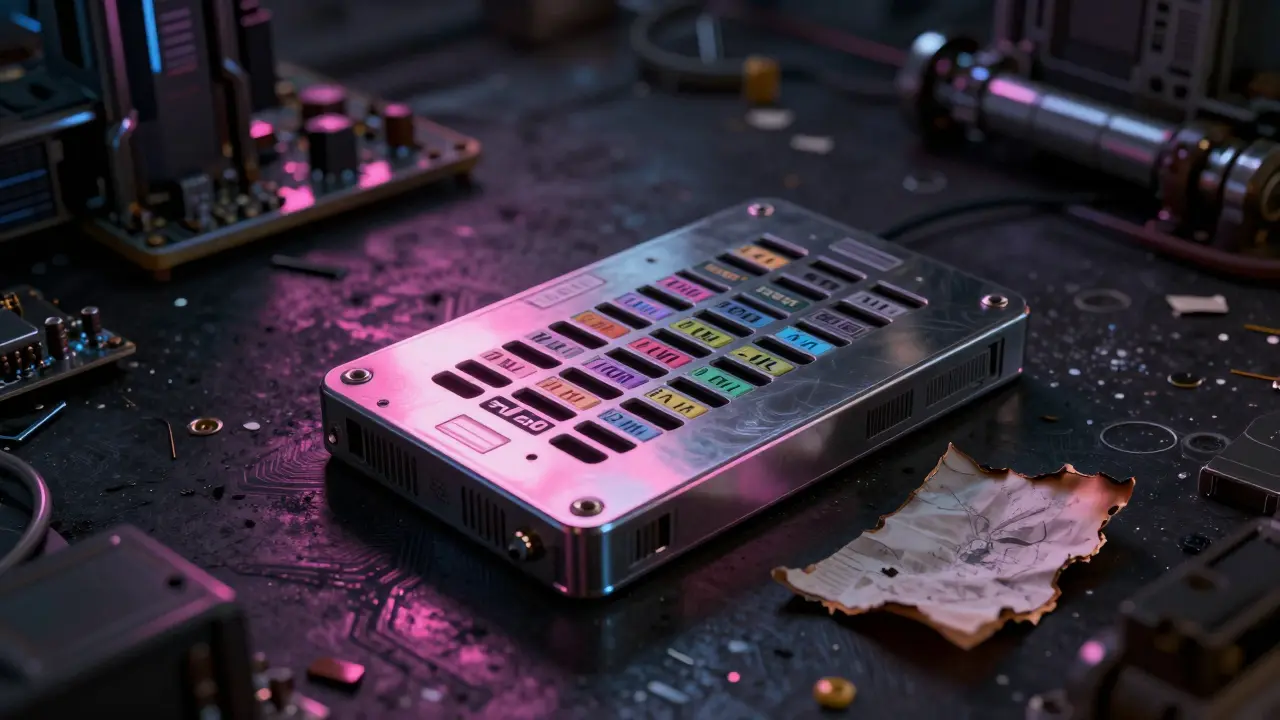
- Use Metal Backups: Paper burns and fades. For long-term storage, consider metal seed plate backups like the Cryptotag Zeusa titanium steel seed phrase backup device or Billfodl Multisharda stainless steel seed phrase storage solution. These can withstand temperatures up to 2,750°F and physical impacts that would shatter glass or melt plastic.
- Geographic Separation: Keep copies in different secure locations. One in a home safe, one in a bank safety deposit box, and perhaps one with a trusted family member. This ensures that no single disaster destroys all access points.
- Test Your Backup: After writing it down, wipe your wallet and try to restore it using the phrase. This confirms you wrote it correctly and that the phrase actually works before you load significant funds.
Advanced Options: Passphrases and SLIP-39
For users who want extra security, some wallets offer a "passphrase" or "25th word." This is an optional extra password you add to your seed phrase. If you lose the passphrase, you cannot recover your wallet even with the 12 words. This adds complexity but protects against theft if someone finds your paper backup but doesn't know the extra code.
However, experts warn about the risks. Bitcoin Core developer Pieter Wuille has criticized complex password extensions for creating false security expectations. If you forget the passphrase, your funds are permanently locked. Use this feature only if you have a reliable system for remembering the extra code.
Looking ahead, the industry is evolving. The SLIP-39Satoshi Labs Improvement Proposal 39, enabling Shamir's Secret Sharing for seed phrases standard allows you to split your seed phrase into multiple shares. For example, you could create five cards where any three are needed to reconstruct the wallet. This eliminates the single point of failure risk while maintaining decentralization. While not yet universally supported, it represents the next step in wallet security.
What Happens If You Lose Your Seed Phrase?
There is no "forgot password" button in crypto. If you lose your seed phrase and your device dies, your assets are effectively donated to the network. Estimates suggest that around 20% of all Bitcoin supply-worth tens of billions of dollars-is permanently inaccessible due to lost keys or seed phrases.
Recovery services exist, but they are expensive and not guaranteed. Companies like Datarecovery.com specialize in recovering damaged media, but they cannot guess a lost phrase. Their success rate relies on finding fragments of the original backup. Prevention is infinitely cheaper and more effective than recovery.
Can I change my seed phrase later?
No. A seed phrase is tied to the specific cryptographic keys it generated. You cannot change the words. If you suspect your current seed phrase is compromised, you must create a brand new wallet with a new seed phrase and transfer your funds to the new addresses immediately.
Is it safe to memorize my seed phrase?
It is theoretically possible but highly discouraged. Human memory is fallible, especially under stress. If you forget even one word or swap two words, you cannot access your funds. Physical backups are far more reliable than memory.
Do all cryptocurrencies use the same seed phrase standard?
Most major wallets use the BIP-39 standard, which is compatible with Bitcoin, Ethereum, and many others. However, some older wallets like Electrum use their own proprietary standards. Always check if your wallet supports BIP-39 if you plan to move funds between different platforms.
Can I use the same seed phrase for multiple wallets?
Yes, you can import the same seed phrase into multiple devices. This is useful for accessing your funds from different computers or phones. However, be cautious: if one of those devices is infected with malware, your entire wallet ecosystem is at risk.
What should I do if I find a seed phrase online?
Do not use it. Seed phrases found online are likely already checked by bots and drained of funds. Additionally, using a public phrase compromises your privacy and security. Always generate a new, unique seed phrase from a trusted wallet application.