


Imagine posting a photo on Instagram and actually owning it. Not just having a license to display it on Meta's servers, but holding the cryptographic key that proves you created it. Now imagine getting paid directly by your followers in real-time, without an algorithm deciding if you're "worth" showing to them. This isn't a distant sci-fi dream; it's the core promise of Decentralized Social (DESO), a Layer 1 blockchain designed specifically to decentralize social media and scale storage-heavy applications.
If you've been following crypto, you know Ethereum is for finance and Solana is for speed. But what about social interaction? For years, blockchains struggled to handle the massive amount of data generated by likes, comments, and posts. DeSo was built to solve this exact problem. It’s not just another coin; it’s the infrastructure for a new kind of internet where users own their data.
How DeSo Differs from Traditional Blockchains
Most people assume all blockchains are similar. They aren't. General-purpose chains like Ethereum or Cardano were designed with financial transactions in mind. When you try to store a tweet or an image on Ethereum, it becomes prohibitively expensive and slow. The network clogs up because it wasn't built for high-volume, low-value data.
DeSo takes a different approach. It operates on a bare-metal infrastructure. Instead of running through virtual machines-which add layers of complexity and latency-DeSo processes transactions directly on the hardware. This means near-instant response times. If you post something on a DeSo-powered app, it updates instantly across the network.
Think of it like this: Ethereum is a secure vault for gold bars. DeSo is a bustling public square where millions of people can shout, whisper, and trade ideas simultaneously without the system crashing. Each node in the DeSo network builds its own indexes, ensuring the ecosystem stays resilient even as it scales to billions of users.
The Role of the DESO Token
You can't use the network without the fuel. That fuel is the DESO coin. It serves three main purposes:
- Access: You need DESO to create profiles, post content, and interact with others on DeSo apps.
- Monetization: Creators earn DESO through tips, creator coins, and NFT sales.
- Governance & Security: As the network moves toward its Revolution Proof of Stake mechanism, DESO will play a crucial role in securing the network and aligning incentives.
The tokenomics are designed for scarcity and stability. The maximum supply is capped at 10.8 million units. As of early 2025, over 8.88 million DESO coins were already in circulation. Unlike many projects that hand out huge chunks of tokens to venture capitalists or insiders, DeSo distributed its initial supply through Bitcoin-to-DeSo atomic swaps. This meant every holder had to actively buy or mine their tokens, creating a community of invested participants rather than passive speculators.
Creator Coins: Monetizing Your Influence
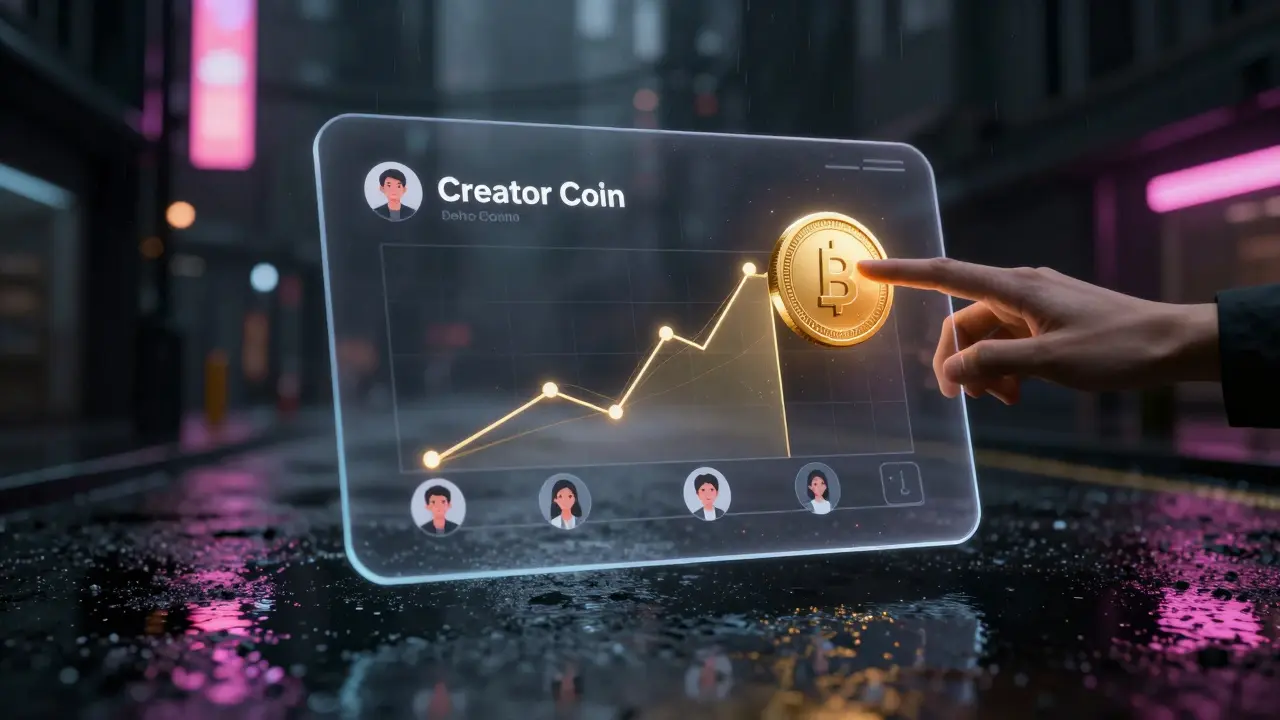
One of the most unique features of the DeSo ecosystem is the Creator Coin system. On traditional platforms, if you have 100k followers, the platform makes money off those followers. You get a tiny cut, if anything. On DeSo, every profile automatically generates a social token.
Fans can buy these Creator Coins directly. The price fluctuates based on demand. If a creator goes viral, their coin value rises. This creates a direct financial link between the artist and their audience. It’s not just about tipping; it’s about investing in someone’s future success. Fans who hold the coin often get access to premium messages, exclusive content, or even stakeholder meetings with the creator.
This has led to an emergent culture known as "buy and retweet." Users are incentivized to support creators early, hoping their influence-and the value of their coins-will grow. It turns social engagement into a transparent marketplace of influence.
Data Ownership and Censorship Resistance
Let’s talk about control. When you post on Facebook or X (formerly Twitter), you’re renting space. Those companies can delete your account, shadowban you, or change their terms of service overnight. Your social graph-who you follow and who follows you-is trapped in their walled garden.
On DeSo, your identity is decentralized. Your profile, followers, and content are stored on-chain. Because the code is open-source and permissionless, no single entity can shut you down. You carry your social graph with you. If one DeSo-based app shuts down, you can move your entire history and follower list to another app seamlessly. It’s like moving your email from Gmail to Outlook, but taking all your contacts and past emails with you, without any friction.
Content is also encrypted end-to-end. Only you hold the private keys to your data. Intermediaries cannot read your messages or sell your browsing habits to advertisers. This level of privacy is rare in today’s digital landscape.
The DeSo Wallet: Your Hub for Web3 Social
To navigate this world, you need the DeSo Wallet. Think of it as your browser for the decentralized social web. It’s not just a place to store crypto; it’s a hub for managing your digital life.
Inside the wallet, you can:
- Create and manage your on-chain identity.
- Trade Creator Coins and NFTs on the DeSo DEX (decentralized exchange).
- Send tips and receive payments.
- Interact with various third-party apps built on the DeSo protocol.
The interface is designed to be intuitive for Web3 newcomers. You don’t need to understand complex smart contract addresses to send a tip or buy a fan token. The wallet abstracts away the technical heavy lifting, letting you focus on connecting with people.
Why DeSo Matters for Developers
For developers, DeSo offers a blank canvas. Since the blockchain handles the heavy lifting of storage and indexing, devs can build diverse applications without worrying about scalability bottlenecks. We’ve seen the rise of:
- NFT marketplaces with on-chain royalties.
- End-to-end encrypted messengers.
- DAO tooling for community governance.
- Internationalized social feeds that respect local languages and cultures.
Because the data layer is standardized, these apps can interoperate. A post made on one blogging platform can be liked on a different analytics dashboard. This interoperability is key to building a true decentralized ecosystem, rather than just another isolated app.
Risks and Considerations
While the vision is compelling, there are challenges. Adoption is still growing. The user experience, while improved, can still feel unfamiliar compared to polished giants like TikTok or Instagram. Additionally, the volatile nature of cryptocurrency means the value of your Creator Coins or tips can fluctuate wildly.
Security is also paramount. In a decentralized system, there is no customer support team to reset your password. If you lose your private keys, you lose access to your identity and assets and content forever. Users must take personal responsibility for their security, using hardware wallets and secure backup methods.
The Future: Revolution Proof of Stake
DeSo is evolving. The upcoming launch of the Revolution Proof of Stake mechanism aims to enhance network security while introducing deflationary dynamics. By burning fees, the supply of DESO could decrease over time, potentially increasing its value as demand grows. This shift aligns the incentives of validators, creators, and users, ensuring the network remains robust and profitable for everyone involved.
Is DESO the same as DeSo?
Yes, they refer to the same ecosystem. "DeSo" stands for Decentralized Social, which is the name of the blockchain platform. "DESO" is the ticker symbol for the native cryptocurrency used on that network. People often use them interchangeably, but technically one is the technology and the other is the asset.
How do I get started with DeSo?
To start, you need to download the DeSo Wallet app on your mobile device or computer. Once installed, you'll create a new wallet and securely save your recovery phrase. Next, you'll need to acquire some DESO tokens, which you can buy on major cryptocurrency exchanges or peer-to-peer platforms, and transfer them to your DeSo wallet address.
Can I migrate my social media followers to DeSo?
You cannot automatically import followers from centralized platforms like Instagram or Twitter due to API restrictions. However, you can encourage your existing audience to join you on DeSo by sharing your DeSo profile link. The benefit is that once they follow you on DeSo, that relationship is yours to keep and port across any DeSo-compatible app.
Are Creator Coins a good investment?
Creator Coins are highly speculative. Their value depends entirely on the popularity and engagement of the specific creator. While some early supporters have seen significant gains, many coins may remain illiquid or drop in value. Treat them as support for artists you love, not as a guaranteed financial instrument.
Is DeSo censorship-resistant?
Yes. Because content is stored on a decentralized blockchain and controlled by your private keys, no central authority can delete your posts or ban your account. While individual front-end apps might choose to hide certain content from their interface, the data remains permanently accessible on the underlying DeSo blockchain.