

You’ve probably seen the ticker GT on your trading screen or heard about it in crypto circles. But what exactly is GateToken? It’s not just another coin you buy and hold hoping for a moonshot. GT is the fuel that powers the entire Gate ecosystem, including one of the world’s oldest cryptocurrency exchanges, Gate.io, and its dedicated blockchain, GateChain.
If you are looking to understand whether this token fits into your portfolio, you need to look past the price chart. You need to understand how it works, why its supply keeps shrinking, and how it compares to giants like Binance Coin (BNB). This guide breaks down everything you need to know about GateToken as we move through 2026.
The Core Identity: What Is GateToken?
Think of GT as a membership card with superpowers. When you hold it, you aren’t just speculating on value; you are participating in the economy of one of the largest crypto platforms globally. Gate.io, founded by Lin Han, has been operating since 2013, making it a veteran in the space. GT ties your interests directly to the growth and stability of this platform.
Deflationary Design: The Supply Shock
The most unique feature of GateToken isn’t its price-it’s its disappearing act. Most tokens inflate over time as new coins are minted. GT does the opposite. It is designed to be aggressively deflationary.
Here is the math behind the scarcity:
- Initial Issuance (2019): 1,000,000,000 (1 Billion) GT.
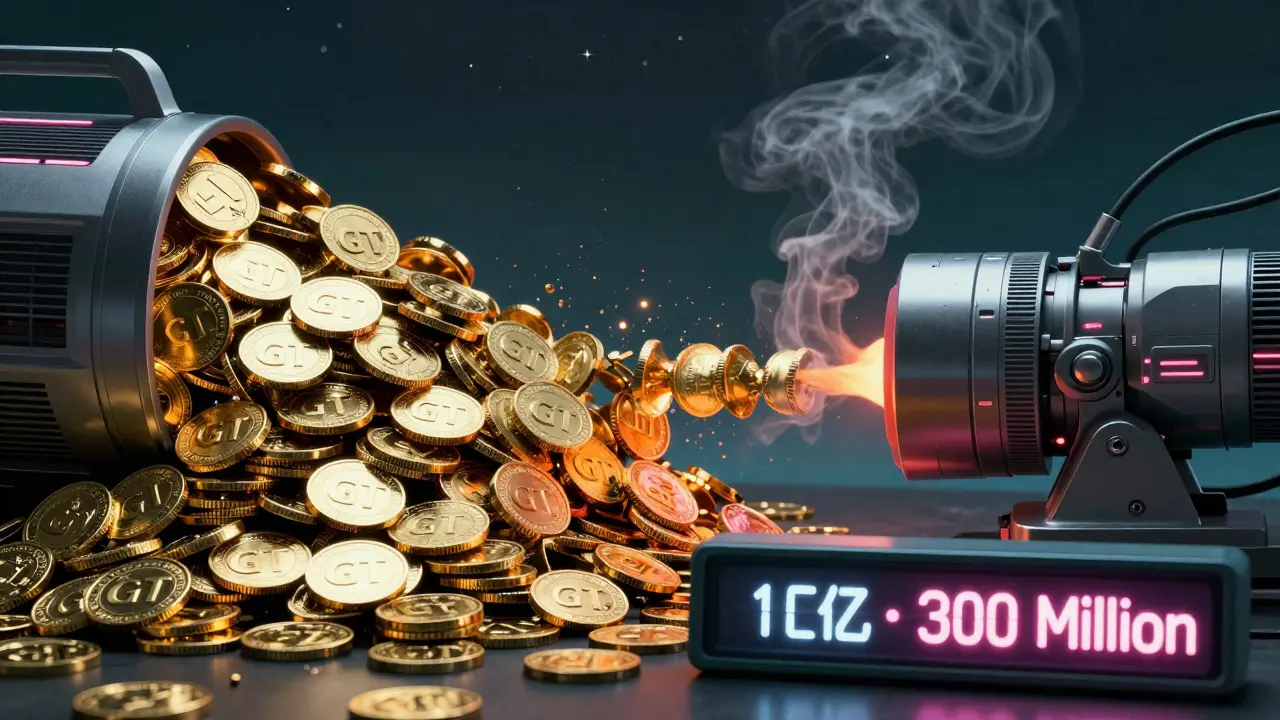
- Major Burn Event: In a massive move to reduce supply, 700,000,000 GT were permanently destroyed.
- Current Maximum Supply: Capped at 300,000,000 GT.
But the burning didn’t stop there. Gate.io uses a portion of its exchange revenues to buy back GT from the open market and burn it. By late 2024, more than 174 million tokens had been burned through this mechanism. This leaves a circulating supply of roughly 96 million GT. Why does this matter to you? Basic economics tells us that if demand stays steady or grows while supply shrinks, upward pressure on price increases. This "absolute deflation mode" is a key selling point for long-term holders.
Utility: What Can You Actually Do With GT?
A token without use cases is just a speculative bet. GT has concrete utilities that provide immediate value to users on the Gate platform. Here is how you can put your tokens to work:
- Trading Fee Discounts: This is the most common use. If you pay your trading fees on Gate.io using GT, you get a significant discount compared to paying in other currencies. For active traders, this saves real money every day.
- VIP Status Upgrades: Holding a certain amount of GT can boost your VIP level on the exchange. Higher VIP levels mean lower maker/taker fees, higher withdrawal limits, and access to exclusive campaigns.
- Staking on GateChain: Since GT is the native asset of GateChain, you can stake it to help secure the network. In return, you earn rewards. This supports the Proof-of-Stake consensus model of the chain.
- DeFi and Yield Farming: GT is used as collateral in various decentralized finance applications within the Gate ecosystem, allowing you to earn interest or participate in liquidity mining.
- Governance: As a governance token, GT holders have a voice in the future development of the GateChain protocol, although specific voting mechanisms vary by proposal.
This multi-faceted utility ensures that GT isn’t just sitting in your wallet; it’s actively working for you within the ecosystem.
GateChain: The Blockchain Backbone
To understand GT, you have to understand GateChain, which is a next-generation public blockchain focused on asset security and decentralized trading. While many blockchains struggle with user experience and security, GateChain introduces specialized features designed to solve real-world problems.
One standout feature is the "on-chain hot insurance account." In traditional crypto, if you lose your private key or get hacked, your funds are gone forever. GateChain attempts to mitigate this risk with built-in recovery mechanisms and clearing guarantees. Because GT is the only token on this chain, all these security features rely on GT as the primary collateral and transactional asset. This makes GT critical not just for trading, but for the structural integrity of the network.
Market Performance and Comparison
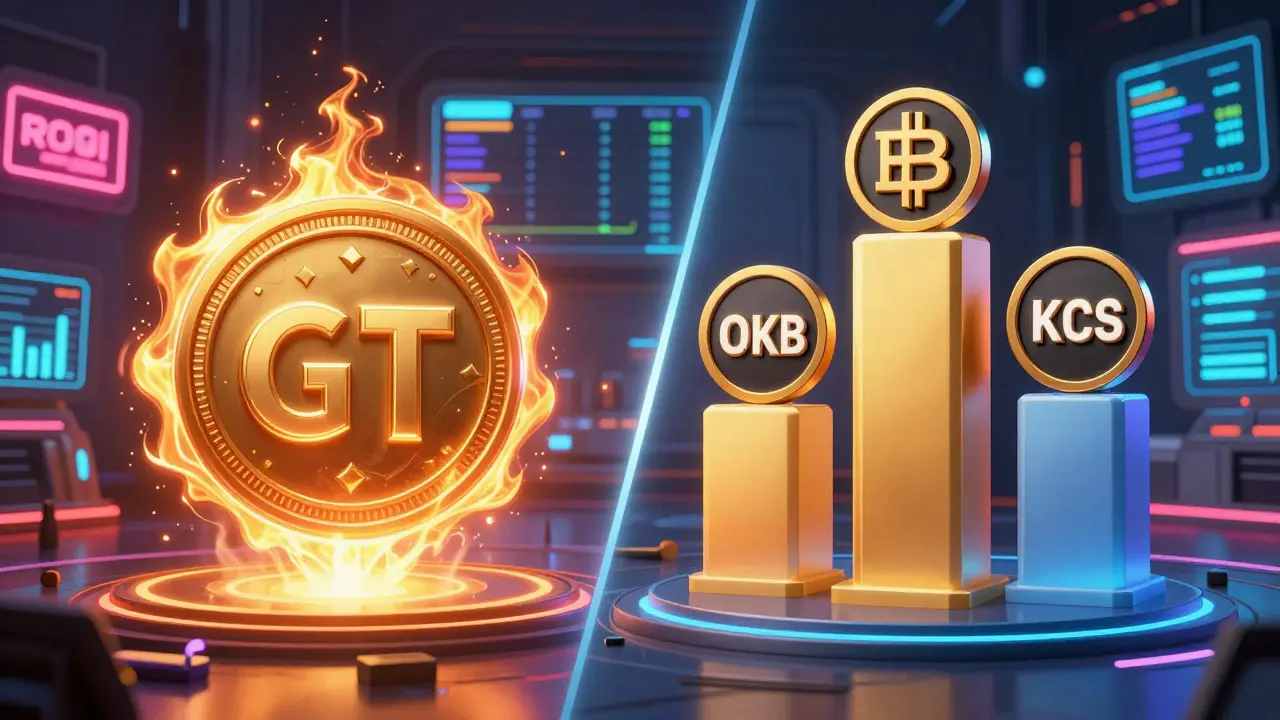
As of late July 2026, GateToken is ranked around #66 by market capitalization. Its price hovers in the mid-single-digit dollar range (approximately $6.71 USD), reflecting its status as a mid-tier exchange token. It doesn’t have the massive dominance of Bitcoin or even top exchange tokens like BNB, but it holds a stable position with consistent liquidity.
| Token | Exchange | Max Supply | Burn Mechanism | Primary Use Case |
|---|---|---|---|---|
| GT | Gate.io | 300 Million | Aggressive (Revenue-based buyback & burn) | Fee discounts, GateChain staking, Web3 utility |
| BNB | Binance | 200 Million (Target) | Quarterly burns until 50% reached | Ecosystem gas, fee payments, Launchpad |
| OKB | OKX | 300 Million | Monthly buys/burns | Fee discounts, OKT Chain utility |
| KCS | KuCoin | 200 Million | Daily profit-sharing burns | Fee discounts, KCS Earn |
Compared to BNB, which is a top-five cryptocurrency with tens of billions in market cap, GT is smaller. However, its deflationary trajectory is sharper due to the initial 70% supply reduction. For investors who believe in Gate.io’s longevity and the adoption of GateChain, GT offers a high-utility entry point into the exchange ecosystem.
Risks and Considerations
No investment is without risk. Before buying GT, consider these factors:
- Regulatory Uncertainty: Exchange tokens often face scrutiny from regulators like the SEC. If GT is classified as a security in certain jurisdictions, it could impact trading availability.
- Platform Dependency: GT’s value is tied to Gate.io’s success. If the exchange loses market share to competitors, demand for GT may drop.
- Liquidity Depth: While liquid enough for most retail traders, GT doesn’t have the deep order books of BTC or ETH. Large institutional moves could cause higher slippage.
How to Buy and Store GateToken
Getting your hands on GT is straightforward if you are already using Gate.io. You can purchase it directly on the spot market using USDT, BTC, or other major pairs. Once bought, you can leave it in your exchange wallet to automatically apply fee discounts or withdraw it to a compatible Ethereum wallet (since it’s ERC-20) or a GateChain-compatible wallet for staking.
For beginners, keeping GT on the exchange is the easiest way to benefit from fee rebates immediately. For advanced users interested in DeFi, moving GT to a self-custody wallet allows you to interact with GateChain’s smart contracts and earn staking rewards.
Is GateToken (GT) mineable?
No, GateToken is not mineable. It was issued as an ERC-20 token and functions as a utility and governance asset. New supply is not created through mining; instead, the existing supply is reduced through periodic burns.
What is the difference between GT and BNB?
Both are exchange utility tokens, but BNB belongs to Binance, the largest global exchange, giving it higher liquidity and brand recognition. GT belongs to Gate.io and has a more aggressive deflationary history, having burned 70% of its initial supply early on. GT is also the native token of GateChain, similar to how BNB powers BSC.
How does the GT burn mechanism work?
Gate.io allocates a percentage of its monthly revenue to buy back GT from the open market and permanently destroy it. This reduces the circulating supply over time, aiming to increase scarcity and support long-term value.
Can I use GT outside of Gate.io?
Yes, because GT is an ERC-20 token, you can store it in any Ethereum-compatible wallet (like MetaMask) and trade it on other exchanges that list it. However, its primary utility and maximum benefits are realized within the Gate.io and GateChain ecosystem.
Is GateChain secure?
GateChain focuses heavily on asset security, featuring innovations like on-chain hot insurance accounts and clearing guarantee mechanisms. These are designed to protect against common issues like private key loss and asset theft, offering a layer of security not always present in standard public blockchains.