
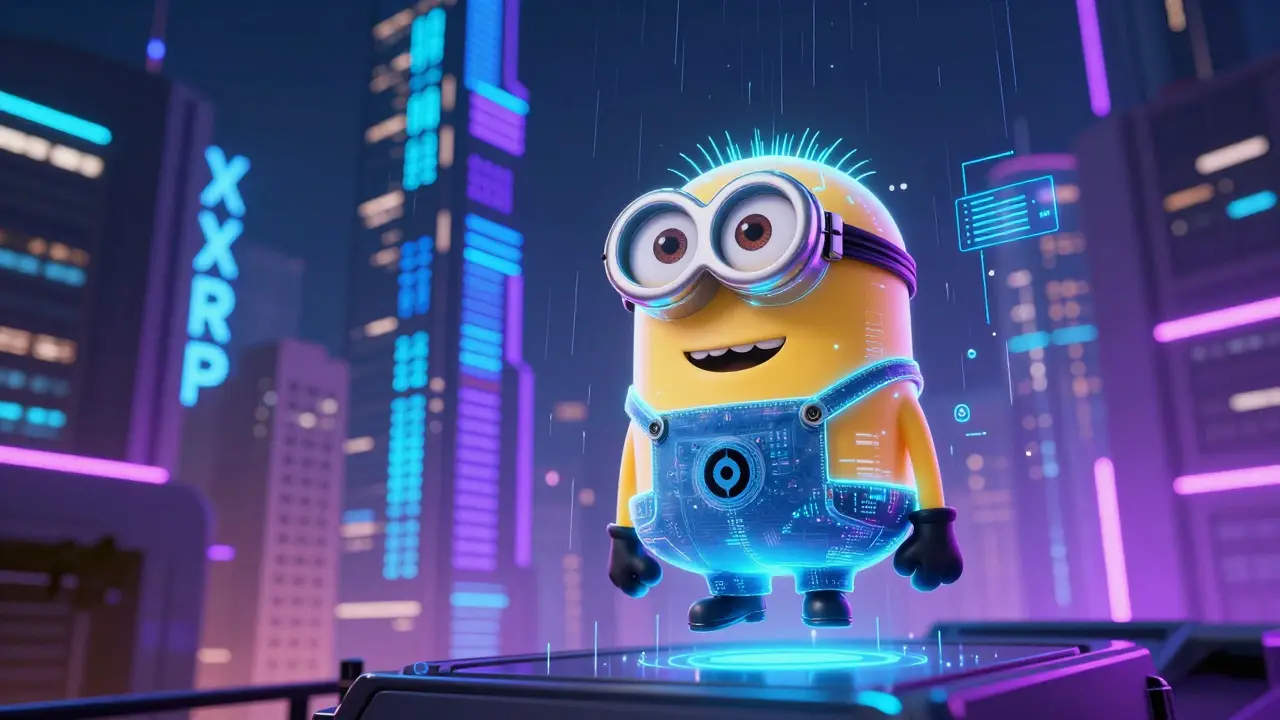
Imagine a cryptocurrency that doesn't care about complex financial protocols or decentralized finance. Instead, it wants to be the next big pop-culture franchise, complete with movies, games, and characters. That is exactly what Ripples (RPLS) is. Launched in late 2024, this token operates on the XRP Ledger (XRPL) and bills itself as more than just another meme coin. It aims to build an entertainment brand comparable to Illumination’s "Minions" franchise.
If you are wondering whether RPLS is a serious investment or just internet hype, you aren't alone. The crypto space is flooded with tokens that promise the moon but deliver dust. RPLS sits in a unique niche: it’s a community-driven asset built on one of the fastest blockchains, yet its value relies heavily on future media projects rather than current utility. Let’s break down what this token actually is, how it works, and whether it has any legs in the current market.
The Origin Story: From Meme to Media Brand
Ripples wasn’t born in a Silicon Valley incubator. It launched on October 24, 2024, created by two pseudonymous developers based in the United States and the United Kingdom. Unlike many projects that hide their team for security reasons, these creators have remained anonymous, which is standard practice in the meme-coin world but adds a layer of risk for investors.
The core idea behind RPLS is simple: evolve from a speculative token into a multi-platform entertainment entity. The roadmap isn’t focused on building lending platforms or payment rails. Instead, the team plans to release mobile games for iOS and Android, launch NFTs, produce short films, and eventually create a feature-length Hollywood movie. In this ecosystem, holding RPLS isn’t just about hoping the price goes up; it’s supposed to be a ticket into a growing fanbase.
This strategy mirrors the success of character-driven IP like Minions or Pikachu. By anchoring the token to a recognizable brand identity, the project hopes to attract users who might not normally engage with cryptocurrency. However, as of mid-2026, the execution of this vision remains largely unproven. While NFTs are available on the xrp.cafe marketplace, the promised mobile game and film projects have faced delays or lack concrete public updates, leaving the "utility" aspect mostly theoretical.
How RPLS Works on the XRP Ledger
To understand RPLS, you need to understand where it lives. It is not an ERC-20 token on Ethereum, nor is it on Solana or BNB Chain. RPLS is an issued currency on the XRP Ledger. This distinction matters significantly for both cost and speed.
The XRP Ledger uses a federated consensus algorithm, meaning transactions settle in seconds rather than minutes. This makes it incredibly efficient for trading. When you buy or sell RPLS, you are likely using the XRPL’s native decentralized exchange (DEX). There are no smart contracts involved in the traditional sense. Instead, RPLS exists as a trust line linked to a specific issuer address on the ledger.
Here is what that means for you as a user:
- Low Fees: Trading on XRPL costs fractions of a cent, making it cheap to move small amounts of RPLS.
- XRP Requirement: To hold RPLS, you must have an XRPL account. Every active account requires a reserve of XRP (currently around 10 XRP) to prevent spam. You cannot hold RPLS without holding some XRP first.
- No Gas Wars: Unlike Ethereum, you don’t bid against others for transaction priority. If the network is congested, your trade still processes quickly.
This technical setup makes RPLS accessible to anyone with an XRPL-compatible wallet. However, it also limits its reach. Users locked into Ethereum or Bitcoin ecosystems cannot easily interact with RPLS without bridging assets, which adds friction.
Tokenomics: Fixed Supply and No Hidden Tricks
One of the few things clear about RPLS is its supply structure. The total and maximum supply is capped at exactly 100,000,000 RPLS tokens. There is no inflation schedule, no staking rewards mechanism, and no disclosed burn program. Once the tokens are issued, they stay there.
This fixed supply model is typical for meme coins. It creates scarcity, but only if demand rises. Without new tokens being minted, the price movement depends entirely on buying and selling pressure. However, data discrepancies exist regarding circulating supply. Some trackers show 100 million in circulation, while others report zero, suggesting that much of the supply might be held by the founders or locked in illiquid pools. This opacity is a red flag for fundamental analysts.
There is no public breakdown of token allocation. We don’t know what percentage belongs to the developers, marketing budgets, or community treasuries. In a transparent project, this information is crucial. For RPLS, it’s a mystery. This means early holders could theoretically dump large amounts of tokens onto the market, causing sudden price crashes.
Price Performance and Market Reality
Let’s talk numbers, because that’s usually why people click on articles like this. RPLS has been volatile. Its all-time high was approximately $0.0853 per token. As of recent snapshots in 2026, the price has hovered in the sub-cent range, often between $0.001 and $0.005 depending on the exchange.
| Metric | Value | Note |
|---|---|---|
| All-Time High (ATH) | $0.0853 | Peak speculative interest |
| Recent Spot Price | $0.0008 - $0.005 | Highly variable by source |
| Drawdown from ATH | ~99% | Typical for failed meme cycles |
| Market Cap Rank | #1187 - #4504 | Micro-cap status |
The divergence in prices across platforms like LiveCoinWatch, Binance, and Crypto.com reflects thin liquidity. With daily trading volumes sometimes spiking to $1.5 million but often dropping lower, a single large sell order can crash the price by 10% or more. Technical indicators like the Relative Strength Index (RSI) have shown neutral sentiment, oscillating around 66, which suggests neither strong bullish momentum nor capitulation bearishness.
Analysts note that RPLS behaves like a classic speculative asset. It lacks the institutional backing of major coins like Bitcoin or Ethereum. Its price is driven by social media buzz, news about the upcoming movie, and general meme-coin trends. If the entertainment roadmap stalls, the price support evaporates.
Wallet Support and How to Buy
If you decide to take the plunge, you need the right tools. Since RPLS lives on the XRP Ledger, you can’t just use any old MetaMask wallet. You need an XRPL-compatible solution. Fortunately, support is decent for a micro-cap token.
Popular options include:
- Ledger & Trezor: Hardware wallets that offer cold storage security. Ensure your device firmware supports XRPL.
- Trust Wallet & Atomic Wallet: Mobile-friendly software wallets that allow easy DEX swapping.
- Crypto.com App: Offers integrated on-chain swapping, which simplifies the process for beginners.
To buy RPLS, you typically start by purchasing XRP on a centralized exchange. Then, you transfer that XRP to your XRPL wallet. Finally, you use the wallet’s built-in DEX feature to swap XRP for RPLS. Remember, you will need to keep some XRP in your wallet to cover the reserve requirement and transaction fees. If you send all your XRP away, your account becomes inactive, and you lose access to your RPLS until you deposit more XRP.
Risks and Red Flags
Before you invest, consider the downsides. RPLS is a high-risk asset. Here are the primary concerns:
1. Lack of Transparency: The anonymous team provides limited updates. There are no regular financial reports or governance votes. You are trusting strangers with your capital.
2. Execution Risk: The entire value proposition hinges on the success of a movie and games. These are expensive, long-term projects. If the film flops or never gets made, the token loses its narrative anchor.
3. Liquidity Issues: Thin markets mean you might not be able to sell your tokens quickly without slippage. During a panic sell-off, exiting your position could be difficult.
4. Regulatory Uncertainty: While RPLS hasn’t been targeted by regulators yet, meme coins with vague utility often fall under scrutiny. If authorities classify it as an unregistered security, exchanges could delist it overnight.
Is RPLS Worth Your Attention?
Ripples (RPLS) is not for the faint of heart. It is a speculative bet on a cultural phenomenon that doesn’t fully exist yet. If you believe in the power of meme culture and think the "Minions of Crypto" branding will catch on, RPLS offers a low-entry point due to its low price per token.
However, if you are looking for stable growth or proven utility, look elsewhere. The token’s history shows significant drawdowns, and its fundamentals are weak. Treat it like a lottery ticket, not a savings account. Only invest what you can afford to lose completely, and always do your own research before interacting with the XRP Ledger.
Is RPLS the same as Rocket Pool (RPL)?
No, they are completely different. Rocket Pool (RPL) is a governance token for an Ethereum staking protocol with a substantial market cap. Ripples (RPLS) is a meme/entertainment token on the XRP Ledger. Do not confuse the tickers.
Can I buy RPLS directly with USD?
Most centralized exchanges do not list RPLS for direct fiat purchase. You typically need to buy XRP first, then swap it for RPLS on a decentralized exchange (DEX) or via a wallet that supports XRPL swaps.
What happens if the RPLS movie project fails?
The token’s value is heavily tied to its entertainment roadmap. If the movie and games fail to launch or gain traction, the primary narrative driving demand disappears, likely leading to a significant drop in price.
Do I need XRP to hold RPLS?
Yes. Because RPLS is issued on the XRP Ledger, your wallet must maintain an XRP reserve (usually 10 XRP) to remain active. Without this reserve, your account freezes, and you cannot transact.
Who created Ripples (RPLS)?
RPLS was launched in October 2024 by two anonymous developers based in the US and UK. Their identities have not been publicly disclosed, which is common in meme coin projects but increases counterparty risk.
Comments
15 Comments
Michelle Walker
You are completely ignoring the basic economics here. This is a classic pump and dump scheme wrapped in cute marketing. The anonymous team is the biggest red flag possible. They have zero accountability. When the movie fails to launch, which it will, they will rug pull and leave you with worthless tokens. Do not fall for this hype.
Shay Thomson
I actually think there is something beautiful about trying to merge pop culture with blockchain technology. It feels like we are witnessing the birth of a new kind of digital art form. The Minions comparison is bold but I can see the vision. Maybe if people gave these projects a chance to breathe instead of just criticizing them immediately we could see something amazing emerge from the chaos.
DJ Maleko
Bro seriously though why are you guys so obsessed with utility? 🤔 Crypto is about vibes and community first. If the memes are strong the price goes up. Simple as that. Stop overthinking it and just enjoy the ride. Also check out my other post about how AI will replace all developers by next year 😂
Erika Pozzetto
It is imperative that one considers the structural integrity of such ventures before allocating capital. The lack of transparency regarding token allocation is deeply concerning from a regulatory standpoint. Furthermore the reliance on speculative media outcomes rather than tangible technological advancements suggests a fundamental misalignment with sustainable investment principles. One must exercise extreme caution.
Russ Fincham
The technical setup on XRPL is interesting but the business model is flawed. You cannot build a sustainable entertainment brand solely on token speculation. The liquidity issues mentioned in the article are fatal for any serious investor. Most of these meme coins die within six months. This one has been around since late 2024 and still has no real product. It is dead weight.
Linda Hilliard
Oh darling please. You really believe this nonsense? 😒 RPLS is a textbook example of a vaporware project targeting uninformed retail investors. The jargon-heavy roadmap is designed to confuse you into thinking there is substance where there is none. Real value comes from code not cartoons. Stay away from this garbage unless you enjoy losing money. 🙄
Winston Lacewing
This makes me so angry! 😡 How can anyone promote this scam? These developers are stealing from hardworking people who just want to save their money. It is morally bankrupt to create tokens with no actual purpose and then hide behind anonymity. We need stricter regulations NOW to protect innocent victims from these crypto predators. Shame on everyone involved! 🚫💸
Kristine Lawson
Contrary to popular opinion, I find the concept entirely plausible; however, the execution appears severely lacking. The grammatical structure of their whitepaper-if one exists-is likely atrocious, which reflects poorly on their professionalism. Moreover, the punctuation in their social media updates is inconsistent, suggesting a lack of attention to detail. Therefore, I remain skeptical.
Tawny Holmes
Total waste of time.
KEITH WONG
lol u guys r too smart for ur own good. i bought some when it was at 0.001 and now im sitting pretty. dont listen to the haters they just jealous because they missed the boat. keep holding and mooning soon 🚀🌕 trust me bro
Natalie Lucas
i mean its kinda fun to watch the charts go up and down like a rollercoaster lol. not gonna lie i lost some cash on another coin last week but this one seems chill so far. lets hope the movie actually happens cause that would be epic. fingers crossed!
Jackie D
I wonder if the creators have ever actually made a movie or game before? It feels like they are throwing spaghetti at the wall to see what sticks. The whole 'Minions' angle is catchy but without a solid foundation it might just crumble under pressure. I am curious to see how they handle the community feedback if things start going south.
Curtis Johnson
look i get the skepticism but maybe we should give them a little grace. building anything takes time especially in crypto. the xrpl tech is solid at least. lets see what they do next before calling it quits. no need to be so harsh everyone. stay positive and supportive ok?
Steven Briggs
i just want to know if its safe to hold. the fees are low which is nice but i worry about the reserve requirement. if xrp drops does that affect my rpls holdings directly? i am trying to understand the mechanics better before committing more funds.
Hamza k
The narrative arc of this project is fascinatingly tragic yet potentially triumphant. Imagine the drama if the film flops spectacularly while the token pumps. It would be a masterpiece of irony. But if they pull it off, the cultural impact could be seismic. I am watching closely, captivated by the potential for either disaster or glory.
Write a comment