
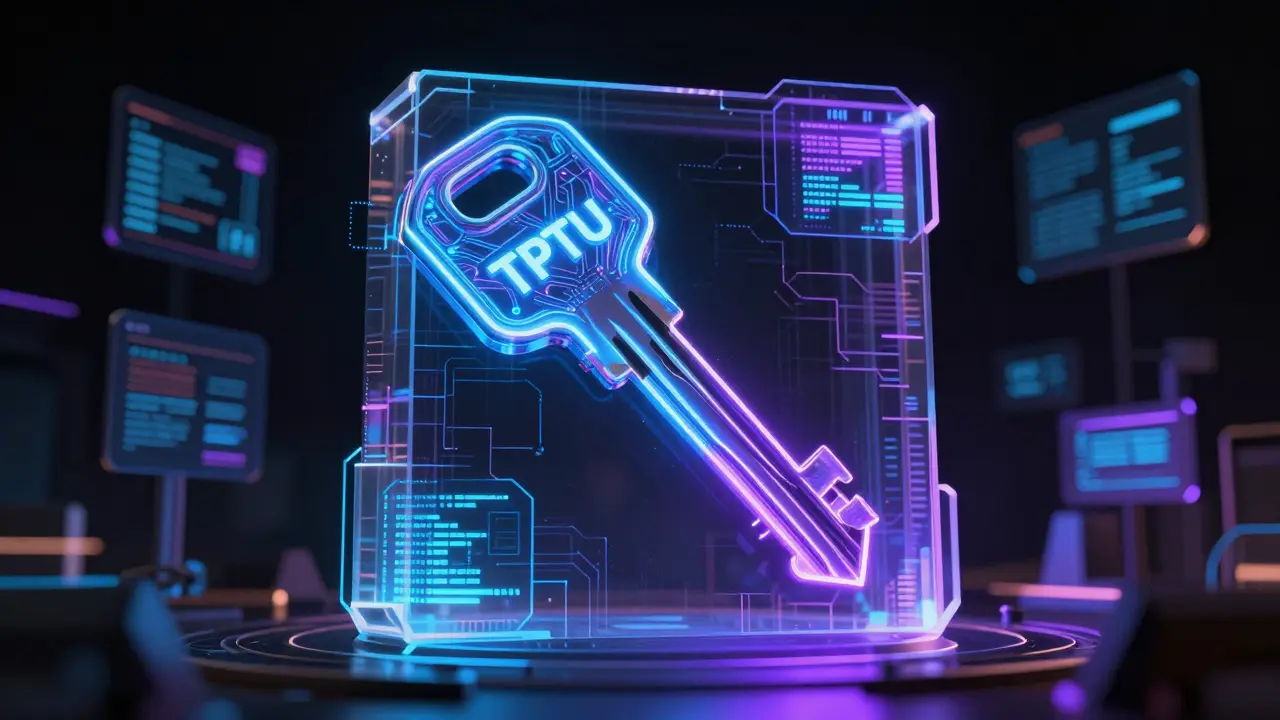
Imagine a crypto asset that doesn't just sit in your wallet but actually acts as a key to unlock AI-powered trading tools. That is exactly what Trading and Payment Token is. Often referred to by its ticker TPTU, this token is the engine driving the utility and automated trading capabilities of the Ultima Chain network. Unlike Bitcoin, which many treat as digital gold, TPTU is built for a specific job: making blockchain interactions and algorithmic trading easier for the average user.
Quick Summary of TPTU
- Core Purpose: Powers automated trading bots and ecosystem access on Ultima Chain.
- Unique Feature: A "freezing" mechanism that generates UENERGY tokens.
- Market Status: A small-cap asset primarily traded on exchanges like MEXC and Bybit.
- Token Model: Deflationary, meaning it's designed to limit supply over time to support value.
How TPTU Actually Works in the Ecosystem
To understand TPTU, you have to look at the Ultima Chain. This is the parent network where TPTU lives. Think of TPTU as a multipurpose tool. First, it's a payment method for services within the network. Second, it's an activation key. If you want to use the network's AI trading bots, you need TPTU to get started.
The most interesting part is the relationship between TPTU and UENERGY. While TPTU is for trading and payments, UENERGY is the "gas" or operational fuel. You can't just buy UENERGY in the same way; instead, the system uses a token freezing mechanism. If you lock up your TPTU for three years, the network rewards you with 5,000 UENERGY tokens for every single TPTU frozen. This creates a strong incentive for people to hold onto their tokens rather than selling them immediately.
The Automated Trading Bot System
The real draw for most investors is the AI-powered trading bots. Here is how the process works in a real-world scenario: a user buys TPTU and uses it to acquire a bot license. Instead of manually watching charts 24/7, the user connects their exchange account (like MEXC or BingX) via an API integration. The bot then executes trades on TPTU/USDT pairs based on pre-set strategies, aiming to generate stable profits in USDT.
This setup removes the emotional stress of trading. You aren't guessing when to buy or sell; the algorithm does it based on data. However, it's worth noting that while these bots operate on major exchanges, the token itself isn't available everywhere. For instance, while you might see price data for TPTU on Binance, you can't actually trade it there.
Market Analysis: Prices and Supply
If you are looking at the numbers, you'll notice something strange: different websites tell you different things about TPTU. This is common with niche tokens. For example, CoinMarketCap might list the maximum supply at 14 million, while other platforms like MEXC suggest 6 million. When you see these discrepancies, it usually means the project has updated its tokenomics or the aggregators are using different data points.
| Exchange/Source | Typical Price (USD) | 24h Volume | Status |
|---|---|---|---|
| Bybit | $0.0605 | ~$131K | Tradable |
| MEXC | $0.0608 | ~$51K | Tradable |
| Phemex | $0.0703 | ~$121K | Tradable |
| Binance | N/A | N/A | Price Track Only |
With a market cap generally hovering around $1 million, TPTU is firmly in the "small-cap" category. This means it's much more volatile than a giant like Ethereum. A few large trades can move the price significantly, which is why the trading volume relative to the market cap (about 12.5%) is a key metric to watch.
Pros and Cons of the TPTU Model
Is the TPTU model sustainable? It depends on what you value. The direct link to a functional product (the trading bots) gives it more utility than a typical "meme coin." The freezing mechanism also helps stabilize the price by taking tokens out of circulation.
On the flip side, the lack of listings on Tier-1 exchanges like Binance or Crypto.com is a hurdle. Most mainstream investors won't touch a coin if they can't buy it on their favorite app. Furthermore, the three-year lockup period for UENERGY is a long time in the crypto world-a lot can change in 36 months.
How to Trade and Sell TPTU
If you've decided to get involved, the process is fairly standard for any Cryptocurrency Exchange. Using Bybit as an example, here is the path:
- Log into your verified account.
- Go to the "Trade" section and search for the TPTU/USDT pair.
- Choose between a Market Order (sell instantly at the current price) or a Limit Order (set a specific price you're willing to accept).
- Once the trade closes, your USDT will be available in your funding or trading wallet for withdrawal.
Looking Ahead: The Future of Ultima Chain
The success of TPTU is tied directly to the adoption of the Ultima Chain network. If more people start using the AI bots and the demand for UENERGY grows, the pressure to freeze more TPTU could drive the price up. However, the project currently targets a niche group of algorithmic traders. To move beyond that, they would likely need to expand their decentralized application (dApp) library or secure a listing on a top-three global exchange.
What is the difference between TPTU and UENERGY?
TPTU is the main utility token used for payments, activating trading bots, and ecosystem access. UENERGY is the operational fuel used to pay for network transaction fees and smart contract deployment. You get UENERGY by freezing your TPTU for three years.
Can I buy TPTU on Binance?
No, TPTU is not listed for trading on Binance. While Binance may show price data for the token, you cannot buy or sell it there. You'll need to use exchanges like MEXC, Bybit, or Phemex.
How many UENERGY tokens do I get for freezing TPTU?
According to the network's established ratio, each TPTU token frozen for a three-year period yields 5,000 UENERGY tokens.
Is TPTU a safe investment?
Like all small-cap cryptocurrencies, TPTU carries high risk. Its low market cap and limited exchange availability make it more volatile than major coins. Always do your own research and only invest what you can afford to lose.
What does a deflationary tokenomics model mean for TPTU?
A deflationary model means the total supply of tokens is designed to decrease over time or is strictly capped. This is intended to create scarcity, which can potentially increase the value of the remaining tokens as demand grows.
Comments
21 Comments
Prachi Bhadarge
Oh sure, an AI bot that does the hard work for you. Because that's exactly how everyone becomes a millionaire overnight without any effort. 🙄
Trudy Morse
Money is just an energy exchange anyway. This token seems like a digital manifestation of that flow. Interesting utility.
Chintu Parikh
It is truly heartening to see such innovative approaches to algorithmic trading being integrated into a blockchain ecosystem! I believe the synergy between TPTU and UENERGY could create a very sustainable model for all participants involved.
Prachi Bhadarge
Slow down there, Chintu. "Synergy" is just a fancy word for "hope this doesn't crash before the lockup ends." Let's be real here.
Shantal Sanjur
Wait, a three-year freeze? That is a total red flag. They just want to lock up the liquidity so the insiders can dump their bags without the price crashing immediately. It's the oldest trick in the book, and if you think you're getting a fair deal, you're just playing into their hands. Why would any sane person lock funds for 36 months in this market? It's basically a hostage situation for your coins. They talk about "deflationary models" to distract you from the fact that you can't sell. I've seen this movie before and it always ends with the devs vanishing into the ether with everyone's USDT. Total scam vibes all around. Don't let the "AI bot" buzzword blind you to the basic math of a liquidity trap. It's obviously a coordinated effort to manufacture scarcity while they control the exit. The discrepancy in supply data is just the cherry on top of this disaster cake. They can't even keep their numbers straight across exchanges. Good luck getting your money back in 2029 if the project is even a memory by then!
Michael Harms
Hey, let's keep it positive! I totally get the hesitation with lock-ups, but some projects really do need that stability to grow. It's all about finding the balance that works for you. Cheers!
Yuhan Mo
The tokenomics here are quite intriguing, specifically the programmatic link between the utility token and the gas mechanism. It's a classic example of a dual-token economy aimed at mitigating volatility through a locked incentive structure.
Sean Mitchell
Absolutely tragic. Another generic AI wrapper pretending to be a revolution. I'm exhausted just looking at this.
Andrew Southgate
I've actually spent a lot of time looking into similar bot-driven tokens, and while the risks are there, the automation part is genuinely helpful for people who don't have the time to stare at candles all day. If you're new to this, just remember to start with a small amount and maybe use a separate wallet for your API keys to keep things secure. It's a learning curve, but once you get the hang of how the TPTU/USDT pairs behave on Bybit, it can be a really rewarding experience if you're patient!
Thomas Jewett
Who cares about these fake internet coins when real American industries are sufferin?? Its just a way for foreign devs to steal money from hardworking people who dont know any bettr... absolute joke of a system!!!
Luke George
Typical. They tell you the supply is 6 million here and 14 million there. It's all manipulated by the big players to keep us in the dark. Probably controlled by a central entity anyway.
Shannon Kelly Smith
Let's all try to help each other understand the tech! 🚀 It's a steep climb but we can do it together! 💎🙌
Anna Grealis
the numbers dont add up... too many gaps in the story. typical crypto noise.
Karen Mogollon Gutierrez
I find the lack of availability on Tier-1 exchanges to be an utterly scandalous oversight for a project claiming such sophisticated capabilities!
Joshua Salwen
LMAO a
Joshua Salwen
Sory, typo... I meant LMAO a "guide" for a coin that isn't even on Binance? What a joke!! 🤣🤣
Saurav Bhattarai
Only a peasant would care about MEXC. If it's not a top-tier asset, why are we even discussing it in a serious forum? How quaint.
John and Lauren Busch
Whatever floats your boat, I guess. 🤷♂️
Michelle Stanish
I don't like the bot idea. Manual is better.
Jeff Barlett
Everyone's acting like this is a goldmine, but the three-year lock is practically a lifetime. I'm going to bet against this just because the optimism here is nauseating.
Gillian Kent
hope everyone stays safe with there investments!! just be careful with the loking periods
Write a comment