



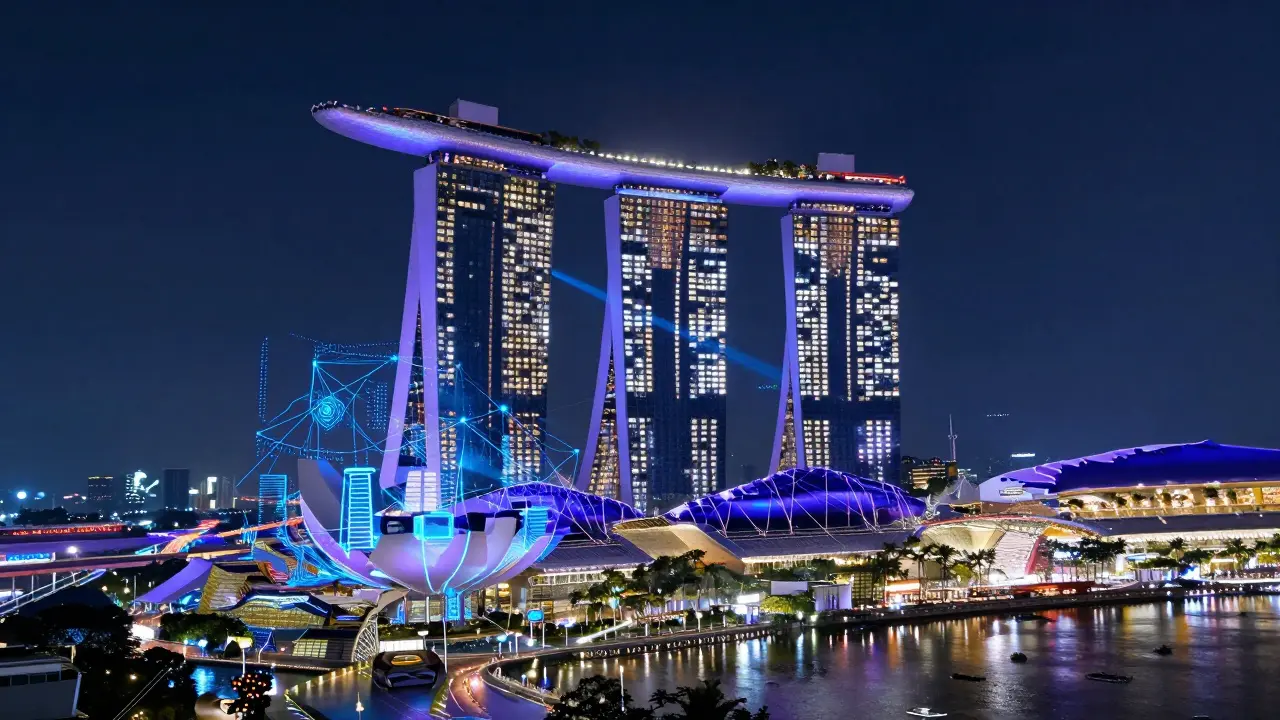
It is easy to assume that if you want to run a crypto business in Asia, you just need a passport and a laptop. The reality on the ground in Singapore is much sharper. As of July 2026, Singapore stands as the undisputed heavyweight of Asian digital assets, but it does not welcome everyone with open arms. It welcomes those who play by its strict, transparent rules.
The city-state has transformed from a curious observer into the region’s primary engine for institutional blockchain adoption. You see this in the data: Singapore ranks fourth globally in the Crypto-Friendly Cities Index 2025 and scored a perfect 100 in the ApeX Protocol report for being the most "crypto-obsessed" nation. But these rankings are not just about hype. They reflect a calculated strategy where regulatory clarity trumps wild speculation. If you are looking at Singapore today, you are looking at a market that has finished its growing pains and entered an era of mature, high-stakes compliance.
The Regulatory Firewall: Why MAS Rules Everything
To understand why global giants flock here, you have to look at the Monetary Authority of Singapore (MAS). This central bank does not treat cryptocurrency like a hobby; it treats it like finance. The framework they built distinguishes clearly between different token types, offering precise licensing pathways for payment services while setting hard guardrails for custody and anti-money laundering (AML) compliance.
The impact of this approach was starkly visible in June 2025. On June 30, 2025, a deadline passed that forced unlicensed crypto firms to cease operations immediately. This was not a soft warning. It was a cleanup. The result was a "reallocation of liquidity." Money did not leave Asia; it moved from shady, unregulated platforms into compliant entities operating under MAS supervision. For Fortune 500 companies, this predictability is gold. Today, 83% of their blockchain pilots operate under MAS-approved frameworks. That is not a guess; that is institutional trust at scale.
If you are an entrepreneur, this means your barrier to entry is higher than in some offshore jurisdictions. You cannot launch a wallet or an exchange without navigating the Payment Services Act. However, once you are inside the system, you gain access to a level of credibility that is nearly impossible to replicate elsewhere in the region.
The Stablecoin Superhighway
While retail traders chase meme coins, the real money in Singapore is moving through stablecoins. The city-state is now the second-largest stablecoin hub in the world, trailing only the United States. The numbers are staggering. Between June 2024 and June 2025, Circle reported $2.4 trillion in on-chain stablecoin activity across the Asia-Pacific region, with Singapore acting as the central node.
Consider the Singapore-China corridor. It has become the busiest route for cross-border stablecoin transactions globally. Businesses are no longer just talking about blockchain; they are using it to settle invoices. Corporate stablecoin transactions surged from less than $100 million in early 2023 to over $3 billion by early 2025. We are seeing major brands like Wetrip travel agency, Capella Hotels, and luxury reseller Ginza Xiaoma accepting stablecoin payments directly.
| Metric | Early 2023 | Early 2025 | Growth Factor |
|---|---|---|---|
| Corporate Stablecoin Transactions | <$100 Million | >$3 Billion | 30x+ |
| APAC On-Chain Activity (Circle) | Data Not Available | $2.4 Trillion (12 months) | N/A |
| Global Rank (Stablecoin Hub) | Top 5 | #2 (After USA) | Upward Trend |
This shift matters because it proves utility. When a hotel chain accepts USDC or USDT for bookings, they are solving real friction in currency conversion and settlement speed. Singapore is positioning itself as the bridge where traditional finance meets decentralized efficiency.
Tax Incentives and Talent Migration
Regulation brings safety, but tax policy brings people. Singapore’s fiscal landscape for crypto is aggressively attractive. There is no capital gains tax on trading profits. Staking rewards? No tax. Mining rewards? Tax-free. This creates a powerful magnet for both individual investors and corporate headquarters.
The result has been a brain drain from other jurisdictions. High-profile executives have relocated here. Gary Or, Bobby Bao, and Rafael Melo from Crypto.com made the move. Even Changpeng Zhao, the former CEO of Binance, found a home in the ecosystem. These are not minor players; they are industry architects. Their presence signals to venture capitalists and engineers that Singapore is the safe harbor for serious work.
The Henley Crypto Adoption Index reflects this human element, giving Singapore a score of 45.7 out of 60 points, ranking it number one worldwide. This is not just about banks; it is about culture. Millennials and Gen Z in Singapore adopt crypto at rates up to three times higher than Baby Boomers. This generational shift drives demand for decentralized finance (DeFi) and digital identities, ensuring the market remains dynamic even as regulations tighten.
Institutional Anchors: BlackRock, SWIFT, and Tokenization
You cannot talk about Singapore’s status without mentioning the heavy hitters. BlackRock selected Singapore as its Asian tokenization hub. Goldman Sachs is actively exploring tokenized real-world assets (RWA) within the jurisdiction. These firms are betting that the $2 trillion opportunity forecasted for tokenized assets by 2030 will be coordinated from Marina Bay Sands, not Dubai or Zug.
Furthermore, SWIFT is testing Central Bank Digital Currency (CBDC) bridges with Singaporean banks. This is critical infrastructure. It means that when the world moves toward programmable money, Singapore will likely be the router. Sky Wee, managing partner at Sky Ventures, put it bluntly: "Singapore has achieved what no other crypto hub has: institutional trust at scale. This isn't just about being crypto-friendly, it's about building a credible, predictable environment where global institutions feel safe to innovate and invest."
Circle also opened its Singapore office in May 2025, explicitly expanding into Asia with support from MAS Chief FinTech Officer Sopnendu Mohanty. This endorsement from the regulator to a private stablecoin issuer highlights the collaborative nature of the local ecosystem.
The TOKEN2049 Effect
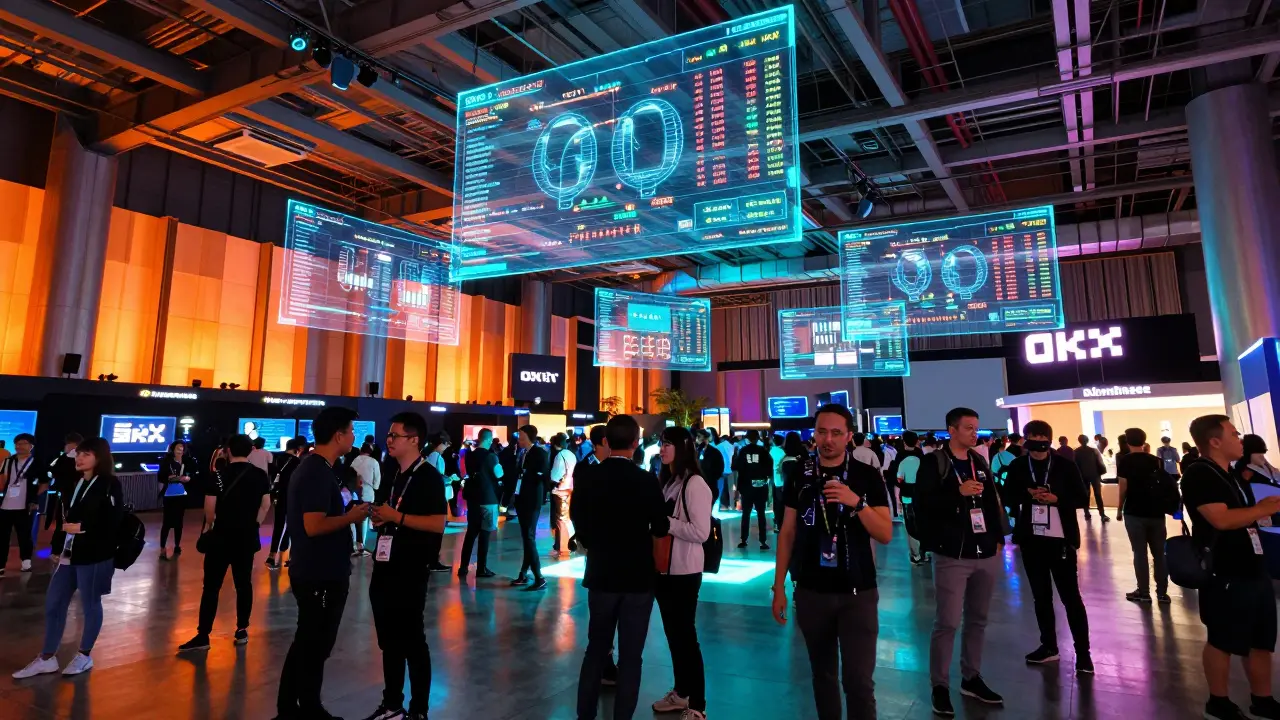
Events matter. TOKEN2049 Singapore is not just a conference; it is the heartbeat of the industry. The 2025 edition, which began on October 1, 2025, sold out completely. It drew 25,000 attendees from over 160 countries, featuring more than 500 exhibitors and 300 speakers across all five floors of Marina Bay Sands.
Look at the sponsors: OKX, BloFin, Coinbase, Bitget, DWF Labs, and TRON. These are the companies shaping the future of exchanges and infrastructure. By hosting this event, Singapore reinforces its network effects. Deals are signed, partnerships are forged, and talent is recruited on the sidelines of these panels. It cements the city-state’s role as the physical center of gravity for the global crypto community.
Challenges and Future Outlook
Is it all smooth sailing? No. The cost of doing business in Singapore is high. Office space, salaries, and compliance costs are among the highest in the world. The strict KYC (Know Your Customer) and AML requirements can slow down product launches compared to more lax jurisdictions. Some startups may find themselves priced out or bogged down by bureaucracy.
However, the trade-off is stability. In a sector prone to sudden bans and regulatory shocks, Singapore offers continuity. As we move deeper into 2026, the focus is shifting from simple trading to complex financial engineering-tokenized funds, fractional ownership of real estate, and cross-border CBDC interoperability. Singapore is building the rails for this next phase.
If you are a developer, a fund manager, or a fintech founder, the question is no longer whether Singapore is a hub. It is whether you can afford not to be there. The window for easy entry has closed, but the door for serious innovation remains wide open.
Why did Singapore ban unlicensed crypto firms in June 2025?
The Monetary Authority of Singapore (MAS) enforced a deadline on June 30, 2025, requiring all virtual asset service providers to hold proper licenses under the Payment Services Act. This move was designed to eliminate illicit activities, ensure consumer protection, and align Singapore with global financial standards. Unlicensed firms were forced to cease operations, leading to a consolidation of the market around compliant entities.
Are crypto gains taxed in Singapore?
Generally, no. Singapore does not impose capital gains tax. Therefore, profits from trading cryptocurrencies, staking rewards, and mining rewards are typically tax-free for individuals and businesses, provided the activity is not conducted as a regular trading business by a licensed entity subject to income tax rules. Always consult a local tax advisor for specific corporate structures.
How does Singapore compare to Dubai as a crypto hub?
Both are top-tier hubs, but they serve different needs. Dubai is known for its aggressive marketing and zero-tax environment, attracting many retail-focused exchanges. Singapore excels in institutional trust, regulatory clarity, and integration with traditional finance (TradFi). Major banks like BlackRock and SWIFT prefer Singapore for its robust legal framework and proximity to Asian markets, making it better for B2B and enterprise blockchain solutions.
What is the significance of the Singapore-China stablecoin corridor?
It is currently the most active route for cross-border stablecoin transactions globally. This corridor facilitates efficient trade settlements between two of the world's largest economies, bypassing traditional banking delays. It demonstrates the practical utility of stablecoins in international commerce and positions Singapore as a critical liquidity bridge in Asia.
When is the next TOKEN2049 Singapore event?
TOKEN2049 Singapore is an annual event held in October. The 2025 edition took place starting October 1, 2025. The 2026 event is expected to follow a similar schedule, typically occurring in late September or early October at Marina Bay Sands, serving as the premier gathering for global crypto leaders.