




Imagine buying Bitcoin in Vietnam and paying a tiny fraction of a percent every time you trade. It sounds manageable until you realize that for high-frequency traders and market makers, this small fee could wipe out their profits entirely. In mid-2026, the Vietnam Ministry of Finance is proposing a 0.1% tax on all digital asset transfers, marking a significant shift in how the country handles cryptocurrency. This isn't just a minor adjustment; it’s part of a broader legal framework that finally brings crypto into the formal tax system.
For millions of Vietnamese investors, this change signals maturity in the local market. For exchanges like Binance, however, it raises serious questions about whether trading will remain viable. The proposal sits at the intersection of government revenue needs and market reality. Let’s break down what this means for you, whether you’re a casual holder or an active trader.
The Legal Foundation: From Gray Area to Regulated Asset
To understand the tax, you first need to understand the law behind it. For years, crypto in Vietnam existed in a regulatory gray zone. That changed with the Digital Technology Industry Law, which was passed by the National Assembly in June 2025 and took effect on January 1, 2026. This legislation provided the first clear legal definitions for "crypto assets" and "virtual assets" in Vietnamese law.
However, not everything digital is included. The law explicitly excludes securities, stablecoins, and central bank digital currencies (CBDCs). This distinction matters because it tells us exactly what falls under the new tax umbrella. If you’re trading Bitcoin, Ethereum, or other tokenized assets that fit the definition of a virtual asset, you are now subject to these rules. The Ministry of Finance has used this legal footing to draft a Personal Income Tax Law amendment that introduces a new category called "other income." This category captures emerging sources in the digital economy, ensuring that no profit goes unnoticed by the state.
How the 0.1% Transaction Tax Works
The headline figure is simple: a 0.1% tax on the value of every digital asset transfer. But the mechanics are where things get interesting. This rate mirrors the existing securities trading tax structure in Vietnam. By treating crypto transactions similarly to traditional stock trades, the government aims to normalize digital assets as legitimate financial instruments rather than speculative gambles.
Here is how the math works for a typical user:
- Casual Trader: You buy $1,000 worth of Bitcoin. You pay $1 in tax. When you sell it later for $1,200, you pay another $1.20 in tax. Total cost: $2.20.
- Active Trader: You trade $100,000 volume in a day. You pay $100 in taxes just on the turnover, regardless of whether you made a profit or loss.
This gross-value-based approach is crucial to understand. Unlike income tax, which is levied on your net profit, this transaction tax is applied to the total volume of your trades. For most retail investors who buy and hold, this is negligible. For those who trade frequently, it adds up quickly. The Vietnam Blockchain Association estimates that this single measure could generate over $800 million annually for the government, based on current trading volumes exceeding $100 billion in market value.
Beyond the Transaction: The Full Tax Picture
The 0.1% fee is just the entry point. The comprehensive tax framework extends to other aspects of crypto ownership and business operations. Here is a breakdown of the key rates you need to know:
| Tax Type | Applicable To | Rate / Details |
|---|---|---|
| Transaction Tax | All digital asset transfers | 0.1% per transaction value |
| Capital Gains Tax | Converting crypto to fiat currency | 20% flat rate |
| Personal Income Tax | Mining, staking, airdrops | Progressive scale: 5% to 35% |
| Corporate Income Tax | Businesses engaged in crypto activities | 20% standard rate |
| Value Added Tax (VAT) | Crypto exchange service fees | 10% |
There is some good news for smaller investors. The framework includes an exemption for the first 10 million Vietnamese dong (approximately $400 USD) in gains per year. This threshold protects casual users from being bogged down by paperwork and minimal tax liabilities. However, once you cross that line, the full progressive scale applies. Non-compliance carries penalties starting at 2 million dong or 2% of unpaid taxes, whichever is higher, establishing a clear enforcement mechanism.
The Liquidity Crisis: Why Exchanges Are Worried
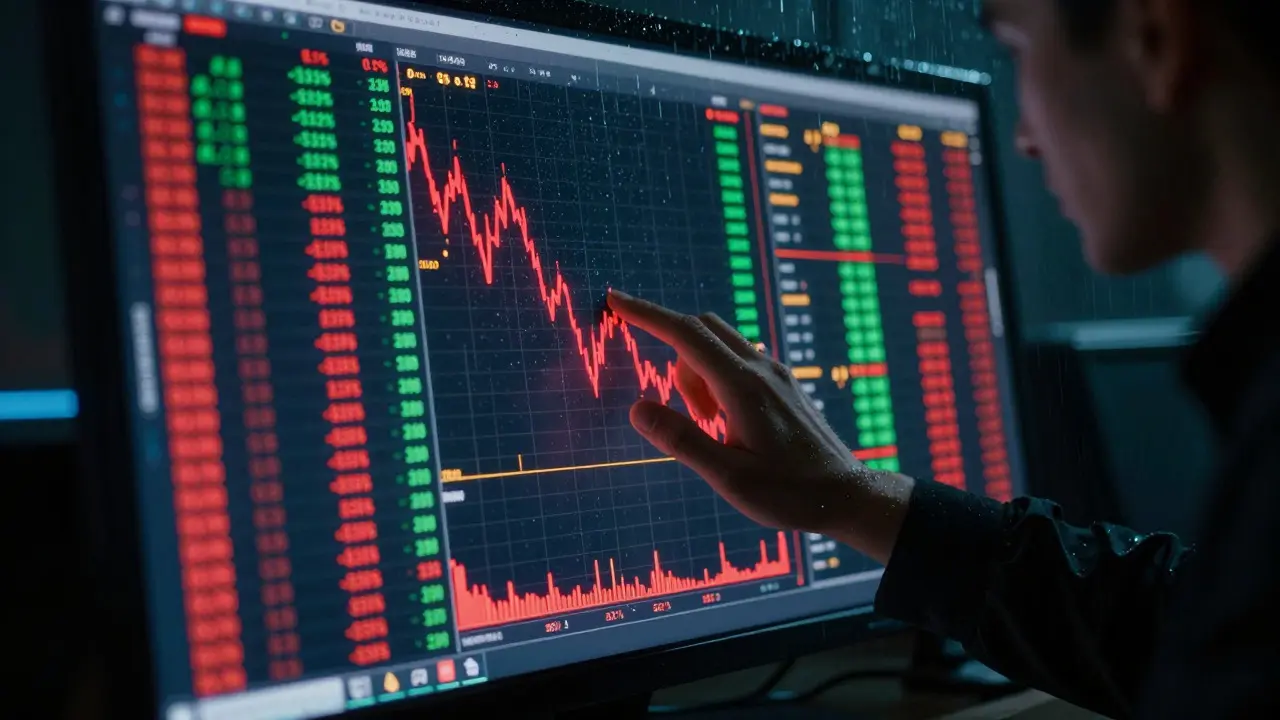
If the tax seems reasonable to a retail investor, why are major exchanges like Binance raising alarms? The issue lies in market-making margins. Professional market makers provide liquidity by placing buy and sell orders close together. Their profit margin per trade is often razor-thin-around 0.01%.
A 0.1% transaction tax is ten times higher than their typical profit margin. As Binance noted in their October 2025 submission to the Ministry of Finance, this makes many market-making strategies economically unsustainable without compensation mechanisms. Without market makers, the order book thins out. Spreads widen. Retail investors end up paying more to execute trades because there is less depth in the market.
Market analysts have seen this pattern before in other jurisdictions. When gross value taxes are introduced, high-frequency trading strategies often retreat. These strategies rely on small margins across large volumes. If the tax eats the margin, the volume disappears. The result is a less liquid, more volatile market where everyday users suffer from worse pricing. The OECD guidelines on digital asset taxation highlight this risk, suggesting that while revenue generation is important, structural disadvantages to liquidity providers can harm the entire ecosystem.
Pilot Programs and Future Incentives
Recognizing these risks, the government hasn’t rushed into a full-scale rollout. Instead, they are implementing a pilot program for cryptocurrency issuance and trading. This allows them to assess the real-world impact of VAT, Corporate Income Tax, and Personal Income Tax on crypto-assets through small-scale, closely monitored trials. This measured approach reflects lessons learned globally, where rapid regulation often led to capital flight.
There are also discussions around incentives to keep the market healthy. Proposals include a 10% corporate income tax incentive for pilot exchanges during their first five years of operation. Additionally, VAT exemptions for digital asset transactions are being considered to promote liquidity. Some suggestions even mention specific rates for NFT profits (5-10%) and withdrawal fees for foreign investors (1-5%). While these details are still under evaluation, they show that the government is aware of the need to balance revenue collection with market development.

Compliance and Reporting Requirements
With great transparency comes greater responsibility. Under the proposed framework, individuals must file annual cryptocurrency earnings reports with the General Department of Taxation by March 31 each year. Businesses face stricter quarterly reporting requirements. This mirrors existing obligations for traditional investments, providing a familiar compliance pathway for both taxpayers and authorities.
The multi-agency approach involves the Ministry of Finance leading policy development while collaborating with the State Security Commission and major exchanges like Bybit. This collaboration emphasizes Anti-Money Laundering (AML) and Counter-Financing of Terrorism (CFT) compliance. The goal is to create a resilient framework that protects investor rights while preventing budget losses. For users, this means keeping detailed records of every transaction, including dates, values, and types of assets involved.
What This Means for Your Strategy
So, what should you do? If you are a long-term holder, the impact is minimal. The 0.1% fee is a cost of doing business, similar to brokerage fees in traditional finance. Focus on your overall portfolio strategy rather than worrying about individual trade costs. Keep your records organized for the annual filing deadline.
If you are an active trader, you need to recalculate your edge. Factor the 0.1% tax into your backtesting models. Strategies that relied on tight spreads may no longer be profitable. Consider reducing frequency or focusing on larger trends where the tax burden is proportionally lower relative to potential gains. Watch for updates on the pilot program, as adjustments to the tax structure or the introduction of liquidity incentives could change the landscape again.
Vietnam’s move to tax crypto is inevitable. The question is not if, but how well the market adapts. By understanding the rules, the risks, and the opportunities, you can navigate this new era with confidence. The days of unregulated wild west trading are over; the age of responsible, taxed digital asset ownership has begun.
When does the 0.1% crypto transaction tax start in Vietnam?
The legal foundation, the Digital Technology Industry Law, took effect on January 1, 2026. However, the specific implementation of the 0.1% transaction tax is part of a pilot program and draft resolutions currently being finalized by the Ministry of Finance. Expect gradual rollout rather than immediate full enforcement to allow for market adjustment.
Is the 0.1% tax applied to profits or total trade value?
It is applied to the total transaction value (gross value), not your net profit. This means you pay 0.1% on every buy and every sell, regardless of whether you made money or lost money on the trade.
Are stablecoins and CBDCs included in this tax?
No. The Digital Technology Industry Law explicitly excludes securities, stablecoins, and central bank digital currencies (CBDCs) from its scope. The tax primarily targets virtual assets like Bitcoin and Ethereum.
What is the tax rate for converting crypto to cash?
Capital gains from converting cryptocurrency to fiat currency face a 20% tax rate. However, there is an exemption for the first 10 million Vietnamese dong in gains per year.
How does this tax affect market makers and liquidity?
The 0.1% tax is significantly higher than typical market-making margins of 0.01%. This can make high-frequency trading strategies unsustainable, potentially reducing market depth and widening spreads for retail investors. Exchanges like Binance have raised concerns about this impact on liquidity.
When do I need to file my crypto tax report?
Individuals must file annual cryptocurrency earnings reports with the General Department of Taxation by March 31 of each year. Businesses are required to file quarterly reports.

Comments
23 Comments
Phelan Deihl
I honestly think this is just the beginning of a much larger trend where governments everywhere start squeezing crypto. It feels like they are watching us closely now.
Ami Elizabeth
its gonna be a mess lol. who even reads these tax laws properly before trading
michelle aguilar
Oh, please. As if anyone actually pays attention to these nuances! The masses are too busy chasing the next moonshot to care about a mere 0.1% transaction fee; it is utterly trivial for the average retail investor who lacks any real financial acumen anyway. They will simply absorb the cost without a second thought because ignorance is bliss, and that is precisely what the authorities count on when designing such bureaucratic hurdles. It is quite amusing to watch them panic over spreads while ignoring the broader macroeconomic shifts happening right under their noses.
Lance Konig
The mathematical reality here is undeniable. If your margin is 0.01% and the tax is 0.1%, you are operating at a tenfold deficit before you even factor in exchange fees or slippage. This is not a policy adjustment; it is an execution order for high-frequency trading strategies in Vietnam. Market makers will flee immediately, causing liquidity to evaporate and spreads to widen into oblivion. Retail traders will then complain about volatility, completely unaware that they are suffering from the absence of the very participants who kept prices stable. It is a classic case of shooting the messenger while blaming the silence that follows.
Walker Perry
this is exactly how they control you first they tax the transactions then they track every move you make through the exchanges its all part of the globalist agenda to strip away privacy and force everyone onto their digital leash we need to go off grid completely before its too late
manish jha
You people lack discipline. Real wealth is built through patience and ethical accumulation, not by trying to game a system with micro-trades. This tax is merely a filter to separate the serious investors from the gamblers. Embrace the regulation as a tool for spiritual and financial purification rather than complaining about lost cents.
Sarah Hafner
I totally get why people are stressed about this but remember that compliance is key now :) Make sure you keep those records organized so you dont have a headache come March 31rd!
Susan Kiley
It is absolutely fascinating how the 'common man' suddenly finds time to critique fiscal policy when it affects their speculative hobbies! One would assume that individuals capable of navigating the volatile crypto markets would possess the intellectual capacity to understand basic taxation structures without needing hand-holding. The drama surrounding a fractional percent is truly indicative of the fragility of modern retail psychology. Let us see how long this outrage lasts once the pilot program reveals actual revenue figures for the state.
Gary Straiton
America should look at this and laugh while we keep our freedom to trade without government interference. But no, we let them regulate everything until there is nothing left. This is what happens when you surrender sovereignty. Vietnam is setting a trap for its own citizens, and the rest of the world should take note before they follow suit.
alex fordy
It makes me wonder if the true value of money lies in its freedom 🤔 Perhaps this tax is a test of our commitment to decentralization. We must adapt our strategies to align with the new reality rather than fighting it.
Nia Franklin
oh my gosh!! i cant believe they are really doing this!!! its like the wild west is closing down forever 😱 hope everyone stays safe out there in the new regulated era!!!
Mohamed Shoaeb
i think its good for stability though less chaos means better long term growth for the market overall
Sonia Gomez Gomez
Why do you guys care so much about pennies? Its your fault for trading so much. Just hold your coins and stop being greedy. You deserve to pay up for your little hobby :)
SHIV SHANKAR KANTA
the soul of commerce is dying under the weight of bureaucracy they seek to crush the spirit of innovation with their heavy hands and cold numbers there is no justice only extraction
Daniel Brown
Have you considered that the exemption for the first 10 million dong might actually protect most small investors? It seems like a reasonable compromise between revenue generation and individual burden.
Marco Maldonado
us of course does it better but hey lets see if vietnam can handle their own mess. prob gonna fail hard like always with these new tech regulations
Darren Moon
The semantic drift in the public discourse regarding this legislative measure is palpable. To characterize a gross-value levy as merely a 'fee' is a gross oversimplification that ignores the structural implications for market depth. The arbitrage opportunities will vanish, leading to a stagnation of price discovery mechanisms. It is a textbook example of regulatory capture masquerading as fiscal responsibility.
Quang Thai Tran
This is clearly a precursor to total surveillance capitalism. By forcing all transactions through taxed channels, the state creates a perfect ledger of every citizen's financial movements. The pilot program is merely a beta test for social credit integration. Beware the digital shackle.
Dianne Ritter
I guess we just have to wait and see how it plays out. Maybe it will encourage more responsible trading habits.
Stephanie Millar
As someone who loves culture and travel, I find it interesting how different countries approach finance! Vietnam is taking a bold step, and perhaps other nations will follow suit eventually.
Nikki keller
It is important to consider both sides of the argument. While liquidity may suffer initially, the long-term legitimacy of crypto assets could increase significantly with clear legal definitions.
miranda gamboa
Let's optimize our portfolios! We need to adjust our alpha generation models to account for this new friction cost. High-frequency strategies are dead; long live swing trading!
Kiran Jayaram
you idiots dont see the bigger picture the tax is just a distraction while they manipulate the underlying asset prices to dump on you retails
Write a comment