


You’ve likely heard of Dogecoin. It’s the original meme coin that put cryptocurrencies on the map for retail investors. But have you heard of Doge on Pulsechain? It sounds similar, but it is a completely different asset with very different risks and mechanics. If you are looking at this token because you see a ticker symbol like "DOGE" and assume it behaves like the famous Dogecoin created by Billy Markus and Jackson Palmer, you need to pause. This guide breaks down exactly what this token is, why it exists on the PulseChain network, and whether it belongs in your portfolio.
Understanding the Core Identity: Not Your Average Dogecoin
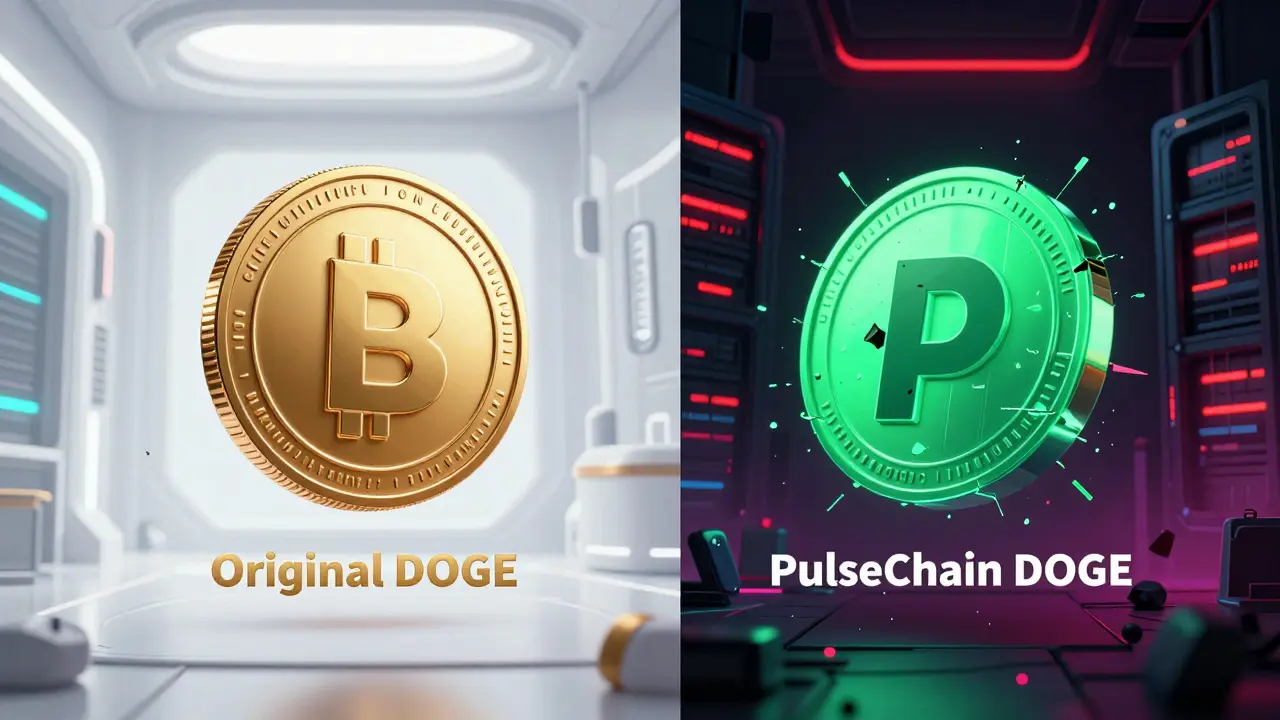
Let’s clear up the biggest confusion right away. The original Dogecoin runs on its own blockchain. It has been around since 2013 and has a massive market cap, often exceeding $10 billion. Doge on Pulsechain, however, is a distinct token running on the PulseChain blockchain.
PulseChain launched as an Ethereum fork designed to offer lower transaction fees and faster processing times. When new chains launch, they often bring over popular tokens from their parent chain or create new versions of them. Doge on Pulsechain is one such derivative. It uses the DOGE ticker, which can be misleading, but it is not the same asset you would find on Coinbase or Binance under the main Dogecoin listing.
Think of it this way: Original Dogecoin is like the brand-name soda. Doge on Pulsechain is like a generic store-brand soda sold only in a specific regional convenience store. They might taste similar and look alike on the shelf, but they are produced by different companies, have different ingredients, and carry different price tags.
| Feature | Original Dogecoin (DOGE) | Doge on Pulsechain (DOGE) |
|---|---|---|
| Blockchain Network | Dogecoin Blockchain (Scrypt) | PulseChain (Ethereum Fork) |
| Total Supply | Inflationary (~143 Billion+) | Fixed at 100 Trillion |
| Market Cap | Billions of USD | Sub-million USD (Micro-cap) |
| Liquidity | High (Major Exchanges) | Low (Decentralized Exchanges Only) |
| Risk Level | High (for crypto) | Extreme (Speculative Meme) |
The Numbers Behind the Token: Supply and Scarcity
When evaluating any cryptocurrency, supply mechanics matter. For Doge on Pulsechain, the numbers are staggering. The total supply is set at 100,000,000,000,000 tokens-that is 100 trillion tokens. To put that in perspective, Bitcoin has a max supply of 21 million. Even original Dogecoin, known for its high supply, has nowhere near this volume.
Here is where it gets tricky. Data from early 2025 showed reports of zero tokens in active circulation. This doesn’t necessarily mean the token doesn’t exist; it often indicates issues with data tracking on monitoring platforms, locked liquidity pools, or tokens held in private wallets that haven't interacted with public exchanges yet. However, trading does occur. You will find activity on decentralized exchanges within the PulseChain ecosystem, such as those tracked by Liquidity Finder.
The price reflects this massive supply. We are talking about microscopic valuations, often ranging between $0.00000001 and $0.000000003 per token. Because the price is so low, small changes in decimal places can look like massive percentage gains on paper. A jump from 0.00000001 to 0.00000002 looks like a 100% gain, but if you only invested $10, you’re now sitting on $20. It feels exciting until you try to sell and realize there isn’t enough demand to cash out without crashing the price.
Trading Realities: Liquidity and Volatility
If you decide to trade Doge on Pulsechain, you aren’t walking into a liquid market like you would with Ethereum or Solana. You are entering a micro-cap environment where liquidity is thin. Trading volumes fluctuate wildly. On some days, you might see $5,000 in volume; on others, it might drop to near zero.
This lack of liquidity creates two major problems for traders:
- Slippage: When you try to buy or sell a large amount, your order might not fill at the expected price. Because there are few buyers and sellers, your single trade can move the market significantly against you.
- Price Instability: With low volume, a single whale (a holder with a large amount) selling their stash can crash the price by 50% or more in minutes. Conversely, a small buy-in can spike the price artificially.
Data shows 24-hour price changes ranging from -28% to +4%, but these swings happen rapidly and unpredictably. Unlike established coins that react to broader economic news or regulatory updates, Doge on Pulsechain moves based on niche community sentiment, social media buzz, or simply random speculation. There is no institutional backing here. No major banks or hedge funds are holding this token. It is purely a retail-driven speculative asset.
How to Actually Buy and Store DOGE on Pulsechain
You cannot buy Doge on Pulsechain on standard centralized exchanges like Coinbase, Kraken, or Binance. It is not listed there. To get your hands on this token, you need to navigate the decentralized finance (DeFi) world on the PulseChain network. Here is the step-by-step process:
- Set Up a Compatible Wallet: You need a wallet that supports PulseChain. MetaMask is the most common choice. You must configure MetaMask to add the PulseChain network manually. This involves adding the correct RPC URL, Chain ID, and currency symbol (PLS) to your network settings.
- Acquire PLS Tokens: To pay for gas fees (transaction costs) on PulseChain, you need PLS tokens. You will need to bridge PLS from another chain (like Ethereum) or buy it on a supported exchange and transfer it to your MetaMask wallet connected to PulseChain.
- Connect to a Decentralized Exchange (DEX): Navigate to a PulseChain-based DEX. Platforms like PulseX or other aggregators listed on Liquidity Finder are typical venues. Connect your MetaMask wallet to the site.
- Swap PLS for DOGE: Find the DOGE token contract address. Be extremely careful here. There may be fake tokens with similar names. Always verify the contract address through official community channels like the project’s Linktree or verified Twitter account (@DOGE_on_Pulse).
- Execute the Swap: Enter the amount of PLS you want to swap. Set your slippage tolerance higher than usual (often 5-10%) due to volatility, but be aware this increases the risk of getting a bad price. Confirm the transaction.
Once bought, the tokens sit in your wallet. Remember, keeping them in a hot wallet (connected to the internet) carries security risks. For long-term holding, consider hardware wallets that support custom networks, though support for newer chains like PulseChain can be limited.

The Risks: Why Most Experts Stay Away
Let’s be direct. Doge on Pulsechain is a high-risk, speculative asset. It falls into the category of "meme coins" that rely entirely on community hype rather than utility. Unlike utility tokens that power applications or governance tokens that give voting rights, this token’s value is derived solely from people believing others will buy it later.
Consider these red flags:
- No Fundamental Utility: The token doesn’t provide access to a service, yield farming rewards, or governance features that generate revenue.
- Regulatory Uncertainty: As governments tighten rules on cryptocurrencies, assets with no clear utility are often the first to face scrutiny or bans.
- Smart Contract Risk: While PulseChain is a fork of Ethereum, individual token contracts can have bugs or vulnerabilities. If the contract has a flaw, the token could become worthless or hackable.
- Developer Abandonment: Many meme projects lose momentum quickly. If the developers stop promoting the token or leave the project, the community often collapses, taking the price with it.
Financial advisors generally recommend treating money spent on such tokens as entertainment expenses-money you are fully prepared to lose. Do not invest rent money, emergency funds, or savings intended for education. If you can afford to lose 100% of your investment, then perhaps a small speculative bet fits your strategy. If not, stick to established assets.
Community and Future Outlook
The future of Doge on Pulsechain depends heavily on the broader PulseChain ecosystem. If PulseChain grows significantly, attracting developers and users, tokens on the network may benefit from increased attention. However, history shows that out of thousands of meme coins launched, only a tiny fraction survive long-term.
Community engagement is currently minimal compared to giants like Shiba Inu or PEPE. Social media accounts show basic activity, but not the viral momentum needed to sustain price growth. Without a strong roadmap, regular development updates, or celebrity endorsements, the token relies on organic grassroots support, which is fragile.
For now, Doge on Pulsechain remains a niche curiosity. It serves as a lesson in the diversity of the crypto space: just because something has a familiar name doesn’t mean it shares the same safety profile. Always do your own research (DYOR), verify contract addresses, and understand the liquidity landscape before clicking "swap."
Is Doge on Pulsechain the same as original Dogecoin?
No, they are completely different assets. Original Dogecoin runs on its own blockchain and has a multi-billion dollar market cap. Doge on Pulsechain is a separate token running on the PulseChain network with a much smaller market cap, different supply mechanics, and higher risk. They are not interchangeable.
Where can I buy DOGE on Pulsechain?
You cannot buy it on major centralized exchanges like Coinbase or Binance. You must use a decentralized exchange (DEX) on the PulseChain network. This requires setting up a wallet like MetaMask, adding the PulseChain network, acquiring PLS tokens for gas fees, and swapping for DOGE using a verified contract address.
What is the total supply of Doge on Pulsechain?
The total supply is fixed at 100 trillion (100,000,000,000,000) tokens. This massive supply contributes to the token's extremely low per-unit price, often fractions of a cent.
Why is the price of DOGE on Pulsechain so volatile?
Volatility stems from low liquidity and low trading volume. With fewer buyers and sellers, even small trades can cause significant price swings. Additionally, as a meme coin with no fundamental utility, its price is driven primarily by speculation and community sentiment rather than underlying value.
Is it safe to invest in Doge on Pulsechain?
It is considered highly risky. Like many micro-cap meme tokens, it carries the risk of total loss. There is no guarantee of price appreciation, and liquidity issues may prevent you from selling your tokens. Only invest money you can afford to lose entirely.
Do I need PLS tokens to trade DOGE on Pulsechain?
Yes. PLS is the native gas token of the PulseChain network. You need PLS in your wallet to pay for transaction fees when buying, selling, or transferring DOGE tokens on the network.
Comments
23 Comments
Matthew Malone
another american dream crushed by foreign tech bro scams. pulsechain is just a way for russians and chinese devs to rug pull us again while we sit here debating decimals. keep your money in the bank where it belongs.
Lee Paige
the whole pulsechain ecosystem is a honeypot designed to track wallet movements for the deep state. they want you to connect metamask so they can map your identity to your holdings. do not fall for this surveillance capitalism trap.
Karthikeyan S
honestly looking at these charts its obvious manipulation 📉📈. the liquidity is so thin one whale can dump and run leaving everyone else holding the bag. typical indian dev behavior sorry couldnt resist that stereotype but seriously avoid this garbage token
Greg Lewis
why are people still falling for meme coins when real value comes from tangible assets? i mean sure if you have extra cash burn it on digital confetti but dont act like its investing. its gambling with worse odds than vegas because the house literally owns the code.
Dr Lynea LaVoy
i appreciate the detailed breakdown of the supply mechanics. many people confuse ticker symbols across chains without realizing the fundamental differences in smart contract architecture. always verify the contract address before swapping as fake tokens are rampant on new networks like pulsechain.
verna kennedy
it is absolutely ridiculous that anyone thinks this has any long term viability. the article clearly states zero utility and extreme risk yet people still buy in hoping for a miracle. education is failing us if we cant distinguish between a currency and a joke token.
Kelly Tenney
thank you for sharing this guide. it helps to understand the technical steps involved in setting up metamask for pulsechain. however i would advise caution as the slippage tolerance required indicates severe market inefficiency which often leads to significant losses for retail traders.
Caralee Robertson
im kinda scared to try this stuff tbh. the idea of bridging tokens and dealing with gas fees on a forked chain seems super complicated and risky. maybe ill stick to regular doge even tho its also volatile at least i know how to buy it on coinbase without hacking my own computer
aaliyah zahid
sarcasm aside this is actually a pretty good warning label for noobs. most people see 'doge' and think moon mission without reading the fine print about being on a different blockchain entirely. glad someone is trying to educate rather than just shilling.
dan kaffeman
only losers play these micro cap games. real investors look at fundamentals revenue growth and user adoption none of which exist here. this is pure speculation driven by degenerates who lost everything in eth l2s and are now chasing ghosts on pulsechain.
Meg Gran
so basically its a scam right? lol. why would anyone put money into something with 100 trillion supply and no utility unless they wanted to lose it fast. the philosophy of crypto should be decentralization not creating more ways to get rugged by anonymous devs.
Alexander DeVries
stay strong out there folks. remember that every dip is an opportunity if you believe in the project but in this case the project is literally nothing so maybe stay away. focus on building skills that generate income instead of betting on decimal points moving left or right.
Steven Jacobowitz
the jargon here is overwhelming for beginners. terms like rpc url chain id and slippage tolerance sound scary but really its just standard defi procedure. however the risk assessment is accurate this token lacks any intrinsic value proposition beyond speculative hype cycles.
Sylvia Mossman
everyone says avoid high risk assets but thats exactly where the alpha is. if you wait for safe investments youll never make life changing money. pulsechain might be messy but early adopters always win eventually so im buying the dip regardless of what experts say.
Alexis Abster
oh my god yes! finally someone explains the difference properly! i was so confused why my portfolio looked weird after the bridge event. this clarity brings such joy to my day knowing i didnt accidentally swap my life savings into a void thank you so much for writing this!
Brad Ranks
absolute drama queen energy in this thread. people acting like losing $10 on a meme coin is the end of the world. live a little take some risks. if you cant handle volatility you should probably just save bonds and die poor.
Caitlin Donahue
hey thanks for the info. i tried to follow the steps but got stuck on adding the network manually. is there a simpler way or do i really need to copy paste all those hex codes? feels like too much effort for a token that might go to zero tomorrow anyway.
Dinesh Pattigilli
typical western ignorance regarding blockchain technology. pulsechain offers superior scalability solutions compared to ethereum mainnet. you elitists dismiss innovation because you cannot comprehend advanced consensus mechanisms. educate yourselves before spewing nonsense about rugs and scams.
Madhu Menon
in the grand scheme of existence does a token name matter? perhaps we are all just memes in the simulation. :D but practically speaking yes verify contracts. wisdom lies in knowing when to engage and when to observe the chaos unfold around us.
Narendra Kulkarni
good article mate. simple and clear instructions. i respect that u warned ppl about the risks. always do ur own research as they say. hope pulsechain does well but yeah definitely sounds sketchy for big amounts of money.
JEVON HALL
here is a pro tip use a hardware wallet if possible even though support is limited check if ledger added pulsechain recently. also double check the contract address three times i made that mistake once cost me $500 lesson learned 😅
Yogendra Dwivedi
this raises interesting questions about brand dilution in decentralized finance. how do we protect intellectual property when forks can replicate tickers effortlessly? perhaps regulatory frameworks need to evolve to address these naming conflicts and prevent consumer confusion.
Erik Kirana
please stop pretending this is sophisticated finance. it is childish behavior masked as investment strategy. the lack of punctuation in your comments mirrors the lack of structure in this tokenomics model. grow up and invest in index funds instead of playing with fire 🔥📉
Write a comment