
Have you seen the ticker FROGE popping up on your social media feed or a chat group? It’s an Ethereum-based token that rides the wave of internet culture and speculative trading. But here is the hard truth: unlike Bitcoin or even established altcoins like Solana, there is no massive institutional research report on this specific coin. It falls into the category of high-risk, community-driven assets.
If you are looking for a quick explanation of what Froge (ETH) actually is, how it works on the blockchain, and whether it is safe to touch, you are in the right place. We will cut through the hype and look at the mechanics, the risks, and what you need to verify before sending any money.
Quick Summary: Key Takeaways
- Froge (ETH) is a speculative asset built on the Ethereum blockchain, often categorized as a meme coin or community token.
- There is significant confusion with other projects named "Forge" (like $FORGE by Blocksmith Labs). Always verify the exact contract address.
- These tokens rely heavily on community sentiment and viral trends rather than underlying utility or revenue generation.
- High volatility means prices can swing 50% or more in a single day based on social media activity.
- Safety checks involve verifying liquidity locks, renounced contracts, and team transparency on platforms like Etherscan.
What Exactly Is Froge (ETH)?
To understand Froge is a cryptocurrency token operating on the Ethereum network, typically designed for trading, speculation, or community engagement rather than industrial use cases., we first have to separate it from the noise. In the crypto world, names get reused constantly. You might hear about "Forge" protocols used for decentralized finance (DeFi) or real-world asset trading. Those are different things entirely.
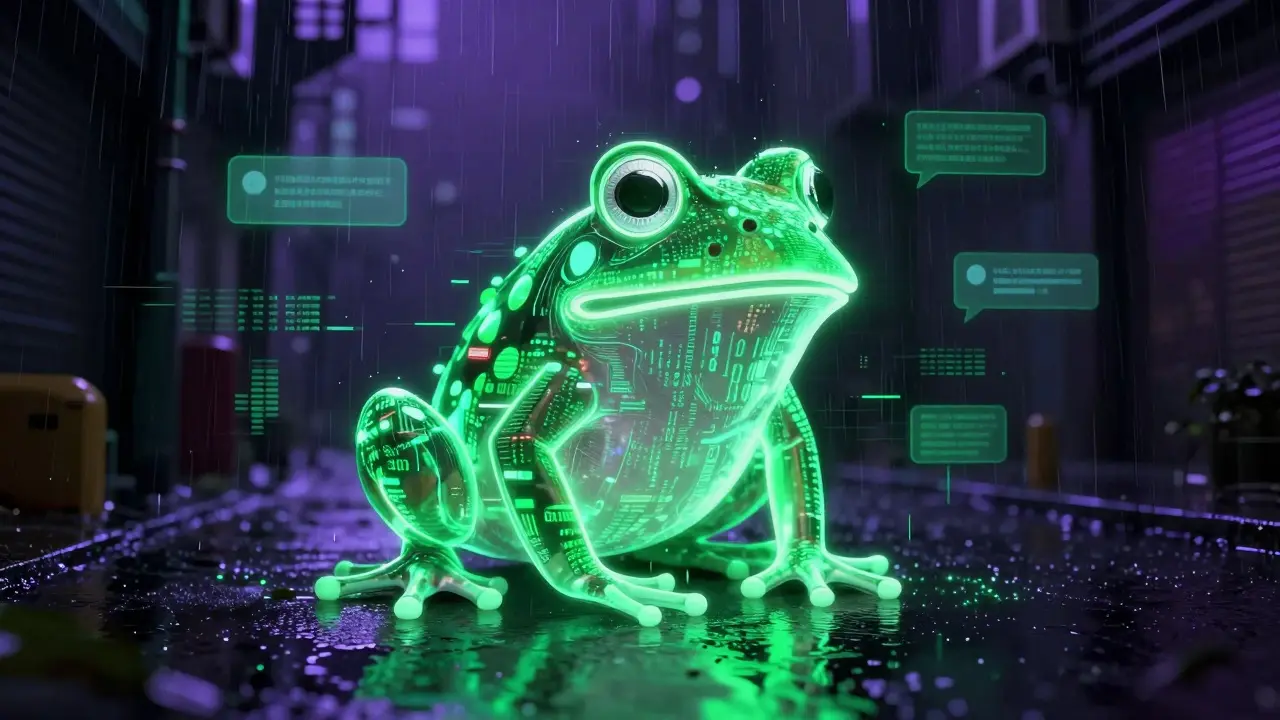
Froge (FROGE) usually refers to a token created by anonymous developers or a loose community group. These projects start with a simple idea: create a symbol (in this case, a frog) that people find funny, cute, or culturally relevant. The value comes purely from other people believing it has value. This is known as a "meme coin" dynamic.
Because it lives on Ethereum, it follows the ERC-20 standard. This means it behaves like other tokens such as Shiba Inu (SHIB) or Pepe (PEPE). It doesn’t have its own blockchain; it piggybacks on Ethereum’s security and infrastructure. When you buy FROGE, you are essentially buying a digital IOU that says, "I hold X amount of this specific code string on the Ethereum ledger."
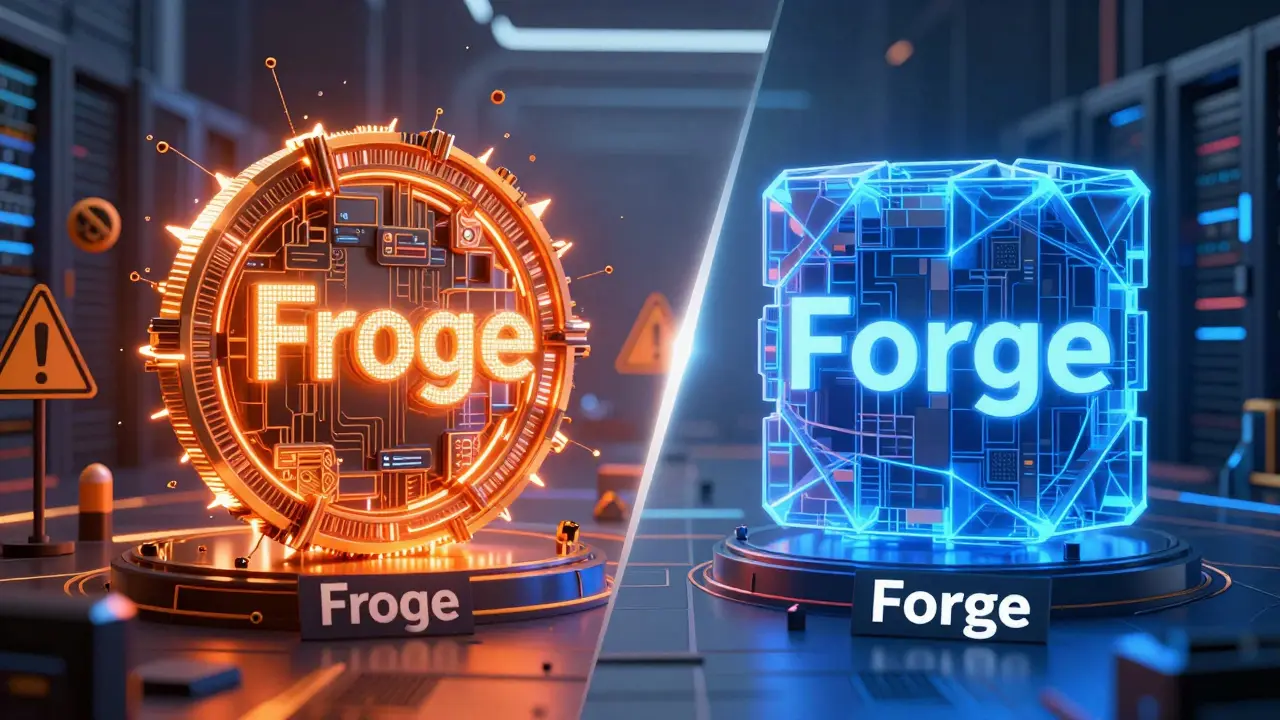
The Critical Difference: Froge vs. Forge
This is where most new investors lose money. One typo changes everything. Let’s break down the difference between the speculative token you are asking about and legitimate DeFi projects.
| Feature | Froge (ETH / FROGE) | Forge ($FORGE / Protocol) |
|---|---|---|
| Purpose | Speculation, Community, Meme Culture | Utility, Staking, Real-World Assets |
| Backing | Community Sentiment & Virality | Revenue, Partnerships, Code Utility |
| Risk Level | Extreme (Can go to zero) | Medium-High (Market dependent) |
| Team | Often Anonymous | Public Companies (e.g., Blocksmith Labs) |
| Blockchain | Ethereum (ERC-20) | Varies (Ethereum, Solana, etc.) |
If you see a project called "Forge Global" or "$FORGE," that is likely a structured financial product or a DeFi protocol. If you see "Froge" with the extra 'e' and a cartoonish logo, you are looking at a meme coin. Never mix them up. Check the ticker symbol and the contract address every single time.
How Does FROGE Work Technically?
Under the hood, FROGE is just smart contract code. Here is what happens when you interact with it:
- Minting: The creator writes code that creates a total supply of tokens (e.g., 1 trillion). They send these to a liquidity pool on a decentralized exchange (DEX) like Uniswap.
- Liquidity Pool: To allow trading, the creator pairs FROGE with Ether (ETH). For example, they might put 1 million FROGE and 10 ETH into a pool. This sets the initial price.
- Trading: When you buy FROGE using MetaMask or Trust Wallet, you are swapping your ETH for FROGE directly from that pool. No central bank or company approves the transaction; the code does it automatically.
- Price Discovery: The price moves based on supply and demand. If everyone buys, the ratio shifts, and the price goes up. If everyone sells, the price crashes.
Unlike stocks, there are no earnings reports. Unlike Bitcoin, there is no scarcity mechanism like halving (unless specifically coded). The only driver is human behavior.
Is Froge (ETH) Safe? The Risk Checklist
You need to be skeptical. Not because I say so, but because the data shows that over 90% of new meme coins fail within their first year. Here is how you vet FROGE yourself before investing.
1. Check the Contract Address
Never trust a link sent via DM. Go to a data aggregator like CoinGecko or CoinMarketCap and search for "FROGE." Copy the contract address from there. Then, paste that address into Etherscan is the block explorer for the Ethereum network, allowing users to view transaction history, contract code, and holder distribution.. If the website looks fake or the address doesn't match, it is a scam.
2. Analyze Holder Distribution
On Etherscan, look at the "Holders" tab. Do one or two wallets hold 40% of the supply? That is a red flag. It means the developer could dump all their tokens at once, crashing the price to zero. A healthy distribution has thousands of holders with small amounts.
3. Verify Liquidity Locks
Liquidity is the fuel for trading. If the developer removes the liquidity, the token becomes worthless instantly. Look for a "Liquidity Locked" badge or a link to a locker service like Unicrypt or Team Finance. If the liquidity is not locked for at least 6-12 months, consider it extremely risky.
4. Review the Smart Contract
Does the contract have hidden functions? Tools like Token Sniffer is an automated tool that analyzes smart contracts for potential vulnerabilities, honeypots, and malicious code. or GoPlus Security can scan the code. They will tell you if the developer can pause trading, blacklist your wallet, or mint infinite new tokens. If any of these are true, do not buy.

Market Dynamics: Why Do People Buy It?
If there is no utility, why does anyone care? The answer lies in psychology and community. Projects like FROGE thrive on:
- Narrative: Is there a trend? Maybe frogs are popular in gaming or anime right now. The token taps into that cultural moment.
- Community: Active Telegram and Discord groups create a sense of belonging. Members promote the coin to each other, creating artificial demand.
- Gambler’s Mentality: Many buyers know it is risky but hope for a 10x or 100x return. It is treated like a lottery ticket, not an investment.
This creates a cycle. Early buyers sell to latecomers. Latecomers sell to even later entrants. Eventually, the music stops, and the price collapses. Understanding this cycle is crucial for survival.
How to Buy FROGE Safely (If You Choose To)
If you have done your due diligence and decided to proceed, here is the step-by-step process:
- Set Up a Wallet: Download MetaMask or Trust Wallet. Secure your seed phrase offline. Never share it.
- Buy ETH: Purchase Ethereum on a centralized exchange like Coinbase or Binance. Withdraw it to your personal wallet.
- Add the Token: In your wallet, add the FROGE token using the verified contract address. This allows you to see your balance.
- Use a DEX: Connect your wallet to Uniswap or SushiSwap. Select ETH as input and FROGE as output.
- Adjust Slippage: Meme coins often have high volatility. You may need to set slippage tolerance to 5% or higher to ensure the trade goes through.
- Confirm Transaction: Review the gas fees (network costs) and confirm. Wait for the transaction to be mined on the blockchain.
Remember, you are responsible for the funds once they leave the centralized exchange. There is no customer support to call if you make a mistake.
Future Outlook: What Could Happen?
Predicting the future of a meme coin is nearly impossible. However, we can look at scenarios:
- Bull Case: The community grows massively, influencers post about it, and it gets listed on major exchanges like Binance or Kraken. This brings legitimacy and huge price spikes.
- Bear Case: Interest fades, the team abandons the project, or a regulatory crackdown hits meme coins. The price slowly bleeds out to near zero.
- Scam Case: The developer executes a "rug pull," stealing the liquidity. This happens frequently in unverified projects.
Given the current market environment in 2026, regulators are watching closely. Tokens with no clear utility face higher scrutiny. Always assume the worst-case scenario is possible.
Is Froge (FROGE) a scam?
It depends on the specific contract. Many tokens with similar names are scams. To determine if the official FROGE is a scam, check if the liquidity is locked, if the contract is renounced, and if the team is transparent. If these elements are missing, treat it as high-risk or potentially fraudulent.
Where can I buy FROGE token?
FROGE is typically traded on decentralized exchanges (DEXs) like Uniswap. You cannot usually buy it directly on centralized exchanges like Coinbase unless it has been recently listed. You will need an Ethereum wallet and ETH to perform the swap.
What is the difference between FROGE and FORGE?
FROGE is generally a meme coin focused on speculation. FORGE (or $FORGE) often refers to utility tokens or DeFi protocols with actual business models. They are completely different assets with different risk profiles. Always check the spelling and contract address.
Is it safe to invest in meme coins like FROGE?
No, it is not considered safe investing. Meme coins are highly volatile and speculative. You should only invest money you are willing to lose entirely. They lack fundamental value drivers like revenue or user base growth.
How do I check the FROGE contract address?
Go to a reputable data aggregator like CoinGecko or CoinMarketCap, search for FROGE, and copy the contract address listed under the details section. Paste this address into Etherscan to verify transactions and holder information.