

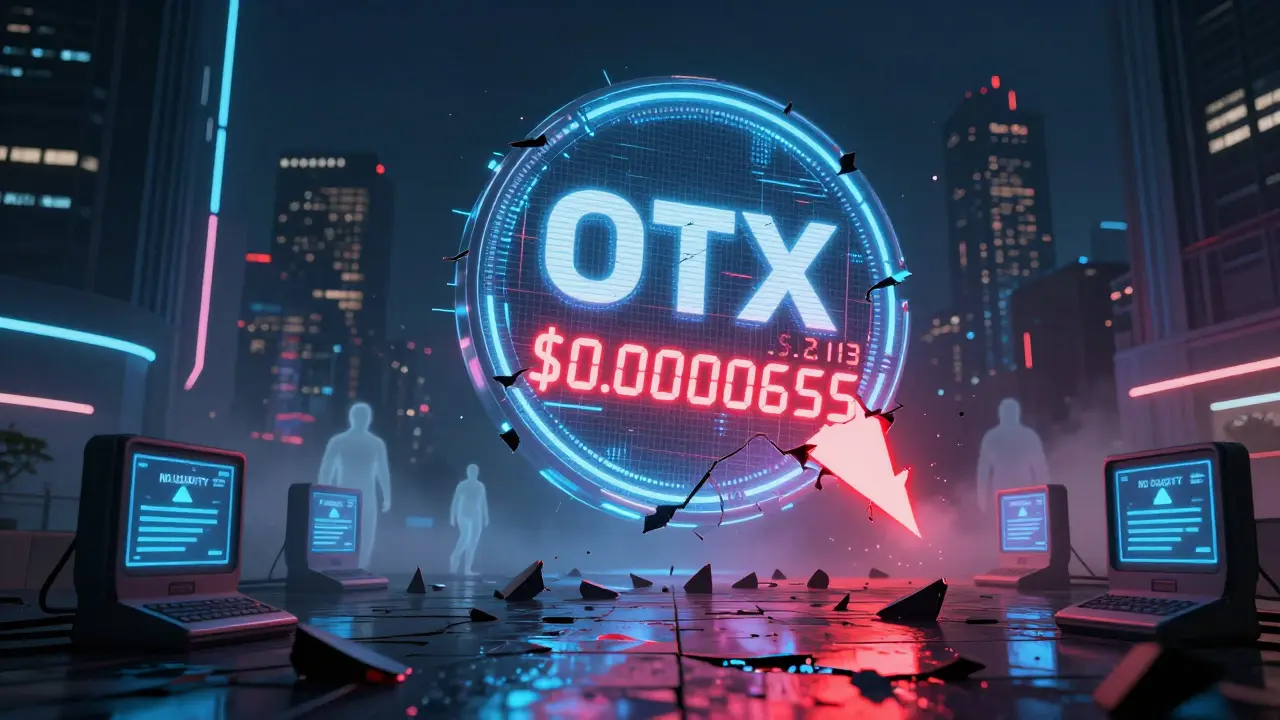
The OTX crypto coin was never meant to be just another altcoin. It was pitched as a revolutionary layer 1 infrastructure for crypto trading - a platform built to fix slow settlement times on Ethereum and reward users for participating. But today, its story looks very different. As of March 2, 2026, the OTX token trades at $0.0000655, down over 99% from its all-time high of $2.13. And worse - it’s no longer listed on any major exchange. Trading has stopped. The market has moved on.
What OTX was supposed to be
Open Trade Exchange (OTX) launched on August 23, 2023, with a bold claim: it would be the world’s first open trade exchange in crypto. Unlike traditional exchanges that act as middlemen, OTX said it would let users trade directly through a decentralized settlement layer built on Ethereum. The idea was simple - faster trades, lower fees, and rewards for users who held and staked OTX tokens. The token itself is an ERC-20 asset with a fixed supply of 550 million. That’s not unusual. What stood out was the incentive structure. Users could earn commissions by referring others to the platform. Staking OTX was supposed to unlock daily rewards. Airdrops were promised to early adopters. The team, based in the UK, promised 24/7 customer support, educational content, and even job openings for blockchain developers. Their website, otx.exchange, looked professional. It had sections for trading, community forums, career pages, and legal documents. For a while, it felt real. People bought in. The price climbed.The rise - and the crash
OTX hit its peak on April 12, 2024. At $2.13, it was up over 3,000% from its initial listing price. Trading volume spiked. Social media buzzed. Crypto influencers posted about it. Some users even claimed they made life-changing gains. But behind the scenes, things were unraveling. By late 2024, trading volume began to drop. Exchanges started delisting OTX. One by one, the platforms that once listed it pulled the plug. By January 2025, only one small exchange still traded it. Then, on February 17, 2026, even that one stopped. CoinGecko now shows zero active trading pairs. The last recorded price is just a snapshot - not a real market value. The all-time low came on April 7, 2025, when OTX hit $0.00006562. Today, it’s at $0.0000655 - barely above that low. That’s a 99.99% drop from its peak. Even if you bought at the top, you’d need the price to rise over 32,000% just to break even.Why did OTX fail?
There’s no single answer, but the clues are clear. First, the technology never delivered. OTX claimed to be a layer 1 solution for Ethereum, but no technical whitepaper, code repository, or performance benchmarks were ever made public. No GitHub. No audits. No proof that it actually improved transaction speed or reduced fees. Without transparency, trust vanished. Second, the business model relied too heavily on user referrals and staking rewards. That’s a red flag. When a project pays users more for bringing in new people than for actual product use, it often looks like a pyramid. And when the flow of new users slowed, the rewards dried up. Third, the team disappeared. No major updates since mid-2024. No announcements about product milestones. No responses to community questions. The contact emails ([email protected], [email protected]) still exist - but no replies have been sent in months. Compare that to real projects like Uniswap or Aave. They release monthly dev updates, publish audit reports, and open-source their code. OTX did none of that.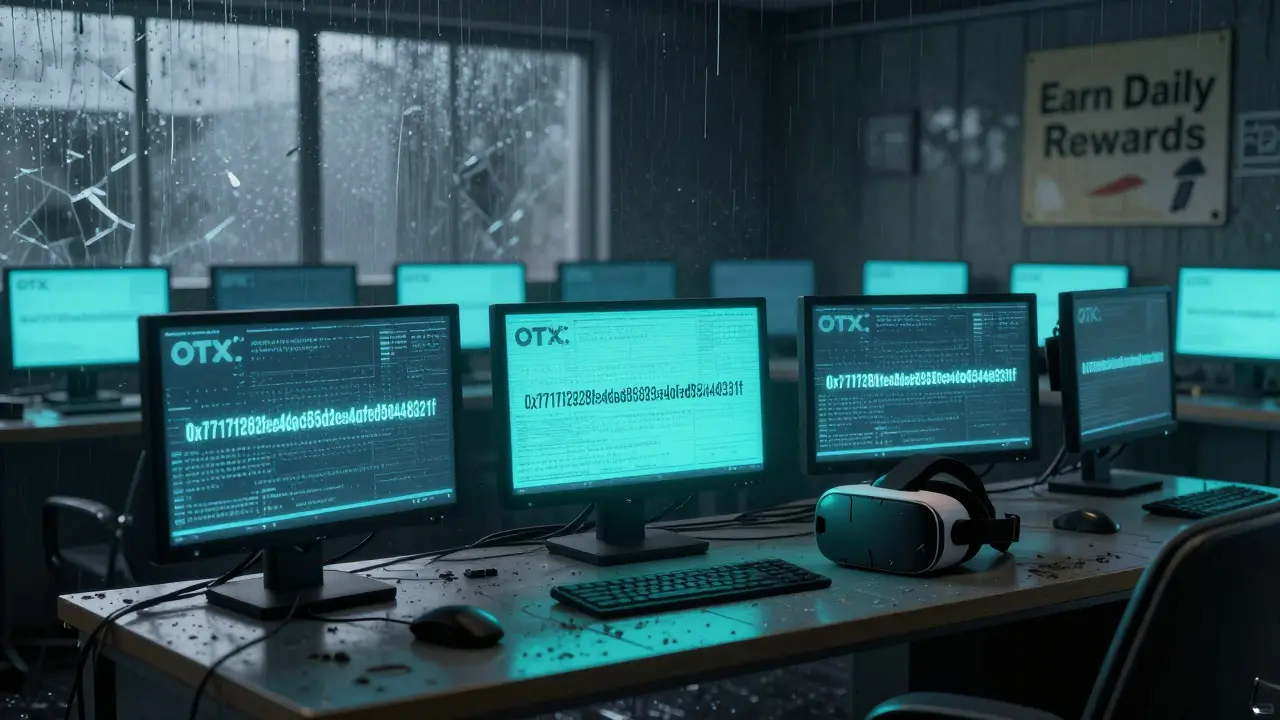
Current status: Is OTX dead?
As of March 2, 2026, OTX is effectively dead as a tradable asset. No exchange lists it. No liquidity exists. The token still shows up on wallet balances - but it’s worthless for trading, swapping, or using in any DeFi protocol. The fully diluted valuation (FDV) is listed at BTC 0.5934. That’s just a math calculation based on 550 million tokens at today’s price. It doesn’t reflect reality. No one is buying. No one is selling. It’s a ghost token. The website is still up. The blog hasn’t been updated since November 2024. The community Discord server is quiet. The careers page still lists open positions - but no one’s hiring. This isn’t a temporary dip. This is a collapse.What should you do if you own OTX?
If you still hold OTX tokens:- Don’t expect a recovery. The market has spoken. There’s no sign of revival.
- Don’t send more funds to the platform. Any new deposits won’t be recoverable.
- Check your wallet. If the token is still visible, it’s just a digital entry - not an asset with value.
- Consider writing it off. The likelihood of recovery is near zero.
Lessons from OTX
OTX isn’t unique. It’s one of hundreds of crypto projects that promised big things and delivered nothing. What makes it worth studying is how fast it fell - and how cleanly it vanished. Here’s what to look for in any new crypto project:- Is there code? Check GitHub. If it’s empty or has no commits, walk away.
- Are there audits? Real projects get audited by firms like CertiK or Hacken. OTX never did.
- Is there transparency? Who’s behind it? Where are they based? Can you find their LinkedIn or past work?
- Is trading active? If volume is under $100k/day on major exchanges, it’s not liquid. If it’s not listed anywhere, it’s dead.
- Are rewards too good to be true? If you’re earning 5% daily just for staking, it’s likely unsustainable - and possibly fraudulent.
Final thoughts
OTX started with a good idea - faster, fairer crypto trading. But ideas mean nothing without execution. Without code, without transparency, without real users - it collapsed. The token is now a footnote in crypto history. If you’re looking for real innovation in crypto, don’t chase hype. Look for projects that build in public, prove their tech, and earn trust over time. OTX didn’t do any of that. And now, it’s gone.Is OTX crypto still trading?
No, OTX is not trading on any major exchange as of March 2, 2026. All listings were removed by February 17, 2026. The current price of $0.0000655 is based on the last recorded trade and does not reflect active buying or selling.
What happened to the OTX token price?
OTX reached an all-time high of $2.13 on April 12, 2024. By April 7, 2025, it had crashed to $0.00006562 - a drop of 99.99%. As of March 2, 2026, it’s trading at $0.0000655, nearly unchanged from its lowest point. The token has lost over 99.9% of its peak value.
Can I still use OTX on exchanges or DeFi platforms?
No. OTX is not listed on any decentralized or centralized exchange. It cannot be swapped, staked, or used in any DeFi protocol because no platform accepts it. Even wallets that still show the token balance cannot interact with it meaningfully.
Is OTX a scam?
There’s no legal ruling calling OTX a scam, but its behavior matches classic warning signs: no public code, no audits, disappearing team, and a reward model based on referrals rather than product use. While not proven illegal, it’s widely considered a failed project with little to no chance of recovery.
What’s the contract address for OTX?
The OTX token contract address is 0x7717f2828fe4dac8558d23ee4cdfed9544e9321f. It’s an ERC-20 token on the Ethereum blockchain. However, this address no longer holds any meaningful activity or liquidity as of early 2026.
Should I buy OTX now?
Absolutely not. With zero trading volume, no exchange support, and no development updates, buying OTX now is equivalent to buying a piece of digital paper. There is no path to recovery, and no mechanism to cash out. Any purchase would be a total loss.
Where can I find official OTX updates?
The official website is still live at otx.exchange, but it hasn’t been updated since November 2024. No press releases, blog posts, or social media announcements have been made in over a year. Contact emails go unanswered.
What’s the total supply of OTX?
The total supply of OTX is 550,000,000 tokens, with no plan to mint more. This fixed supply was hardcoded into the contract at launch. However, since the token is no longer traded, the supply is effectively locked in wallets with no utility.
Comments
22 Comments
lori sims
I remember when OTX was everywhere. I thought it was the next big thing - until I realized the whole thing was a glitter-coated dumpster fire. The website looked slick, the team sounded legit, but zero code, zero audits, zero transparency. It wasn’t a project. It was a mood. And now? Just a ghost in my wallet. RIP, OTX. You had potential. You just didn’t wanna grow up.
Reggie Fifty
This is why America needs to stop letting foreigners run our crypto infrastructure. This OTX nonsense was a foreign-backed pump-and-dump scheme disguised as innovation. No American company would ever launch a token with no code, no team, and no accountability. This is what happens when you let woke blockchain bros run things without oversight.
Kristi Emens
I read this whole thing and just felt sad. Not angry. Not mad. Just… sad. Because people put real hope into this. They believed in the idea - that crypto could be fairer, faster, more open. And instead of being met with real innovation, they got a hollow shell. It’s not just about money. It’s about trust. And that’s what got broken here.
Deborah Robinson
I’m still holding some OTX. Not because I think it’ll come back, but because I don’t want to give up on the idea that something like this could work. Maybe one day someone will pick up the code, audit it, fix the flaws, and rebuild it right. Until then, I’m keeping it. A little digital memorial.
Kaitlyn Clark
i just want to say i bought otX at $1.80 bc i saw a video from some guy in a hoodie saying "this is the future" and now i feel like a fool but also kind of proud? like i believed in something even if it was dumb. also my wallet still shows 12k otX and i stare at it sometimes like its a pet. 🤷♀️
Amanda Markwick
OTX didn’t fail because it was bad. It failed because the crypto world rewards noise over substance. Look at the projects that survived - they didn’t shout the loudest. They showed up. Daily. With commits. With audits. With transparency. OTX had a great pitch. But no one ever saw the engine. And in crypto, if you can’t show the engine, you’re just selling dreams. And dreams don’t pay bills.
Nicki Casey
It is my firm belief that OTX was never intended to function as a cryptocurrency at all. Rather, it was a covert operation by a consortium of central bank-aligned entities to test the gullibility of retail investors under the guise of decentralization. The absence of code? A feature, not a bug. The disappearing team? They were reassigned to a shadow regulatory task force. The staking rewards? A honeypot designed to collect KYC data. This was not a failure. It was a controlled experiment. And we, the public, were the lab rats.
Jessica Carvajal montiel
I knew it was a scam from day one. The name alone - Open Trade Exchange - sounds like a corporate shell company from 2009. And the team? UK-based? Please. That’s code for "we’re hiding from the SEC." The fact that they didn’t even bother to publish a GitHub repo? That’s not incompetence. That’s malice. They knew they were stealing. And now? They’re sipping margaritas on a beach somewhere while people like you and me are left with digital trash.
maya keta
lmao this is why you dont trust "decentralized" projects that dont have a cto with 10y experience at coinbase. otX was just a front for some 19yo bros in a basement with a canva website and a discord server. they even stole the color scheme from uniswap v2. no audit? no code? no team? just vibes. and vibes dont pay for gas fees.
Curtis Dunnett-Jones
I appreciate the thoroughness of this analysis. It is, without question, one of the most comprehensive dissections of a failed crypto venture I have encountered. The lack of technical transparency, the unsustainable reward model, and the complete absence of post-launch communication constitute a textbook case study in governance failure. I would recommend this be archived in the Library of Congress as a cautionary artifact of the 2020s crypto bubble.
Sean Logue
man i still get DMs from people asking if otX is "coming back." like bro, it's been two years. the website is still up but the contact form just says "thank you for your message" and nothing else. i think the devs just ghosted and moved on to the next thing. it's wild how fast these things go from "next bitcoin" to "digital ghost town."
Jeff French
no code. no audits. no updates. just a website with a nice gradient and a discord with 3 bots. that’s the whole story. the price chart is just a line going down. the supply is locked. the team is gone. the only thing left is the contract address. and even that’s just a static number now. it’s not dead. it’s already buried.
Colin Lethem
i bought otX because i thought the name sounded cool. like "open trade exchange" - sounds like a legit stock exchange. turns out it was just a google form with a token attached. i still have 50k in my wallet. i call it my "emotional NFT."
Michelle Mitchell
idk why people are still talking about this. it's dead. move on. there are 50 new coins with "AI" in the name right now. go chase those. otX? it's like a forgotten meme from 2024. cringe. delete your wallet. you're holding digital dust.
christopher luke
i still believe in crypto. i just don’t believe in projects like otX. this is why i only invest in stuff with code on github and real devs on twitter. otX was a vibe. real crypto is a grind. i lost money. but i learned. and that’s worth more than any token.
Mary Scott
they used my email. they said i won an airdrop. i sent 0.1 eth to "claim" it. never got anything back. now i know better. don't trust anyone. not even if they say "it's safe."
Shannon Holliday
i still have otX in my wallet. not because i think it'll rise. but because i want to remember what it felt like to believe in something that didn't exist. 🌌✨
Jeremy buttoncollector
the contract address is live on etherscan. 0x7717...321f. 550M supply. 0.0000655 price. 0 transactions in 400 days. the only activity is a single wallet that keeps sending 0.00000001 eth to itself. it’s like watching a ghost try to pay for coffee.
Michelle Xu
Thank you for this meticulously documented account. The absence of technical documentation, audit trails, and communication channels constitutes a breach of fiduciary responsibility to retail participants. I would encourage regulators to treat such projects as de facto fraud under securities law, regardless of whether a formal indictment has been filed. The damage to market integrity is irreversible.
Ryan Burk
this is why you dont read the whitepaper. you read the github. if the github is empty, the project is empty. otX had a website. i had a dream. now i have a zero balance. i still laugh about it though. it was dumb. but it was MY dumb.
Sriharsha Majety
i dont know much about crypto but i saw my friend made money on otX so i bought some. then he said it was gone. now i dont trust anyone. not even my own eyes. maybe next time i just buy gold
Tabitha Davis
I’m not saying this was a scam - I’m saying it was a government psyop. OTX was designed to trigger mass retail participation so they could track every wallet, then shut it down to justify tighter crypto regulations. The price crash? A controlled collapse. The silence? A cover-up. The team? Probably NSA contractors with fake LinkedIn profiles. You think you lost money? You lost your privacy.
Write a comment