



Imagine waking up tomorrow and realizing your entire crypto portfolio is gone. Not because the market crashed, but because you lost a piece of paper or forgot a password. This isn't a hypothetical nightmare; it's a reality for millions. Unchained Capital estimates that roughly 20% of all Bitcoin-worth over $150 billion-is permanently lost due to poor seed phrase management. If you hold any cryptocurrency, your seed phrase is the single most critical asset you own. It’s not just a string of words; it’s the master key to your financial freedom. But how do you keep that key safe from fire, water, theft, and your own forgetfulness?
The Seed Phrase, often called a recovery phrase or mnemonic, is a sequence of 12, 18, or 24 words generated by your wallet software. Defined by the BIP-39 standard created in 2013, this system converts complex cryptographic private keys into human-readable words using a predefined dictionary of 2,048 terms. Each word represents 11 bits of entropy, creating a security level between 128 and 256 bits. Think of it as the DNA of your wallet. If someone gets these words, they can recreate your private keys and drain your funds instantly. No password reset button exists here. There is no customer support hotline at Bitcoin headquarters. If you lose your seed phrase, you lose your money. If someone else finds it, they take your money. That stark binary outcome makes proper storage non-negotiable.
Why Digital Storage Is A Security Trap
It’s tempting to save your seed phrase in a note on your phone, a cloud backup, or even an email draft. After all, we store everything else digitally. But this convenience is a massive vulnerability. DataRecovery.com’s 2024 assessment found that 37% of cryptocurrency thefts in 2023 stemmed directly from compromised digital storage methods. When you type your seed phrase into a device connected to the internet, you expose it to malware, keyloggers, and remote hackers.
Password managers are often cited as a secure solution, but experts disagree when it comes to seed phrases. John Smith, Chief Information Security Officer at DataRecovery, warns that storing seed phrases in password managers concentrates all risk in one digital location. In 2023 alone, 22 high-profile losses totaling $87 million occurred because a user’s password manager vault was breached. Cloud services are even riskier. New malware variants specifically target cloud-stored text files containing keywords like "seed" or "recovery." In Q2 2024 alone, there was a 200% increase in such attacks. If you must use digital storage, ensure it is encrypted offline before syncing, but ideally, keep it off the grid entirely.
Paper vs. Metal: The Durability Battle
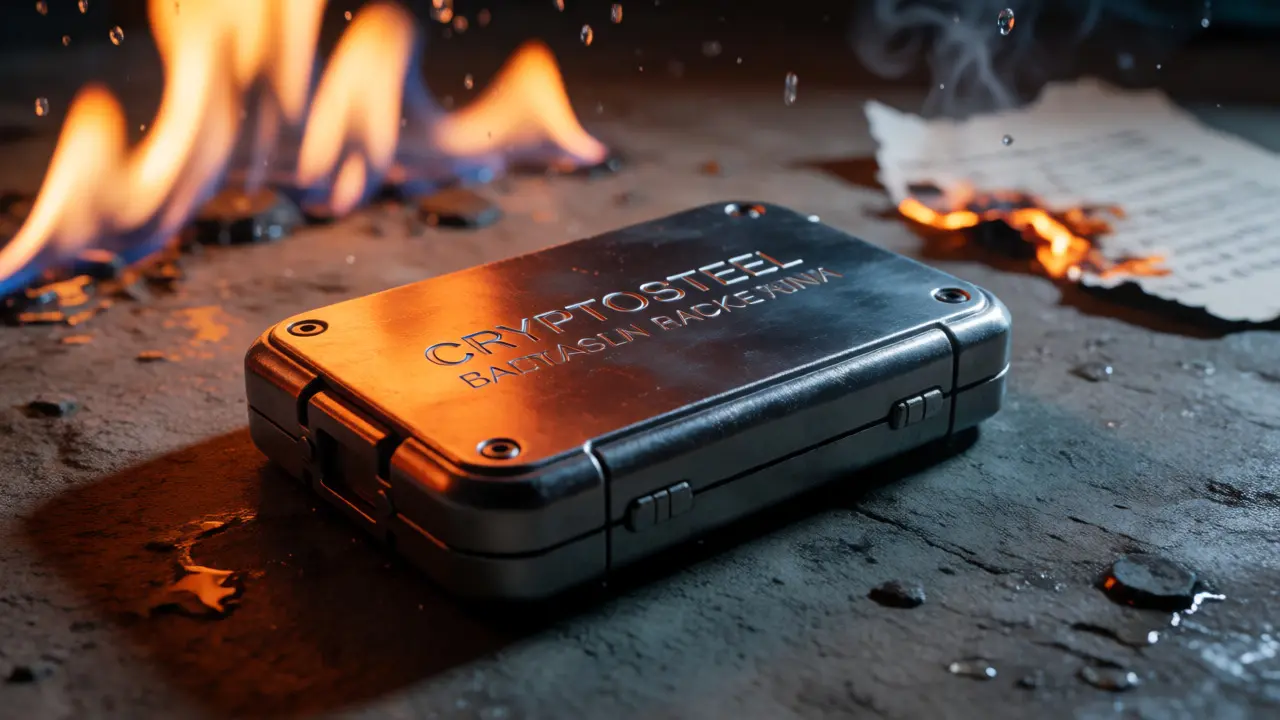
If digital is risky, physical is safer. But not all physical backups are created equal. Paper is the default recommendation from many wallet providers, yet it has a shocking failure rate. Vault12’s testing showed that paper backups degrade significantly after just 18 months under normal conditions. Ink fades in 67% of samples, and moisture or accidental damage ruins another 42%. Worse, paper is flammable. A house fire doesn’t just destroy your home; it vaporizes your wealth if your seed phrase is on a sheet of printer paper in a drawer.
Metal storage solutions have emerged as the gold standard for durability. Products like Cryptosteel and Billfodl use stainless steel or titanium plates to etch or assemble your words. These materials withstand extreme temperatures and corrosion. Cryptosteel’s stainless steel construction, for instance, can endure temperatures up to 1400°C for 15 minutes. Billfodl’s titanium offers resistance to saltwater immersion for days. While these devices cost more-Cryptosteel Capsule Solo runs about $119 and Billfodl around $99.99-they offer peace of mind that paper simply cannot match. For holdings above $10,000, the investment in metal backup is negligible compared to the risk of total loss.
| Storage Method | Durability | Hack Risk | Cost | Best For |
|---|---|---|---|---|
| Paper | Low (Fire/Water) | Medium (Physical Theft) | $0 - $5 | Small amounts, temporary |
| Metal Plate | High (Fire/Corrosion) | Low (Harder to copy) | $99 - $120 | Long-term holding, large amounts |
| Digital/Cloud | High (Redundant) | Very High (Remote Hacks) | Free - $10/mo | Not recommended for primary backup |
| Hardware Wallet | Medium (Device Loss) | Low (If PIN protected) | $79 - $149 | Active trading, daily access |
Location Strategy: Don’t Put All Eggs in One Basket
Storing your seed phrase safely isn’t just about the medium; it’s about geography. If you keep your metal plate in the same safe where you keep your passport and jewelry, a single burglary could result in both identity theft and financial ruin. Similarly, if your house burns down, a safe inside might melt or be inaccessible for weeks.
For assets under $50,000, a common strategy is to keep one metal backup in a permanently installed home safe and a second backup in a bank safe deposit box. This separation ensures that neither a local disaster nor a targeted home invasion wipes you out. For larger portfolios, consider geographic distribution. Experts recommend keeping backup locations at least 50 miles apart. This reduces the chance that a regional event-a hurricane, earthquake, or civil unrest-affects all copies simultaneously.
Avoid cliché hiding spots. Coffee cans, flour containers, and under-mattress pockets are the first places thieves look. Unchained Capital documented 217 cases in early 2024 where seed phrases stored in kitchen containers were accidentally thrown away during cleaning. If you hide it, make it obscure but memorable. Better yet, use tamper-evident bags. These security bags cost less than $20 and show clear signs if opened, giving you an alert if someone has accessed your backup without moving it.
Advanced Solutions: Multisig and Shamir’s Secret Sharing
If you hold significant wealth-say, over $100,000-you might want to move beyond simple single-key backups. Two advanced methods dominate the pro space: Multisignature (Multisig) wallets and Shamir’s Secret Sharing Scheme (SSSS).
Multisig requires multiple signatures to authorize a transaction. A common setup is 2-of-3, meaning you need two out of three possible keys to spend your coins. You can store each seed phrase in a different location with a different trusted person or institution. If one backup is stolen, the thief still needs another key to move your funds. This drastically reduces the impact of a single point of failure.
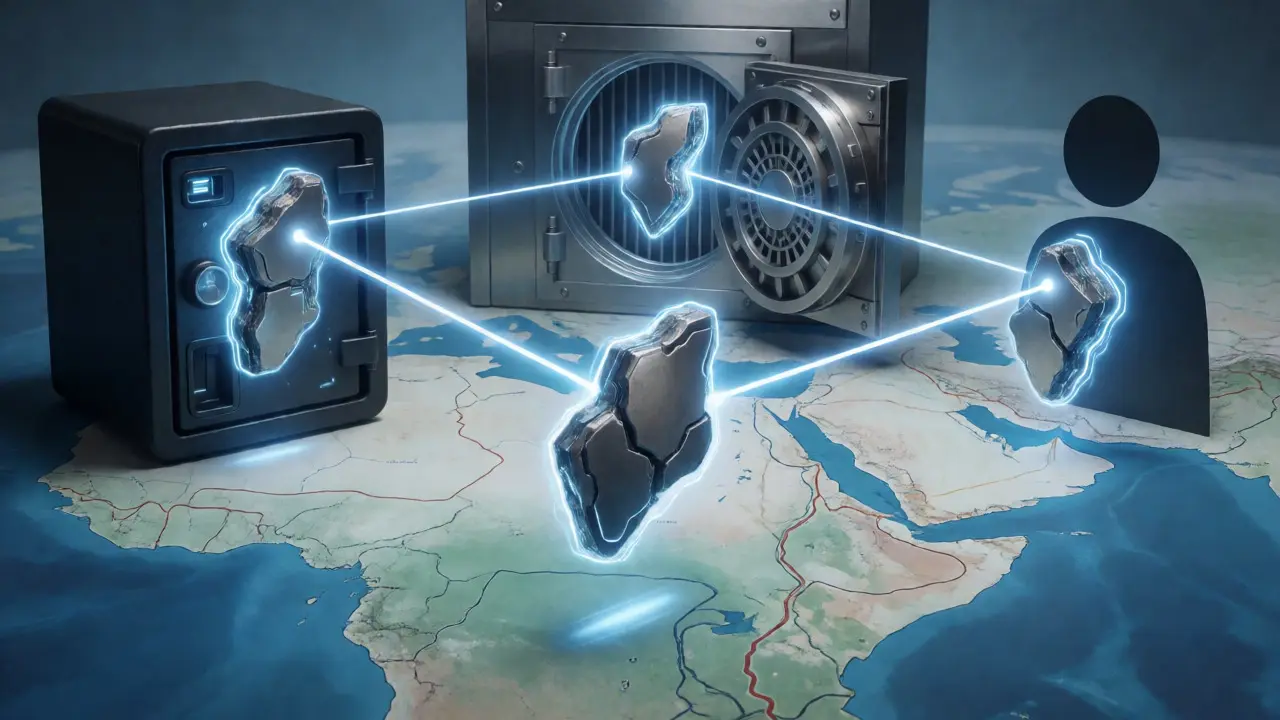
Shamir’s Secret Sharing takes this further by splitting your single seed phrase into multiple fragments. For example, you can split your 24-word phrase into five parts, requiring any three parts to reconstruct the original. No single fragment reveals the full secret. Dr. Evelyn Chen from Chainalysis argues that properly implemented SSSS with geographically distributed fragments offers superior security for high-value holdings. However, this complexity comes with a learning curve. It requires technical expertise to set up correctly and manage the reconstruction process. For most users, a robust metal backup with geographic separation is sufficient and far easier to manage.
Common Mistakes That Cost Millions
Even with the right tools, execution errors happen frequently. Here are the pitfalls to avoid:
- Wrong Word Order: BIP-39 relies on exact ordering. Swapping two words renders the phrase useless. Double-check your assembly on metal plates carefully.
- Incomplete Backups: Some wallets require an additional passphrase (often called the 25th word). If you don’t back up this extra word alongside your seed phrase, your recovery will fail.
- Photographing the Phrase: Taking a picture of your seed phrase with your smartphone uploads it to the cloud automatically. This exposes it to every server Apple or Google uses. Never photograph your seed phrase unless you immediately delete the image from your gallery and cloud sync.
- Ignoring Testing: Many people never test their backup until they need it. Once a year, simulate a recovery. Use a watch-only wallet or a testnet environment to verify that your written or etched phrase actually works.
Final Checklist for Secure Storage
To wrap this up, let’s distill the advice into actionable steps. Whether you’re new to crypto or a seasoned holder, follow this protocol:
- Generate Offline: Create your seed phrase on a hardware wallet or an air-gapped computer. Never generate it on a web browser connected to the internet.
- Write It Down: Write the words clearly on paper initially to verify legibility.
- Transfer to Metal: Purchase a reputable metal backup device like Cryptosteel or Billfodl. Assemble the words carefully.
- Destroy the Paper: Shred the initial paper backup once you’ve verified the metal version is correct.
- Separate Locations: Keep one backup at home in a fireproof safe and another in a bank safe deposit box or with a trusted family member.
- Verify Annually: Check that your backups are intact and accessible once a year.
Your seed phrase is your responsibility. Banks have FDIC insurance; crypto does not. By treating your seed phrase with the seriousness it deserves, you protect not just your current holdings, but your future financial independence. Stay paranoid, stay offline, and stay safe.
Can I store my seed phrase in a password manager?
While convenient, it is generally not recommended for primary storage. Password managers are digital targets for hackers. If your master password is compromised, all your stored seeds are exposed. Use it only for secondary, low-value accounts, or ensure the data is encrypted locally before syncing.
What happens if I lose my metal backup?
If you lose your only copy of the seed phrase, your funds are permanently inaccessible. This is why having multiple backups in separate geographic locations is critical. Without a backup, there is no way to recover your private keys.
Is it safe to write my seed phrase on paper?
Paper is vulnerable to fire, water, and degradation. Studies show high failure rates for paper backups within 5 years. It is acceptable for small amounts or as a temporary measure while setting up a permanent metal backup, but not ideal for long-term security.
Do I need a passphrase along with my seed phrase?
Yes, if you set one up. Some wallets allow you to add an optional passphrase (the 25th word). This creates a hidden wallet. If you forget this passphrase, you cannot access those specific funds, even if you have the correct 24-word seed phrase.
How many backups should I have?
At least two. One should be in a secure home location (like a fireproof safe), and the other should be in a separate geographic location (like a bank safe deposit box). This protects against local disasters like fires or burglaries.