



Think you can still buy Bitcoin in Lisbon, hold it for a year, and pay zero taxes? If you’re relying on old forum posts from 2019, you might be walking into a trap. The landscape shifted dramatically in 2023, ending Portugal’s status as a pure tax-free paradise while keeping its competitive edge. Today, the rules are precise, tiered, and strictly enforced. Whether you are a casual holder, an active trader, or a professional miner, understanding where you fit in this new framework is critical to avoiding unexpected bills.
Portugal's cryptocurrency taxation now operates under a sophisticated three-tier system within the Personal Income Tax (PIT) Code. This structure categorizes your activities into specific buckets, each with distinct rates and conditions. It’s not just about how much you made; it’s about how long you held the asset and what you did to generate that income. The core promise remains attractive: long-term investors can still enjoy significant exemptions, but the net has tightened around short-term speculation and professional operations.
The Three-Tier Tax Structure Explained
Portugal doesn’t treat all crypto income equally. Your tax liability depends entirely on which category your activity falls into. Misclassifying yourself can lead to overpaying or facing penalties during an audit by the Autoridade Tributária e Aduaneira (AT), the Portuguese tax authority.
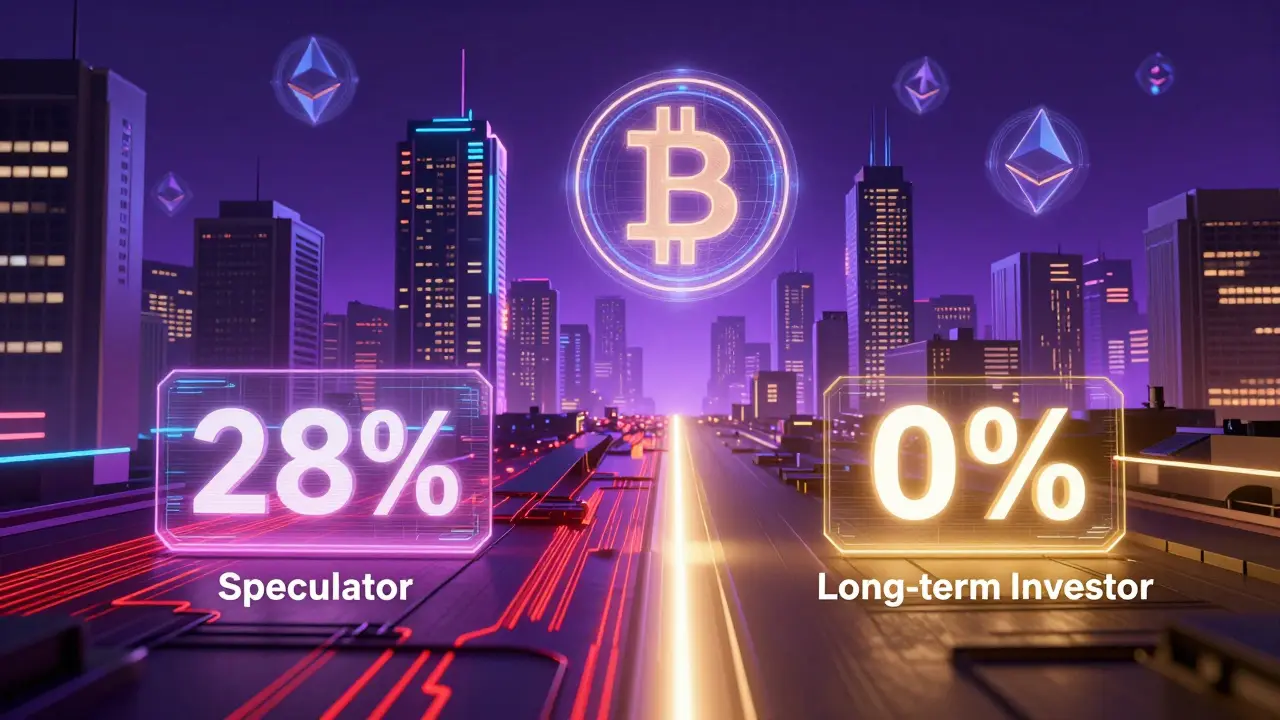
- Category G (Capital Gains): This applies to individual investors buying and selling crypto as an investment. The key metric here is time. If you hold a crypto-asset for less than 365 days before converting it to fiat currency (like Euros), you face a flat 28% tax rate on the profit. However, if you hold the asset for more than 12 months, the gain is completely tax-free. This exemption holds true provided you or the paying agent are based in the EU, EEA, or a country with a Double Tax Treaty with Portugal.
- Category E (Passive Income): Staking rewards and lending interest fall here. These are taxed at a flat 28% rate. There is a nuance: if you receive staking rewards directly in crypto, taxation is deferred until you convert them to fiat. You don’t owe tax the moment the reward hits your wallet, only when you cash out.
- Category B (Professional Activity): If trading or mining is your primary job, you fall under this category. Rates are progressive, ranging from 14.5% to 53%. For those earning under €200,000 annually, a simplified regime applies. Mining income is taxed on 95% of gross receipts due to environmental concerns, while other professional crypto activities are taxed on just 15% of gross income. The resulting taxable amount is then subject to standard progressive income tax rates.
Why the 365-Day Rule Matters More Than Ever
The distinction between short-term and long-term holdings is the single most impactful rule for most retail investors. Before 2023, many assumed any private investor was exempt. Now, the clock starts ticking the day you acquire the asset. Using the First In, First Out (FIFO) method, tax authorities determine which coins were sold first. If you bought Bitcoin in January 2025 and sold half in December 2025, that sale is short-term and taxable. If you wait until February 2026, it becomes long-term and tax-free.
This creates a clear incentive for buy-and-hold strategies. Active traders who flip assets weekly will find themselves paying 28% on every profitable trade converted to fiat. Conversely, patient investors can effectively eliminate their capital gains tax burden simply by waiting out the calendar year. This policy aims to discourage speculative churn while rewarding stable investment behavior.
How Portugal Compares to Other European Hubs
You might wonder if moving to Germany or France offers better terms. While Portugal lost its "zero-tax" title, it remains highly competitive within the EU. Let’s look at the numbers side-by-side to see where your money works harder.
| Jurisdiction | Short-Term Capital Gains | Long-Term Exemption | Staking/Lending Tax |
|---|---|---|---|
| Portugal | 28% Flat Rate | Tax-Free after 365 Days | 28% Flat Rate (deferred until fiat conversion) |
| Germany | Progressive up to 45% | Tax-Free after 1 Year | Included in Income Tax |
| France | 30% Flat Tax (PFU) | No General Exemption | 30% Flat Tax |
| United Kingdom | 10% - 20% CGT | No Time-Based Exemption | Income Tax (20% - 45%) |
Notice that Portugal’s 28% short-term rate is lower than France’s 30% and significantly lower than Germany’s top marginal rate for high earners. More importantly, Portugal’s long-term exemption is absolute, whereas Germany requires you to be a non-professional trader to qualify for similar benefits. For the average digital nomad, Portugal still offers one of the best deals in Europe, provided you respect the holding periods.
Regulatory Compliance and MiCAR Integration
Staying compliant isn’t just about calculating taxes; it’s about navigating regulations. The Bank of Portugal oversees anti-money laundering (AML) and Know Your Customer (KYC) protocols. As the EU rolls out the Markets in Cryptoassets Regulation (MiCAR), harmonization across member states will tighten reporting standards. Portugal’s early adoption of clear tax rules positions it well for this transition, but it also means the tax authority is building better infrastructure to track holdings.
Don’t assume the AT lacks resources to find you. While they may not have perfect visibility today, global trends in data sharing and blockchain analytics suggest enforcement capabilities will grow rapidly. Keeping detailed records using tools like CoinTracking or similar portfolio managers is no longer optional-it’s essential defense against audits.

Future Outlook: What’s Next for Crypto Taxes?
Will these rules change again? Likely, yes, but probably not drastically in the short term. The current framework balances revenue generation with maintaining Portugal’s appeal to tech talent and investors. Experts predict minor adjustments to simplified regime thresholds and clearer definitions of "professional" activity rather than a complete overhaul. The core concept-taxing speculation, exempting long-term investment-seems politically sustainable.
However, keep an eye on the definition of passive vs. active income. As DeFi grows, distinguishing between simple staking and complex liquidity provision could become murkier. Taxpayers should stay agile and consult local professionals as interpretations evolve. The goal for Portugal is to remain a hub for the digital economy without becoming a loophole for tax avoidance.
Frequently Asked Questions
Do I need to declare crypto assets I haven't sold?
Generally, no. Portugal does not require individuals to declare unrealized gains or total holdings for wealth tax purposes in the same way some countries do. You typically report crypto transactions on your annual tax return only when they trigger a taxable event, such as converting crypto to fiat or receiving professional income.
Are crypto-to-crypto trades taxable in Portugal?
No, swapping one cryptocurrency for another (e.g., Bitcoin to Ethereum) is not a taxable event. Taxes are only triggered when you convert crypto into fiat currency (like EUR or USD) or use it to purchase goods and services. This allows you to rebalance your portfolio without immediate tax consequences.
What happens if I sell before the 365-day mark?
If you sell a crypto-asset less than 365 days after acquiring it, you must pay a flat 28% tax on the capital gain. This applies to the profit portion of the transaction, calculated using the FIFO (First In, First Out) method to determine your cost basis.
Is mining always considered professional activity?
Not necessarily, but it often is if done at scale. Small-scale hobbyist mining might fall under different categories depending on frequency and volume. However, dedicated mining operations usually fall under Category B (Business and Professional Income). Under the simplified regime, mining income is taxed on 95% of gross receipts, reflecting higher operational costs and environmental impacts.
Can I opt out of the flat 28% tax on staking?
Yes. For Category E income (staking/lending), you can choose to aggregate this income with your other personal income. This subjects it to progressive tax rates (14.5% to 53%). This option is beneficial if your total income places you in a lower tax bracket than 28%, though it requires careful calculation.