




Imagine casting your vote from a café in Tokyo while the election happens in Toronto. You get a receipt proving your ballot was counted, but no one knows it was you. It sounds like science fiction, yet blockchain electoral systems are moving closer to reality. But here is the catch: despite the hype, these systems are not ready for nationwide general elections today. The technology promises transparency and security, but it also brings new risks that paper ballots simply do not have.
In 2026, we are standing at a crossroads. On one side, we have the desire for accessible, transparent digital voting. On the other, we have severe technical limitations and unresolved security concerns. This article cuts through the noise to explain where blockchain voting actually stands, what works, what fails, and what the future likely holds for our democratic processes.
Why Blockchain for Voting? The Core Promise
To understand the future, we first need to grasp why anyone wants to put votes on a blockchain. Traditional electronic voting machines (EVMs) create centralized databases. If hackers breach that single server, they can alter thousands of votes without leaving a trace. This centralization was a major concern during the 2016 US elections, where fears of foreign interference dominated headlines.
Blockchain electoral systems leverage distributed ledger technology to create transparent, secure, and auditable voting processes. Instead of one server, the vote record is copied across hundreds or thousands of nodes. To change a vote, an attacker would need to compromise more than 51% of the entire network simultaneously-a feat that is computationally nearly impossible for large networks.
The value proposition rests on three pillars:
- Immutability: Once a vote is recorded, it cannot be deleted or altered.
- Anonymity with Verification: Using cryptographic techniques like zero-knowledge proofs, the system can verify you are eligible to vote without revealing your identity or your specific choice.
- Public Auditability: Anyone can audit the ledger to ensure every valid vote was counted, without compromising voter privacy.
However, theory is different from practice. While the cryptography is sound, the human element and software interfaces introduce vulnerabilities that pure math cannot fix.
Current State of Play: Pilots and Prototypes
As of mid-2026, there are no major national governments using pure blockchain for their primary general elections. Instead, we see a landscape of pilots, municipal trials, and corporate applications.
Estonia's i-Voting system remains the gold standard for digital voting, though it is not a pure blockchain implementation. Since 2005, Estonia has allowed citizens to vote online. In the 2019 parliamentary elections, approximately 44% of all votes were cast digitally. Estonia uses a hybrid approach where digital votes are encrypted and later converted into physical printouts for final counting, ensuring a paper trail. This model balances accessibility with verifiability.
In the United States, progress has been slower and more fragmented. West Virginia’s 2020 pilot program aimed to allow overseas military voters to use a blockchain-based app. The result? Only 144 votes were successfully processed across two counties. The low turnout highlighted significant usability issues and lack of trust among users. Similarly, Colorado’s 2024 municipal blockchain pilot processed over 12,000 votes with zero security incidents, proving the technology can work on a small scale, but scalability remains unproven.
| Feature | Paper Ballots | Traditional EVMs | Blockchain Voting |
|---|---|---|---|
| Auditability | High (Physical) | Low (Black Box) | High (Cryptographic) |
| Accessibility | Low (In-person only) | Medium | High (Remote) |
| Scalability | High | Medium | Low (Currently) |
| Cost per Vote | $1 - $3 | $0.50 - $1.50 | $5 - $10 (Pilot phase) |
| Security Risk | Theft/Loss | Hacking Central Server | Front-end Device Compromise |

Technical Hurdles: Why It’s Not Ready for Prime Time
If blockchain is so secure, why aren’t we using it everywhere? The answer lies in performance and complexity. Most blockchain voting prototypes rely on platforms like Ethereum. While Ethereum is robust, its mainnet processes about 15 transactions per second (TPS). A national election might require processing 10,000+ TPS during peak hours. Even with Layer-2 scaling solutions, achieving this throughput securely and cheaply is a massive engineering challenge.
Consider the hardware requirements. Running a full node to verify the election ledger requires minimum 4GB RAM and 100GB storage. For election officials managing millions of votes, the infrastructure costs skyrocket. A national pilot program can cost between $500,000 and $2 million, compared to $200,000 for conventional internet voting setups.
Then there is the issue of voter coercion. With paper ballots, you go to a private booth. With remote blockchain voting, you could be voting in your living room while someone watches over your shoulder. Unlike in-person voting, there is no way to guarantee the voter’s environment is free from pressure. This is a fundamental flaw that technology alone cannot solve.
Furthermore, the user interface is critical. If a voter accidentally clicks the wrong candidate, can they undo it? In many blockchain systems, once the transaction is submitted, it is immutable. This “finality” is great for finance but terrifying for voting. Current systems often include a “revote” window, but this adds complexity and potential bugs.
Regulatory Landscape and Standards in 2026
Regulation is catching up to the technology, albeit slowly. In March 2024, the National Institute of Standards and Technology (NIST) published a comprehensive assessment (NISTIR 8400). Their conclusion was blunt: “While blockchain offers theoretical advantages for vote integrity, no current implementation meets federal voting system standards for nationwide deployment.”
This stance is shared by the US Election Assistance Commission, which currently prohibits blockchain for federal elections due to these security gaps. However, the European Union is taking a more proactive approach. The eIDAS 2.0 framework, effective June 2026, establishes certification standards for blockchain voting systems. This regulatory clarity is expected to accelerate adoption in EU member states, particularly for local and organizational votes.
Switzerland already permits limited blockchain voting in cantonal elections under strict federal oversight. This nuanced approach allows innovation while maintaining rigorous safety nets. As Dr. Jane Smith, MIT Cryptography Lab Director, noted in 2025: “Blockchain provides the cryptographic tools needed for verifiable elections, but the technology alone cannot solve social engineering vulnerabilities.”
The Future Trajectory: Hybrid Models and Niche Adoption
So, what does the future look like? Experts predict a bifurcated path. For high-stakes national elections, pure blockchain is unlikely to replace paper ballots anytime soon. Instead, we will see hybrid systems.
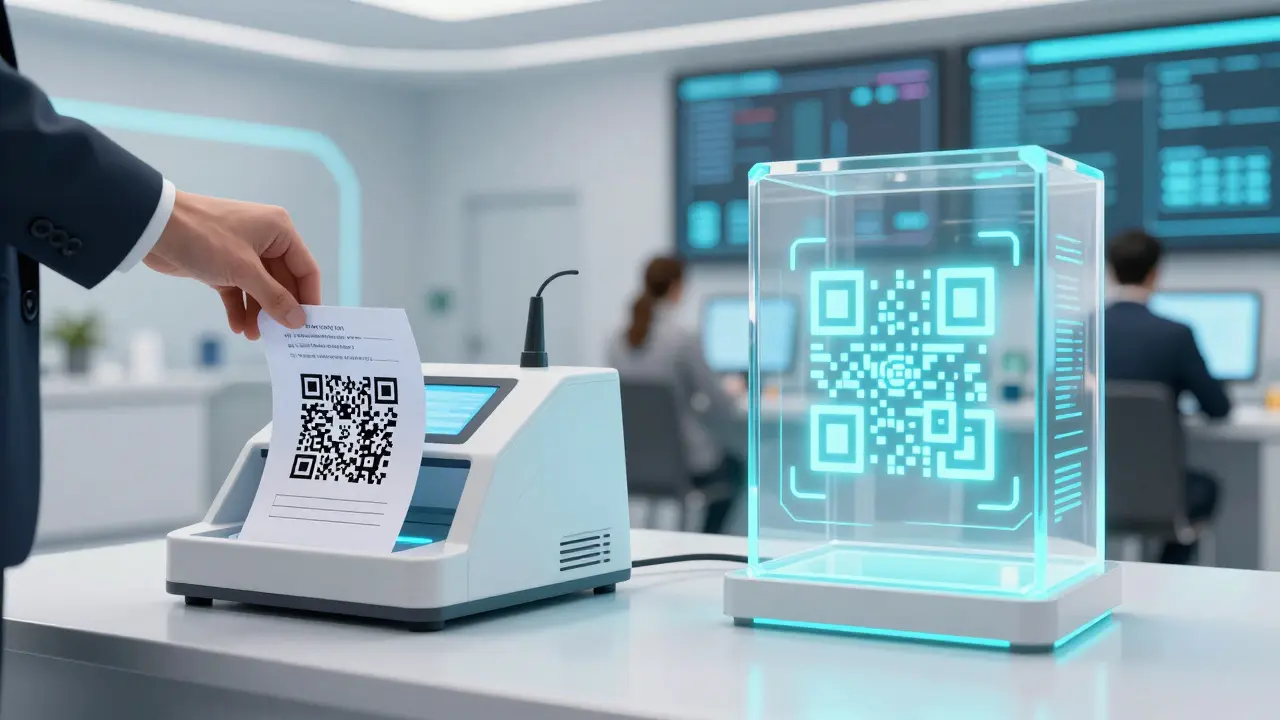
In these hybrid models, voters might use a blockchain-enabled device to cast their vote, but the system generates a unique QR code or printed receipt. These physical receipts are then stored and used for random audits. This combines the accessibility of digital voting with the auditability of paper. MIT researchers are actively developing “end-to-end verifiable” systems that allow voters to confirm their vote was counted correctly without revealing their choice.
Meanwhile, blockchain voting will likely thrive in niche areas where speed and transparency matter more than absolute legal finality:
- Corporate Governance: Shareholder voting is already adopting blockchain. Nasdaq’s Linq platform has processed over 10,000 blockchain votes annually since 2015. Companies demand instant, tamper-proof results.
- Municipal Elections: Small towns and cities may adopt blockchain for local referendums, where voter counts are manageable and community trust is higher.
- Absentee and Military Voting: Remote accessibility justifies the technical complexity for soldiers deployed abroad or citizens living overseas.
Gartner predicts that by 2030, 15% of national elections will include some blockchain component, primarily for absentee ballots. The market for blockchain voting solutions is projected to grow from $187.5 million in 2023 to $1.2 billion by 2028, driven largely by enterprise and municipal adoption rather than national politics.
Conclusion: Proceed with Caution
The future of blockchain electoral systems is not a binary switch from paper to crypto. It is a gradual integration of cryptographic verification into existing democratic frameworks. The technology solves real problems-transparency and immutability-but introduces new ones-scalability and front-end security.
For now, blockchain voting is best suited for controlled environments with lower stakes or as a supplementary tool for remote voters. As standards like eIDAS 2.0 mature and scalability improves, we may see broader adoption. But until then, the safest bet for national elections remains a hybrid approach that leverages blockchain’s strengths without ignoring its weaknesses.
Is blockchain voting secure?
Blockchain itself is highly secure against tampering due to its distributed nature. However, the overall system’s security depends on the weakest link, which is often the voter’s device (phone/computer) or the authentication process. If a hacker compromises your phone before you vote, they can manipulate your choice without breaking the blockchain.
Which country uses blockchain for voting?
No major nation uses pure blockchain for general elections yet. Estonia uses a advanced digital voting system (i-Voting) that incorporates cryptographic principles similar to blockchain, but it still relies on a centralized backend for final counting. Switzerland allows limited blockchain voting in local cantonal elections.
What are the main disadvantages of blockchain voting?
Key disadvantages include scalability issues (slow transaction speeds), high implementation costs, voter coercion risks (lack of private voting booths), and the steep learning curve for non-tech-savvy users. Additionally, if a vote is sent incorrectly, it cannot be easily undone.
Will blockchain replace paper ballots?
Unlikely in the near future. Paper ballots provide a physical audit trail that is universally trusted. The most probable future is a hybrid system where blockchain verifies digital votes, but paper backups remain for auditing purposes.
How much does implementing blockchain voting cost?
Costs vary significantly by scale. National pilot programs can range from $500,000 to $2 million, including infrastructure, security audits, and user training. Municipal implementations are cheaper but still exceed traditional electronic voting setup costs due to specialized development needs.

Comments
18 Comments
Jay Sharma
they are watching you through the webcam while you vote. the blockchain is just a honeypot to collect biometric data and voting patterns for the globalist agenda. wake up sheeple.
Abby Martin
oh please, stop with the conspiracy nonsense. it's about scalability and security protocols. if you can't grasp basic computer science concepts then maybe stay out of tech policy discussions. it's embarrassing.
Jay Sharma
security protocols? more like backdoors. nsa loves this stuff.
Maurice Flynn
look i get the skepticism but the article makes a solid point about hybrid models. we don't need to throw out paper ballots entirely. just use blockchain for the audit trail. it's a middle ground that actually works.
nancy jarecki
the notion that blockchain solves coercion is laughable at best. front-end device compromise is the elephant in the room that these proponents ignore. unless you have air-gapped devices with zero-knowledge proof verification on a separate hardware enclave it's all theoretical fluff. most voters wouldn't know a private key from a public wifi password.
Sajjad Ghorbani Moghaddam
nancy has a point there. the user interface is where it breaks down. i tried using some of those crypto wallets and it was a nightmare. asking grandma to verify a hash before casting her vote for mayor? no way. it needs to be invisible to the user.
nancy jarecki
exactly. the UX barrier is insurmountable for mass adoption without significant subsidies for education which brings us back to the cost issue mentioned in the post. $10 per vote is absurd when paper costs pennies.
Fiona Ellis
I must say, the comparison table in the article is quite illuminating regarding the trade-offs between accessibility and security. It seems we are prioritizing convenience over integrity, which is a dangerous precedent for democratic institutions. We should not rush into nationwide implementation until the eIDAS 2.0 standards are fully tested and proven effective across diverse cultural contexts. The risk of voter suppression via technical glitches is too high to ignore. 📉🗳️
Rebecca Shoniker
The cryptographic underpinnings are sound; however, the systemic vulnerabilities introduced by client-side execution environments render the entire proposition fundamentally flawed. One must consider the attack surface expansion significantly. Furthermore, the immutability feature, while touted as a benefit, becomes a liability when considering human error or malicious coercion vectors that cannot be mitigated by software alone. It is a classic case of solving a non-problem while creating new ones. 🙄
Nicole Woessner
i live in a small town and honestly we had a pilot program last year. it was cool but slow. took forever to load the page during peak hours. people were frustrated. i think for big cities it would be a disaster. maybe keep it for shareholder meetings like they said
Trent Erman1
think about the philosophical implications of removing the physical act of voting. the ritual matters. standing in line talking to neighbors. it builds community. blockchain isolates us further into our digital bubbles. we lose the social fabric of democracy even if we gain efficiency. is speed worth the loss of civic connection?
Scott Miller
efficiency IS important! look how many people skip voting because lines are too long. if we can make it easy everyone participates. democracy dies in silence not in speed. let's fix the tech instead of crying about rituals.
Trent Erman1
but scott participation without informed deliberation is mob rule. the friction of voting serves a purpose. it ensures only committed citizens engage. remove the friction and you invite apathy disguised as engagement.
Rob Morton
i wonder if the hybrid model could work better if we used paper receipts that voters mail in separately. that way you have the digital record for speed and the paper for audit. what do you guys think about splitting the verification process?
Mélanie Boulay
While I appreciate the enthusiasm for technological innovation, it is imperative that we consider the profound implications of such a shift on the foundational principles of our electoral systems, particularly regarding the sanctity of the secret ballot and the potential for unprecedented levels of surveillance and coercion that may arise from remote voting mechanisms, which ultimately necessitates a cautious and measured approach rather than a hasty adoption driven by mere novelty or corporate interests seeking to monetize the democratic process.
Robert Hundley
melanie is right lol. it's too risky. i'm happy with my paper ballot. let's just count them correctly next time. :-)
Melissa L
honestly idk much about block chain but sounds expensive. why spend millions when we can just hire more poll workers?
John Curry
the irony is palpable. we build a decentralized ledger to prevent censorship yet rely on centralized authentication providers to verify identity. it's a paradox that keeps me up at night. the technology is ready perhaps but our societal trust structures are not. we are trying to solve a political problem with a mathematical tool.
Write a comment