
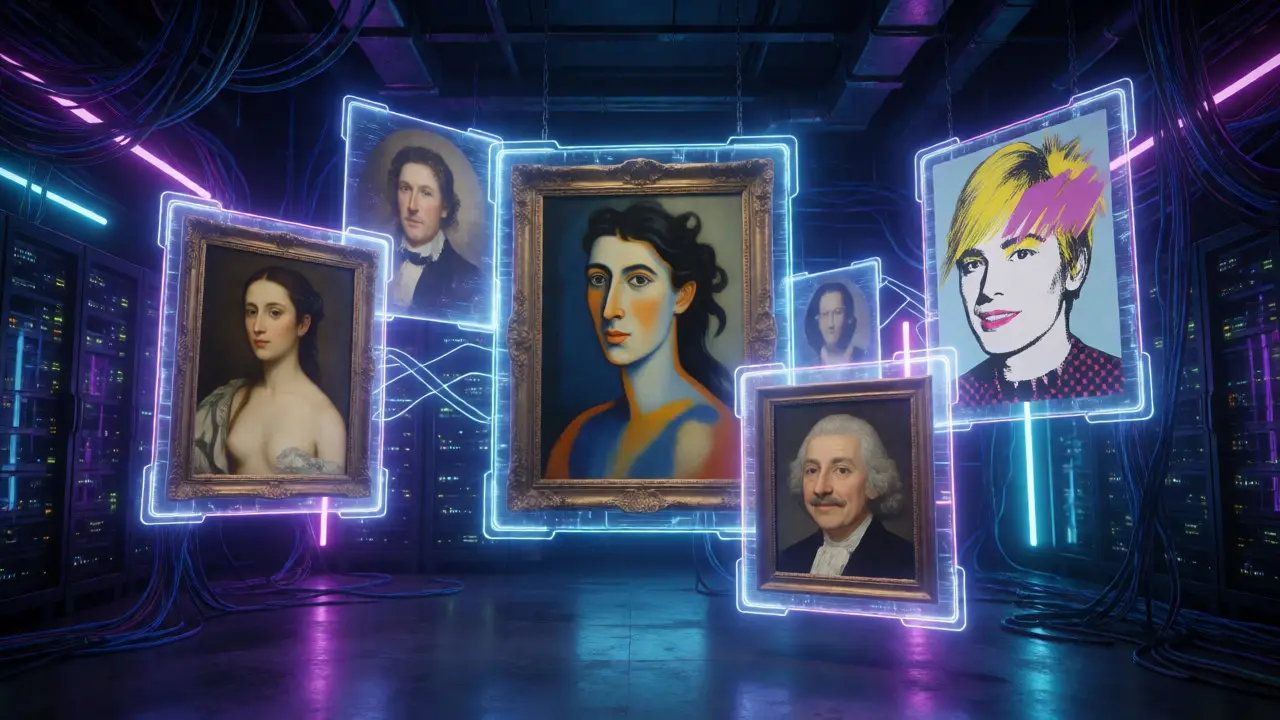
Imagine owning a piece of Picasso or Warhol without needing a mansion to hang it in. That’s the core promise behind APENFT, a cryptocurrency project that aims to bring world-class fine art onto the blockchain. But what exactly is the APENFT (NFT) coin? It isn’t just another digital collectible; it is the governance token for a foundation dedicated to digitizing and authenticating high-value artworks.
If you’ve seen the ticker "NFT" on your exchange dashboard and wondered why a token with such a generic name trades at fractions of a cent, you’re not alone. This article breaks down how APENFT works, why it chose the TRON network, and whether its massive supply makes sense for investors. We’ll look past the hype to see the actual utility driving this asset in 2026.
Key Takeaways
- Utility: APENFT is a governance token for the APENFT Foundation, which tokenizes real-world fine art.
- Technology: The project primarily runs on the TRON blockchain (TRC-20 standard) but supports Ethereum and BNB Chain for broader access.
- Tokenomics: It features an extremely large supply (approx. 990 trillion tokens) with a deflationary model based on community-voted burns rather than automatic transaction fees.
- Storage: Unlike many NFTs that rely on centralized servers, APENFT uses BitTorrent File System (BTFS) for decentralized, permanent storage of artwork data.
- Market Position: As of September 2026, it remains a mid-cap asset focused on bridging traditional art institutions with the crypto economy.
The Intersection of Fine Art and Blockchain
Most people associate Non-Fungible Tokens (NFTs) with cartoon apes or pixelated punks. APENFT takes a different route. It positions itself as a bridge between traditional fine art and the digital economy. Founded by Justin Sun, the creator of the TRON network, and Sydney Xiong, an art industry professional, the project launched in March 2021. Their goal was simple yet ambitious: register renowned artworks as NFTs to make them accessible to a global audience.
This isn’t about minting thousands of low-effort images. The APENFT Foundation focuses on curating high-profile pieces from established artists and institutions. By putting these works on-chain, they create a verifiable proof of ownership and provenance. For collectors, this means transparency. For artists, it offers new revenue streams through royalties and fractional ownership models. The ecosystem supports both crypto-native creators and traditional painters, trying to democratize access to art that was previously locked away in private collections or museums.
How the Technology Works: TRON, Ethereum, and BTFS
Technically, APENFT is a multi-chain solution. The primary home for the NFT token is the TRON blockchain, where it operates as a TRC-20 token. Why TRON? Because it offers high throughput and significantly lower transaction fees compared to Ethereum. When you mint an artwork or trade a token on TRON, the gas costs are negligible, making micro-transactions feasible. However, the project also maintains compatibility with Ethereum via the ERC-20 standard, allowing users to interact with the broader DeFi and NFT ecosystems there.
A critical component of APENFT’s infrastructure is its storage solution. Many early NFT projects failed because their image files were hosted on centralized servers that could go offline. APENFT leverages the BitTorrent File System (BTFS), a decentralized storage network acquired by TRON. BTFS ensures that the metadata and media files associated with each artwork are stored across a distributed network. This reduces censorship risks and ensures that the digital record of the art remains intact even if individual nodes fail. It’s a technical choice that prioritizes permanence, which is crucial when dealing with assets representing valuable physical art.
| Feature | APENFT | General PFP Marketplaces |
|---|---|---|
| Primary Focus | Fine Art & Institutional Partnerships | Collectibles, Gaming, Community |
| Blockchain Support | TRON (Primary), Ethereum, BNB Chain | Primarily Ethereum or Solana |
| Storage Solution | BTFS (Decentralized) | IPFS or Centralized Servers |
| Token Utility | Governance, Voting, Rewards | Often purely speculative or access-based |
Understanding the Tokenomics: Supply and Burns
One of the first things you notice about APENFT is its price: roughly $0.00000024 USD. This isn’t because the project is worthless; it’s due to the massive total supply. The whitepaper outlined a maximum supply of 999,990,000,000,000 tokens. This design choice lowers the barrier to entry, allowing retail investors to buy billions of tokens for a few dollars. However, it also requires careful management to prevent dilution.
APENFT follows a deflationary model, but it’s not automatic. Unlike some tokens that burn a fee on every transaction, APENFT relies on community-voted burns financed by TRON DAO profits. As of mid-2026, analytics show the circulating supply has dropped to approximately 990.1 trillion tokens, meaning nearly 1% of the initial max supply has been removed. These burns are sporadic, occurring when the community votes to reduce supply to increase scarcity. While this approach gives holders control, it lacks the predictable, mechanical pressure of auto-burn tokens, which can affect long-term price stability expectations.
Governance and Holder Rights
Holding the NFT token isn’t just about speculation. It grants you specific rights within the ecosystem. The token acts as a proof of interest in the APENFT Foundation. Holders can vote on key platform decisions, such as which artworks to acquire next, how to allocate treasury funds, and when to execute token burns. This governance structure aligns the incentives of the token holders with the success of the platform.
Beyond voting, holders may participate in profit-sharing mechanisms. If the foundation generates revenue through sales, auctions, or partnerships, a portion of those profits can be redistributed to stakers or active participants. This transforms the token from a passive asset into an active tool for shaping the future of the digital art gallery. However, participating in governance requires more than just holding coins; it involves engaging with DAO proposals and understanding the strategic direction of the foundation.
Where to Buy and Store APENFT
Getting started with APENFT is straightforward for anyone familiar with crypto trading. The token is listed on major centralized exchanges, including Binance, HTX (formerly Huobi), Gate.io, OKX, and KuCoin. You can typically trade it against USDT or other stablecoins. Once purchased, you have two main options for storage:
- Custodial Storage: Leave the tokens on the exchange. This is convenient for active traders but carries the risk of exchange insolvency.
- Self-Custody: Withdraw to a wallet that supports TRC-20 tokens (like TronLink) or ERC-20 tokens (like MetaMask). This gives you full control over your private keys.
For most users, using a TRON-compatible wallet is recommended since the native environment for APENFT activity is the TRON chain. Ensure you select the correct network when withdrawing to avoid losing funds. Always double-check the contract address before adding the token to your wallet interface.
Is APENFT a Good Investment in 2026?
Evaluating APENFT requires looking beyond the chart. The project occupies a niche space. It competes with massive platforms like OpenSea or Rarible but differentiates itself through curation and institutional backing. In 2026, the general NFT market has cooled from its 2021 peak, shifting focus toward utility and real-world asset tokenization. APENFT fits this narrative well by focusing on authenticated fine art rather than speculative hype.
However, challenges remain. The huge supply means significant buying pressure is needed to move the price substantially. Additionally, the reliance on sporadic burns means supply reduction is slower than in mechanically deflationary protocols. Investors should view APENFT as a bet on the continued adoption of blockchain technology in the traditional art sector. If the foundation continues to secure partnerships with major galleries and artists, the demand for the governance token could rise. Conversely, if engagement drops, the large supply could weigh heavily on the price.
Is APENFT the same as the NFT concept?
No. "NFT" stands for Non-Fungible Token, which is a type of cryptographic asset. APENFT is a specific cryptocurrency project and governance token that facilitates the creation and trading of NFTs, particularly for fine art. The ticker symbol for the APENFT token is often displayed as "NFT," which causes confusion, but they are distinct concepts.
Which blockchain does APENFT use?
APENFT primarily operates on the TRON blockchain using the TRC-20 token standard. It also has bridges and support for Ethereum (ERC-20) and BNB Chain, allowing for cross-chain interoperability and access to liquidity pools on multiple networks.
Why is the APENFT token price so low?
The low unit price is due to the extremely large total supply, originally set at nearly 1 quadrillion tokens. This design allows for broad participation and low-cost transactions. The value is derived from the market capitalization and utility, not the per-token price.
Can I earn rewards by holding APENFT?
Yes, holders can potentially earn rewards through staking programs or profit-sharing initiatives managed by the APENFT Foundation. Specific opportunities depend on current ecosystem campaigns and governance votes regarding treasury distribution.
Is APENFT safe to store?
Like any cryptocurrency, safety depends on your storage method. Using hardware wallets or reputable software wallets (like TronLink or MetaMask) provides better security than leaving funds on an exchange. Always verify the contract address to ensure you are interacting with the legitimate APENFT token.