


The Basics of Shark Cat
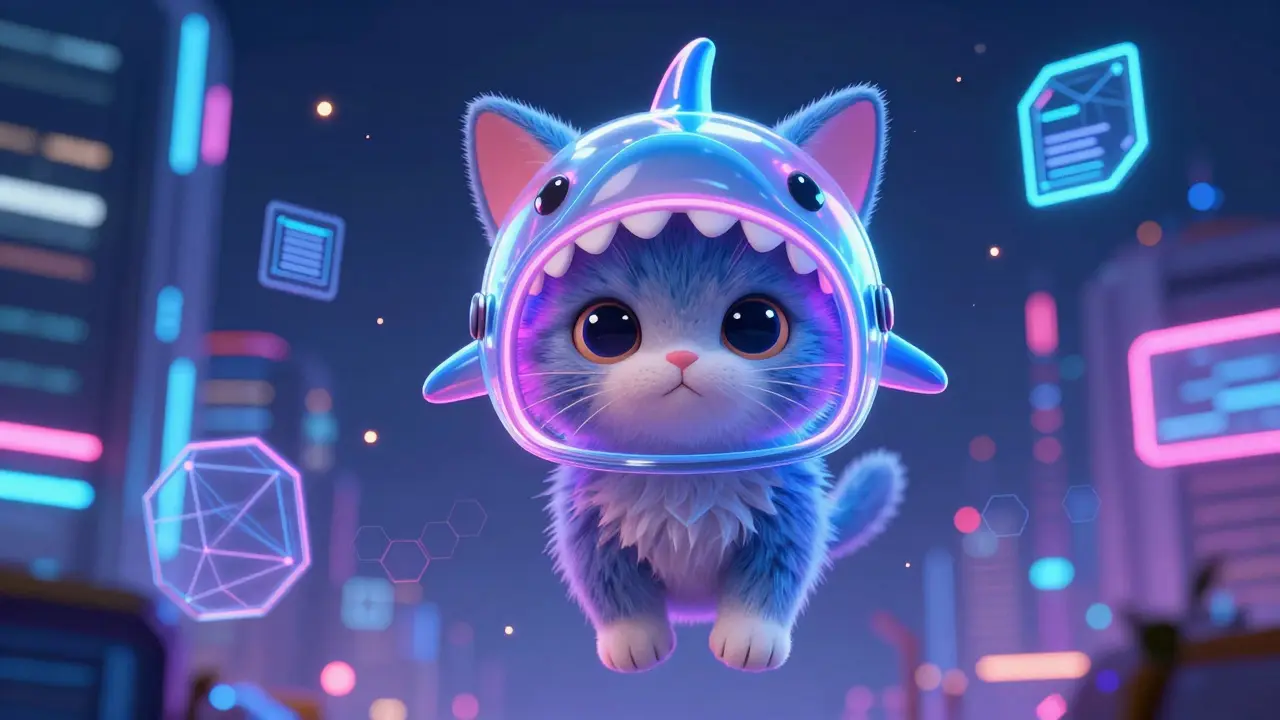
When you hear Shark Cat (SC) is a high-risk meme cryptocurrency built on the Solana blockchain. It launched in early 2024 during a boom of internet-meme-themed assets. Unlike projects backed by massive corporations or complex technology, Shark Cat relies entirely on community momentum. Think of it less like an investment vehicle for building wealth and more like a digital collectible fueled by humor and online engagement. If you have ever seen a cat wearing a shark hat on social media, this token captures that exact energy.
The project positions itself as community-led. There is no official development team steering the ship in the traditional sense. This distinction matters because it means the value depends heavily on whether people continue talking about it rather than whether software developers release updates. In the broader landscape of digital assets, Shark Cat falls squarely into the meme coin category. These tokens often see wild price swings driven by social media trends rather than economic fundamentals.
Technical Foundation on Solana
Shark Cat operates exclusively on the Solana Blockchainknown for high-speed transactions and low costs. This choice defines how you interact with the token. Solana allows for near-instant transfers, usually settling in under a second. Gas fees typically cost pennies, often less than $0.001 per transaction. This low barrier to entry encourages trading activity, which is vital for any token wanting liquidity.
Technically, the token follows the Solana SPL standard. This is the protocol that allows different tokens to exist securely on the network. While there aren't unique technical innovations here beyond the standard meme coin functionality, the underlying infrastructure supports the high volume of trades required for speculative markets. The token contract address has been verified across multiple trackers, ensuring transparency for anyone who wants to audit the supply directly on the blockchain explorer.
Supply and Market Cap Dynamics
To understand Shark Cat, you need to look at the numbers. As of recent historical snapshots, the total maximum supply sits at 1 billion tokens. Almost 99% of these were in circulation within the first few months of launch. This saturation prevents sudden supply dumps from hidden wallets later on, which provides some stability compared to projects where founders hold large percentages.
However, market capitalization tells a story of volatility. At various points, valuations ranged between $1.2 million and $6.8 million depending on which exchange reported the data. This discrepancy highlights a common issue with niche crypto assets: liquidity fragmentation. One exchange might show a healthy price while another shows a significantly lower rate due to lack of active traders. For an investor, checking the average across platforms gives a clearer picture than relying on a single source.
| Attribute | Shark Cat (SC) | Dogecoin | Shiba Inu |
|---|---|---|---|
| Blockchain | Solana | Ethereum/Own Chain | Ethereum |
| Market Cap (Historical) | $1.2M - $6.8M | $15.3 Billion | $4.2 Billion |
| Volatility | High (15.7% daily avg) | Moderate | Moderate-High |
| Holders | ~19,000 | Millions | Millions |
The table above illustrates where Shark Cat stands relative to giants like Dogecoin. With a market cap representing less than 0.01% of established competitors, it sits in the bottom tier of valuations. This position implies higher risk but also the potential for percentage-based gains if the community grows rapidly. However, historical data shows that 92% of similar tokens launched in Q1 2024 collapsed by Q2, suggesting survival odds are statistically low.

Community Sentiment and Social Dominance
Human interaction drives the price of meme coins. The Shark Cat ecosystem revolves heavily around its Telegram group, which held over 12,000 members at its peak tracking. Daily message volumes often exceeded 300 interactions, significantly higher than many peer tokens. This engagement suggests an active user base willing to promote the asset. Yet, social metrics can be deceptive. An active chat does not always equal financial support.
Sentiment analysis from major platforms showed mixed results. On Reddit, roughly 60% of comments expressed bearish feelings, citing price drops below entry points. Conversely, Telegram remained upbeat with celebration events for reaching holder milestones. This divergence is typical in crypto. Public forums like Reddit tend to express frustration when prices drop, while private communities try to maintain morale through positivity. User reviews on third-party sites averaged low ratings, specifically mentioning extreme volatility and unfulfilled marketing promises.
Buying and Storage Mechanics
If you decide to participate, the process requires basic crypto hygiene. You will need a wallet compatible with Solana. The Phantom wallet is the most common tool, downloaded millions of times by users needing security. Once funded with SOL tokens to cover gas fees, you connect to decentralized exchanges. Platforms like Raydium or Jupiter handle the actual swapping of SOL for Shark Cat.
Transactions settle quickly, usually in 0.4 seconds. However, slippage becomes a concern during high volatility periods. Traders sometimes find that trying to sell large amounts results in partial execution because there isn't enough liquidity waiting on the other side. One user reported attempting to sell 50 million SC tokens but only managing to move 32 million at their target price. Planning your exit strategy before entering is crucial given these liquidity constraints.
Risk Profile and Future Outlook
Expert analysis generally leans toward caution. Price prediction models from June 2024 suggested potential declines based on moving averages and Relative Strength Index signals showing oversold conditions. The Fear and Greed Index placed sentiment in the "Fear" zone, indicating market apprehension. Technical analysts identified support levels that, if broken, could lead to further depreciation.
Broader industry reports flagged Shark Cat as a high-risk speculative asset. Without utility beyond trading, the long-term viability depends solely on hype cycles. Historical data indicates that the survival rate for Solana meme coins beyond twelve months hovers around 18%. Most lose significant value before finding stability. While some analysts saw potential reversal zones, the probability remained low. Institutional involvement was virtually non-existent, meaning large players are not backing the floor price.
Final Thoughts on Participation
Navigating the world of Shark Cat cryptocurrency requires realistic expectations. It serves as a reminder that not every digital asset will succeed. The community is vibrant, yet the financial metrics suggest a fragile ecosystem. Whether you view it as a fun speculative play or a risky long-term hold, understanding the mechanics behind the meme is essential. Always verify token contracts on explorers and never invest funds you cannot afford to lose.
Is Shark Cat listed on major centralized exchanges?
Currently, Shark Cat trades primarily on decentralized exchanges like Raydium and Jupiter. Listings on major centralized platforms remain limited compared to top-tier cryptocurrencies.
How do I buy Shark Cat tokens safely?
Use a Solana-compatible wallet like Phantom, connect to a trusted DEX aggregator like Jupiter, and verify the contract address on a blockchain explorer before confirming the swap.
What is the maximum supply of SC tokens?
The hard cap is set at 1 billion SC tokens. Approximately 99% of this supply was circulating shortly after the launch in early 2024.
Does Shark Cat have a utility beyond being a meme coin?
As of the latest data, it functions mainly as a speculative community asset without additional technical utilities or governance features built into the token itself.
Why does the price of Shark Cat fluctuate so much?
Low liquidity and high retail speculation contribute to extreme volatility. Small trade sizes can impact the price disproportionately compared to larger, more liquid assets.

Comments
21 Comments
Matthew Wright
This shark cat thing looks absolutely crazy!!! The Solana network is incredibly fast which makes trading super easy!!! However the volatility is insane!!! You could lose everything in minutes!!! Community hype drives this completely!!! It feels like pure gambling right now!!! I am definitely watching the price action!!! Solana transactions are cheap though!!! Gas fees are negligible!!! Liquidity seems decent on Jupiter!!! But the charts look scary!!! Bearish signals everywhere!!! Technical indicators suggest a drop!!! RSI is flashing oversold conditions!!! Don't put your rent money in here!!! Just speculation really!!!
Emma Pease-Byron
Your excitement is noted and thoroughly unimpressive. One would hope for a more measured analysis given the financial implications involved.
Arwyn Keast
SPL token standard compliance is non-negotiable for security protocols. Market cap fragmentation remains a critical systemic issue. Liquidity depth on decentralized exchanges is inadequate for large orders. Volatility metrics indicate excessive risk exposure for retail investors. Fundamental analysis yields zero utility data points.
Hugo Lopez
I totally agree that safety is important! 😊 Solana is really cool though! The speeds are amazing for swappiing! 🚀 We just need to stay safe! Let's support the community vibes! 🐟😺 Crypto can be fun too! Keep learning everyone! 📚
Lauren Gilbert
The phenomenon of meme currency adoption illustrates a complex interplay between social dynamics and market forces. When individuals engage with assets like Shark Cat they are participating in a shared cultural narrative rather than traditional economic exchange. The underlying blockchain infrastructure facilitates rapid settlement but does little to stabilize intrinsic value fluctuations. Community engagement metrics such as Telegram message volumes often correlate poorly with actual transaction volume data. This divergence creates an environment prone to sudden liquidity evaporation events. Historical precedents within the Solana ecosystem suggest survival rates remain statistically insignificant beyond twelve months. Most tokens launched during early 2024 experienced significant depreciation before mid-year due to hype exhaustion cycles. Psychological factors drive retention in chat groups even when charts display clear downtrends. Users seeking quick returns ignore fundamental lack of utility or governance mechanisms embedded in the contract code. Risk management strategies should prioritize capital preservation over speculative gain potential in such fragmented markets. External audits provide transparency but cannot mitigate inherent market structure flaws found in low cap assets. Social dominance appears fragile when broader market sentiment shifts toward risk aversion globally. Without institutional backing prices rely solely on retail momentum which evaporates quickly under pressure conditions. Exit planning becomes impossible during panic selling due to slippage mechanics on thin order books. Diversification away from single asset concentration remains the only prudent approach for long term portfolio health considerations.
Sonya Bowen
Brief summary of key points above. Risk is high. Stay vigilant. Good read.
Carol Prates
You people are naive about the danger here! This is going to crash hard! Everyone is ignoring the red flags! I warned you all! This feels like a scam waiting to happen! Why do you trust this community blindly?
Carmelita Gonzales
solana tech is good but meme coins are risky. liquidity might dry up anytime. watch your wallets
Erica Mahmood
Solana SPL standards ensure base functionality. Low gas costs enable microtrading. Depth analysis shows insufficient reserves for large exits. Volatility exceeds 15 percent daily averages.
Krystal Moore
I am so sick of these projects crashing! It ruins everything! People keep losing money like they have nothing better to do! It is so frustrating to watch!
Sharhonda Walker
liquidity pools are weak on thsi token dont invest u money contract address vrfied but chart bad. sell soon before rug
Alexandra Lance
There are hidden agendas behind every launch 🤡 Someone is controlling the pumps 🙅♀️ Follow the whale wallets! They know something we don't 🧐 Trust the conspiracy! The real story is deeper 💸👁️
Nicholas Whooley
It is evident that participation requires careful consideration of risk tolerance levels. Investors should approach such opportunities with significant caution regarding capital allocation strategies.
Diana Martín Prieto
I understand your concerns. Being cautious is always wise. We all want to succeed together though. There is still opportunity out there. Please take your time to decide. Your safety matters most.
Susan Payne
This asset lacks fundamental merit. Speculation without utility is inherently flawed. Retail investors are being misled by marketing gimmicks. Poor decision making leads to inevitable losses.
Siddharth Bhandari
Data supports cautionary view. Market conditions remain unstable. Holders should monitor closely.
akash temgire
The technical architecture presents significant vulnerabilities in liquidity provision protocols. One must acknowledge the statistical improbability of sustained appreciation given current market parameters. Asset valuation relies disproportionately on external social media promotion.
Evan Borisoff
Solana offers speed advantages over legacy chains despite centralized validation concerns. Regulatory oversight remains ambiguous for these novel digital asset classes in domestic jurisdictions. The prevalence of speculative instruments undermines broader market stability metrics significantly. Foreign entities dominate current transaction volumes according to on-chain data. Domestic interest faces headwinds from stricter financial reporting requirements emerging soon.
Taylor Meadows
Why do people still hold this garbage? It is draining my emotional energy watching others lose. The pain in this community is unnecessary. Stop feeding the beast. You are hurting yourselves.
vijendra pal
i agru with u frnd plz do not buy sc i think its rug pull 🚀💨 many peple lost monay alredy dont be victim next time bro 🔒🔥
david head
looks risky lol
Write a comment